What if the "lymphatic massage" you're considering for chronic swelling is actually insufficient for your physiological recovery? While general wellness sessions offer temporary comfort, managing complex fluid dynamics requires a high level of clinical precision to prevent tissue fibrosis and maintain skin integrity. If you're struggling with the persistent heaviness and restricted mobility of lymphedema, you aren't just looking for a relaxation service; you're seeking a clinical partner to restore functional balance. Finding a qualified lymphedema therapist in Cedar Park is the first step toward moving beyond standardized services toward measurable, long-term results.
We understand that living with chronic swelling feels like a constant battle against your own anatomy. You deserve a management plan that prioritizes medical-grade safety and evidence-based protocols over generic techniques. In this guide, you'll discover how specialized clinical therapy provides the path to significant limb girth reduction and improved mobility. We'll outline the four pillars of Complete Decongestive Therapy, explain how the 2024 Lymphedema Treatment Act expands your access to essential compression supplies, and help you identify the technical qualifications that distinguish a medical specialist from a recreational practitioner.
Key Takeaways
- Distinguish between recreational massage and the clinical management of high-protein fluid accumulation to ensure your therapy addresses specific physiological needs.
- Identify the four essential pillars of Complete Decongestive Therapy that work in tandem to reduce limb girth and prevent tissue complications.
- Verify the specific credentials required to find a qualified lymphedema therapist in Cedar Park who adheres to the rigorous standards of the Lymphology Association of North America.
- Understand the progression from the intensive reduction phase to a sustainable maintenance plan for long-term swelling control.
- Learn how specialized post-operative and breast cancer-related protocols provide a structured framework for tissue rehabilitation and functional recovery.
Understanding Lymphedema Therapy in the Cedar Park Context
Lymphedema is a chronic condition characterized by the accumulation of high-protein interstitial fluid. It occurs when the lymphatic system's transport capacity is insufficient to handle the lymphatic load. This isn't a simple case of temporary swelling or "water weight." It's a progressive physiological failure that requires specialized intervention. For those seeking a lymphedema therapist Cedar Park provides a clinical landscape where understanding the underlying pathology is the first step toward effective management. Understanding Lymphedema requires recognizing that even minor disruptions to lymph nodes can lead to life-long symptoms if left untreated.
We distinguish between two primary types of this condition. Primary lymphedema stems from congenital malformations of the lymphatic vessels. Secondary lymphedema is far more common in Central Texas and results from external damage to the system. The local climate in Cedar Park often exacerbates these symptoms. High temperatures cause vasodilation, which increases the volume of fluid entering the tissue. For residents navigating the Texas heat, this environmental factor often leads to increased limb heaviness and visible swelling during the summer months.
The Rise of Secondary Lymphedema in North Austin
North Austin has seen a surge in secondary lymphedema cases. While many associate this condition solely with oncology, the local landscape includes a high volume of post-operative cosmetic surgery patients. Procedures like liposuction or abdominoplasty can disrupt delicate lymphatic pathways. When these pathways are compromised, the body cannot effectively clear cellular debris and fluid. Oncology patients, particularly those undergoing breast cancer treatment with lymph node removal, also face a high risk. It's vital to identify early warning signs such as:
- A persistent feeling of heaviness or "fullness" in the limb.
- Jewelry or clothing that suddenly feels restrictive.
- Subtle skin changes, including a loss of visible skin folds.
- A "tight" sensation that doesn't resolve with elevation.
Why General Wellness Massage Fails Lymphedema Patients
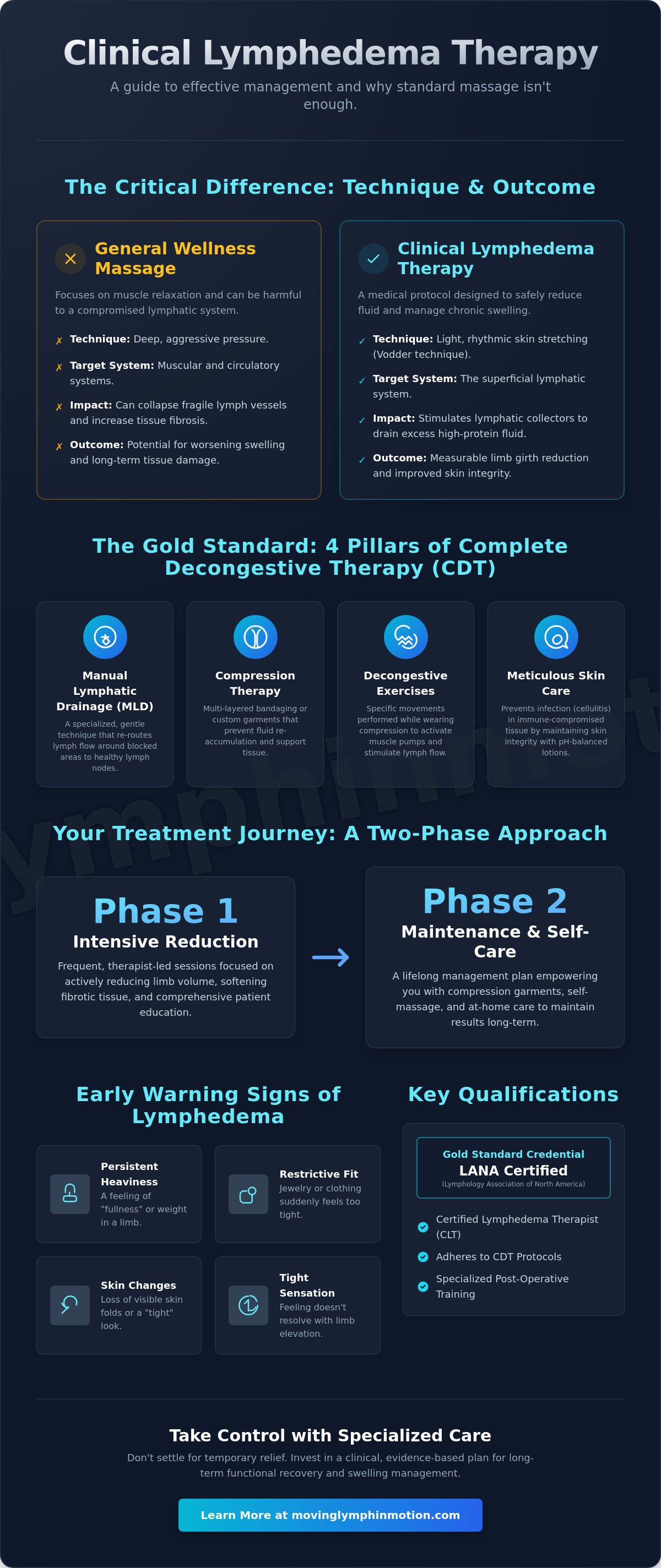
Many patients mistakenly turn to recreational spas for relief. This is a dangerous path. General wellness massage focuses on the muscular and circulatory systems, often using deep, aggressive pressure. For a compromised lymphatic system, this pressure can be catastrophic. It can collapse the initial lymphatics or cause further tissue fibrosis. A clinical lymphedema therapist Cedar Park specialist uses the Vodder technique, which involves light, rhythmic skin stretching. This specific movement encourages the opening of lymphatic collectors without damaging the fragile vessels. The physiological difference between these two approaches determines whether the tissue recovers or degrades over time.
The Clinical Standard: Complete Decongestive Therapy (CDT)
The management of chronic swelling requires more than symptomatic relief; it demands a gold-standard protocol known as Complete Decongestive Therapy (CDT). This multi-modal approach is designed to address the specific physiological stages of lymphedema, from the latent Stage 0 to the advanced fibrotic changes of Stage 3. Unlike generalized treatments, CDT is a structured, two-phase system that reduces limb volume and then maintains those results through patient empowerment. Working with a dedicated lymphedema therapist Cedar Park specialist ensures that each of the four pillars-Manual Lymphatic Drainage, compression, skin care, and exercise-is tailored to your unique tissue state.
Skin care is a non-negotiable component of this clinical standard. Lymphostatic limbs have a compromised immune response because the stagnant, high-protein fluid serves as a breeding ground for bacteria. This makes the limb highly susceptible to cellulitis, a bacterial skin infection that can cause rapid tissue damage and systemic illness. Meticulous skin hygiene and pH-balanced hydration are critical defensive measures to prevent these complications. When the skin barrier is intact, the risk of infection drops, allowing the focus to remain on fluid reduction and tissue softening.
Manual Lymphatic Drainage (MLD) Protocols
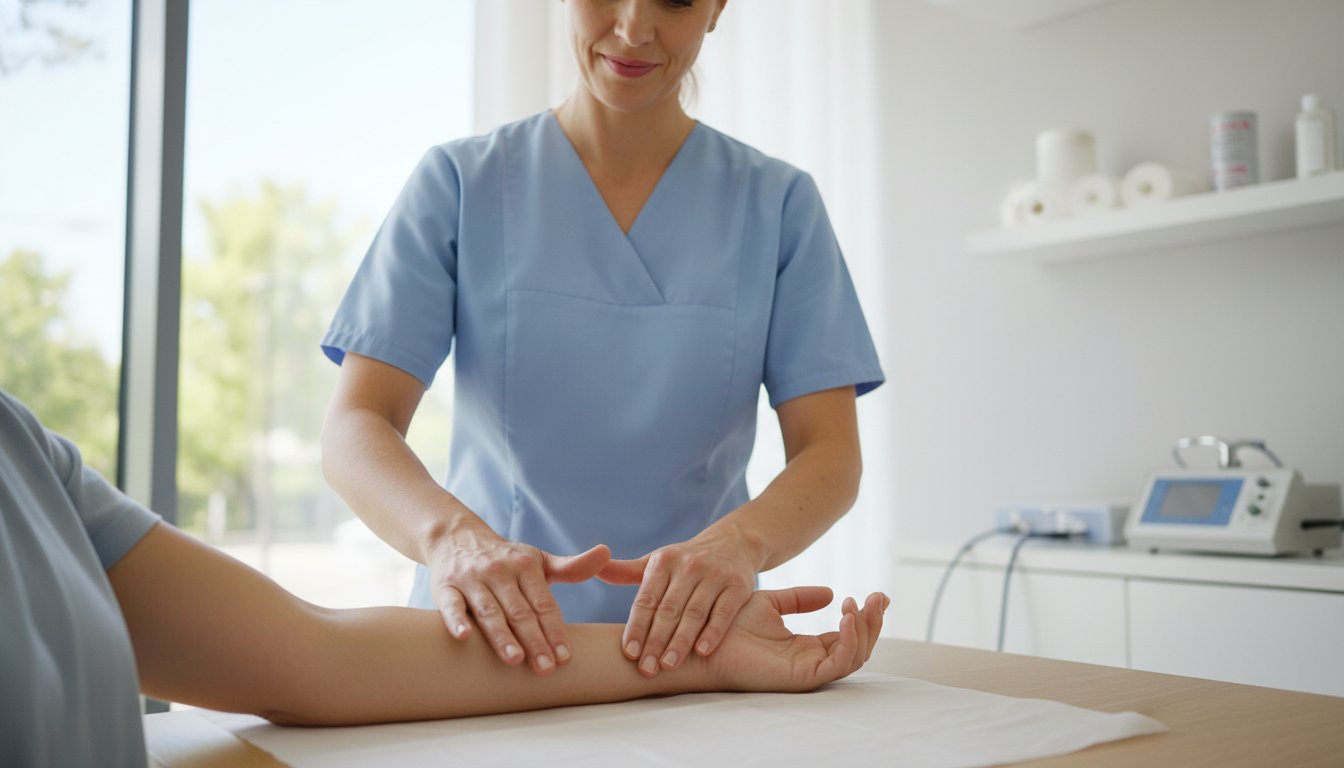
Manual Lymphatic Drainage is the cornerstone of the intensive phase. This technique uses the Vodder method, a series of precise, rhythmic strokes that stretch the skin to stimulate the lymphangions. The goal is to reroute interstitial fluid away from congested or damaged areas toward healthy, functioning lymph node groups. This requires deep anatomical knowledge; a lymphedema therapist Cedar Park professional must understand the specific watersheds of the body to bypass blockages effectively. It's a delicate process that prioritizes the movement of fluid over the manipulation of muscle tissue.
The Importance of Compression and Exercise
Compression is the engine that maintains the progress made during MLD. In the initial intensive phase, we use multi-layered, short-stretch bandages. Unlike "long-stretch" ACE wraps, these bandages provide a high working pressure, which means they resist muscle expansion during movement. This resistance creates a "muscle pump" effect, forcing lymphatic fluid into the vessels with every step or reach. Once the limb has reached its minimum volume, we transition to custom or off-the-shelf compression garments for daily wear.
Decongestive exercises complement this by further activating the lymphatic system. These aren't high-impact workouts; they're specific, low-resistance movements performed while wearing compression. This combination is essential for long-term stabilization. For residents seeking specialized lymphedema and lipedema management, mastering these self-care techniques is the key to transitioning from clinical dependency to independent health.
Choosing a Lymphedema Therapist in Cedar Park: Key Qualifications
Selecting a practitioner for chronic swelling requires a shift in perspective. You aren't looking for a relaxing afternoon; you're seeking a medical intervention. A general massage therapist may offer "lymphatic drainage," but a Certified Lymphedema Therapist (CLT) possesses the specialized education to manage physiological dysfunction. This distinction is the most critical factor in your lymphedema treatment journey. When evaluating a lymphedema therapist Cedar Park patients must prioritize clinical credentials over spa-like amenities to ensure safe, effective care.
The gold standard for practitioners is the CLT designation. This requires 135 hours of intensive training in Complete Decongestive Therapy. This education isn't just about technique. It involves deep study into the anatomy of the lymph system, fluid dynamics, and the specific pathology of lymphedema. Practitioners who hold a LANA (Lymphology Association of North America) certification have met even more rigorous national standards. This level of expertise is essential when dealing with sensitive cases like breast cancer-related swelling therapy or the complexities of post-operative recovery.
Essential Certifications to Look For
A CLT certification ensures your therapist understands the curriculum of the lymph system's anatomy, physiology, and pathology. This knowledge is vital for identifying when a limb is safe for therapy and when it requires medical clearance. Ongoing professional education is equally important. The field of lymphology is constantly evolving with new research into tissue states and fluid management. A therapist committed to continuing education can offer the most current, evidence-based protocols for your recovery.
Clinical Environment vs. Spa Setting
Clinical management requires a clinical environment. A professional lymphedema therapist Cedar Park office is equipped for more than just Manual Lymphatic Drainage. It's a space for precise limb girth measurements, skin integrity checks, and the application of multi-layered compression bandages. A thorough medical history intake is mandatory. Your therapist must understand your surgical history, vascular health, and any existing comorbidities to create a safe protocol. Red flags include providers who treat lymphedema in a purely recreational spa setting or fail to discuss long-term management plans. If a provider uses aggressive, deep-tissue pressure on an edematous limb, they risk collapsing the initial lymphatics, which can lead to permanent tissue damage.
Before committing to a plan, ask your prospective therapist these specific questions:
- Are you a Certified Lymphedema Therapist with at least 135 hours of training?
- Do you provide all four components of CDT, including compression bandaging?
- How will you coordinate with my oncology or surgical team?
- What specific metrics do you use to track limb volume reduction?
What to Expect During Your Lymphedema Treatment Journey
Your recovery is a structured progression, not a series of isolated appointments. Entering a clinical partnership requires a clear understanding of the milestones ahead. The treatment journey begins with an intensive reduction phase, typically requiring multiple sessions per week to move stagnant fluid and soften fibrotic tissue. Once we achieve a plateau in limb volume, we transition to the maintenance phase. This is where your role as a patient becomes central. You'll learn to manage symptoms through daily garment wear and self-care protocols. A dedicated lymphedema therapist Cedar Park professional acts as your guide through these technical transitions, ensuring your safety at every step.
Collaboration with your medical team is a hallmark of professional management. We don't work in a vacuum. Effective therapy involves ongoing communication with your primary care physician, oncologist, or vascular surgeon. This ensures that your decongestive plan aligns with your overall medical history and current treatment status. By sharing data on volume reduction and tissue health, we create a comprehensive safety net for your recovery.
Your First Session in Cedar Park
The initial evaluation is a deep dive into your physiological state. We begin with detailed diagnostic measurements to establish a baseline for your limb girth. This isn't just about weight; it's about tracking the specific volume of interstitial fluid. We assess tissue density, skin integrity, and your current range of motion. This evaluation happens in a calm, clinical atmosphere designed for your comfort and privacy. From this data, we develop a customized treatment plan that fits your lifestyle while meeting the rigorous requirements of decongestive therapy.
Tracking Progress and Adjusting Treatment
We measure success through objective data. As the limb decongests, we track the reduction in volume and the improvement in skin texture. Success means the tissue feels softer and the limb feels lighter. As your measurements change, we adjust your compression levels. This is a critical phase where we transition from short-stretch bandages to long-term compression garments. Under the 2024 Lymphedema Treatment Act, Medicare now provides better coverage for these essential supplies, making long-term management more accessible. If you're seeking specialized breast cancer-related swelling therapy, this transition to self-management is a vital part of reclaiming your mobility and confidence.
Patient education is the final pillar of your journey. You'll learn the art of self-MLD and the nuances of garment care. Knowing how to properly don and doff your garments, and when to replace them, ensures your results remain stable for years to come. We empower you with the technical knowledge to recognize early signs of fluid fluctuations, allowing for proactive adjustments before complications arise.
Lymph in Motion: Specialized Lymphedema Care in Cedar Park
Residents of Cedar Park, Leander, and Liberty Hill often struggle to find a practitioner who understands the nuanced fluid dynamics of both congenital lymphedema and acquired swelling. At Lymph in Motion by Criselda White, we reject the standardized, high-volume mentality of larger institutions. Every patient receives meticulous, individualized attention that prioritizes physiological results over aesthetic fluff. As a dedicated lymphedema therapist Cedar Park specialist, the focus remains on ensuring that your recovery plan is as unique as your anatomical needs.
While many local providers focus exclusively on oncology-related cases, the clinical expertise at Lymph in Motion by Criselda White extends to the specific challenges of post-operative cosmetic surgery recovery. Surgical procedures like liposuction or body contouring can cause significant lymphatic trauma, leading to localized lymphedema that requires professional management to prevent long-term fibrosis. This intersection of medical lymphedema therapy and surgical aftercare distinguishes our practice as a comprehensive center for tissue health. We provide a steady, methodical guide through the complexities of physical recovery, ensuring that your body’s natural drainage pathways are restored with precision.
A Compassionate, Clinical Approach
Our methodology at Lymph in Motion by Criselda White combines clinical authority with the reassurance you need during a complex recovery. We provide specialized care for lipedema, lymphedema, and breast cancer-related swelling. By moving beyond recreational techniques, we empower you with the professional education required for sustainable health. This includes teaching you the mechanics of your own lymphatic system and providing the technical tools for effective self-care at home. We maintain a high level of respect for your healing process, opting for evidence-based results that improve your daily quality of life.
Scheduling Your Clinical Consultation
Beginning your journey with Lymph in Motion by Criselda White is a straightforward, intentional process. When you arrive for your initial evaluation, please bring any relevant surgical notes, oncology reports, or current compression garments you're using. Sharing your full medical history allows us to build a safe, evidence-based protocol from day one. We'll perform a thorough tissue assessment to determine the most effective path forward for your specific condition. It's time to move toward a more mobile, lighter future. Schedule your clinical evaluation with Lymph in Motion by Criselda White today to secure a dedicated partner in your long-term management plan.
Securing Your Path to Long-Term Physiological Balance
Achieving sustainable results in the management of chronic swelling is a collaborative process that requires both clinical expertise and patient commitment. We've explored the necessity of Complete Decongestive Therapy, the impact of the 2024 Lymphedema Treatment Act on garment accessibility, and the vital distinction between clinical therapy and recreational massage. By partnering with a qualified lymphedema therapist Cedar Park residents can move beyond temporary relief toward a structured program of physiological stabilization and tissue health.
At Lymph in Motion by Criselda White, your recovery is managed by a Certified Manual Lymphatic Drainage Specialist and Professional MLD Certification Instructor. This level of specialization ensures that whether you're navigating post-operative cosmetic surgery recovery or breast cancer-related swelling, your care is rooted in anatomical precision and evidence-based protocols. We invite you to Book Your Clinical Lymphedema Evaluation in Cedar Park to establish your baseline and begin your customized path to health. You don't have to manage these complexities alone; we're ready to act as your steady guide through every phase of your recovery journey.
Frequently Asked Questions
What is the difference between lymphedema and regular swelling?
Lymphedema is a chronic condition defined by the accumulation of high-protein fluid within the interstitial tissues. While regular edema is often a temporary response to injury or salt intake, lymphedema represents a structural failure of the lymphatic system. This leads to progressive tissue changes, such as fibrosis, that won't resolve with simple elevation or diuretics.
How many sessions of lymphedema therapy will I need?
Your treatment plan depends on the stage and severity of the swelling. The intensive phase usually involves several sessions per week for two to four weeks to achieve maximum volume reduction. Once the limb is decongested, we transition to a maintenance phase where appointments become less frequent as you master self-management techniques.
Is lymphedema therapy covered by insurance in Texas?
Most major insurance providers and Medicare Part B cover therapeutic sessions, though specific coverage levels depend on your individual policy. As of January 1, 2024, the Lymphedema Treatment Act ensures Medicare coverage for essential compression supplies like garments and bandages. It's best to verify benefits with your provider or a qualified lymphedema therapist Cedar Park clinic before your first visit.
Can I perform manual lymphatic drainage on myself at home?
Self-MLD is a critical component of long-term management, but it must be performed correctly to be effective. We provide professional instruction during your sessions so you can safely stimulate fluid movement between clinical visits. Attempting these techniques without proper training can lead to ineffective results or potential tissue irritation.
Why is skin care so important for lymphedema patients?
Stagnant, high-protein fluid creates an environment where bacteria can thrive, significantly increasing the risk of cellulitis. Even a small scratch can lead to a systemic infection in a lymphostatic limb. Meticulous hygiene and pH-balanced moisturizers help maintain the skin’s barrier, preventing complications that could stall your progress.
What should I wear to my lymphedema therapy session in Cedar Park?
Wear loose, comfortable clothing that allows easy access to the affected limb. If you're receiving therapy for your leg, wide-leg trousers or shorts are ideal; for arm therapy, a tank top or loose shirt is preferred. This ensures your lymphedema therapist Cedar Park specialist can perform MLD and apply compression bandages without restriction.
Is lymphedema therapy painful?
Clinical lymphedema therapy is a gentle, non-invasive process. Manual Lymphatic Drainage uses light, rhythmic skin stretching to stimulate the initial lymphatics located just beneath the skin. If you experience pain during a session, the pressure is likely too deep. Correct technique should feel soothing and shouldn't cause bruising or discomfort.
How do I know if my therapist is properly certified?
A qualified practitioner should hold the Certified Lymphedema Therapist (CLT) credential, which requires a minimum of 135 hours of specialized training. You can also check for LANA certification, which indicates the therapist has passed a national board exam and maintains high clinical standards. Don't hesitate to ask for proof of these qualifications during your initial consultation.


