
The success of your cosmetic procedure isn't determined solely in the operating room; it's secured during the critical weeks of physiological remodeling that follow. For many patients, the anxiety of potential complications like fluid pockets or "dead space" can overshadow the excitement of their new silhouette. Utilizing specialized MLD for seroma prevention isn't a luxury or a spa-like indulgence. It's a clinical necessity designed to manage the inflammatory response and ensure that your tissues adhere smoothly and predictably.
You've likely felt the weight of conflicting advice, perhaps even confusing clinical Manual Lymphatic Drainage with a standard post-op massage. It's natural to fear the discomfort of needle aspirations or the frustration of a prolonged, lumpy healing process. This article provides a clear, evidence-based roadmap for your recovery journey. You'll learn exactly how MLD functions as a safeguard for your surgical investment, the anatomical reasons why fluid management is vital, and what to expect from a professional, medical-grade treatment plan. By understanding the mechanics of lymphatic transport, you can move toward a faster, more confident return to your daily life.
Key Takeaways
- Identify the biological causes of seroma formation and how surgical tissue dissection creates "dead space" that traps sterile interstitial fluid.
- Understand the clinical mechanism of MLD for seroma prevention, which utilizes specialized techniques to stimulate lymphangiomotoricity and reroute fluid to functional nodes.
- Learn why medical-grade compression garments are most effective when paired with manual drainage to ensure comprehensive fluid clearance.
- Discover the "Golden Window" for starting therapy, typically within 24 to 72 hours post-surgery, to optimize your aesthetic results and healing trajectory.
- Distinguish between recreational wellness massage and clinical Manual Lymphatic Drainage to protect your surgical investment with expert-led, anatomical care.
Understanding Seromas and Post-Surgical Fluid Dynamics
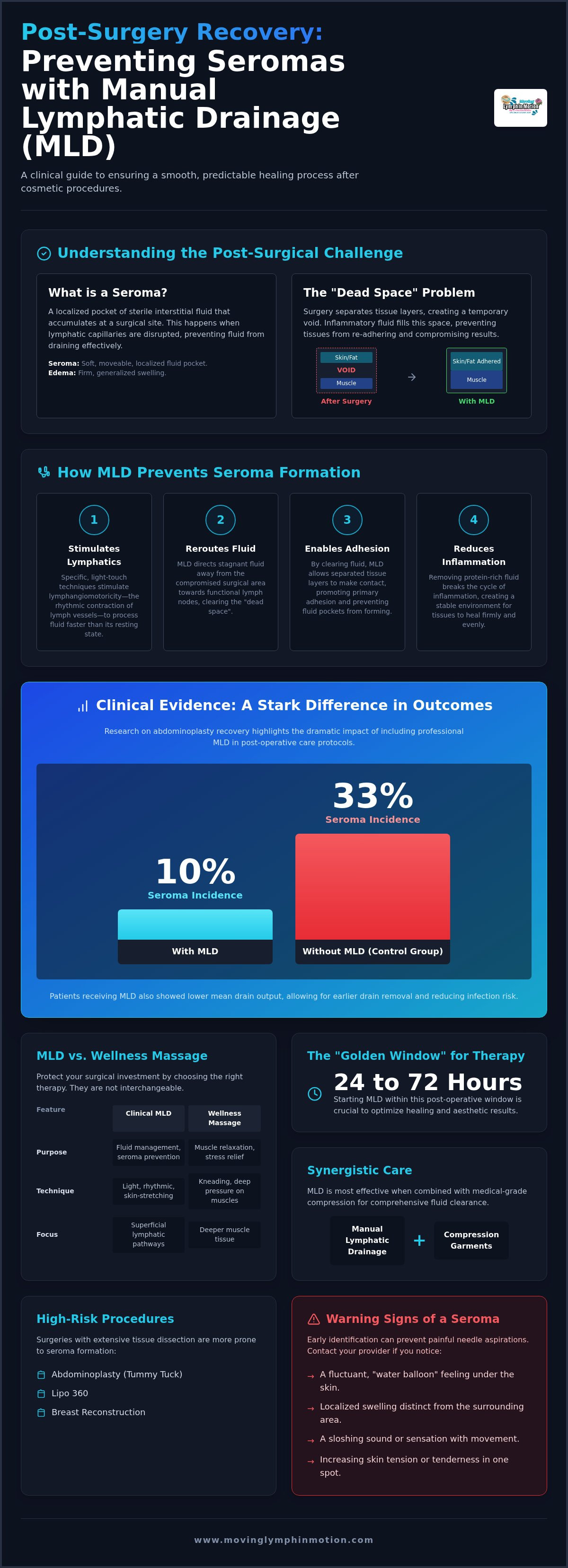
A Seroma is a sterile collection of interstitial fluid that accumulates within a surgical site where tissue has been significantly manipulated. Unlike general post-operative edema, which is a diffuse swelling throughout the area, a seroma is a localized pocket of fluid. This occurs because the surgical process inevitably disrupts the delicate network of lymphatic capillaries. When these vessels are severed during tissue dissection, they can't effectively transport fluid away from the site. This imbalance between fluid production and drainage creates the foundation for complications, making the early application of MLD for seroma prevention a critical component of clinical recovery.
Certain procedures carry a higher risk profile due to the extent of tissue trauma. Abdominoplasty, Lipo 360, and breast reconstruction are particularly prone to these collections. In these surgeries, large planes of tissue are separated, which severs the primary drainage pathways. Distinguishing between normal swelling and a pathological fluid pocket is essential for a safe recovery. While edema feels firm and generalized, a seroma often presents as a soft, moveable mass that requires specialized intervention to resolve.
The Concept of 'Dead Space' in Cosmetic Surgery
During invasive cosmetic procedures, surgeons often separate the skin and fat layers from the underlying muscle fascia. This separation creates what clinicians call "dead space." It's essentially a temporary vacuum between tissue layers. Natural inflammatory responses trigger an increase in fluid production to aid healing, but without a clear exit path, this fluid fills the void. Large-surface-area surgeries provide more room for these pockets to expand. If the layers don't adhere quickly, the fluid prevents the tissues from knitting back together, which can compromise your final aesthetic result. Utilizing MLD for seroma prevention helps collapse this space by moving stagnant fluid out of the area.
Warning Signs: When Fluid Accumulation Becomes a Seroma
Identifying a seroma early can prevent the need for painful needle aspirations. One of the most common signs is a fluctuant sensation. This feels like a water balloon beneath the skin. You might notice localized swelling that seems distinct from the surrounding area. Some patients even report a sloshing sound or feeling when they move. As the fluid volume increases, skin tension rises, and the area may become increasingly tender. If left unmanaged, the pressure can lead to skin necrosis or infection. Professional lymphatic therapy helps mitigate these risks by manually encouraging the fluid toward functional lymphatic territories before it can consolidate into a pressurized pocket.
How Manual Lymphatic Drainage (MLD) Prevents Seroma Formation
MLD functions as a physiological catalyst, accelerating the body’s natural clearance of surgical byproducts. By applying specific, light-touch techniques, a therapist stimulates the lymphatic system to process fluid at a rate significantly higher than its resting state. This proactive approach is central to the efficacy of MLD for seroma prevention. Instead of allowing fluid to pool in the void left by surgery, MLD directs it toward functional lymph nodes located outside the immediate surgical field. This rerouting is essential because the local lymphatic capillaries are often temporarily incapacitated by the procedure itself.
Removing this excess fluid does more than just reduce swelling. It physically allows the separated layers of tissue to come into contact with one another. When the "dead space" is cleared of stagnant fluid, the body can begin the process of primary adhesion. This reduces the inflammatory load, as the presence of protein-rich fluid is a known trigger for prolonged inflammation; this inflammation, in turn, stimulates even more fluid production. By breaking this cycle, MLD creates a stable environment for the tissues to knit together firmly and evenly.
Clinical Evidence: The 10% vs 33% Seroma Reduction
Clinical data supports the transition from traditional care to MLD-inclusive protocols. Research published by the ISR regarding abdominoplasty recovery demonstrated a stark difference in outcomes. Patients who received professional MLD showed a seroma incidence rate of only 10%, compared to a 33% incidence rate in the control group. This reduction is largely attributed to the decrease in mean drain output observed in MLD patients. When fluid is moved efficiently through the lymphatic system, surgical drains can often be removed sooner. Early drain removal is a significant milestone, as it minimizes the window of opportunity for secondary infections and reduces overall patient discomfort during those first few weeks of healing.
Tissue Healing and Lymphatic Regeneration
Beyond immediate fluid clearance, MLD facilitates the long-term structural integrity of the healing site. The therapy supports the formation of new lymphatic anastomoses, which are functional connections between severed vessels. Lymphangiomotoricity is the rhythmic contraction of lymph vessels. By encouraging this natural rhythm, MLD prevents the accumulation of stagnant, protein-rich fluid that often leads to internal scarring or fibrosis. This specialized care ensures that the recovery environment remains optimal for cellular repair and aesthetic refinement. For those navigating the complexities of surgical aftercare, scheduling a clinical assessment can help determine the ideal frequency for your specific recovery needs.
To learn more about advanced non-invasive beauty treatments, visit Cosmicfy for expert skin care and wellness services.
MLD vs. Traditional Post-Op Care: A Comparative Analysis
Traditional recovery protocols often rely heavily on compression garments and surgical drains to manage fluid. While these tools are indispensable, they're essentially passive. Compression garments provide external pressure to help collapse the dead space mentioned earlier, but they lack the mechanical ability to transport fluid through the lymphatic system. They essentially act as a barrier. This is where MLD for seroma prevention becomes a necessary active intervention. By manually stimulating the lymphangions, a specialist creates a pressure gradient that moves stagnant fluid out of the surgical site and into healthy tissue.
The synergy between medical-grade compression and professional MLD is what truly optimizes recovery. Compression maintains the progress made during a clinical session, preventing fluid from re-accumulating in the cleared areas. Without MLD, compression might simply trap fluid in certain pockets, potentially increasing the risk of a pressurized seroma. Understanding the distinction between these modalities is a key part of Manual Lymph Drainage Therapists: Choosing a Specialist who understands the physiological needs of a post-op body and how to coordinate these recovery tools effectively.
The Danger of Aggressive Post-Op Massage
A common misconception in the recovery community is the belief that "aggressive" massage, such as wood therapy or deep tissue manipulation, is necessary to break up fluid or prevent lumps. This approach is clinically counterproductive and often dangerous. High-pressure techniques can easily damage fragile new capillaries and disrupt the early stages of tissue adhesion. Instead of resolving fluid issues, aggressive techniques often incite more inflammation. This secondary inflammatory response triggers the body to produce even more interstitial fluid, directly increasing the risk of seroma formation. It's vital to differentiate between draining and massaging. MLD uses a specific, skin-stretching stroke that's gentle enough to protect healing tissues while being powerful enough to clear the lymphatic pathways.
Complementing Surgical Drains
Patients often wonder if they should wait until their surgical drains are removed before starting MLD. In a clinical setting, we find that MLD helps prime the system while drains are still in place. Drains are effective for high-volume fluid removal, but they're localized and only drain the area immediately surrounding the tube. MLD addresses the entire surgical region, moving fluid from the periphery toward the drains or toward healthy lymph nodes. This keeps the fluid thin and moving, which can prevent the protein-rich discharge from clogging the narrow drain tubes. Once the surgeon determines that drain output has decreased sufficiently for removal, the lymphatic system must take over the entire workload. Starting MLD for seroma prevention early ensures that these natural pathways are already stimulated and ready for that transition.
The Clinical Protocol: Timing Your MLD for Seroma Prevention
The efficacy of MLD for seroma prevention is heavily dependent on the timing of intervention. Clinicians recognize a "Golden Window" within the first 24 to 72 hours post-surgery. During this initial phase, the body’s inflammatory response is at its peak, and the surgical dead space is most vulnerable to fluid accumulation. Initiating therapy early ensures that the lymphatic system is primed to handle the surge of interstitial fluid before it has the opportunity to consolidate into a pressurized pocket. In the first week, daily sessions are often recommended to maintain consistent fluid transport and prevent the stagnation that leads to secondary complications.
Adhering to a structured timeline allows for a more predictable recovery trajectory. This approach aligns with established standards for Post-Op Lymphatic Drainage in Austin: A Clinical Guide, where specialized care is tailored to the specific surgical techniques used by local surgeons. By following a clinical protocol, patients can transition from acute inflammatory management to long-term tissue refinement with greater confidence.
The First 14 Days: A Critical Timeline
Recovery is a dynamic process that requires different therapeutic focuses as the tissues heal. From days one through five, the primary goal is systemic drainage. We focus on reducing the acute inflammatory response and moving fluid toward the major lymph node groups. Between days 6 and 14, the focus shifts toward the localized management of surgical dead spaces. During these sessions, we carefully monitor for pitting edema, which is a generalized swelling that leaves an indentation when pressed, versus localized fluid pockets. This distinction is vital for adjusting the manual pressure and direction of the drainage strokes to ensure optimal tissue adherence.
Customizing Care for Lipo 360 vs. Tummy Tuck
Every procedure demands a unique anatomical approach. A tummy tuck involves a large abdominal flap where the skin and fat have been separated from the muscle. Drainage must be directed toward the axillary or inguinal nodes, bypassing the horizontal incision line. In contrast, Lipo 360 is a circumferential procedure that often leads to dependent edema in the lower back and sacrum. Gravity causes fluid to settle in these posterior areas, requiring a specific drainage pattern to prevent localized seromas in the sacral region. A therapist’s deep understanding of these incision patterns and fluid dynamics is what makes MLD for seroma prevention so effective for diverse cosmetic procedures.
Expert MLD in Austin: Protecting Your Aesthetic Investment
Cosmetic surgery is a significant financial and emotional investment. To protect that investment, the transition from the operating room to the recovery suite must be managed with clinical precision. Utilizing specialized MLD for seroma prevention ensures that your skin adheres smoothly to the underlying muscle fascia, preventing the wavy or lumpy appearance that can result from unmanaged fluid pockets. While general wellness spas offer relaxation, they often lack the technical training required to handle post-surgical tissue states safely. At Best Lymphatic Specialist, we treat the recovery phase as an extension of the surgical procedure itself, focusing on physiological results over aesthetic fluff.
Our approach is grounded in a deep understanding of the specific techniques used by Austin’s leading surgeons. Whether your procedure involved extensive abdominal undermining or circumferential liposuction, the direction and pressure of lymphatic transport must be exact. Professional MLD doesn't just move fluid; it manages the environment in which your tissues heal. By maintaining low interstitial pressure, we facilitate the primary adhesion of tissue layers, which is the most effective way to close the dead space where seromas typically form. This meticulous attention to detail is what allows our patients to return to their normal activities with greater confidence and a more refined surgical outcome.
The Best Lymphatic Specialist Difference
Criselda White’s clinical background transforms the recovery process into a structured, evidence-based journey. As a certified practitioner and an education hub for MLD professionals, the focus at Best Lymphatic Specialist is on technical mastery and patient safety. We maintain a professional environment that respects the fragility of your post-operative state. Serving the Central Texas community, including Austin, Cedar Park, and Georgetown, we act as a dedicated clinical partner. We don't just provide a service; we provide a clinical safeguard for your surgical results, ensuring that every session moves you closer to your desired aesthetic goal.
Booking Your Post-Op Recovery
The most successful recoveries are planned well in advance of the surgery date. Because the window for effective MLD for seroma prevention is so specific, we recommend coordinating your recovery timeline at least two weeks before your procedure. During your initial consultation, we'll review your surgical plan to establish a customized protocol that aligns with your surgeon's requirements. This proactive step ensures that your sessions are secured and that you have a clear roadmap for the first 14 days of your healing journey. By preparing now, you can focus entirely on your rest and recovery once the procedure is complete.
Securing Your Surgical Results with Clinical Precision
The path to a smooth, complication-free recovery requires more than just patience; it demands a structured, anatomical approach to fluid management. By prioritizing MLD for seroma prevention within the critical first days of your healing journey, you effectively collapse surgical dead space and encourage healthy tissue adherence. This specialized intervention acts as a necessary bridge between your surgeon's technical skill and your body's physiological response, ensuring your aesthetic goals are met without the setbacks of localized fluid collections or painful aspirations.
As a certified MLD educator serving the Austin and Cedar Park communities, Best Lymphatic Specialist provides a specialized post-op clinical protocol tailored to your specific procedure. We move beyond general wellness to offer evidence-based therapy that respects the complexity of your recovery. Coordinating your care before your surgery date ensures you have the professional support needed to navigate the inflammatory phase with confidence and safety. This proactive planning is the final step in protecting your surgical investment.
You've made a significant commitment to your health and silhouette. We're here to ensure your body heals as beautifully as you've envisioned.
Frequently Asked Questions
Is MLD painful if I have a seroma or fresh surgical incisions?
Clinical Manual Lymphatic Drainage is a non-invasive, light-touch therapy that should never be painful. The technique utilizes a specific, rhythmic skin-stretching stroke that targets the initial lymphatics located just beneath the surface of the skin. Because it doesn't involve deep tissue manipulation or heavy pressure, it's exceptionally safe and comfortable even when applied near fresh incisions or over areas of localized fluid tension.
How many MLD sessions do I need to effectively prevent a seroma?
Most patients achieve optimal results with a series of 5 to 10 sessions scheduled during the first two weeks of recovery. The highest frequency usually occurs during the "Golden Window" of the first seven days. Your specific protocol for MLD for seroma prevention depends on the surgical surface area, the complexity of the procedure, and your body's individual rate of inflammatory fluid production.
Can I perform MLD on myself at home to prevent fluid buildup?
Self-care techniques are helpful for general wellness, but clinical fluid management requires a therapist with specialized anatomical knowledge. Professional MLD for seroma prevention involves rerouting fluid around damaged lymphatic pathways to functional nodes. Incorrect DIY techniques can move fluid in the wrong direction or apply excessive pressure; this may inadvertently increase localized tension or fail to clear the surgical dead space effectively.
What happens if a seroma forms despite receiving MLD?
If a seroma forms, the focus of therapy shifts to managing the fluid pocket and encouraging gradual absorption. You must notify your surgeon immediately for a clinical evaluation. MLD remains a vital tool in these cases. It helps soften the surrounding tissue and assists the body in processing remaining fluid after a medical aspiration, which prevents the pocket from refilling and facilitates tissue adherence.
Does insurance cover Manual Lymphatic Drainage for seroma prevention?
Insurance coverage for post-operative MLD is inconsistent and varies significantly between different providers and plans. While the Lymphedema Treatment Act has improved coverage for certain supplies, MLD for cosmetic recovery is often classified as elective. It's advisable to request a letter of medical necessity from your surgeon. This documentation can sometimes assist in securing reimbursement for these medically necessary recovery services.
Can MLD help if my surgeon has already had to aspirate a seroma?
Yes, MLD is highly effective following a clinical aspiration. Once the surgeon has removed the bulk of the fluid, MLD helps prevent the "vacuum" from refilling by continuously directing new interstitial fluid away from the site. This support is essential for allowing the separated tissue layers to finally knit together, which permanently closes the space where fluid previously collected.
Why do some surgeons suggest MLD while others do not?
Surgeons have different levels of exposure to clinical lymphatic research and varying recovery philosophies. Many leading specialists in Austin now view MLD as a clinical safeguard for their aesthetic results. Others may be cautious if they've seen patients receive "aggressive" post-op massages that caused tissue damage. Choosing a certified specialist ensures that the therapy provided meets the high-formality medical standards surgeons expect.
Is there a difference between 'Lymphatic Massage' and 'Manual Lymphatic Drainage'?
There is a profound clinical distinction between these two terms. "Lymphatic massage" is often used loosely in wellness settings to describe light-pressure relaxation. In contrast, Manual Lymphatic Drainage is a medical-grade methodology that requires specific clinical certification. MLD follows precise anatomical pathways and pressure gradients designed to stimulate lymphangiomotoricity, making it a therapeutic necessity rather than a recreational service.


