
Post-operative fibrosis is not an inevitable side effect of your surgery; it's a biological response to stagnant fluid that requires clinical intervention before it becomes permanent. If you're noticing "lumpy" or "wavy" textures under your skin, you're likely experiencing the anxiety of wondering if your aesthetic results are compromised. It's frustrating to feel a restrictive tightness that limits your mobility and makes you question the difference between normal swelling and developing scar tissue. You deserve a recovery that feels as smooth as it looks.
This article explains how clinical-grade MLD for post-op fibrosis works at a cellular level to prevent and resolve tissue hardening. We'll examine the physiological mechanics of fluid dynamics, the critical timeline for professional intervention, and how specialized protocols can restore your contoured profile. By understanding the science of lymphatic transport, you can move forward with a clear clinical plan to eliminate discomfort and secure the refined surgical results you've worked for. We'll also look at why 2026 recovery standards emphasize earlier intervention to prevent prolonged disability and ensure long-term tissue health.
Key Takeaways
- Understand the biological trigger of fibrosis, where stagnant, protein-rich edema signals the body to deposit excessive collagen during the healing phase.
- Discover the physiological mechanism of MLD for post-op fibrosis, which stimulates lymphangiomotoricity to clear fluid and resolve tissue hardening at a cellular level.
- Learn why aggressive "wood therapy" or deep tissue massage can be counterproductive by causing micro-trauma to fragile, healing lymphatic vessels.
- Identify the optimal recovery timeline, including an early intervention protocol that typically requires two to three clinical sessions per week for the initial fourteen days.
- Gain clarity on how specialized, anatomically precise protocols ensure your surgical results remain smooth, contoured, and free of restrictive tightness.
Understanding Post-Operative Fibrosis: Why 'Hard Lumps' Form After Surgery
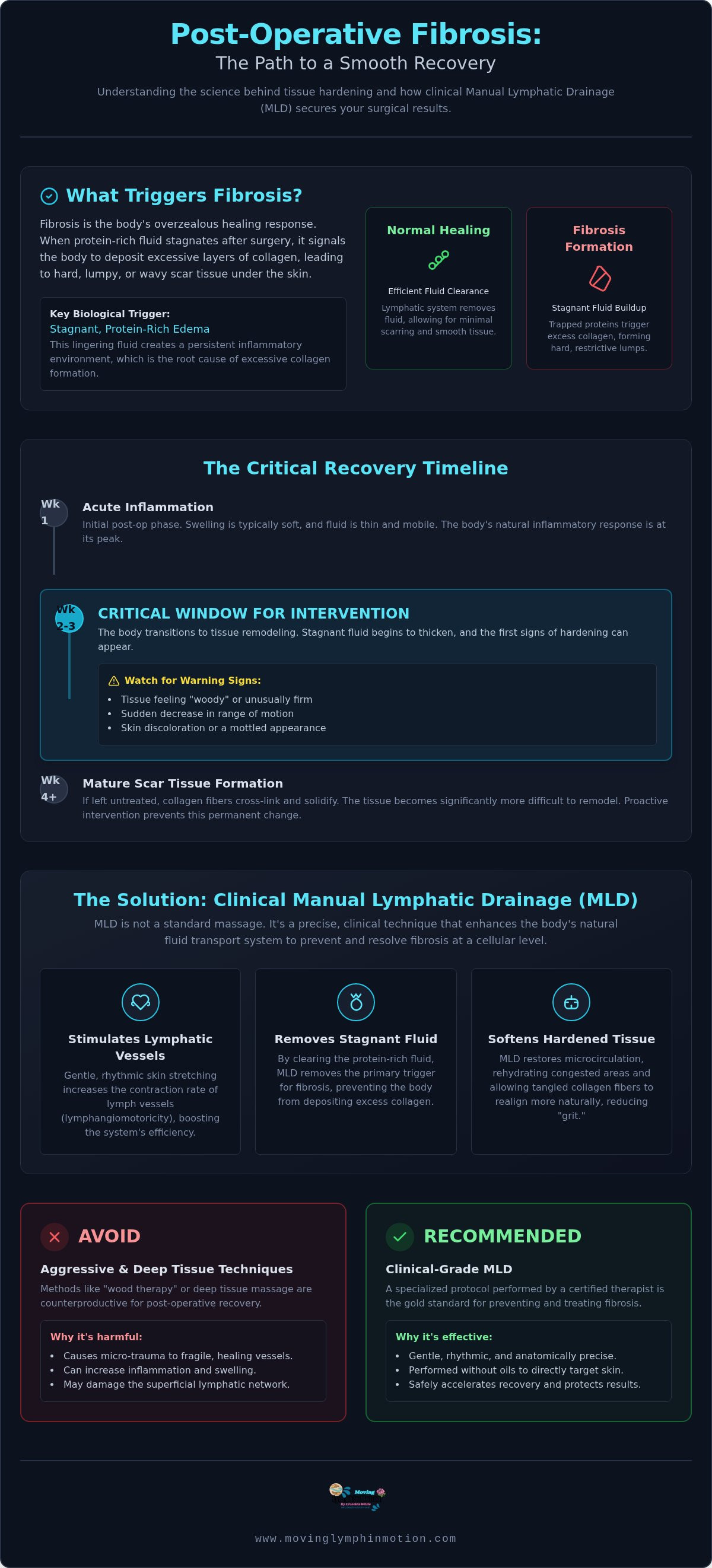
Fibrosis represents the body’s overzealous attempt at internal repair. While some level of scarring is necessary to close surgical wounds, post-operative fibrosis occurs when there's an excessive accumulation of fibrous connective tissue, primarily collagen, in the surgical site. This process isn't random. It’s triggered by the presence of stagnant, protein-rich edema. When fluid lingers in the tissues, it creates a persistent inflammatory environment that signals the body to deposit thick layers of collagen to "bridge" the gaps created during surgery.
This complication is most frequent in procedures like liposuction, tummy tucks, and Brazilian Butt Lifts (BBLs). In these cases, the surgeon removes fat or tissue, creating empty spaces or "tunnels." If the lymphatic system can't efficiently clear the resulting fluid, these voids become reservoirs for stagnation. Distinguishing between normal inflammatory swelling and the onset of hardening is vital for a successful recovery. While swelling is typically soft and fluctuates in volume, fibrosis feels distinctively firm, fixed, and often restrictive. Incorporating MLD for post-op fibrosis early in the recovery phase helps manage these protein levels before they can trigger a permanent structural change in the tissue.
The Anatomy of a 'Lump': Fluid Stagnation vs. Scar Tissue
The transition from a liquid to a solid lump follows a predictable biological path. Initially, the fluid is thin and mobile; however, as the water is reabsorbed by the venous system, the remaining proteins concentrate into a thick, gel-like substance. The seroma-to-fibrosis pipeline describes the biological transition where untreated, protein-rich fluid collections organize into dense, permanent scar tissue. Because liposuction creates extensive voids, these areas are high-risk zones for fluid pooling that eventually hardens into the "waves" or "lumps" many patients fear. Utilizing Manual Lymphatic Drainage during this phase is essential to interrupt the organization of protein into solid tissue.
When Does Swelling Become a Problem?
The critical window for intervention usually opens between the second and third week after your procedure. This is the phase where the body transitions from acute inflammation to tissue remodeling. If the tissue begins to feel "woody" or you notice a sudden decrease in your range of motion, these are clinical indicators that early-stage fibrosis is taking hold. Skin discoloration or a mottled appearance can also signal that the underlying tissue is becoming congested and restricted.
Waiting for these lumps to resolve on their own is a risky strategy. Once collagen fibers have fully cross-linked into mature scar tissue, they're significantly more difficult to remodel. Early application of MLD for post-op fibrosis ensures that fluid is evacuated before it has the chance to solidify. This proactive approach preserves the smooth, contoured results your surgeon achieved in the operating room and prevents the formation of permanent irregularities.
The Physiological Role of MLD in Resolving Fibrotic Tissue
Unlike a standard massage that focuses on muscle manipulation, Manual Lymphatic Drainage (MLD) is a specialized technique designed to enhance the transportation of lymph fluid. In the context of post-surgical recovery, its primary function is to increase the "lymphatic load" capacity. Surgery inevitably damages the local lymphatic network, leading to a backlog of protein-rich fluid. MLD manually compensates for this damage by encouraging the remaining, intact vessels to work at peak efficiency. By moving stagnant fluid out of the interstitial space, MLD for post-op fibrosis prevents the biological signal that tells the body to create more scar tissue.
The core of the technique involves a gentle, rhythmic stretching of the skin. This specific stretch stimulates the smooth muscle in the walls of the lymphangions, which are the functional units of a lymph vessel. This stimulation, known as lymphangiomotoricity, increases the frequency of vessel contractions. It's a precise, clinical methodology that requires a deep understanding of anatomical drainage pathways. It's vital to distinguish between a "spa-style" massage and a clinical MLD protocol. A spa massage often involves oils and deep pressure, which can actually increase inflammation or damage fragile healing vessels. Clinical MLD is performed without oils and uses light, directional pressure to target the superficial lymphatic system directly.
Breaking Down the 'Grit': How MLD Softens Hardened Tissue
The hardening or "grit" often felt in fibrotic areas is a result of collagen fibers becoming tangled in a dehydrated, congested environment. MLD restores microcirculation, rehydrating these tissues and allowing collagen fibers to realign more naturally. We utilize the "watershed" technique, which involves mapping the body’s natural drainage pathways and redirecting fluid from congested surgical sites toward healthy, functioning lymph node clusters. This is a physiological intervention that addresses the root cause of tissue hardening, rather than just masking surface irregularities. Clinical MLD effectively softens established fibrotic tissue by facilitating the removal of the excess proteins that keep the area rigid.
Pre-Op vs. Post-Op MLD: A Multi-Phased Strategy
Recovery is a multi-phased process that ideally begins before the first incision. Pre-operative sessions prepare the tissue bed by clearing existing metabolic waste and optimizing the immune response. Post-operatively, the strategy shifts to match your healing stage:
- Post-op Phase 1: Edema Management (Days 1-14): Focuses on acute swelling reduction to decrease pressure on the incision lines and improve comfort.
- Post-op Phase 2: Fibrosis Resolution (Week 3+): Transitions into active remodeling. Implementing targeted MLD for post-op fibrosis during this phase allows for the restoration of tissue suppleness and contour.
For those navigating these recovery phases in Central Texas, securing a clinical recovery partner at Best Lymphatic Specialist ensures each session is tailored to your specific stage of healing, prioritizing physiological results over aesthetic fluff.
Clinical MLD vs. Aggressive Massage: Avoiding the 'Wood Therapy' Trap
A prevailing misconception in post-surgical recovery is the belief that aggressive force is required to "break up" hardened tissue. Many patients are told that pain is a necessary component of smoothing out lumps. This approach is biologically counterproductive. Aggressive deep tissue techniques or "wood therapy" utilize mechanical tools that exert excessive pressure on the superficial lymphatic system. Because the lymphatic capillaries are situated just beneath the skin, they are highly susceptible to micro-trauma during the healing phase.
When these fragile vessels are damaged, the body initiates a secondary inflammatory response. This leads to the "rebound effect," where trauma-induced inflammation actually accelerates the production of collagen fibers. Instead of resolving the issue, aggressive massage can make the tissue denser and more irregular. Clinical MLD for post-op fibrosis stands as the only evidence-based manual therapy that facilitates fluid clearance without triggering this harmful inflammatory cycle. It prioritizes the integrity of the healing tissue, ensuring that the recovery process remains focused on physiological restoration rather than physical trauma.
Why 'Wood Therapy' Can Ruin Your Lipo Results
Mechanical tools used in wood therapy are particularly dangerous for liposuction patients. These tools lack the sensory feedback required to detect the subtle changes in tissue tension that a trained therapist can feel. Bruising after a session is a clinical sign of capillary rupture and tissue damage, not a marker of effective treatment. Pain is not a physiological requirement for the resolution of post-operative fibrosis. True resolution occurs when the lymphatic load is reduced and the internal environment is stabilized, allowing the tissue to soften naturally. Using tools on a body that is already struggling to manage fluid can lead to permanent contour irregularities and skin ripples.
Identifying a Qualified MLD Specialist in Austin
Finding a clinical partner in the Austin area requires careful vetting of therapeutic credentials. When seeking a specialist, specifically ask if they are certified in the Vodder or Leduc method. These are the gold standards for clinical lymphatic work and require extensive anatomical training. Red flags to watch for include the use of heavy oils, the application of deep pressure, or any technique that causes significant discomfort. For a deeper dive into selecting the right professional, consult our Manual Lymph Drainage Therapists: A Clinical Guide. Choosing a specialist who understands the delicate balance of post-surgical anatomy is the most critical step in protecting your aesthetic investment. Your therapist should act as a clinical guide, providing a safe environment for your tissues to heal without the risk of further injury.
The Recovery Roadmap: Timeline and Frequency for Fibrosis Treatment
Achieving a smooth, contoured result after cosmetic surgery is a marathon, not a sprint. While the initial surgical procedure takes only a few hours, the biological process of tissue remodeling continues for months. Establishing realistic expectations is essential; resolving hardened tissue requires a methodical approach that mirrors the body’s natural healing cycles. Progress is measured through clinical markers such as increased tissue pliability, refined skin texture, and a restoration of your full range of motion. When these indicators improve, it confirms that the lymphatic system is successfully managing the protein load that otherwise leads to scarring.
For patients aiming to prevent complications, the "Early Intervention" protocol is the clinical standard. This involves scheduling two to three sessions of MLD for post-op fibrosis per week during the first 14 days of recovery. This frequency ensures that protein-rich edema is evacuated before it can signal the body to deposit excessive collagen. If you are already four or more weeks into your recovery and have established "hard lumps," we shift to a "Fibrosis Rescue" protocol. While it's never too late to begin treatment, established fibrotic tissue is more organized and requires a longer, more intensive series of sessions to soften and remodel.
When to Start MLD for Optimal Results
The "Golden Window" for starting therapy typically opens within 24 to 48 hours after you receive clearance from your surgeon. Initiating MLD during this acute phase is the most effective way to interrupt the seroma-to-fibrosis pipeline. Early sessions focus on gentle fluid redirection to keep the surgical site soft and well-perfused. Starting late doesn't mean results are impossible, but it does mean the recovery roadmap will be more gradual. For those seeking specialized care in Central Texas, our Post-Op Lymphatic Drainage in Austin: A Clinical Guide provides a detailed framework for navigating these early stages of surgical recovery.
Home Care Integration: Compression and Movement
Clinical sessions work in tandem with your daily home care routine. Compression garments, often referred to as fajas, are vital tools that provide the external pressure needed to prevent fluid from re-accumulating in the voids left by surgery. However, the use of foam inserts requires clinical guidance; if they are placed incorrectly or shift during the day, they can actually create new fibrotic indentations by exerting uneven pressure on healing tissue. Beyond compression, walking and consistent hydration are your most effective at-home partners to professional MLD for post-op fibrosis. Movement acts as a natural pump for the deep lymphatic vessels, while hydration ensures that lymph fluid remains thin enough to transport easily through the system.
Post-Op Care in Austin: The Best Lymphatic Specialist Advantage
Best Lymphatic Specialist provides a clinical alternative to the recreational wellness models prevalent in Central Texas. While many facilities offer general massage, our practice focuses exclusively on the physiological demands of surgical recovery. Serving Austin, Cedar Park, and Round Rock, we prioritize anatomical precision over aesthetic fluff. This medical-grade seriousness ensures that every session of MLD for post-op fibrosis is directed by a deep understanding of fluid dynamics and tissue pathology. We don't just aim for comfort; we target the specific biological markers that lead to successful, lump-free outcomes.
Our commitment to individualized care means we reject the standardized, mass-market mentality of general spas. Every patient presents a unique recovery profile, influenced by their surgical technique, inflammatory response, and personal lymphatic health. By acting as a clinical partner, Best Lymphatic Specialist provides the meticulous attention required to identify early-stage tissue hardening before it matures into permanent fibrosis. This specialized expertise allows us to treat sensitive areas without triggering the secondary inflammation that often follows more aggressive, non-clinical approaches.
Personalized Protocols for Modern Cosmetic Procedures
Modern surgical techniques like Lipo 360, high-definition tummy tucks, and complex revision surgeries require equally modern recovery protocols. These procedures create extensive internal wound beds that demand sophisticated fluid management. At Best Lymphatic Specialist, we coordinate closely with local Austin plastic surgeons to ensure our care remains a seamless extension of their surgical plan. This collaborative approach is particularly vital for patients seeking Post-Op Swelling Treatment in Georgetown or surrounding suburbs, where access to specialized lymphatic expertise is essential for protecting a surgical investment. We adapt our techniques for various stages of healing, including:
- Lipo 360 and BBL: Managing extensive circumferential swelling and preventing "waves" in the abdominal and flank regions.
- Tummy Tucks: Reducing tension on the primary incision line and clearing fluid from the suprapubic area.
- Revision Surgeries: Addressing pre-existing scar tissue while managing new acute inflammation.
Book Your Recovery Consultation
Your journey toward a smoother recovery begins with a comprehensive clinical assessment. During this initial visit, we examine your tissue pliability, identify any developing seromas, and map out a treatment frequency tailored to your healing rate. This isn't a generic service; it's a dedicated therapeutic plan designed to eliminate pain and restore your contoured profile as quickly as possible. We provide the steady guidance and specialized knowledge you need to manage the complexities of physical recovery with confidence. Choosing a clinical specialist for your MLD for post-op fibrosis is the most effective way to ensure your results are both comfortable and permanent.
Securing Your Aesthetic Investment with Clinical Precision
Post-operative recovery is a delicate physiological process that dictates the final success of your surgical procedure. By understanding that fibrosis is a manageable biological response to protein-rich fluid stagnation, you can take proactive steps to ensure your results remain smooth and contoured. Clinical MLD for post-op fibrosis provides the necessary intervention to clear this fluid and remodel hardened tissue without the risks associated with aggressive mechanical tools or deep tissue trauma. Timely, specialized care allows your body to heal efficiently while protecting the refined profile your surgeon achieved.
As a specialized post-op recovery specialist and certified clinical MLD practitioner, Criselda White offers the anatomical expertise required for complex recoveries. Serving the communities of Austin, Cedar Park, and Round Rock, our practice acts as your clinical partner to resolve tissue hardening and restore mobility. You don't have to navigate the transition from liquid edema to solid fibrosis alone. We provide the steady, evidence-based guidance needed to move through each phase of healing with safety and clarity.
Professional care ensures that your body heals with the same precision your surgeon applied in the operating room. We're here to guide you toward a comfortable, confident recovery that prioritizes your long-term physiological health.
Frequently Asked Questions
What is post-op fibrosis and is it permanent?
Post-operative fibrosis is the excessive accumulation of fibrous connective tissue that occurs when protein-rich fluid stagnates in surgical voids. While it can become permanent if the collagen fibers fully cross-link and mature, it's often reversible through clinical intervention in the first few months. Early application of MLD for post-op fibrosis interrupts this hardening process by evacuating the fluid that triggers scar tissue formation.
Can MLD really break down hard lumps after liposuction?
Clinical MLD effectively softens and resolves the hard lumps associated with liposuction by restoring microcirculation to the affected area. By clearing the stagnant proteins that keep the tissue rigid, MLD allows the tangled collagen fibers to hydrate and realign. This physiological shift transforms the "grit" or "lumps" back into soft, pliable tissue, preserving the smooth contour intended by your surgeon.
How many MLD sessions will I need to see a difference in my fibrosis?
Most patients begin to feel a change in tissue pliability after three to five clinical sessions. However, a full course for established fibrosis typically requires 10 to 12 sessions scheduled over several weeks. Because fibrosis resolution is a biological remodeling process, the total number of visits depends on the age of the scar tissue and your individual inflammatory response.
Is MLD for fibrosis painful?
Clinical MLD is a gentle, non-invasive technique that should never cause pain or bruising. Unlike aggressive "wood therapy" or deep tissue massage, MLD utilizes light, rhythmic skin-stretching to stimulate the superficial lymphatic vessels. If a treatment causes discomfort, it's likely triggering a secondary inflammatory response that could actually worsen your fibrosis rather than resolve it.
How soon after surgery can I start MLD for fibrosis prevention?
You can typically begin MLD for post-op fibrosis prevention within 24 to 48 hours after receiving clearance from your surgeon. Starting during this acute phase is the most effective way to prevent fluid from solidifying into hard tissue. Early sessions prioritize gentle drainage to reduce pressure on incision lines and manage the initial inflammatory load.
What happens if I don't get MLD after my tummy tuck or lipo?
Forgoing professional lymphatic care increases the risk of developing permanent contour irregularities, such as "waves," ripples, or visible lumps. Without intervention, stagnant fluid can lead to chronic inflammation and a restrictive "woody" texture that limits your range of motion. This hardening can eventually obscure the aesthetic results of your tummy tuck or liposuction, making revision surgeries more likely.
Can I do MLD on myself at home to fix fibrosis?
Self-massage at home cannot replace the anatomical precision of a certified MLD specialist. Professional drainage requires a deep understanding of watershed pathways and the specific direction of lymph flow, which changes after surgical trauma. Incorrect self-application can inadvertently push fluid into congested areas, potentially exacerbating the swelling and hardening you're trying to resolve.
Why is my fibrosis getting harder even though I'm wearing my compression garment?
Compression garments are designed to prevent new fluid from accumulating, but they don't actively evacuate the protein-rich fluid already trapped in your tissues. If that trapped fluid remains stagnant, it'll continue to transition into solid fibrotic tissue despite the external pressure. Additionally, improperly fitted garments or shifting foam inserts can create localized pressure points that contribute to uneven hardening and indentations.


