
Your liposuction results aren't finalized in the operating room; they're actually determined by how your body manages the inflammatory fluid left in the wake of the cannula. It's common to feel overwhelmed by conflicting timelines from your surgeon and your therapist, especially when you're worried about permanent fibrosis or uneven skin texture. You're likely asking how many lymphatic massages are needed after lipo to protect your investment and ensure a smooth, contoured result. While a series of 6 to 10 sessions is a common national baseline, the reality is that your recovery isn't a fixed number. It's a physiological sequence where your tissue's specific inflammatory response dictates the schedule.
We understand the anxiety that comes with navigating post-operative care, particularly when balancing the cost and time commitment of recovery. This guide provides a clinical perspective on the mechanics of fluid dynamics and tissue remodeling. You'll discover the precise physiological factors that determine your unique massage frequency. We'll preview the stages of healing, from the initial reduction of edema to the critical window for preventing hard scar tissue. This information empowers you to navigate your recovery with the quiet confidence of a specialist, ensuring your surgical investment is protected through evidence-based care.
Key Takeaways
- Understand how surgical trauma creates anatomical tunnels that trap inflammatory fluid, requiring targeted manual intervention to prevent stagnation.
- Identify the clinical factors, such as extraction volume and surgical technique, that dictate how many lymphatic massages are needed after lipo for your specific body.
- Navigate the two critical recovery phases, moving from acute swelling management in week one to intensive tissue remodeling in weeks two through four.
- Learn why the sub-acute healing phase is the most vital window for preventing permanent fibrosis and the development of irregular, woody skin textures.
- Recognize the physiological risks of standard spa-style massages compared to medical-grade Manual Lymphatic Drainage performed by a certified clinical therapist.
The Science of Post-Liposuction Edema: Why One Session Isn't Enough
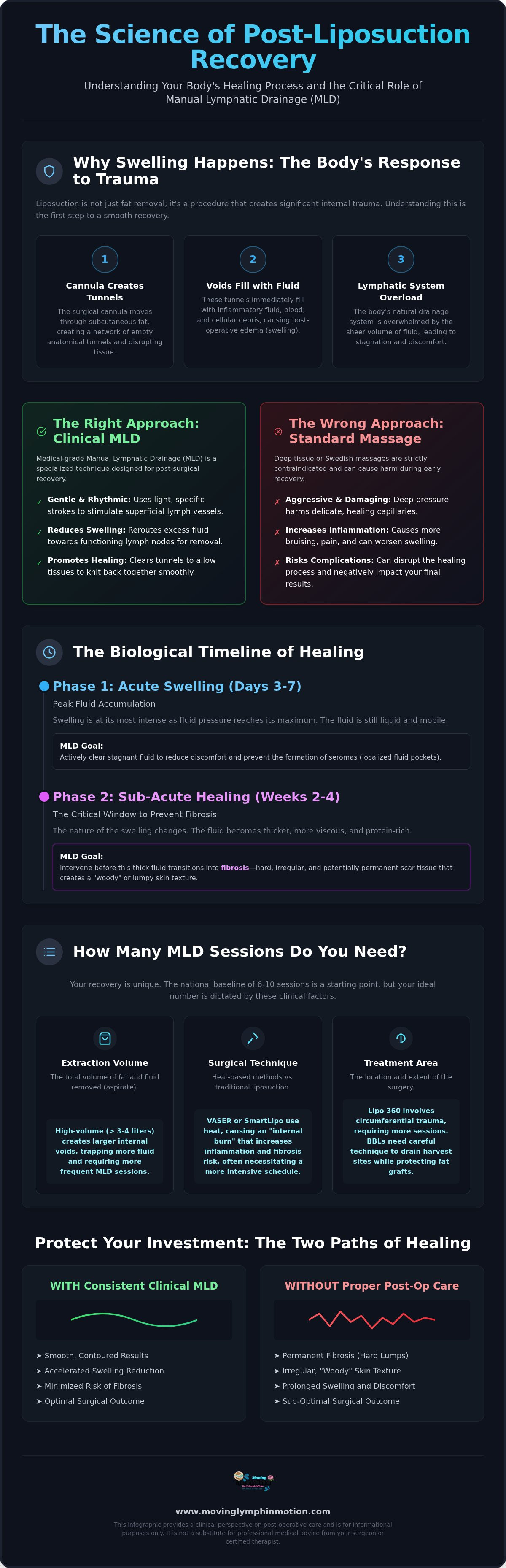
Liposuction is a physically transformative procedure, but the mechanical process of fat extraction creates significant internal trauma. As the surgical cannula moves through the subcutaneous layer, it creates a network of anatomical tunnels. These voids don't remain empty; they immediately fill with inflammatory fluid, blood, and cellular debris. This accumulation, known as post-operative edema, is a natural response to the disruption of the interstitial space. While the body possesses an inherent waste management system, the lymphatic network is often overwhelmed by the sheer volume of fluid produced during the initial healing phase.
Patients often wonder how many lymphatic massages are needed after lipo when they experience the initial relief of a single session. However, one appointment provides only temporary clearance of the stagnant fluid. Because the inflammatory cycle continues for several weeks, the tunnels created by the surgery will continue to refill. Manual lymphatic drainage is a specialized, light-touch technique that reroutes this excess fluid toward functioning lymph nodes, facilitating its removal from the body. Consistent application is required to keep the tunnels clear while the tissues begin to knit back together.
Clinical MLD vs. Traditional Massage
It's vital to distinguish between therapeutic MLD and traditional spa massages. Deep tissue or Swedish techniques are strictly contraindicated during the early stages of recovery. These aggressive methods increase localized blood flow and can cause further damage to the delicate, healing capillaries. This often results in increased inflammation, severe bruising, and unnecessary pain. Clinical MLD focuses on the superficial lymphatic vessels just beneath the skin. It uses gentle, rhythmic strokes to stimulate the natural contraction of the lymphangions without stressing the underlying surgical site.
The Biological Timeline of Swelling
The trajectory of recovery follows a predictable biological pattern. Peak swelling typically occurs between days three and seven post-surgery. This window is often the most uncomfortable for the patient as the fluid pressure reaches its maximum. If this fluid remains stagnant, it can coalesce into seromas, which are localized pockets of fluid that may require medical aspiration. As the recovery progresses into the second and third weeks, the nature of the swelling changes. The fluid becomes more protein-rich and viscous. Without intervention, this thick fluid begins the transition into fibrosis, where the body replaces the fluid with hard, irregular scar tissue. Understanding this timeline is essential for Austin residents who choose to book professional recovery services to ensure their skin remains smooth and contoured.
Factors That Determine Your Recommended Number of MLD Sessions
Determining how many lymphatic massages are needed after lipo requires a clinical assessment of your surgical history and biological profile. Recovery is not a static process. It is a dynamic response to the degree of tissue disruption. The volume of aspirate, which includes both fat and tumescent fluid removed during surgery, serves as a primary indicator for your recovery schedule. High-volume extractions, typically those exceeding three to four liters, create larger internal voids. These "tunnels" require more frequent manual intervention to ensure that inflammatory fluid does not stagnate and harden into permanent lumps.
Surgical technique also plays a pivotal role in your therapeutic needs. While traditional suction-assisted liposuction is purely mechanical, heat-based technologies like VASER or SmartLipo introduce thermal energy to emulsify fat cells. This process creates an "internal burn" that increases the overall inflammatory load. Patients undergoing these heat-assisted procedures often require a more intensive initial drainage schedule to manage the additional fluid and cellular debris resulting from thermal trauma. For those recovering in the Austin area, scheduling a clinical assessment can help tailor these variables into a precise recovery plan.
Liposuction Type and Recovery Needs
VASER and SmartLipo patients frequently experience a more intense swelling phase due to the heat used during the procedure. This necessitates early, frequent sessions to prevent the "woody" texture associated with thermal-induced fibrosis. In cases of Lipo 360, the trauma is circumferential, affecting the entire trunk. This widespread disruption often requires a high-frequency schedule in the first two weeks to manage the fluid that accumulates across the anterior and posterior planes. When a Brazilian Butt Lift (BBL) is involved, the therapist must carefully balance draining the harvest sites while strictly avoiding the fat graft areas to ensure optimal survival of the transferred cells.
Patient-Specific Variables
Individual health markers significantly influence the speed of lymphatic transport. Nicotine use is a critical variable, as it causes systemic vasoconstriction that slows the removal of waste products and increases the risk of complications. For male patients, understanding specific anatomical health is a key part of monitoring their overall well-being during recovery; resources from FullMast offer detailed guides to help navigate these personal health considerations. Pre-existing conditions, such as lipedema, naturally impair lymphatic flow and may necessitate a longer course of treatment. The efficacy of each session is also tied to your commitment to compression garments, which provide the necessary pressure to "hold" the work done during MLD. Finally, consistent hydration is essential; the lymphatic system is fluid-based, and a dehydrated body cannot efficiently process or expel the mobilized edema.
The Standard Post-Op Protocol: A Week-by-Week Recovery Timeline
A structured recovery timeline is essential for transforming surgical trauma into a refined aesthetic result. While individual biological responses vary, most clinical specialists recommend a minimum of 10 to 15 sessions for optimal results. This range ensures that the therapist can address both the initial fluid accumulation and the subsequent tissue remodeling phase. Determining how many lymphatic massages are needed after lipo depends on your specific healing trajectory, but the following protocol serves as the clinical standard for most patients.
- Phase 1 (Weeks 1-2): The Acute Phase. During this window, sessions are typically scheduled daily or every other day. The focus is on clearing the peak volume of inflammatory fluid and metabolic waste before it begins to thicken.
- Phase 2 (Weeks 3-4): The Sub-Acute Phase. Frequency usually shifts to two or three sessions per week. This stage is critical for preventing tissue hardening and managing the early signs of fibrosis as the body starts to deposit collagen.
- Phase 3 (Weeks 5-6): The Maintenance Phase. One session per week is standard here to refine the final contour and address any residual lumps or minor localized edema.
The First 72 Hours: When to Start
Early intervention is a cornerstone of effective recovery. Starting MLD within the first 72 hours prevents interstitial fluid from "setting" within the surgical tunnels, which significantly reduces the risk of long-term hardness. During your initial session, the focus is on extreme comfort and gentle stimulation. You'll be positioned to maximize both drainage and surgical site integrity. This early manual clearance lowers tissue pressure, which often allows patients to reduce their reliance on pain medication as the physical tension of the swelling subsides.
Mid-Recovery Adjustments
As you progress, your clinical therapist will adjust the frequency of your appointments based on tissue palpation. You may be ready to decrease frequency if your skin feels softer and your range of motion has returned to near-normal levels. Conversely, if you experience persistent "sloshing" (a sign of seroma formation) or a sudden increase in tightness, you should remain in the high-frequency phase. For those in the Austin area, booking a mid-recovery assessment allows for these vital adjustments. In the late stages of recovery, we often transition from pure drainage to Build and Sculpt techniques to further enhance muscle definition and skin elasticity as the inflammation fully resolves.
Managing Fibrosis: When 10 Sessions Aren't Enough
Fibrosis represents the body’s disorganized attempt to repair surgical trauma. When inflammatory fluid stagnates in the subcutaneous tunnels, it becomes a protein-rich environment that attracts fibroblasts. These cells deposit collagen in a haphazard manner, leading to the "rope-like" or "woody" texture often described by patients. This isn't the same as the generalized puffiness of early edema; it's the formation of internal scar tissue. Skipping Manual Lymphatic Drainage (MLD) during the sub-acute phase, specifically weeks two through four, is the primary reason post-lipo lumps become permanent.
While a standard recovery might conclude after a dozen sessions, the onset of pathological fibrosis complicates the timeline. Patients often ask how many lymphatic massages are needed after lipo when they notice these hard areas forming. If fibrosis has already integrated into the tissue, the count often exceeds the initial 10-session estimate. A specialized "Fibrosis Protocol" is required to mechanically break down these early-stage adhesions and encourage the body to remodel the tissue into a smoother state.
Identifying Red Flags in Your Recovery
Distinguishing between normal post-op firmness and pathological fibrosis is vital for timely intervention. Normal firmness is typically diffuse and softens gradually with compression and MLD. Conversely, fibrosis presents as persistent "lumps and bumps" that feel fixed and do not shift under light pressure. Another red flag is a results plateau, where swelling refuses to diminish despite following standard protocols. While localized warmth is common during the acute phase, persistent heat or spreading redness should be evaluated by a professional to rule out infection or seroma complications.
Advanced Techniques for Hardened Tissue
Treating established fibrosis requires a shift in therapeutic methodology. As the tissue transitions from fluid edema to solid scar tissue, a clinical therapist must adjust their manual pressure and technique. This isn't about aggressive "massaging," which can cause more trauma, but about specific myofascial and lymphatic maneuvers that encourage tissue softening. While some practitioners utilize specialized tools, manual hands-on techniques remain the gold standard for sensing subtle tissue density changes. It's important to maintain realistic expectations; reversing established fibrosis is a slow physiological process that can take three to six months of consistent clinical work to achieve the final desired contour.
Choosing Your Recovery Partner: The Professional MLD Difference
Selecting the right therapeutic partner is as critical as choosing your plastic surgeon. While many wellness centers offer "lymphatic massage," post-operative recovery requires a specialized clinical approach rather than a general spa technique. A certified manual lymph drainage therapist understands the complex anatomical changes occurring beneath the skin after liposuction. They possess the technical training to identify complications like seromas or early-stage fibrosis that a general practitioner might overlook. Entrusting your recovery to an uncertified provider carries the risk of aggressive techniques that can actually increase inflammation or cause damage to delicate, healing tissues.
At Best Lymphatic Specialist, a typical clinical session for our Austin patients is methodical and evidence-based. We prioritize the same level of clinical rigor found in specialized medical facilities like Digestive Centre, which focuses on advanced diagnostic and surgical health. We begin with a physical assessment of the tissue density and surgical sites. The therapy itself uses precise, light-touch maneuvers designed to stimulate the lymphangions without stressing the underlying incisions. This clinical rigor ensures that every session moves you closer to your desired aesthetic outcome. Integrating these sessions into your surgical plan before your procedure date is the most effective way to manage the initial swelling peak. When you plan ahead, you can accurately determine how many lymphatic massages are needed after lipo and secure a schedule that aligns with your body's specific inflammatory response.
Clinical Standards in Central Texas
We provide specialized recovery care to the Austin, Cedar Park, and Leander communities. Criselda White’s clinical background ensures that every patient receives a medical-grade recovery experience that prioritizes physiological results over aesthetic fluff. This expertise is particularly important for patients navigating the complexities of multi-area procedures or heat-based liposuction. By focusing on the scientific mechanics of fluid dynamics, we help you protect your surgical investment and achieve a smooth, contoured skin texture through individualized attention.
Your Next Steps for a Smooth Recovery
The path to a lump-free recovery begins with a personalized consultation. This initial assessment allows us to create a tailored session count based on your surgery type, extraction volume, and health history. To secure your recovery window and ensure a seamless transition from the operating room, you can Schedule your recovery sessions through our online portal. As you prepare for your procedure, remember that a successful outcome relies on a three-pillar approach: consistent use of compression garments, meticulous hydration, and professional Manual Lymphatic Drainage. Understanding how many lymphatic massages are needed after lipo is the first step in ensuring your results are as smooth and pain-free as possible.
Securing Your Surgical Results Through Clinical Precision
Navigating the post-operative journey requires more than just patience; it demands a proactive, evidence-based approach to tissue management. We've explored how surgical trauma creates voids that fill with inflammatory fluid and why early intervention is the most effective way to prevent permanent fibrosis. Determining how many lymphatic massages are needed after lipo is a collaborative process between your body’s unique healing response and your therapist’s clinical expertise. By following a structured, week-by-week protocol, you ensure that your skin remains smooth and your contours are refined.
Choosing a partner with specialized Clinical MLD Certification is the most vital step in protecting your surgical investment. At Best Lymphatic Specialist, we focus exclusively on post-cosmetic surgery recovery, providing the medical-grade care necessary for a safe and predictable outcome. Our targeted manual techniques reduce inflammation and resolve localized hardness before it becomes a long-term complication. We're proud to serve the Austin, Cedar Park, and Georgetown communities with individualized attention and expert guidance.
You've invested significantly in your physical transformation, and you deserve a recovery that reflects that commitment. We're here to provide the clinical expertise and compassionate reassurance you need to feel confident at every stage of your healing process.
Frequently Asked Questions
Is lymphatic massage painful after liposuction?
Clinical Manual Lymphatic Drainage is not painful and should never involve aggressive or deep pressure. Because the technique targets the superficial lymphatic vessels located just beneath the skin, the application is extremely light and rhythmic. This gentle approach actually reduces tissue pressure and inflammation, which often provides immediate relief from the "tight" or "heavy" sensation common in the days following surgery.
Can I do my own lymphatic drainage at home after lipo?
While basic self-care maneuvers can support your recovery, they don't replace the precision of a certified clinical therapist. Professional MLD requires a deep understanding of anatomical pathways and fluid dynamics to effectively reroute edema toward functioning lymph nodes. Attempting to manage your own recovery without professional guidance may lead to fluid stagnation or an inability to detect the early formation of fibrosis.
What happens if I don't get lymphatic massages after my surgery?
Foregoing professional MLD significantly increases the risk of permanent fibrosis, localized fluid pockets known as seromas, and prolonged inflammation. Without manual intervention, the protein-rich fluid trapped in surgical tunnels can harden into a woody, irregular texture. This risk is a primary factor in determining how many lymphatic massages are needed after lipo to ensure a smooth and predictable final contour.
How soon after my lipo procedure can I start MLD?
Most clinical specialists recommend starting MLD within 24 to 72 hours of your procedure. Early intervention is essential to prevent interstitial fluid from becoming stagnant and more viscous within the tissues. This acute-phase care helps manage the peak swelling window, which typically occurs between days three and seven post-op, ensuring the recovery process remains on schedule.
Will lymphatic massage help with bruising?
Yes, MLD significantly accelerates the resolution of bruising by facilitating the removal of trapped blood cells and metabolic debris from the interstitial space. By stimulating the lymphatic system's transport capacity, the body can more efficiently process the breakdown products of hemoglobin. This results in a faster return to your natural skin tone and a notable reduction in localized tenderness and discoloration.
Can I start MLD if it's already been a month since my surgery?
You can certainly start MLD a month after surgery, though the therapeutic focus will shift from managing acute edema to tissue remodeling. At this stage, the therapist evaluates the surgical sites for signs of fibrosis or rope-like adhesions. While the initial swelling has likely subsided, clinical work is still necessary to soften hardened areas and ensure the skin adheres smoothly to the underlying muscle.
How long does each post-op lymphatic massage session last?
A typical clinical recovery session lasts between 45 and 60 minutes. This duration allows the therapist to methodically clear the entire lymphatic chain, ensuring that fluid is not just shifted but successfully directed into the proper drainage channels. The exact time may be adjusted based on the complexity of your surgery and the current state of your tissue density.
Do I need MLD if I only had a small area of liposuction?
MLD is highly recommended even for localized procedures because the mechanical trauma of the cannula occurs regardless of the treatment area's size. Even a small surgical site experiences the formation of internal tunnels and the subsequent accumulation of inflammatory fluid. Clinical drainage ensures that these smaller areas heal without the development of persistent lumps or uneven skin textures.


