
Lipedema is not a consequence of lifestyle choices or a failure of willpower; it is a progressive adipose tissue disorder that demands a rigorous clinical intervention. While approximately 11 percent of women in the United States live with this condition, many face a cycle of misdiagnosis and medical gaslighting that dismisses their chronic pain as simple obesity. You understand the physical and emotional exhaustion that comes with limbs that feel heavy, tender, and unresponsive to traditional weight loss efforts. Finding specialized lipedema treatment Austin practitioners offer is often the first step in reclaiming your mobility and comfort.
This guide explores a clinical approach to managing the disease through evidence-based manual lymphatic drainage and comprehensive tissue care. We will detail how these specialized therapies improve fluid dynamics to reduce swelling and pain. You will also learn how a structured management plan serves as a vital foundation for both long-term maintenance and successful surgical outcomes. By focusing on the physiological mechanics of the lymphatic system, it's possible to prevent the progression of fibrotic tissue and improve your overall quality of life.
Key Takeaways
- Differentiate lipedema from standard obesity by recognizing its clinical markers as a chronic, progressive adipose-lymphatic disorder.
- Discover why specialized lipedema treatment Austin protocols prioritize gentle Manual Lymphatic Drainage over aggressive massage to protect fragile lymphatic vessels.
- Master the "Gold Standard" of conservative management by combining clinical manual therapy with medical compression and dedicated skin care.
- Navigate the surgical recovery process through a structured two-step approach involving pre-operative clearing and targeted post-operative edema management.
- Gain insight into the clinical expertise at Lymph in Motion, where evidence-based therapy supports both symptom reduction and long-term tissue health.
Understanding Lipedema: A Clinical Perspective for Austin Patients
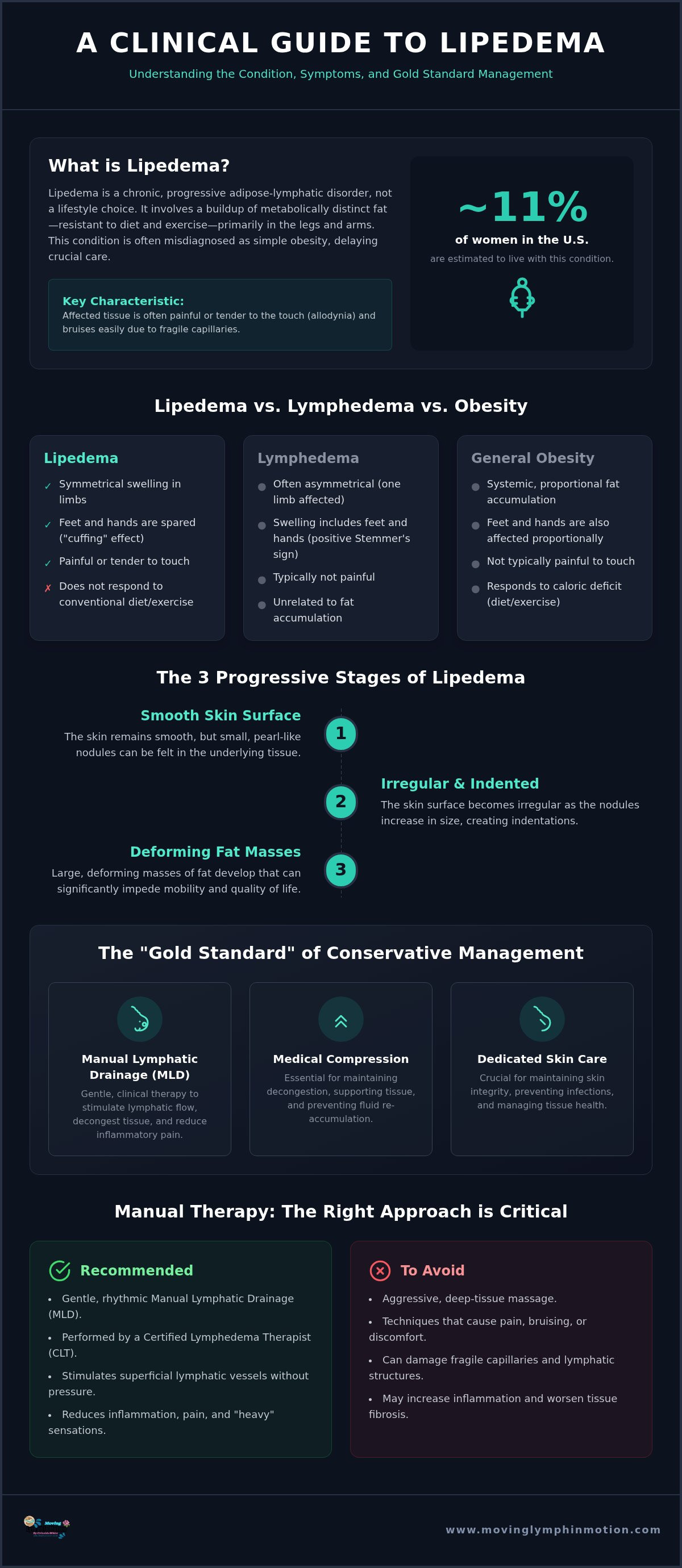
Lipedema is a complex physiological condition categorized as a chronic, progressive adipose-lymphatic disorder. Unlike standard obesity, which involves a systemic accumulation of fat responsive to caloric deficit, lipedema fat is metabolically distinct and often resistant to diet or exercise. This condition primarily affects the lower extremities and sometimes the arms, creating a disproportionate body shape that can be physically debilitating. For those seeking a comprehensive overview of lipedema, clinical literature emphasizes that the underlying pathology involves both adipocyte hypertrophy and microvascular dysfunction. In the Central Texas medical community, patients frequently encounter misdiagnosis, often being told to simply lose weight. This delay in accurate diagnosis allows the condition to progress, making early access to specialized lipedema treatment Austin protocols essential to prevent the transition from simple swelling to permanent tissue fibrosis.
Clinical markers are precise when distinguishing lipedema from other conditions like lymphedema. In lymphedema, swelling is often asymmetrical and affects the feet, evidenced by a positive Stemmer's sign. In contrast, lipedema presents symmetrically and the feet and hands remain unaffected. This creates a sharp demarcation at the joints, often referred to as a "cuffing" effect. Understanding these nuances is the first step toward a successful clinical management plan.
Recognizing the Symptoms and Stages
Lipedema progresses through three primary stages, each requiring a tailored approach to care. In Stage 1, the skin surface remains smooth, though the underlying tissue contains small, pearl-like nodules. By Stage 2, the skin surface becomes irregular and indented as these nodules increase in size. Stage 3 is characterized by large, deforming masses of fat that can significantly impede mobility. Regardless of the stage, the affected tissue is often hypersensitive. You might experience a dull ache or sharp pain upon light pressure, a symptom known as allodynia. Easy bruising is another hallmark, caused by increased capillary fragility within the diseased adipose tissue.
Why Specialized Care Matters in Central Texas
The Austin healthcare landscape can be difficult to navigate for those with lymphatic disorders. General massage or wellness-based bodywork is often insufficient and, in some cases, counterproductive for diseased tissue. A Certified Lymphedema Therapist (CLT) provides the clinical expertise necessary to manage these complex tissue states. They use precise, rhythmic movements to stimulate the lymphatic system without damaging fragile capillaries. Choosing the right provider is a critical decision in your recovery journey. You can consult this resource on Manual Lymph Drainage Therapists to understand the specific qualifications and clinical background required for effective care. Ensuring the lipedema treatment Austin specialists provide is based on the Vodder method or similar clinical standards ensures that interstitial fluid is efficiently moved, reducing the pressure that leads to pain and further tissue degradation.
The Role of Manual Lymphatic Drainage (MLD) in Lipedema Treatment
Manual Lymphatic Drainage (MLD) serves as a cornerstone of the U.S. standard of care for lipedema. Unlike traditional massage, MLD is a specialized manual technique designed to stimulate the initial lymphatics, which are the smallest vessels located just beneath the skin. By applying specific, rhythmic pressure, a therapist creates a stretching effect on the connective tissue. This action opens the lymphatic valves, allowing stagnant interstitial fluid to enter the lymph capillaries and move toward functional lymph nodes. In the context of lipedema treatment Austin specialists provide, this process is essential for decongesting the diseased adipose tissue that characterizes the condition.
It's vital to distinguish clinical MLD from aggressive, deep-tissue massage. While deep pressure might benefit standard muscular tension, it's often damaging to lipedema patients. Diseased fat cells and fragile capillaries are highly susceptible to trauma. Aggressive techniques can cause bruising, increase inflammation, and further compromise the lymphatic architecture. Clinical MLD, however, focuses on the reduction of inflammatory cytokines. These signaling proteins often contribute to the chronic pain and "heavy" sensation in the limbs. By facilitating fluid movement, manual therapy helps downregulate these inflammatory markers, providing significant symptomatic relief. For effective maintenance, patients typically benefit from one to two clinical sessions per week during the initial intensive phase, followed by a customized schedule based on their physiological response.
Addressing Fibrotic Tissue and Congestion
Lymphatic stagnation acts as a catalyst for adipose tissue degradation. When fluid remains trapped in the interstitial space, it triggers a low-grade inflammatory response that leads to the formation of fibrotic, or scarred, tissue. This is what creates the characteristic "nodular" feel of lipedema fat. Specialized manual techniques help soften these fibrotic areas by improving local circulation and nutrient exchange. To achieve these results without causing pain, manual pressure must be calibrated to a level that engages the skin and superficial fascia without compressing the underlying sensitive adipose layers. If you're ready to address these tissue changes, you can schedule a clinical assessment to determine the appropriate intensity for your stage of lipedema.
Long-term Benefits of Regular Therapy
The primary goal of consistent therapy is to maintain mobility and reduce the persistent sensation of limb heaviness. When the lymphatic system is supported, the mechanical pressure on nerves and blood vessels is diminished. This management is also the most effective way to prevent the progression into lipo-lymphedema, a secondary condition where the lymphatic system becomes so overwhelmed by the adipose load that it begins to fail entirely. Integrating MLD into a broader plan, such as Clinical Lymphedema Therapy in Austin, ensures that the transport capacity of your lymphatic system remains optimized, protecting your long-term vascular and skin health.
Comprehensive Management: Conservative vs. Surgical Pathways
Effective management of lipedema is not a singular event but a multi-faceted clinical strategy. The recognized gold standard of care involves a synergistic combination of Manual Lymphatic Drainage, medical-grade compression, and meticulous skin hygiene. This approach aims to reduce the interstitial load and manage the physiological stress on the lymphatic system. While the Lipedema diagnostic criteria emphasize the physical presentation of the disease, long term health requires a commitment to these conservative protocols. Even if a patient pursues surgical intervention, these non-invasive methods remain the foundation of tissue health. Managing expectations is a vital part of the recovery journey; lipedema is a lifelong condition that requires consistent, observant care to prevent progression and maintain the results achieved through clinical therapy.
For individuals navigating lipedema treatment Austin specialists provide, the transition from diagnosis to management often begins with a trial of conservative therapy. This phase allows the clinician to assess tissue responsiveness and establish a baseline for fluid dynamics. It also prepares the body for more intensive interventions by reducing localized inflammation and softening fibrotic areas.
Conservative Management Protocols
Austin's humid and high-heat climate presents unique challenges for lipedema patients, particularly regarding the use of medical-grade compression garments. Heat can cause vasodilation, which increases the filtration of fluid into the tissues and exacerbates swelling. Proper garment selection, often utilizing flat-knit fabrics, is essential to provide the necessary counter-pressure to move lymph fluid against gravity. Beyond compression, anti-inflammatory dietary choices help manage the systemic inflammation that often accompanies adipose disorders. Low-impact exercises, such as swimming or walking, are also highly effective. These activities utilize the "muscle pump" to facilitate lymphatic flow without placing excessive mechanical stress on sensitive joints or fragile capillaries.
The Synergy of Surgery and Manual Therapy
Surgical options, such as Water-Assisted Liposuction (WAL) or Power-Assisted Liposuction (PAL), are increasingly utilized to remove diseased adipose tissue that is unresponsive to diet and exercise. However, surgery is not a standalone solution. Leading surgeons recommend a series of MLD sessions both before and after the procedure. Pre-operative MLD clears the lymphatic pathways, ensuring the system is functioning at its highest capacity before the trauma of surgery. Post-operative care is even more critical to manage surgical edema and reduce the risk of seromas or permanent fibrosis. Integrating specialized Post-Op Lymphatic Drainage in Austin ensures that the healing process is efficient and that the delicate lymphatic vessels are protected during the remodeling of the tissue.
Navigating Lipedema Surgery Recovery in Austin and Cedar Park
Surgery for lipedema, such as Water-Assisted Liposuction (WAL), involves significant mechanical disruption of the subcutaneous tissue. Recovery requires a structured, four-step clinical pathway to ensure the integrity of the lymphatic architecture. Step one begins before the first incision; pre-operative MLD sessions clear the lymphatic pathways to optimize fluid transport capacity. This reduces the baseline congestion, allowing the system to better handle the inevitable surgical trauma. Step two focuses on immediate post-operative care. This phase is dedicated to managing surgical edema and inflammatory responses that can lead to complications if left unaddressed. Specialized lipedema treatment Austin providers are essential during this window to facilitate the removal of tumescent fluid and cellular debris.
Step three involves long-term tissue remodeling. During the three to six months following surgery, the body produces collagen to heal the treated areas. Without professional manual intervention, this process can result in disorganized fibrosis or hard "lumps" within the tissue. Finally, step four marks the transition back to long-term maintenance therapy. Surgery removes the diseased fat, but the underlying lymphatic vulnerability remains. Returning to a regular MLD schedule ensures that the results of the contouring are preserved and that the limb remains light and mobile.
Specialized Post-Op Care for Lipo 360 and Limb Contouring
Lipedema-specific liposuction often involves extensive "Lipo 360" or full-limb contouring, which creates unique swelling patterns across the trunk and extremities. Traditional recovery protocols often overlook the specific needs of the adipose-lymphatic system. Our approach integrates the Build and Sculpt Body Treatment during the healing phase. This methodology doesn't just move fluid; it actively supports the reorganization of the tissue to enhance the surgical aesthetic while prioritizing physiological health. By addressing the tissue at a cellular level, we help minimize the "heaviness" that often lingers after aggressive fat removal.
Local Recovery Resources in Central Texas
Finding a specialist for lipedema treatment Austin patients can rely on involves verifying clinical credentials rather than aesthetic certifications. While many general massage centers exist in Cedar Park, Round Rock, and Georgetown, few possess the clinical certification required for post-surgical lipedema care. When choosing a specialist, verify their experience with post-op edema and their ability to collaborate with your surgical team. Mobile clinic visits can be particularly beneficial during the first two weeks of recovery when mobility is limited and the need for frequent MLD is highest. A clinical checklist for an Austin specialist should include certification in Manual Lymphatic Drainage (Vodder or Klose methods) and specific experience with WAL or PAL liposuction recovery.
Clinical Excellence at Best Lymphatic Specialist by Criselda White
At Best Lymphatic Specialist, the approach to lipedema treatment Austin residents receive is rooted in deep clinical education and a specialized understanding of fluid dynamics. Criselda White, a Licensed Massage Therapist and Certified Lymphedema Therapist, leads the practice with a focus on the Vodder Method of Manual Lymphatic Drainage. Her expertise is particularly vital for patients navigating the anatomical complexities of lipedema, where tissue sensitivity and microvascular fragility require a meticulous hand. Each care plan is individualized, rejecting the standardized mentalities of the mass-market wellness industry in favor of evidence-based physiological results.
The commitment to high clinical standards extends beyond manual therapy to include professional education and a dedication to the latest research in lymphatic health. By maintaining a high-formality register and utilizing precise anatomical terminology, the practice empowers patients to understand the mechanics of their recovery journey. This methodical rhythm ensures that every therapeutic intervention is intentional, moving at a pace that prioritizes patient safety and long-term tissue health. This is a clinical partnership where the specialist acts as a steady guide through the complexities of physical recovery.
The Best Lymphatic Specialist Difference
Choosing a therapeutic partner for lipedema management requires moving beyond the concept of a standard "massage." Clinical manual therapy at Best Lymphatic Specialist is a medical-grade intervention designed to address specific tissue states and recovery phases. With extensive experience in both post-operative cosmetic surgery recovery and oncology-related swelling, the practice understands the nuances of physical trauma and healing. The methodology prioritizes measurable physiological results over aesthetic fluff, ensuring that the primary goal remains the reduction of pain and the improvement of lymphatic transport capacity.
A unique aspect of the practice is the integration of specialized Build and Sculpt techniques. While many providers treat clinical health and aesthetic contouring as separate goals, we recognize the synergy between the two. For lipedema patients, this means using manual protocols that bridge the gap between reducing inflammatory congestion and supporting the body's natural contours. This specialized sculpting is particularly effective for patients who have reached a maintenance phase or are recovering from limb-contouring surgeries, helping to reorganize tissue and enhance the final results of their clinical journey.
Schedule Your Clinical Consultation
Beginning your management journey starts with a comprehensive clinical assessment. During this initial visit, we evaluate your current tissue state, discuss your medical history, and identify specific challenges like limb heaviness or localized pain. You'll receive a clear, therapeutic explanation of how MLD will be applied to your specific stage of lipedema. This transparent approach ensures you understand the mechanics of the methodology before treatment begins, fostering a sense of trust and partnership. Taking this first step is essential for preventing disease progression and reclaiming your mobility in Central Texas.
Advancing Your Recovery with Clinical Precision
Managing lipedema requires a transition from symptom observation to active physiological management. By prioritizing a structured clinical protocol, you can effectively address the metabolic and vascular complexities of the disease. Whether your journey involves conservative maintenance or a surgical recovery plan, the focus remains on preserving the integrity of your lymphatic system. Accessing specialized lipedema treatment Austin protocols ensures that every manual intervention is purposeful and anatomically sound.
Best Lymphatic Specialist provides a unique level of care as a specialized MLD certification provider with a deep focus on post-operative fibrosis prevention. Serving the communities of Austin, Cedar Park, and Georgetown, Criselda White delivers evidence-based therapy that respects the delicate nature of lipedema tissue. This clinical partnership empowers you to move beyond the constraints of chronic swelling toward a future of improved mobility and comfort.
You deserve a dedicated professional who views your recovery as a meticulous clinical process rather than a standard service.
Frequently Asked Questions
Is lipedema treatment in Austin covered by insurance?
Insurance coverage for lipedema treatment Austin varies significantly based on your specific provider and policy details. While many insurers historically classified these therapies as cosmetic, there's a growing trend toward recognizing the medical necessity of lymphatic management. You'll need to consult your benefits coordinator to determine if Manual Lymphatic Drainage or medical-grade compression qualifies for reimbursement under your current plan.
How many sessions of manual lymphatic drainage do I need for lipedema?
The number of sessions depends on the stage of your condition and your body's physiological response to therapy. An initial intensive phase typically involves one to two sessions per week to reduce localized congestion and systemic inflammation. Once your tissue state stabilizes, many patients transition to a maintenance schedule of one session every two to four weeks to prevent fluid accumulation.
Can I treat lipedema at home without professional help?
Professional clinical management is the essential foundation of care, though home maintenance is a vital part of a successful long-term plan. Self-care includes wearing prescribed compression garments and performing therapist-guided movements. However, professional MLD is necessary to stimulate the initial lymphatics effectively and address the fibrotic tissue changes that home-based techniques cannot reach on their own.
Is manual lymphatic drainage painful for those with lipedema?
Clinical Manual Lymphatic Drainage shouldn't be painful. Unlike deep-tissue massage that can damage fragile capillaries, MLD utilizes light, rhythmic pressure calibrated to engage the lymphatic system without compressing sensitive adipose tissue. If you experience tenderness, your therapist will adjust the intensity to ensure the treatment respects your tissue's hypersensitivity while still facilitating efficient fluid movement.
What is the difference between lipedema and lymphedema treatment?
Lipedema treatment focuses on managing diseased adipose tissue and systemic inflammation, whereas lymphedema treatment prioritizes the drainage of protein-rich fluid from a compromised lymphatic system. While both utilize MLD and compression, lipedema protocols require a gentler touch due to extreme tissue tenderness. Lymphedema care often involves more intensive multilayer bandaging to reduce limb volume in cases of asymmetrical swelling.
How do I find a lipedema-qualified therapist in Cedar Park or Round Rock?
You should look for a provider who holds a certification as a Lymphedema Therapist (CLT) and has documented experience with adipose disorders. Verify that they use evidence-based methods like the Vodder or Klose techniques. Many qualified specialists serve the broader Central Texas area, including Cedar Park and Round Rock, through clinical practices that prioritize physiological results over general wellness.
Can manual therapy prevent lipedema from progressing to the next stage?
Consistent manual therapy is a primary tool for slowing the progression of the disease. By improving fluid dynamics and reducing the presence of inflammatory cytokines, MLD helps prevent the formation of disorganized fibrotic tissue. This proactive approach minimizes the risk of developing secondary lymphedema and maintains the integrity of the microvascular system within the affected limbs over time.
Should I get MLD before or after lipedema surgery?
Optimal surgical outcomes require both pre-operative and post-operative MLD. Pre-surgical sessions clear the lymphatic pathways to ensure the system's transport capacity is optimized before the trauma of fat removal. Post-operative care is even more critical for managing surgical edema and preventing the development of seromas or hard scar tissue during the essential tissue remodeling phase.


