

A standard lymphatic massage is often a relaxing wellness service, but for an individual with a compromised lymphatic system, it can be a dangerous clinical oversight. You likely feel the frustration of seeking help for persistent swelling only to find practitioners who don't distinguish between the structural complexities of lipedema and the protein-rich fluid accumulation of lymphedema. It's common to fear that incorrect manual pressure might worsen tissue fibrosis or lead to recurrent cellulitis. This guide clarifies the clinical standards for lymphedema therapy Austin TX, focusing on how specialized manual therapy restores systemic balance and maintains physiological integrity.
We understand that effective management requires a specialist who prioritizes fluid dynamics over aesthetic trends. You'll discover how to achieve significant reduction in limb volume and prevent the progression of skin infections through evidence-based protocols. We will examine the mechanics of Complete Decongestive Therapy (CDT), the impact of the 2024 Lymphedema Treatment Act on your access to medical-grade compression supplies, and how to establish a sustainable management plan that provides long-term stability for your recovery journey.
Key Takeaways
- Learn to distinguish between primary and secondary lymphedema and why clinical intervention is necessary for chronic lymphatic failure.
- Understand the mechanics of Complete Decongestive Therapy (CDT) and how medical-grade Manual Lymphatic Drainage (MLD) stimulates dormant lymph vessels.
- Discover why clinical sequencing and nodal integrity are essential components of lymphedema therapy Austin TX, separating medical management from standard wellness massages.
- Explore specialized protocols for managing radiation-induced fibrosis and the distinct anatomical requirements of lipedema tissue management.
- Identify the clinical criteria for selecting an expert therapist who prioritizes physiological results and long-term tissue health.
Understanding Lymphedema Therapy in Austin, TX: Clinical Standards
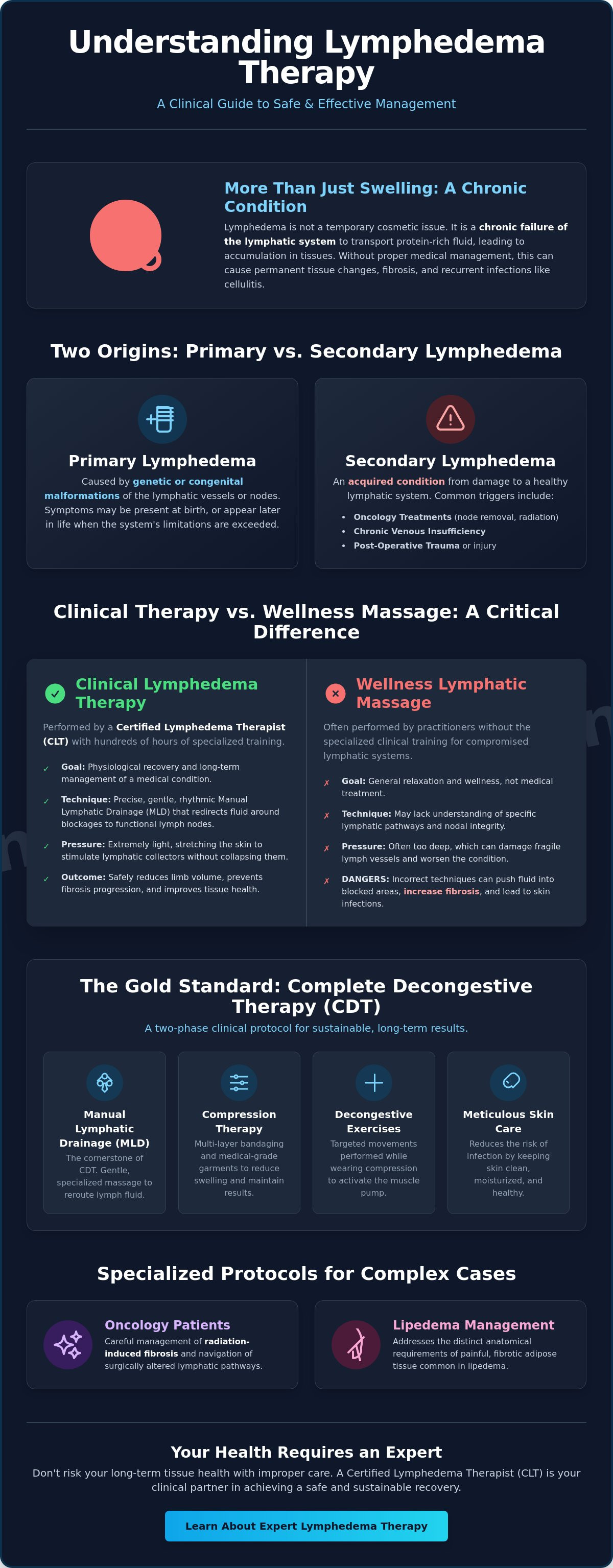
Lymphedema is not merely a cosmetic concern or temporary swelling; it's a chronic failure of the lymphatic system to transport interstitial fluid back into the circulatory system. This mechanical insufficiency leads to the accumulation of protein-rich fluid in the tissues, which can cause permanent changes if left unmanaged. Understanding Lymphedema requires a shift in perspective, moving away from general wellness concepts toward a rigorous, medical-grade management plan. For those seeking lymphedema therapy Austin TX, the local environment presents unique challenges. The Central Texas climate, characterized by high heat and humidity, often causes vasodilation that increases the overall lymphatic load, making clinical intervention essential for maintaining systemic balance.
Primary vs. Secondary Lymphedema
Clinical cases are generally categorized into two distinct types. Primary lymphedema has genetic origins and stems from congenital malformations of the lymphatic vessels or nodes. While some individuals are born with visible symptoms, others may not experience an onset until puberty or later in life when the system can no longer compensate for its structural limitations. Conversely, secondary lymphedema is an acquired condition resulting from external damage to an otherwise healthy system. In our Austin clinic, we frequently treat secondary cases triggered by:
- Oncology Treatments: Lymph node dissection and radiation therapy often disrupt natural drainage pathways.
- Venous Insufficiency: Chronic vascular issues can lead to phlebolymphedema, where the veins and lymphatics fail simultaneously.
- Post-Operative Complications: Significant trauma from invasive surgeries can sever lymphatic channels, leading to localized fluid stagnation.
The Role of the Certified Lymphedema Therapist (CLT)
Effective lymphedema therapy Austin TX requires the expertise of a Certified Lymphedema Therapist (CLT). This designation is critical because a general massage license doesn't provide the anatomical depth necessary to treat lymphatic failure safely. A CLT undergoes hundreds of hours of specialized training to master the mechanics of fluid dynamics and tissue health. This expertise allows the therapist to identify exactly where the system is blocked and use specific manual techniques to redirect fluid toward healthy, functional nodes.
Relying on a practitioner without this clinical background carries significant risks. Improper pressure or incorrect sequencing can accidentally push fluid into areas that cannot handle the load, potentially leading to increased tissue pressure or skin infections. A professional CLT acts as a clinical partner, prioritizing physiological results and long-term stability over the "spa" aesthetics of recreational massage. This targeted approach ensures that your management plan is both safe and sustainable for your specific anatomical needs.
The Components of Complete Decongestive Therapy (CDT)
Complete Decongestive Therapy (CDT) is recognized globally as the gold standard for managing chronic lymphatic insufficiency. Unlike temporary solutions, CDT is a rigorous, two-phase clinical protocol. The initial intensive phase focuses on maximum fluid reduction, while the second phase prioritizes long-term maintenance. For patients seeking lymphedema therapy Austin TX, understanding these four distinct pillars is essential for achieving sustainable results and preventing the progression of tissue fibrosis.
Manual Lymphatic Drainage (MLD) Protocols
The foundation of CDT is Manual Lymphatic Drainage (MLD). This technique involves a gentle, rhythmic stretching of the skin to stimulate the lymphangions, which are the functional units of the lymphatic vessels. By increasing the contraction frequency of these vessels, a therapist can move stagnant interstitial fluid toward healthy drainage pathways. It's a common mistake to equate this with deep tissue massage. High-pressure techniques can actually collapse or damage fragile lymph collectors, potentially worsening the condition. Clinical MLD requires a sophisticated understanding of nodal integrity to ensure fluid is redirected safely. This specialized approach is a core component of Lymphedema & Lipedema Management programs designed for physiological recovery.
Compression and Skin Integrity
Manual drainage alone isn't enough to maintain reduction. Compression therapy provides the external pressure necessary to prevent fluid from re-accumulating in the limb. Clinical standards dictate the use of short-stretch bandages, which differ significantly from the high-elasticity "Ace" wraps found in pharmacies. Short-stretch bandages offer low resting pressure but high working pressure, providing a firm "wall" for muscles to pump against during movement. This mechanism significantly improves the efficiency of the skeletal muscle pump.
Meticulous skin care is equally vital. Because lymphedema fluid is rich in protein, it serves as a breeding ground for bacteria. Maintaining a pH-balanced skin barrier is a primary defense against cellulitis, a serious infection that can lead to hospitalization. According to the National Cancer Institute patient guide to lymphedema, daily skin inspections and the use of specialized emollients are critical for those whose systems have been compromised by oncology treatments. Decongestive exercises, performed while wearing compression, further enhance fluid transport, completing the therapeutic cycle and moving the patient toward a stable maintenance phase.
Clinical MLD vs. Wellness Lymphatic Massage: Identifying the Difference
The term "lymphatic massage" has become a ubiquitous marketing phrase in the wellness industry, yet there is a profound difference between a recreational service and clinical lymphedema therapy Austin TX. For a patient with a healthy lymphatic system, a wellness massage might provide temporary relaxation or minor reduction in general water retention. However, for an individual with a compromised system, these generic techniques can be counterproductive or even dangerous. Clinical Manual Lymphatic Drainage (MLD) is a medical intervention that requires precise sequencing based on an individual’s specific nodal integrity.
Standard wellness massages often skip the critical "clearing" phase. In a clinical setting, a therapist must first stimulate the healthy lymph nodes and clear the proximal pathways before addressing the congested limb. This is analogous to clearing a pipe before trying to push more water through it. Without this specific order of operations, fluid is simply pushed against a blockage, which increases tissue pressure and can cause significant discomfort. Clinical MLD is designed to reroute fluid around damaged areas, a process that relies on a deep understanding of the body's internal plumbing.
Anatomical Precision in Therapy
Professional therapy is rooted in the study of lymphatic watersheds, which are the natural boundaries that divide the body's drainage regions. When lymph nodes are removed or damaged, these boundaries become obstacles. A specialist uses MLD to move fluid across these watersheds into functional territories. This process is documented in the comprehensive overview of lymphedema treatments provided by the National Institutes of Health, which emphasizes the necessity of targeted physical intervention. Unlike a spa visit, a clinical session begins with a medical intake and physical assessment. We monitor limb circumference and tissue texture at every stage to ensure the therapy is achieving measurable physiological results.
Red Flags in Non-Clinical Settings
It's vital to recognize the warning signs of an unqualified practitioner. If a therapist uses heavy oils, lotions, or deep, painful pressure, they aren't performing MLD. True clinical MLD is a skin-stretching technique that doesn't require lubricants, as the goal is to grip the skin and stretch the underlying lymph vessels. Aggressive massage in a post-surgical or lymphedema state can rupture fragile initial lymphatics and worsen fibrosis. Clinical MLD is a medically-grounded intervention specifically engineered to restore tissue health and maintain systemic fluid balance.
Specialized Care for Lipedema and Oncology Patients in Austin
While many associate lymphedema exclusively with oncology, clinical lymphedema therapy Austin TX must address a broader spectrum of lymphatic and adipose tissue disorders. Patients in Central Texas often struggle with misdiagnosed conditions like lipedema or unexpected chronic swelling following cosmetic procedures. These cases require a therapist who understands that not all swelling is created equal. For those residing in the northern suburbs, consulting a Clinical Lymphedema Therapist in Cedar Park provides a localized path to professional management tailored to these specific physiological needs.
Lipedema: More Than Just Swelling
Lipedema is a chronic, progressive condition characterized by the symmetrical accumulation of diseased adipose tissue, primarily in the lower extremities. This tissue resists traditional diet and exercise and is often painful to the touch. Unlike standard lymphedema, lipedema involves an inflammatory process that eventually overwhelms the lymphatic system. If left untreated, it progresses into "lipo-lymphedema," where the lymphatic vessels can no longer transport fluid effectively. We utilize specialized techniques like Build and Sculpt to address these specific tissue states, providing significant pain relief and structural support. This approach prioritizes the reduction of inflammation and the prevention of further tissue degradation.
Oncology Recovery Protocols
Breast cancer survivors face unique challenges, including radiation-induced fibrosis and Axillary Web Syndrome, or "cording." Cording feels like tight bands under the skin and significantly restricts range of motion in the arm and shoulder. Professional intervention is timed carefully around chemotherapy and radiation schedules to ensure the tissue isn't overwhelmed. Managing post-mastectomy swelling requires a therapist who understands how to bypass damaged axillary nodes and redirect fluid to functional areas of the body. Survivors can find more detailed answers in our guide to Lymphatic Drainage for Chronic Swelling.
Chronic swelling is also an under-reported risk following extensive body contouring such as Lipo 360 or a Brazilian Butt Lift (BBL). These procedures can disrupt the superficial lymphatic network, leading to persistent fluid retention that mimics lymphedema. Early clinical intervention prevents this fluid from hardening into permanent fibrosis or causing skin irregularities. If you're navigating these complexities, our Lymphedema & Lipedema Management services provide the medical-grade care necessary for a safe and stable recovery. We focus on restoring anatomical function so you can move forward with confidence in your healing process.
Why Choose Lymph in Motion for Lymphedema Therapy in Austin?
Selecting a provider for lymphedema therapy Austin TX is a critical clinical decision that directly impacts your long-term mobility and integumentary health. Many facilities in Central Texas rely on automated compression pumps or standardized protocols that overlook the nuances of an individual's surgical history or nodal status. At Lymph in Motion, we reject the mass-market mentality that treats lymphatic care as a generic wellness service. We provide one-on-one clinical sessions that prioritize physiological results and tissue integrity over recreational comfort or aesthetic fluff. This focused approach ensures that every manual maneuver serves a specific decongestive purpose.
The Educator Advantage
The expertise at Lymph in Motion is grounded in the work of Criselda White, a dedicated specialist who doesn't just practice therapy but also educates the next generation of practitioners. As a provider who offers professional MLD certification courses, she operates at the absolute forefront of lymphatic research and fluid dynamics. This "educator advantage" provides patients with a level of care informed by the most recent evidence-based protocols in the field. When your therapist is also a clinical instructor, you gain access to a practitioner with a microscopic understanding of nodal integrity and the complex mechanics of lymphangion activity. We remain committed to staying current with the latest peer-reviewed studies to ensure your recovery plan is both safe and scientifically sound.
Your First Session: What to Expect
Your recovery journey begins with a comprehensive diagnostic intake designed to establish a baseline for your systemic health. During this initial assessment, we evaluate several critical factors:
- Surgical and Medical History: Identifying the exact location of node removals, radiation sites, or traumatic injuries.
- Tissue Quality Assessment: Examining the skin for signs of fibrosis, pitting, or temperature changes that indicate inflammation.
- Volume Measurements: Establishing objective data to track the progress of fluid reduction over time.
This data allow us to develop a customized Complete Decongestive Therapy (CDT) plan tailored to your specific lifestyle. We also integrate advanced options like the Build and Sculpt body treatment for patients who require specialized manual contouring alongside their decongestive protocols. Our clinical reach extends across the region, providing expert management for residents in Austin, Cedar Park, Round Rock, and Georgetown. Booking your clinical assessment at Lymph in Motion is the first step toward establishing a sustainable, professional management plan that restores your systemic balance and protects your long-term well-being.
Securing Your Path to Long-Term Lymphatic Stability
Managing chronic lymphatic failure requires a commitment to clinical standards rather than temporary wellness trends. You've seen how Complete Decongestive Therapy serves as the gold standard for reducing limb volume and how specialized protocols address the unique needs of oncology and lipedema patients. Transitioning from active reduction to a sustainable maintenance phase is only possible when your care is guided by anatomical precision and a deep understanding of fluid dynamics.
Effective lymphedema therapy Austin TX is a clinical partnership with a specialist who prioritizes your physiological results. Criselda White, a Certified MLD Instructor specialized in post-operative and oncology recovery, provides the evidence-based care necessary to protect your tissue integrity. Serving the Greater Austin area, including Cedar Park, Round Rock, and Georgetown, Lymph in Motion offers a clinical environment where your recovery is the primary objective.
Take the first step toward a stable management plan and a more comfortable lifestyle. Schedule Your Clinical Lymphedema Assessment with Criselda White to receive personalized, expert guidance. You don't have to navigate the complexities of lymphatic recovery alone.
Frequently Asked Questions
Is lymphedema therapy painful?
Clinical Manual Lymphatic Drainage (MLD) is a gentle, non-invasive technique that should never be painful. Unlike deep tissue massage, it involves rhythmic skin-stretching to stimulate the initial lymphatics located just beneath the skin's surface. If you experience discomfort, it often indicates that the pressure is too deep, which can potentially damage fragile lymph vessels. The goal is to encourage fluid movement through subtle mechanical stimulation rather than aggressive muscle manipulation.
How many sessions of MLD will I need for my lymphedema?
The number of sessions required for lymphedema therapy Austin TX varies based on the severity of the swelling and the stage of the condition. An intensive reduction phase typically involves frequent treatments for several weeks to achieve maximum fluid clearance. Once the limb volume has stabilized, you'll transition to a maintenance phase where sessions are scheduled less frequently. Your therapist will develop a customized plan during the initial clinical assessment to track your physiological progress.
Can lymphedema be cured, or just managed?
Lymphedema is currently classified as a chronic, progressive condition that requires lifelong management. While there is no permanent cure, the application of Complete Decongestive Therapy (CDT) can successfully reduce limb volume and prevent complications like fibrosis or cellulitis. The objective of therapy is to restore systemic balance and empower you with a sustainable self-care routine. Consistent adherence to professional protocols ensures that the condition remains stable and doesn't impact your daily mobility.
Do I need a doctor’s referral for lymphedema therapy in Austin?
In the state of Texas, the requirement for a referral often depends on the specific license of the practitioner and the nature of your condition. While some manual therapies allow for direct access, a referral from your oncologist or primary care physician is highly recommended to ensure a coordinated clinical approach. This documentation provides your therapist with essential medical context regarding your surgical history, node status, and any contraindications that might affect your treatment plan.
Will insurance cover my lymphedema treatments?
Insurance coverage for lymphedema therapy Austin TX depends on your individual provider and the specific details of your health plan. It's important to verify your benefits for manual therapy or decongestive therapy before beginning treatment. Additionally, the Lymphedema Treatment Act, effective January 1, 2024, now mandates Medicare Part B coverage for essential compression supplies. You should contact your insurance administrator to confirm if they cover the clinical services provided by a certified specialist.
How is lipedema therapy different from lymphedema therapy?
Lipedema therapy requires a specialized focus on diseased adipose tissue and associated inflammatory pain, whereas lymphedema therapy prioritizes the transport of protein-rich fluid. While both conditions utilize MLD, lipedema management often incorporates techniques like Build and Sculpt to address tissue texture and sensitivity. Because lipedema tissue is highly sensitive to pressure, the manual application must be meticulously adjusted to provide pain relief without causing bruising or further inflammation in the subcutaneous fat layers.
Can I perform MLD on myself at home?
You can perform self-manual lymphatic drainage at home once you've been properly trained by a certified specialist. This home-care protocol is a fundamental part of the maintenance phase, allowing you to manage fluid levels between clinical visits. It's critical that you don't attempt these techniques without professional instruction. Incorrect sequencing or improper pressure can inadvertently push fluid into congested areas, potentially worsening your symptoms or compromising your skin's physiological integrity.


