

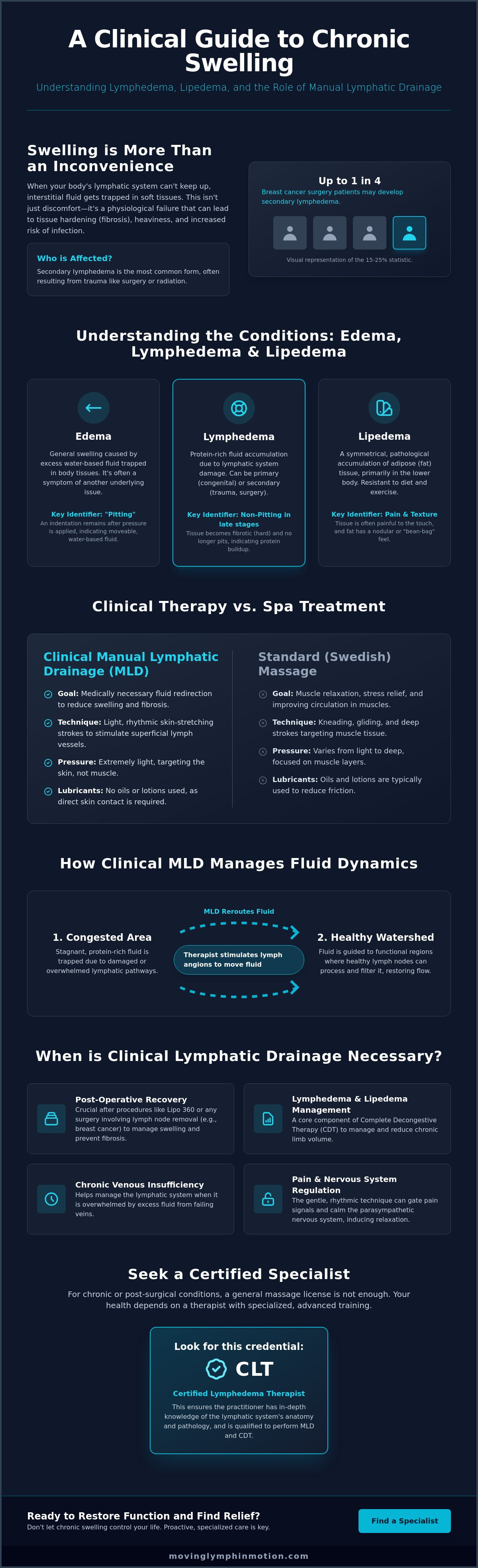
Statistics show that secondary lymphedema accounted for over 81% of the global lymphedema market revenue in 2025, affecting up to 25% of breast cancer surgery patients. If you're struggling with persistent heaviness or post-surgical fibrosis, you've likely realized that generic wellness advice doesn't address the underlying physiological failure. Clinical lymphatic drainage for chronic swelling isn't a luxury spa treatment. It's a precise, anatomical intervention designed to reroute interstitial fluid and reduce tissue volume through specialized manual techniques.
It's frustrating to feel like your body is working against you while you search for answers that actually provide measurable results. You deserve a clear understanding of why your system is stalled and how to restore function. This guide explains the specific clinical mechanisms of manual lymphatic drainage and its role in managing complex conditions like lymphedema and lipedema. We'll explore the science of fluid dynamics, the distinction between relaxation massage and clinical decongestive therapy, and how to locate a qualified specialist within the Central Texas region.
Key Takeaways
- Understand how manual lymphatic drainage for chronic swelling stimulates lymph angions to re-route fluid from congested tissue to healthy watershed regions.
- Learn the physiological differences between edema, lymphedema, and lipedema, including how clinicians use the "pitting" test to assess fluid accumulation.
- Discover why specialized therapy is critical for post-operative recovery after procedures like Lipo 360 or breast cancer treatments involving lymph node removal.
- Identify the essential components of a clinical session, from the initial tissue assessment to the systematic sequence required for effective decongestion.
- Clarify the distinction between a general massage license and the CLT credential when seeking professional management for chronic conditions.
Understanding Chronic Swelling: Edema, Lymphedema, and Lipedema
Chronic swelling isn't merely a cosmetic inconvenience; it's a physiological state where the volume of interstitial fluid exceeds the lymphatic system's transport capacity. When this delicate balance fails, fluid remains trapped in the soft tissues, leading to persistent heaviness and structural changes. Clinicians often use the "pitting" test as a primary diagnostic tool. By applying firm pressure to the swollen area for several seconds, a therapist observes whether an indentation remains. A persistent "pit" indicates that the fluid is largely water-based and moveable, whereas non-pitting edema often suggests more advanced tissue changes or the presence of fibrotic protein deposits.
Lymphedema is categorized into two distinct types. Primary lymphedema stems from congenital malformations of the lymphatic vessels or nodes. Secondary lymphedema, which is far more common, results from external trauma such as surgery, radiation, or infection. In the context of cancer recovery, research indicates that 15% to 25% of breast cancer surgery patients develop secondary lymphedema due to lymph node removal. Unlike these fluid-based conditions, Lipedema is a symmetrical adipose tissue disorder. It primarily affects the lower extremities and is frequently misdiagnosed as standard obesity or edema. Lipedema involves a pathological accumulation of fat cells that are often painful to the touch and resistant to traditional weight loss efforts.
The Pathophysiology of Fluid Retention
The lymphatic system's primary role is the absorption of large-molecule proteins and metabolic waste that the venous system cannot transport. Initial lymphatics, located just beneath the skin, act as the entry point for this "lymphatic load." When fluid becomes stagnant, these proteins trigger an inflammatory response. Over time, this leads to tissue fibrosis, a hardening of the skin that significantly increases the risk of cellulitis and other infections. Chronic venous insufficiency also plays a role by overwhelming the system with excess capillary filtrate. Utilizing clinical Manual Lymphatic Drainage is essential to manually stimulate the vessels and clear this protein-rich stagnation.
When Swelling Becomes a Chronic Medical Concern
Early intervention is the most effective way to prevent stage progression. Many patients wait until they experience "red flag" symptoms like hyperkeratosis (skin thickening), significant limb heaviness, or a restricted range of motion before seeking lymphatic drainage for chronic swelling. While many are told to "elevate their legs," this simple gravity-based approach is often insufficient for late-stage lymphedema. Once the vessels are damaged or the tissue has begun to fibrose, the body requires specialized manual intervention to move fluid into functional watershed regions. Proactive management prevents the irreversible skin changes and chronic infections associated with advanced lymphatic failure. Professional lymphatic drainage for chronic swelling addresses these issues by manually assisting the body's natural filtration processes.
How Clinical Manual Lymphatic Drainage (MLD) Manages Fluid Dynamics
Clinical Manual Lymphatic Drainage (MLD) operates on a fundamental understanding of fluid dynamics. Unlike standard massage, this modality employs light, rhythmic skin stretching to engage the initial lymphatics. When utilizing lymphatic drainage for chronic swelling, the therapist's primary objective is to stimulate the lymph angions. These are the functional units responsible for fluid transport. This manual stimulation facilitates a re-routing process. By directing stagnant fluid away from congested or damaged pathways, a therapist guides the lymphatic load toward functional watershed regions where healthy nodes can process and filter it.
The benefits extend to the nervous system. The slow, rhythmic nature of MLD has a profound effect on the parasympathetic nervous system. It induces a deep state of relaxation that helps lower heart rate and blood pressure. Additionally, the gentle tactile input helps modulate pain by providing a non-nociceptive stimulus. This can effectively gate pain signals before they reach the brain. Professional lymphatic drainage for chronic swelling focuses on anatomical precision over superficial comfort. It's vital to understand that clinical MLD doesn't use oils, lotions, or deep muscular pressure. These elements would interfere with the specific skin-to-skin traction required to manipulate the superficial lymphatic system.
The Science of the Lymph Angion
A lymph angion is essentially the "heart" of the lymphatic vessel, situated between two one-way valves. Under normal conditions, these angions contract approximately 10 to 12 times per minute. Clinical intervention can increase this frequency significantly, accelerating the clearance of metabolic waste. The working phase of an MLD stroke applies precise pressure to stretch the vessel walls and trigger a contraction, while the resting phase allows the vessel to refill with new fluid.
MLD vs. Traditional Massage: A Clinical Distinction
The clinical distinction between MLD and traditional massage is absolute. Techniques like Swedish massage are designed to increase blood flow, a process known as hyperemia. While beneficial for muscle recovery, this increased blood flow actually increases the filtration of fluid into the tissues. This can exacerbate swelling in a compromised system. Aggressive pressure can also collapse or damage the delicate initial lymphatics, which are only one cell layer thick. Professionals trained in the Vodder and Leduc methods prioritize these anatomical realities to ensure safety. For those seeking specialized lymphedema and lipedema management, choosing a clinician who understands these nuances is the first step toward recovery.
Clinical Applications: When is Lymphatic Drainage Necessary?
Identifying the appropriate time for clinical intervention is crucial for long-term physiological health. While the lymphatic system is resilient, specific medical events can overwhelm its capacity, leading to the persistent fluid accumulation discussed previously. Clinical lymphatic drainage for chronic swelling is most frequently indicated in cases where the lymphatic architecture has been physically altered or stressed by trauma. This includes systemic inflammatory conditions, autoimmune flares, and the pathological adipose tissue changes seen in lipedema. In these instances, the therapy serves as more than a comfort measure; it acts as a primary tool for managing inflammatory markers and modulating chronic pain.
Post-Surgical Edema and Fibrosis Prevention
Surgical procedures like Lipo 360 and the Brazilian Butt Lift (BBL) involve significant tissue disruption. This trauma triggers an acute inflammatory response, resulting in localized edema that can quickly become problematic if not managed. MLD accelerates the removal of surgical trauma byproducts, including red blood cell fragments and cellular debris. Without this intervention, fluid can accumulate into pockets known as seromas. If left stagnant, these proteins may eventually organize into hard "lumps" or bands of fibrosis. Utilizing professional post-op lymphatic drainage Austin services ensures that the healing tissue remains soft and pliable, preventing the restricted mobility associated with post-surgical scarring.
Oncology and Breast Cancer Recovery
Secondary lymphedema is a well-documented risk for individuals undergoing cancer treatments. Procedures such as axillary node dissection or radiation therapy can permanently damage the lymphatic pathways. This creates a bottleneck effect in the limb, leading to a permanent need for lymphatic drainage for chronic swelling. MLD provides a non-invasive path to post-mastectomy comfort by manually guiding lymph around the damaged nodes. It's essential that these treatments are closely coordinated with the oncology team to ensure the patient's safety and to monitor for any changes in tissue integrity. This methodical approach helps restore a sense of agency to patients navigating the complexities of cancer recovery.
Beyond these specific scenarios, MLD is increasingly utilized for managing the inflammatory burden of autoimmune disorders. Conditions that cause systemic inflammation often place a heavy load on the lymphatic system. By facilitating the clearance of metabolic waste, clinical therapy helps reduce the frequency and intensity of inflammatory flares. This comprehensive management strategy prioritizes physiological results, moving beyond superficial relief to address the root causes of tissue congestion.
What to Expect During a Professional Lymphatic Therapy Session
A professional session begins with a detailed clinical intake and tissue assessment. This isn't a mere formality; it's a diagnostic necessity. Your therapist evaluates skin integrity, local temperature, and the presence of fibrotic tissue. When performing lymphatic drainage for chronic swelling, the practitioner follows a precise, systematic sequence. We always begin at the neck and proximal nodes. This clears the central "drain" of the body before addressing the limbs. By opening these pathways first, we ensure that lymphatic drainage for chronic swelling is both safe and effective. It provides the fluid moved from the extremities a clear destination for processing.
The strokes themselves are unique. They involve a light, rhythmic stretching of the skin rather than deep tissue manipulation. Each movement is tailored to your specific physiological state and recovery phase. This level of anatomical precision is what distinguishes clinical therapy from generic wellness services. The pressure is purposeful and lean, designed to stimulate the superficial vessels without collapsing them.
The Clinical Environment vs. The Spa Experience
Clinical settings prioritize results over aesthetic fluff. You won't find heavy scents or distracting music here. The environment is intentionally quiet and focused. This silence allows the therapist to sense minute changes in tissue resistance and fluid movement. While the atmosphere is professional, your comfort is paramount. Patients remain draped at all times, ensuring a sense of safety while the therapist focuses on specific anatomical landmarks. This methodical approach fosters a partnership between the patient and the specialist, rooted in medical-grade expertise.
Complementary Therapies: Compression and Kinesio Taping
Manual intervention is only one part of a successful management plan. Because the lymphatic system lacks a central pump, the results of MLD must be maintained through external support. Compression garments are often required to provide a counter-pressure that prevents fluid from re-accumulating in the interstitial space. Additionally, we may utilize specialized lymphatic taping. These elastic strips provide a gentle, 24/7 lift to the skin, creating a pressure differential that facilitates continuous drainage. For those searching for a lymphedema therapist Cedar Park offers, these integrated strategies are essential for long-term volume reduction.
Post-session guidance is the final step in a professional encounter. We provide specific instructions on hydration and therapeutic movement. Staying hydrated ensures that the lymph fluid remains at an optimal viscosity for transport. Meanwhile, light, intentional movement utilizes the "muscle pump" to assist the newly stimulated vessels. To experience this level of specialized care, you can book your clinical lymphatic therapy session here.
Choosing a Certified Lymphatic Therapist in Central Texas
Selecting a provider for lymphatic drainage for chronic swelling requires a rigorous evaluation of clinical credentials rather than a search for proximity or price. While a Licensed Massage Therapist (LMT) in Texas must complete 500 hours of foundational education, this baseline licensure does not include the specialized training necessary to manage complex fluid pathologies. A Certified Lymphedema Therapist (CLT) has undergone an additional 135 hours of instruction specifically in Complete Decongestive Therapy (CDT). This advanced training ensures the practitioner understands how to navigate the complexities of anatomical re-routing and tissue assessment safely. Criselda White exemplifies this high standard, operating as both a seasoned practitioner and a certification instructor. Her deep understanding of local surgical protocols in Austin and Georgetown allows for a seamless transition from the operating room to the recovery suite, ensuring that the manual intervention aligns with the surgeon's specific requirements.
Why Professional Certification Matters for Safety
The application of lymphatic drainage for chronic swelling is not a universal solution; it requires a therapist who can identify critical contraindications. For individuals with acute Deep Vein Thrombosis (DVT), congestive heart failure, or certain active infections, MLD can be dangerous if performed incorrectly. An uncertified practitioner might inadvertently push fluid into a system that cannot process it, potentially leading to cardiac stress or the displacement of a clot. Because we prioritize clinical safety and education, we also offer professional Manual Lymphatic Drainage certification courses. These programs are designed to elevate the standard of care across the industry, ensuring that more therapists possess the anatomical knowledge required to treat complex cases without compromising patient safety.
Accessing Clinical Care in Austin, Cedar Park, and Beyond
Beginning your recovery journey starts with a comprehensive consultation at our Austin or Cedar Park locations. This initial meeting focuses on your medical history, surgical details, and current tissue state. We follow a collaborative approach, often communicating directly with your oncology or surgical team to ensure our therapy supports your overall medical plan. This partnership is essential for achieving measurable reductions in limb volume and preventing the progression of lymphedema or lipedema. We encourage patients to prioritize these clinical outcomes over the convenience of a traditional spa. Choosing a specialist who understands the physiological mechanisms of recovery ensures that your time and resources are invested in results-driven care. To secure your appointment and begin a structured management plan, you can contact our clinical team here.
Restoring Physiological Balance and Mobility
Managing chronic edema, lymphedema, or lipedema requires a transition from passive observation to active, clinical management. Understanding the mechanics of the lymph angion and the necessity of anatomical re-routing is the first step toward reducing limb volume. Clinical lymphatic drainage for chronic swelling isn't a generic wellness service; it's a precise medical intervention that demands a high level of expertise to ensure safety and physiological efficacy.
Choosing a specialist who understands the specific nuances of post-operative recovery and oncology care is vital for long-term success. Criselda White brings this specialized knowledge to every session, serving as both a Certified Lymphedema Therapist (CLT) and a professional MLD certification instructor. By prioritizing evidence-based techniques over superficial trends, you can effectively manage tissue congestion and prevent the progression of fibrosis.
If you're ready to address persistent heaviness with a dedicated clinical partner, it's time to take the next step in your recovery journey. Book a Clinical Lymphatic Consultation with Criselda White to begin your personalized path toward restored mobility and comfort. You don't have to navigate the complexities of physical recovery alone.
Frequently Asked Questions
Is lymphatic drainage for chronic swelling painful?
Clinical lymphatic drainage is entirely painless and utilizes a light, rhythmic touch. Because the initial lymphatics are located just beneath the skin's surface, heavy pressure would collapse the vessels and halt fluid transport. If you experience discomfort, the pressure is likely too deep for the lymphatic system to respond effectively. The goal is a gentle skin stretch that stimulates the lymph angions without triggering a pain response.
How many sessions of MLD will I need to see results?
The number of sessions required depends on your specific condition and the current stage of swelling. Post-operative patients often benefit from a series of sessions within the first two weeks of recovery to prevent fibrosis. For chronic conditions like lymphedema, an intensive phase of several sessions per week may be necessary before transitioning to a maintenance schedule. Your therapist will establish a specific timeline based on your tissue's response to the initial assessment.
Can I perform lymphatic drainage on myself at home?
Self-management is a vital component of long-term care, but it doesn't replace professional intervention for complex anatomical re-routing. While simple strokes can assist with minor fluid movement, a Certified Lymphedema Therapist must first establish the correct drainage pathways. Performing incorrect techniques at home could move fluid into already congested areas. We provide patients with specific, safe self-care protocols once their primary pathways have been professionally cleared.
Is clinical lymphatic drainage covered by health insurance?
In the state of Texas, Manual Lymphatic Drainage performed by a Licensed Massage Therapist is generally not covered by insurance or Medicare. These services are typically paid for out of pocket. If you require insurance reimbursement, you may need a referral to a Physical or Occupational Therapist who specializes in lymphedema management. Many patients choose our specialized clinical care for the depth of expertise in post-operative and oncology-related protocols.
How does MLD differ from a standard deep tissue massage?
Standard deep tissue massage focuses on muscle groups and uses heavy pressure to release tension. This process induces hyperemia, which increases blood flow and can actually worsen chronic swelling. Clinical MLD uses a specific skin-stretching technique to move fluid without increasing local blood volume. It avoids the use of oils and deep pressure to maintain the integrity of the delicate lymphatic vessels which are only one cell layer thick.
What happens if chronic swelling is left untreated?
Untreated swelling often leads to permanent tissue changes such as fibrosis and hyperkeratosis. As protein-rich fluid remains stagnant, it creates an environment where bacteria can thrive, significantly increasing your risk of cellulitis. Over time, the extra weight and volume can also restrict your range of motion and cause secondary joint pain. Early intervention with lymphatic drainage for chronic swelling is essential to prevent these irreversible complications and skin changes.
Are there any side effects after a lymphatic drainage session?
The most common side effect is an increase in urination as the body processes and eliminates the moved fluid. Some patients also report feeling a temporary sense of fatigue or increased thirst following a session. These are normal physiological responses as the metabolic waste is filtered through the kidneys. We recommend increasing your water intake and allowing for a period of rest to support the body's natural detoxification process.
Can MLD help with swelling caused by medications or travel?
MLD is highly effective for temporary swelling caused by long-duration travel or specific medication side effects. Immobility during flights often leads to stagnant fluid in the lower extremities. Manual intervention helps jumpstart the lymphatic pump to clear this accumulation quickly. For medication-related edema, we work to manage the symptoms of fluid retention while you coordinate with your prescribing physician regarding the underlying cause and potential dosage adjustments.


