What if the most critical factor in your surgical outcome isn't the surgeon's scalpel, but the physiological management of your tissues in the weeks that follow? You've invested significant time and resources into your cosmetic procedure, yet the sudden onset of painful swelling and localized hardness can feel deeply unsettling. It's common to feel overwhelmed by the inflammatory phase of healing. Securing a specialized post-op recovery massage Cedar Park is often the difference between a smooth, aesthetic result and the development of permanent, irregular scar tissue.
You deserve a recovery process that prioritizes physiological precision over recreational relaxation. This professional guide provides the clinical criteria necessary to select the right lymphatic therapy to ensure optimal healing and prevent post-surgical fibrosis. We'll examine the technical distinctions between clinical manual lymphatic drainage and standard spa treatments, outlining a clear timeline to reduce inflammation and protect your surgical investment. By understanding the mechanics of fluid dynamics and tissue repair, you can navigate your recovery with the confidence of a clinical partner.
Key Takeaways
- Understand how surgical procedures like liposuction disrupt lymphatic vessels and require clinical intervention to manage post-operative edema effectively.
- Learn to distinguish between gentle clinical MLD and aggressive spa massages that can cause secondary tissue trauma and inflammation.
- Use our therapist checklist to verify specialized certifications when selecting a provider for a post-op recovery massage Cedar Park.
- Discover how stagnant lymph fluid triggers collagen overproduction, and how manual precision prevents the formation of permanent, painful fibrosis.
- Explore the "Build and Sculpt" philosophy to ensure your recovery phase enhances your surgical results through evidence-based tissue management.
The Clinical Necessity of Post-Op Recovery Massage in Cedar Park
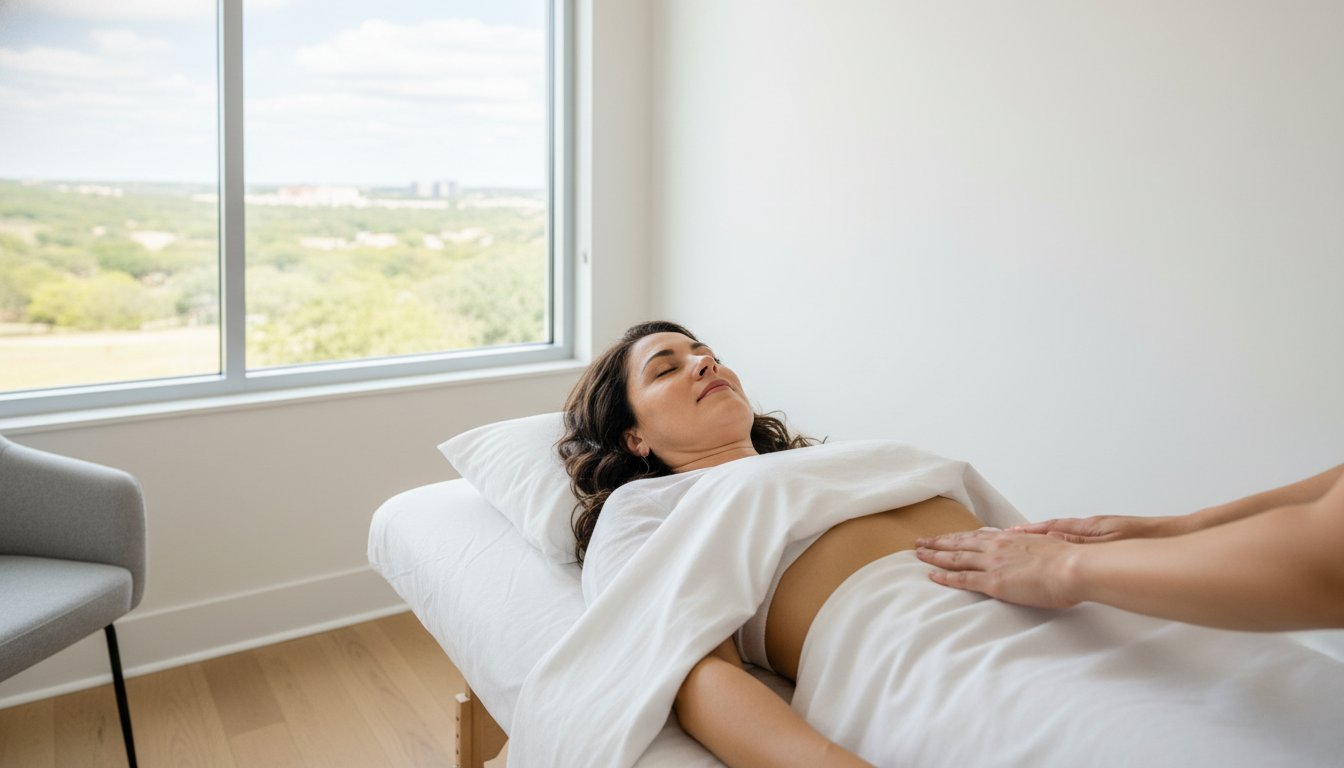
Post-operative recovery is a biological mandate rather than an optional phase of aesthetic healing. When undergoing procedures like liposuction or abdominoplasty, the body experiences significant trauma to its fluid management systems. A post-op recovery massage Cedar Park serves as a clinical intervention specifically designed to address surgical edema and the disruption of lymphatic pathways. Unlike traditional massage, which targets muscular tension, this specialized therapy focuses on the physiological transport of interstitial fluid to prevent complications.
The 2026 standard for surgical aftercare in Central Texas emphasizes a proactive, evidence-based approach. Modern protocols no longer view fluid management as a secondary concern. Instead, Manual lymphatic drainage is recognized as the gold standard for maintaining tissue health. During liposuction, the mechanical action of the cannula shears the delicate lymphatic collectors. In an abdominoplasty, tissue undermining creates a large area of "dead space" that naturally fills with protein-rich inflammatory fluid. Without professional intervention, this fluid stagnates, increasing the risk of infection and delayed wound closure.
Why Surgeons in Central Texas Recommend Early Intervention
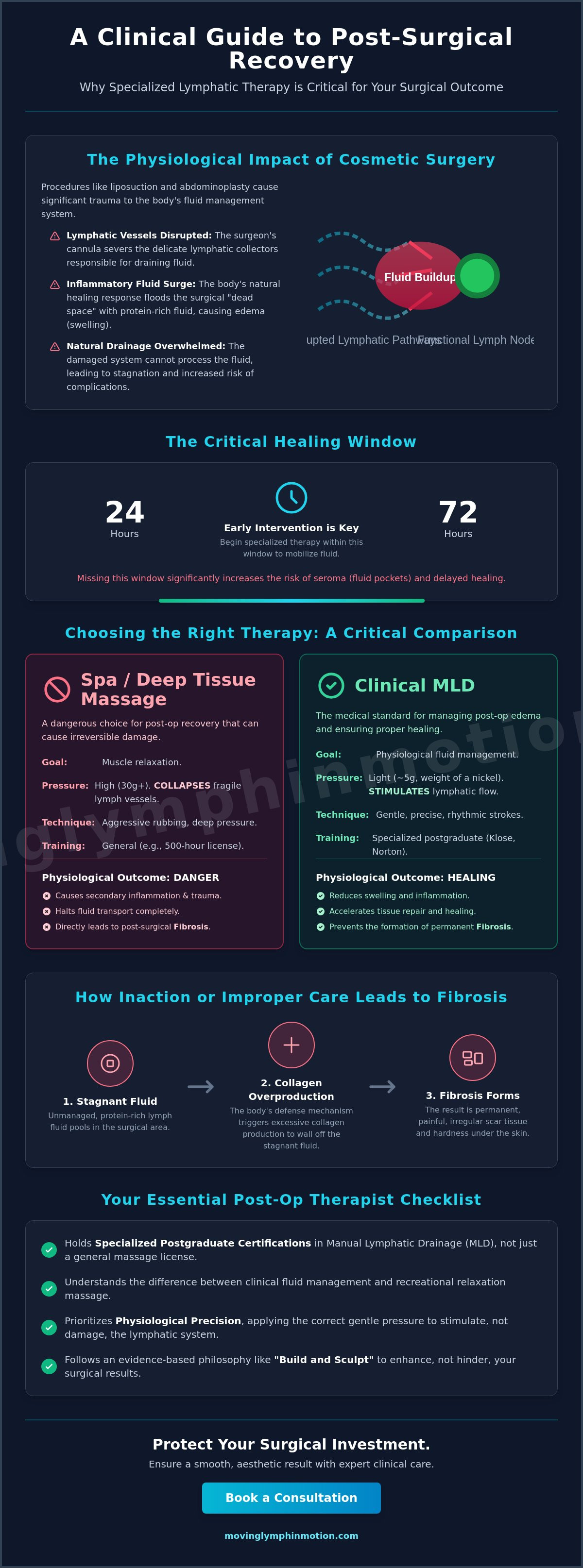
Surgeons throughout the Austin and Cedar Park corridor increasingly advocate for the 24 to 72 hour recovery window. This timeframe is essential for initial fluid mobilization. If the lymphatic system isn't assisted during these first three days, the risk of seroma formation, which is a localized pocket of fluid, rises significantly. Specialized therapists in the area coordinate closely with surgical offices to ensure that lymphatic transport begins as soon as the patient is stable. This collaboration minimizes the inflammatory response and accelerates the return to daily activities.
Anatomical Impact of Cosmetic Surgery on Fluid Dynamics
The mechanical trauma of surgery overwhelms the body’s natural drainage capacity. When tissues are undermined, the severed lymphatic vessels can't effectively process the surge of inflammatory proteins. This creates a state of high-protein edema that the body struggles to resolve. If left unmanaged, these proteins act as a catalyst for excessive collagen production, leading to the hardness known as fibrosis. Manual intervention is required to guide this fluid toward functional lymph nodes, bypassing the damaged zones and restoring physiological balance to the surgical site.
Clinical MLD vs. Spa Massage: A Comparison for Cedar Park Patients
Many patients mistakenly assume that any form of manual bodywork is beneficial after surgery. However, the physiological requirements of a healing body differ vastly from the needs of a healthy person seeking relaxation. A clinical post-op recovery massage Cedar Park is a medical intervention, not a recreational service. The primary distinction lies in the application of pressure. Clinical Manual Lymphatic Drainage (MLD) utilizes approximately five grams of pressure, which is roughly the weight of a nickel. This light touch is essential because the initial lymphatics are located just beneath the skin. Applying 30 grams or more, typical of deep-tissue or Swedish massage, collapses these delicate vessels and halts fluid transport entirely.
The goals of these two modalities are fundamentally different. Spa massage focuses on psychological relaxation and muscular release. Clinical MLD focuses on the physiological management of protein-rich fluid. Therapists providing clinical care must undergo rigorous postgraduate education through institutions like the Klose Training or Norton School, far exceeding the 500-hour general licensing requirement in Texas. This specialized training allows practitioners to recognize early signs of Lymphedema - Symptoms and causes, ensuring that recovery stays on a safe, predictable trajectory.
The Dangers of Aggressive Post-Surgical Manipulation
The "no pain, no gain" philosophy is a dangerous myth in the context of lymphatic recovery. Aggressive rubbing or high-pressure manipulation can rupture newly forming capillaries and disrupt the fragile cellular bridges required for tissue reattachment. This mechanical trauma triggers a secondary inflammatory response, which forces the body to produce excessive collagen. This overproduction is the direct cause of post-surgical fibrosis, or permanent tissue hardness. When seeking a specialized post-operative cosmetic surgery recovery therapist, verifying these clinical credentials is the first step toward a safe outcome.
Identifying Medical-Grade Lymphatic Protocols
Clinical excellence is defined by the use of the Vodder and Leduc methods, which are the established gold standards in the medical community. These protocols prioritize a proximal-to-distal clearing sequence. This means the therapist first clears the healthy lymph nodes near the neck or armpits to create space for the surgical fluid to move into. The Vodder method is a non-invasive, rhythmic skin-stretching technique used to facilitate the movement of lymph fluid. By following these precise anatomical pathways, a skilled therapist ensures that fluid is redirected away from the surgical site, preventing the stagnation that leads to seromas and uneven contours.
The Essential Post-Op Recovery Therapist Checklist
Selecting a provider for a post-op recovery massage Cedar Park is a critical decision that directly impacts your physiological safety and aesthetic outcome. Because the term "massage" is loosely applied in the wellness industry, patients must exercise clinical due diligence. A qualified therapist acts as a medical partner, bridging the gap between the surgical suite and your final result. This requires a specific set of credentials and assessment protocols that go far beyond general licensure.
Professional standards in 2026 require that a therapist demonstrates proficiency in managing complex surgical cases, including Lipo 360, BBL, and fat transfers. These procedures involve distinct anatomical challenges, such as protecting grafted fat cells while simultaneously draining fluid from donor sites. Your therapist should also provide essential education on the proper wear and adjustment of your compression garments, or fajas. Incorrect compression can lead to skin necrosis or permanent contour irregularities, making therapist-led guidance a cornerstone of safe recovery.
Credential Verification and Clinical Training
When evaluating a therapist, you should directly ask for proof of specialized certification. A truly qualified professional will hold credentials from recognized institutions like Klose Training or the Norton School of Lymphatic Therapy. It's vital to distinguish between an "MLD-certified" therapist, who has completed over 135 hours of rigorous clinical training, and an "MLD-informed" therapist, who may have only attended a weekend workshop. Practitioners with a background in oncology or lymphedema management possess a deeper understanding of fluid dynamics and the lymphatic system’s capacity, which is indispensable when managing high-volume surgical edema.
The Consultation: What a Professional Assessment Looks Like
A clinical consultation for a post-op recovery massage Cedar Park must begin with a thorough screening. A professional will review your surgical reports and any specific restrictions provided by your surgeon. They must also perform a physical assessment to check for contraindications such as Deep Vein Thrombosis (DVT) or signs of systemic infection, including localized heat or unexplained redness. This screening is a non-negotiable safety protocol.
Following the safety check, the therapist should perform a gentle palpation of the tissue. This allows them to identify early-stage fibrosis or seroma formation before they become visible or permanent. During this initial meeting, a specialist will set a realistic recovery timeline. While every patient heals differently, a clinical partner will outline a sequential plan based on your tissue’s specific response, ensuring you understand exactly how many sessions are needed to reach your desired aesthetic goal.
Preventing Fibrosis and Seromas in Cedar Park Recovery
Post-surgical recovery requires a deep understanding of tissue remodeling to ensure the final aesthetic result is both smooth and functional. Fibrosis is the pathological overproduction of collagen fibers within the surgical site, often resulting in localized hardness, "lumps," or restricted movement. When you schedule a post-op recovery massage Cedar Park, the primary clinical goal is to keep the extracellular matrix clear of stagnant, protein-rich lymph. If this fluid remains stationary, it acts as a chemical signal that triggers the body to lay down excessive scar tissue, leading to permanent contour irregularities.
Managing fluid collections also involves distinguishing between generalized edema and a seroma. A seroma is a localized pocket of clear fluid that can form in the "dead space" created during procedures like an abdominoplasty. While consistent manual lymphatic drainage helps the body reabsorb minor fluid accumulations, larger, encapsulated seromas may require medical aspiration by your surgeon. A specialized therapist monitors these areas closely, ensuring that manual therapy supports the physiological environment while knowing when to refer a patient back for medical intervention.
The Mechanics of Tissue Hardening Post-Lipo
Patients often notice a change in tissue texture around the two to three week mark. This is when the body transitions into the remodeling phase of healing. During this window, the initial inflammatory fluid begins to thicken, and the body starts organizing new collagen fibers. If the area isn't properly drained, these fibers can form thick, fibrotic bands. Specialized manual techniques are employed at this stage to soften these established bands and maintain tissue pliability. Consistency during this phase is vital, as it's much easier to prevent fibrosis than it is to resolve it once the tissue has fully matured. To protect your results, you can book your post-operative cosmetic surgery recovery sessions to align with this critical remodeling window.
Cedar Park Local Care: Managing Edema in the Texas Heat
The Central Texas climate presents unique physiological challenges for surgical patients. High temperatures and humidity in Cedar Park cause vasodilation, a process where blood vessels widen and leak more fluid into the surrounding tissues. This can lead to a sudden increase in swelling, even weeks into the recovery process. To mitigate this, patients should focus on:
- Strategic Hydration: Maintaining a high intake of water to help flush out inflammatory proteins.
- Dietary Monitoring: Reducing sodium intake to prevent additional water retention during heat waves.
- Local Coordination: Working with Cedar Park compression fitters to ensure your faja provides adequate support without restricting circulation during temperature spikes.
The Lymph in Motion Difference: Clinical Excellence in Cedar Park
At Lymph in Motion by Criselda White, we provide a level of clinical oversight that transcends standard aftercare. Our practice is built on a foundation of medical-grade precision and anatomical expertise. When you choose a post-op recovery massage Cedar Park at our facility, you aren't just receiving a service; you're engaging with a clinical partner dedicated to your physiological integrity. Our "Build and Sculpt" philosophy focuses on optimizing your surgical results through meticulous manual manipulation, ensuring that your body’s inflammatory response is managed with scientific accuracy.
Our authority in the field is evidenced by our commitment to professional education. Beyond providing direct patient care, we offer Professional Manual Lymphatic Drainage certification Courses to other therapists throughout the region. This dual role as both practitioners and educators ensures that our protocols remain at the absolute forefront of lymphatic science. We bridge the gap between acute post-operative management and long-term lymphatic health; this provides a seamless transition as your tissues move from the inflammatory phase into the final remodeling stage.
Bespoke Recovery Plans for Cosmetic Surgery
Every surgical procedure requires a unique physiological strategy. For BBL patients, our protocols strictly avoid any direct pressure on newly grafted fat cells to ensure maximum survival rates. For Lipo 360 and abdominoplasty, we focus on clearing fluid from the trunk while maintaining the integrity of delicate incisions. Similarly, for those who explore Breast Augmentation at MG Plastic Surgery, the focus shifts to managing localized edema to ensure a soft, natural result. Our clinical protocols are tailored to the specific surgical technique used by your physician. This individualized attention prevents the mass-market mentality that often leads to sub-optimal outcomes in general wellness settings.
Beyond Recovery: Aesthetic Sculpting and Maintenance
The benefits of clinical MLD extend far beyond the initial healing window. While the immediate goal is fluid management, long-term lymphatic health is essential for maintaining skin elasticity and a refined, contoured appearance. Regular maintenance sessions support the removal of cellular waste and metabolic byproducts, which keeps the skin-to-muscle adhesion crisp and well-defined. To ensure your investment yields the best possible result, Schedule your clinical assessment at our Cedar Park area facility. By prioritizing manual precision, you can secure the smooth, contoured aesthetic you worked so hard to achieve.
Securing Your Surgical Investment through Clinical Precision
The transition from the operating room to your final aesthetic result depends on the physiological management of your tissues. Clinical manual lymphatic drainage is not a recreational choice but a medical necessity for preventing permanent fibrosis and managing surgical edema. By prioritizing a specialized post-op recovery massage Cedar Park, you ensure that your body’s inflammatory response is guided by anatomical expertise rather than aggressive manipulation. Your recovery deserves a therapist who understands the delicate mechanics of fluid transport and tissue remodeling.
As a Certified Lymphatic Therapist (CLT) and a provider of professional MLD certification courses, Criselda White offers a level of clinical authority that standard wellness centers cannot replicate. Her specialization in post-cosmetic surgery recovery ensures that your bespoke plan aligns with your surgeon’s specific techniques. Don't leave your healing to chance. Book Your Clinical Post-Op Assessment with Criselda White to secure the smooth, contoured results you envision. Your journey toward optimal health and refined aesthetic outcomes is a partnership we're ready to begin.
Frequently Asked Questions
When should I start my post-op recovery massage in Cedar Park?
Clinical protocols recommend starting your specialized recovery sessions within the first 24 to 72 hours following your procedure. This initial window is critical for mobilizing acute edema before the fluid becomes stagnant. Early intervention facilitates the transport of inflammatory proteins away from the surgical site, which significantly reduces the risk of early-stage seroma formation and minimizes tissue tension during the first week of healing.
Does lymphatic drainage massage hurt after liposuction?
No, clinical manual lymphatic drainage should never be painful. Because the technique utilizes extremely light pressure, approximately five grams, to stimulate the superficial lymphatic vessels, it's often described as soothing. If a therapist is using aggressive pressure or causing pain, they're likely performing a traditional massage technique that could potentially damage fragile healing tissues and increase your internal inflammation.
How many sessions of MLD will I need after a BBL or Lipo 360?
Most patients require a series of 10 to 15 sessions to achieve optimal physiological results. For post-liposuction fibrosis prevention, the industry standard as of early 2026 often involves two to three sessions per week during the first month. The exact frequency depends on your body's specific inflammatory response and the volume of fluid being processed by your lymphatic system during the remodeling phase.
Can I use a massage gun or foam roller for post-op recovery instead?
No, you should avoid using mechanical tools like massage guns or foam rollers during the acute recovery phase. These devices apply high-frequency vibration and excessive pressure that can rupture newly forming capillaries and disrupt the reattachment of skin to the underlying muscle. Manual precision is required to safely guide fluid without causing mechanical trauma to the healing surgical site.
Is post-op massage covered by insurance in Texas?
Most cosmetic post-operative recovery services are considered elective and aren't typically covered by standard insurance plans in Texas. However, if the therapy is medically necessary for the management of clinical lymphedema or a specific post-surgical complication, some providers may offer documentation for you to submit for reimbursement. You should check with your specific carrier regarding their current policy on manual lymphatic drainage.
What happens if I skip lymphatic drainage after cosmetic surgery?
Skipping professional drainage increases the risk of prolonged swelling and the development of permanent fibrosis. When protein-rich fluid stagnates, the body replaces it with thick collagen fibers, resulting in hard lumps and uneven skin contours. Without a specialized post-op recovery massage Cedar Park, you may also experience an extended recovery timeline and increased post-surgical discomfort due to excessive tissue tension and fluid pressure.
How is clinical MLD different from the "lymphatic massage" offered at local spas?
Clinical MLD is a medical-grade protocol performed by a Certified Lymphatic Therapist (CLT) who follows the Vodder or Leduc methods. While local spas may offer relaxation treatments, they often lack the specialized training required to navigate surgical contraindications safely. A clinical post-op recovery massage Cedar Park focuses on the physiological transport of fluid and the prevention of medical complications rather than general psychological relaxation.
Can I get a post-op massage if I still have surgical drains in place?
Yes, clinical MLD can and should be performed while surgical drains are active. A skilled therapist works around the drain sites to encourage fluid movement toward the functional lymph nodes and the drains themselves. This helps prevent fluid from pooling in the dead spaces created by surgery, which can reduce the total time the drains need to remain in place and lowers the risk of infection.


