

Facial swelling is often dismissed as a temporary aesthetic nuisance, yet it's frequently the physiological manifestation of a compromised lymphatic system struggling to manage interstitial fluid. Whether you're navigating the inflammatory response following a rhinoplasty or the chronic congestion triggered by Austin's intense allergy seasons, the sensation of facial heaviness is more than skin deep. You've likely tried topical cooling masks or over the counter decongestants only to find the underlying puffiness remains unchanged. We understand that true recovery requires a more precise, anatomical approach to restore your natural profile and physical comfort.
This clinical guide explores the specialized application of facial lymphatic drainage Austin, detailing how medical-grade MLD protocols address stagnant fluid within the delicate tissues of the head and neck. By understanding the science of lymph flow, you'll discover how these targeted techniques facilitate faster healing after dental work and visible reductions in post-operative edema. Because successful recovery often begins with high-quality clinical care, you can learn more about Smiley Dental Lowell to see how their comprehensive services support overall oral health. We'll examine the specific biological mechanisms that drive fluid clearance, providing a clear roadmap for those seeking professional intervention for sinus relief and structural sculpting.
Key Takeaways
- Understand how Austin's unique environmental stressors like Cedar Fever trigger chronic facial edema and why clinical MLD is a necessary physiological intervention.
- Identify the critical roles of the Parotid, Submandibular, and Submental lymph node groups in regulating facial fluid dynamics and clearing watershed areas.
- Distinguish between aesthetic sculpting for contouring and specialized clinical protocols designed for post-operative recovery after rhinoplasty or jaw surgery.
- Learn the essential pre-session requirements, including hydration and skin preparation, to maximize the therapeutic efficacy of facial lymphatic drainage Austin.
- Discover the methodology of integrating clinical manual lymphatic drainage with advanced sculpting to restore facial contour while promoting systemic health.
Understanding Facial Lymphatic Drainage in Austin's Unique Climate
Facial lymphatic drainage is a specialized manual therapy designed to regulate fluid within the interstitial spaces of the face and neck. Unlike traditional massage which focuses on muscular manipulation, Manual lymphatic drainage (MLD) targets the superficial and deep lymphatic vessels to encourage the removal of metabolic waste and excess fluid. For residents seeking facial lymphatic drainage Austin, this clinical intervention is often the primary defense against localized fluid stagnation. This stagnation occurs when the body's natural drainage pathways become overwhelmed by environmental triggers or physiological stressors, leading to persistent puffiness that topical skincare cannot resolve.
Austin presents a distinct challenge due to its extreme seasonal pollen counts and environmental stressors. While systemic swelling might affect the entire body due to diet or cardiovascular factors, localized facial edema in Central Texas is frequently an inflammatory response to local allergens. When the immune system reacts to these triggers, the facial tissues become engorged with fluid. This results in a heavy sensation and a loss of visible contour. MLD works by reducing inflammatory markers in the facial tissues, providing a clear path for the immune system to process these environmental irritants without the secondary complication of chronic swelling.
The Austin Sinus Connection: Cedar Fever and Edema
Central Texas is notorious for "Cedar Fever," a period where pollen counts from Mountain Cedar reach levels that trigger intense immune responses. These allergens cause the sinus linings to become inflamed and hypertrophic, which physically obstructs the small lymphatic channels responsible for clearing the mid-face. This creates a feedback loop where congestion prevents drainage, and the resulting fluid buildup increases pressure on the sinuses. Clinical MLD provides the mechanical assistance needed to bypass these blockages. By utilizing precise, light-pressure strokes, a practitioner can reroute fluid toward functional lymph nodes in the neck, alleviating the pressure that causes chronic sinus headaches and facial heaviness.
Clinical vs. Aesthetic: Why "Medical-Grade" Matters
It's vital to distinguish between a standard aesthetic facial and medical-grade lymphatic drainage. While a spa treatment might focus on topical hydration or a temporary topical glow, clinical protocols prioritize physiological results and tissue health. A professional certified in MLD understands the complex anatomy of the facial watershed areas and the specific tissue states associated with chronic inflammation or post-operative recovery. This high level of expertise ensures that the manipulation is safe and evidence-based. The focus remains on the long-term restoration of the lymphatic system's function rather than just immediate, superficial changes.
The Anatomical Mechanism of Facial Fluid Dynamics
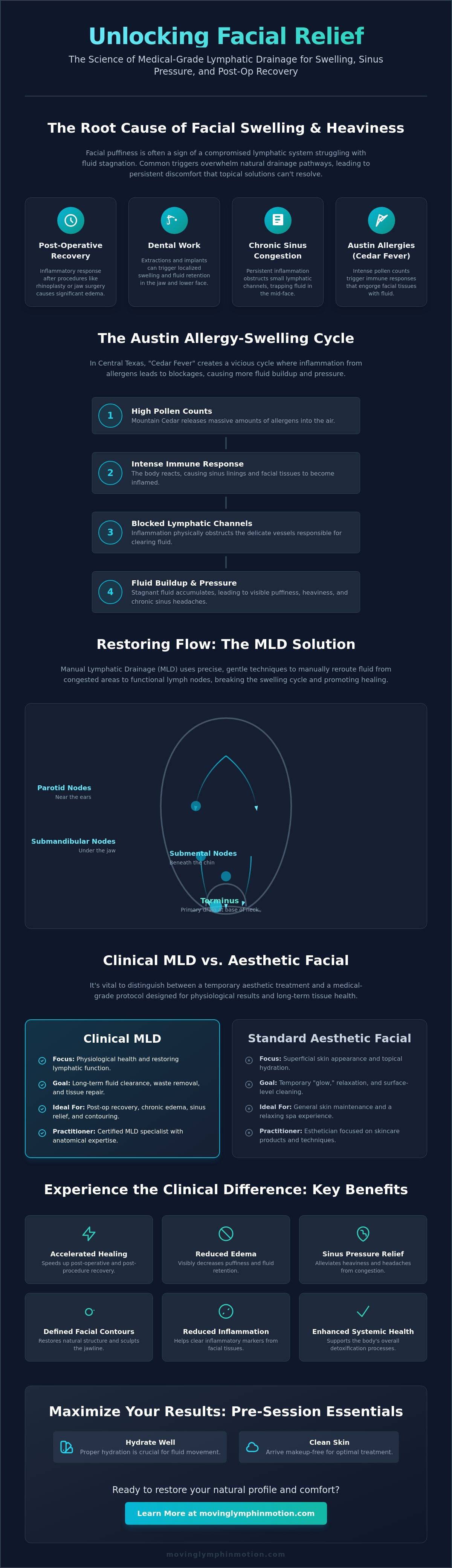
The facial lymphatic network is a sophisticated, pump-less drainage system that relies on specific regional clusters to manage interstitial fluid. These clusters include the parotid nodes located near the ears, the submandibular nodes situated under the jaw, and the submental nodes positioned beneath the chin. These nodes act as biological filtration stations, processing waste and immune cells. For those seeking facial lymphatic drainage Austin, understanding these locations is vital because clinical protocols are specifically designed to move stagnant fluid toward these designated exit points. When these pathways become congested, the resulting pressure leads to the visible puffiness and discomfort often associated with inflammatory conditions.
The lymphatic capillaries in the face are exceptionally superficial, resting just beneath the epidermis. Unlike the circulatory system, which utilizes the heart as a pump, the lymph system depends on external pressure and movement to function. According to the Cleveland Clinic on Lymphatic Drainage, this manual stimulation helps move waste products out of the tissues and back into the bloodstream. All facial fluid eventually migrates toward the "terminus," located in the supraclavicular fossa at the base of the neck. Think of the terminus as the primary drain for the entire head and neck. If this area is blocked, fluid cannot exit the face effectively, regardless of how much topical treatment is applied.
Mapping the Facial Lymphatic Pathways
The face is organized into "watershed" areas, which are anatomical divisions that dictate the natural direction of fluid flow. Fluid from the forehead and periorbital regions drains laterally toward the parotid nodes. In contrast, the mid-face, nose, and jawline channel their fluid downward toward the submandibular nodes. For individuals dealing with deep-seated congestion or structural tension, buccal massage provides a specialized intraoral pathway. This technique allows a practitioner to access deeper facial tissues from within the oral cavity, reaching areas that external manipulation alone cannot influence.
The Science of the Gentle Touch
A common misconception is that deeper pressure yields better results for fluid management. In reality, aggressive force collapses the delicate, thin-walled lymphatic vessels, halting the drainage process entirely. Clinical MLD uses a rhythmic, skin-stretching stroke that creates a precise pressure gradient. This opening of the initial lymphatics allows fluid to enter the vessels so it can be transported away from the face. This repetitive, gentle motion also stimulates the parasympathetic nervous system. It shifts the body into a state of deep relaxation, which is a physiological requirement for efficient healing and tissue regeneration.
Comparing Aesthetic Sculpting vs. Clinical Recovery Protocols
Aesthetic sculpting and clinical recovery represent two distinct applications of lymphatic therapy, though both rely on the same foundational anatomical principles. While aesthetic treatments prioritize contouring and the immediate reduction of superficial puffiness to highlight skeletal structure, clinical protocols are designed to manage the acute inflammatory response following physical trauma. For many individuals, the choice between these approaches depends on whether they are managing chronic environmental edema or acute surgical swelling. Identifying the specific needs of the tissue is the first step in determining which methodology will yield the most effective physiological results.
Clinical intervention is a necessity for those recovering from procedures such as rhinoplasty, facelifts, or orthognathic surgery. In these instances, facial lymphatic drainage Austin serves as a critical component of the post-operative timeline. The timing of these sessions is essential. Most clinical protocols begin within days of the procedure, provided the surgical team has cleared the patient for light manual work. This early intervention prevents the stagnation of protein-rich fluid, which can lead to chronic tissue changes if left unaddressed. While maintenance sculpting can be performed periodically, clinical recovery requires a structured, sequential series of treatments to ensure optimal healing.
Post-Operative Facial Recovery in Austin
The primary objective of post-op lymphatic drainage Austin is to accelerate the body's natural inflammatory resolution. Following facial surgery, the lymphatic vessels are often temporarily disrupted, leading to significant bruising and localized hardness known as fibrosis. Clinical MLD encourages the re-absorption of extravasated blood cells, which visibly reduces the duration of bruising and skin discoloration. Additionally, it helps prevent the formation of dense scar tissue by keeping the interstitial fluid moving through the watershed areas. We prioritize a collaborative approach, ensuring that our therapeutic applications align with the specific requirements of the surgical team.
Buccal Massage and Deep Tissue Contouring
While external MLD addresses the superficial layers, buccal massage provides a unique intraoral approach to facial health. By manipulating the muscles and lymphatic pathways from inside the oral cavity, we can release tension in the masseter muscles and clear deep-seated fluid stagnation along the jawline. This technique is particularly effective for individuals experiencing TMJ dysfunction or heavy fluid retention in the lower third of the face. The result is more than just a temporary reduction in puffiness. It is a structural refinement that improves facial symmetry and restores the natural definition of the jaw and cheekbones through targeted muscle and lymph release.
Preparing for Your Session: A Practitioner’s Guide to Facial MLD
Clinical preparation is essential to ensure that facial lymphatic drainage Austin achieves its intended physiological outcomes. Because the lymphatic system is the body's primary waste removal network, the state of your internal environment directly impacts the efficacy of the manual manipulation. We prioritize a methodical approach that begins before you enter the clinical space. This ensures that the delicate vessels are primed for fluid transport and that the tissue is in an optimal state for manual clearance.
Systemic hydration is the most critical factor in a successful session. Lymphatic fluid is approximately 95 percent water; when the body is dehydrated, this fluid becomes viscous and sluggish, making it significantly harder to mobilize through the watershed areas. We recommend increasing your water intake for at least 24 hours prior to your appointment. Additionally, it's vital to arrive with a clean face, free of heavy makeup or thick occlusive moisturizers. Clinical MLD relies on a precise "skin-stretching" technique that requires a specific level of friction. Excessive product on the skin's surface can cause the practitioner's hands to slide, which prevents the mechanical opening of the initial lymphatics.
Safety is our primary concern, which is why we strictly adhere to medical contraindications. You should reschedule your session if you're experiencing an acute infection, fever, or localized skin inflammation like active cellulitis. Stimulating the lymphatic system during an active infection can potentially spread pathogens through the network before the immune system has localized the threat. During the session, you'll experience a very light, rhythmic pressure. This isn't a deep tissue treatment. The sensation is often so relaxing that it triggers a parasympathetic response, leading many patients to fall into a light sleep.
What to Expect During Your Initial Consultation
Your journey begins with a comprehensive medical history review and a physical assessment of your facial tissue. We examine the skin for signs of pitting edema, fibrosis, or localized heat, which helps us determine the underlying cause of the swelling. For Austin residents, we specifically look for patterns of chronic sinus inflammation or allergy-induced stagnation. Based on this assessment, we develop a customized drainage plan. Acute post-operative cases often require a frequent, sequential series of sessions, whereas chronic sinus management may follow a more spaced-out maintenance schedule.
Post-Session Care and Maintaining Results
The work continues after you leave the clinic. We advise patients to continue high levels of hydration to support the kidneys as they process the mobilized metabolic waste. Gentle movement, such as a short walk, is also beneficial. The rhythmic contraction of the large muscles in the body helps create the internal pressure needed to move lymph through the thoracic duct and back into the circulatory system. To begin your recovery process with a specialist who understands these complex dynamics, schedule your clinical consultation today.
Clinical Facial Rejuvenation at Lymph in Motion
At Lymph in Motion, our therapeutic methodology is anchored in the clinical expertise of Criselda White. We move beyond the superficial applications often found in traditional wellness settings to provide a high-formality, results-driven approach to facial lymphatic drainage Austin. By prioritizing the restoration of fluid dynamics, we help patients navigate the complexities of physical recovery with a sense of safety and professional precision. Our practice is built on the foundational belief that aesthetic rejuvenation is a natural byproduct of sound physiological function and meticulous tissue management.
Our authority in the field is reinforced by our deep roots in clinical education. Because we provide professional manual lymphatic drainage certification courses to other healthcare providers, our practice remains at the forefront of evolving therapeutic protocols. This commitment to academic and clinical excellence ensures that our patients receive care based on the most current understanding of tissue states, fluid dynamics, and recovery phases. Whether you're addressing the inflammatory effects of Austin's intense environmental triggers or seeking specialized post-operative support, you're partnering with a specialist who views your recovery through a strictly medical lens.
Specialized Buccal and Sculpting Services
The 'Build and Sculpt' philosophy at Lymph in Motion represents a sophisticated integration of clinical manual lymphatic drainage with advanced tissue manipulation. This approach utilizes both external MLD and specialized buccal massage to address the deep structural layers of the face that traditional methods cannot reach. We maintain rigorous clinical standards for all intraoral and external work, ensuring that each rhythmic stroke serves a specific therapeutic purpose. This isn't a standard service; it's a meticulous intervention designed to release deep muscular tension, clear chronic stagnation, and restore the natural symmetry of the facial profile through anatomical precision.
Booking Your Clinical Session in Austin
We provide individualized attention and evidence-based care for residents across Central Texas, including those in Cedar Park, Round Rock, and Georgetown. Every recovery journey is unique, and we recognize that standardized, mass-market mentalities often fail to address the specific needs of post-operative or allergy-prone tissues. We begin each relationship with a detailed assessment to create a personalized plan that respects your body's specific healing rhythm. We encourage you to reach out and discover how a clinical approach to fluid management can transform your physical comfort and structural definition. Schedule your clinical facial lymphatic drainage at Lymph in Motion to begin your journey toward physiological restoration and visible results.
Restore Your Facial Health and Physiological Balance
Managing facial edema requires more than topical intervention; it demands a deep understanding of fluid dynamics and anatomical watershed areas. We've explored how Austin's specific allergens and the inflammatory response to surgery can overwhelm the lymphatic system, leading to persistent puffiness and discomfort. By utilizing medical-grade MLD, you can clear stagnant metabolic waste and accelerate the body's natural healing process. Whether you're recovering from a complex surgical procedure or seeking relief from chronic sinus congestion, the methodology remains grounded in science.
As a certified MLD practitioner and educator, Criselda White provides specialized post-op recovery protocols that prioritize tissue health over temporary trends. Our expertise in intraoral buccal massage further ensures that even deep-seated tension and fluid stagnation are addressed with clinical precision during your facial lymphatic drainage Austin session. We're here to act as your clinical partner, empowering you with the knowledge and specialized care needed to reclaim your natural profile. Book Your Clinical Facial Lymphatic Session in Austin today and take the first step toward lasting physiological relief.
Frequently Asked Questions
How is facial lymphatic drainage different from a standard facial?
A standard facial primarily addresses the health of the epidermis and dermis through topical products and extraoral cleansing. In contrast, facial lymphatic drainage Austin is a clinical manual therapy that targets the lymphatic vessels to regulate interstitial fluid. It utilizes a specific rhythmic, skin-stretching stroke rather than exfoliation or extraction. The objective is physiological fluid management and metabolic waste removal rather than superficial skin hydration or aesthetic glow.
Can facial MLD help with chronic sinus infections and Cedar Fever?
Clinical MLD provides mechanical assistance to congested sinus tissues when environmental triggers like Cedar Fever cause inflammation. This inflammation leads to hypertrophic sinus linings that obstruct natural drainage pathways. By stimulating the parotid and submandibular nodes, we encourage the evacuation of inflammatory fluid. This process reduces the internal pressure associated with chronic congestion and supports the immune response by clearing localized stagnant lymph from the mid-face.
Is lymphatic drainage safe after a facelift or rhinoplasty?
Manual Lymphatic Drainage is a standard clinical protocol for post-operative recovery. It's safe once your surgeon provides clearance, which often occurs within the first few days of healing. The exceptionally light pressure used in MLD doesn't disrupt sutures or structural grafts. Instead, it facilitates the resolution of edema and bruising, helping to prevent the formation of dense fibrosis or permanent tissue hardness in the healing facial structures.
How many sessions do I need to see a difference in facial puffiness?
Most patients observe a visible reduction in facial puffiness after a single professional session. However, managing chronic conditions or post-operative recovery typically requires a structured series of treatments to stabilize the results. For acute surgical swelling, we often recommend two to three sessions per week initially. For general maintenance or seasonal allergy management, a single monthly session is usually sufficient to keep the lymphatic pathways functional.
Does buccal massage hurt, and what are the benefits?
Buccal massage is a non-painful intraoral technique that focuses on releasing deep facial muscles and lymphatic channels. While you may feel some intensity in areas of high tension, such as the masseter muscles, the process is generally relaxing. Benefits include the relief of TMJ dysfunction symptoms and improved jawline definition. This technique accesses deep-seated fluid stagnation and muscular tension that external manipulation alone cannot influence.
What should I avoid doing immediately after a facial lymphatic session?
Avoid high-sodium meals and alcohol for at least 24 to 48 hours following your treatment. These substances trigger fluid retention that can counteract the drainage achieved during your session. You should also refrain from intense, high-impact exercise immediately afterward to allow your body to process the mobilized metabolic waste. Maintaining high water intake is essential to help the kidneys filter and excrete the fluid moved during therapy.
Can I get facial lymphatic drainage if I have active acne or skin infections?
Facial MLD is contraindicated during acute skin infections, systemic fevers, or localized inflammatory conditions like cellulitis. If you have active, inflamed acne, we must wait until the infection has resolved before proceeding. Stimulating lymph flow can inadvertently spread pathogens through the network before your immune system has localized the threat. Once the infection is clear, MLD is highly effective for reducing residual post-inflammatory swelling.
How long do the sculpting results of a facial MLD session last?
The immediate sculpting effects generally last for several days, though this varies based on your hydration levels and lifestyle. Because facial lymphatic drainage Austin addresses fluid dynamics rather than structural fat, results are most sustainable with regular sessions. Consistent treatments help train the initial lymphatics to function more efficiently. This leads to more persistent improvements in facial contour and a reduced susceptibility to seasonal or inflammatory swelling.


