
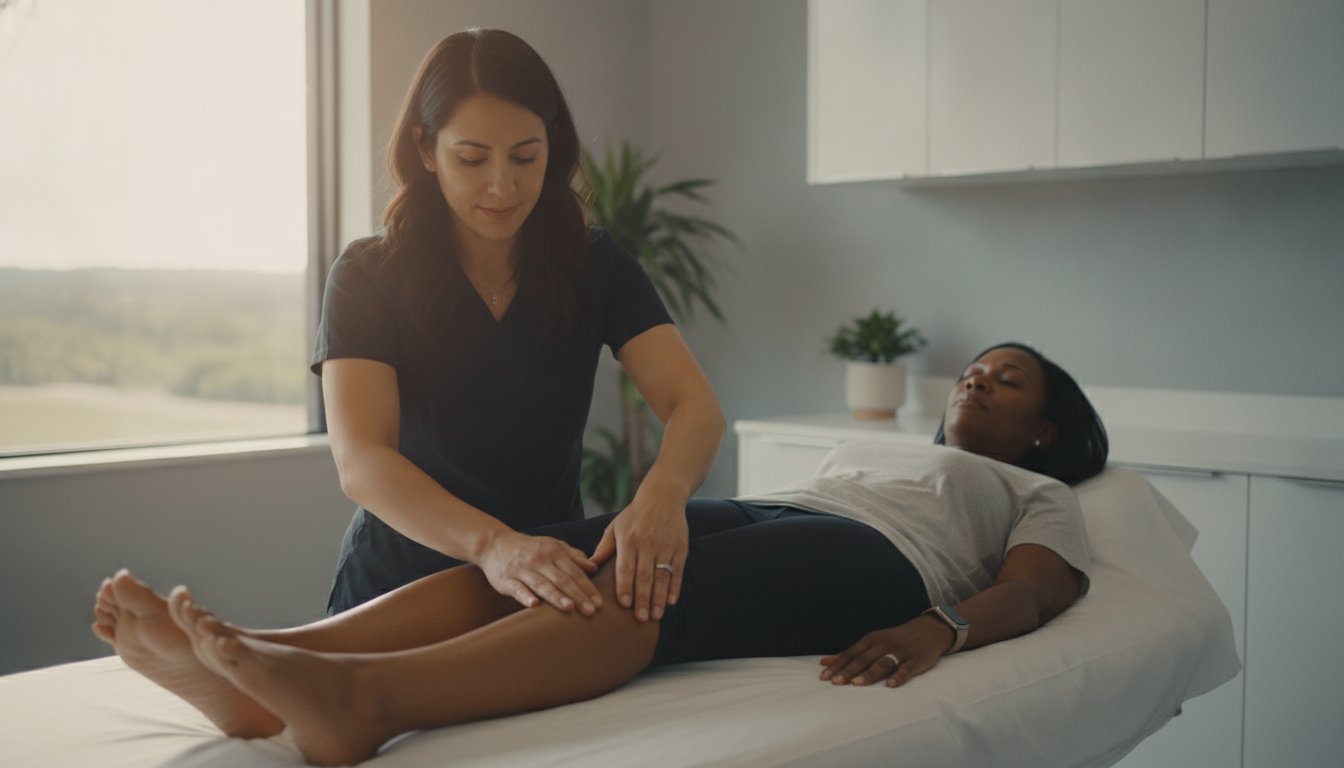
What if the persistent swelling and pressure in your limbs isn't a failure of diet or exercise, but a specific physiological condition that generic wellness massages are physically incapable of addressing? For many individuals in Central Texas, the frustration of being misdiagnosed with simple obesity is compounded by the physical pain of heavy, sensitive tissue. When seeking lipedema vs lymphedema treatment Austin, it's vital to understand that these conditions, while often appearing similar to the untrained eye, involve distinct biological mechanisms. One is a disorder of adipose tissue distribution, while the other is a failure of the lymphatic system's fluid dynamics.
You've likely felt the exhaustion of trying standard recovery methods that don't respect your body's unique anatomical needs. We're here to provide a clinical distinction between these two chronic conditions so you can finally access the specialized care you require. This comparison explores the technical differences between tissue-based and fluid-based swelling and introduces the specialized manual therapy protocols available in Austin. By understanding these nuances, you can move toward a structured recovery plan that reduces pain, improves mobility, and addresses the underlying mechanics of your condition with medical-grade precision.
Key Takeaways
- Differentiate between adipose tissue disorders and lymphatic fluid transport failures to identify the biological root cause of chronic limb swelling.
- Learn how clinical indicators such as limb symmetry and the Stemmer Sign help specialists distinguish between these often-misdiagnosed conditions.
- Discover why lipedema vs lymphedema treatment Austin requires distinct Manual Lymphatic Drainage protocols to address either inflammatory tissue or protein-rich fluid backup.
- Understand the strategic importance of utilizing specialized manual therapy as a critical pre-habilitation tool before undergoing surgical intervention.
- Gain insight into building a multidisciplinary recovery team in Central Texas through individualized anatomical assessments and clinical expertise.
Understanding the Pathophysiology: Lipedema vs. Lymphedema
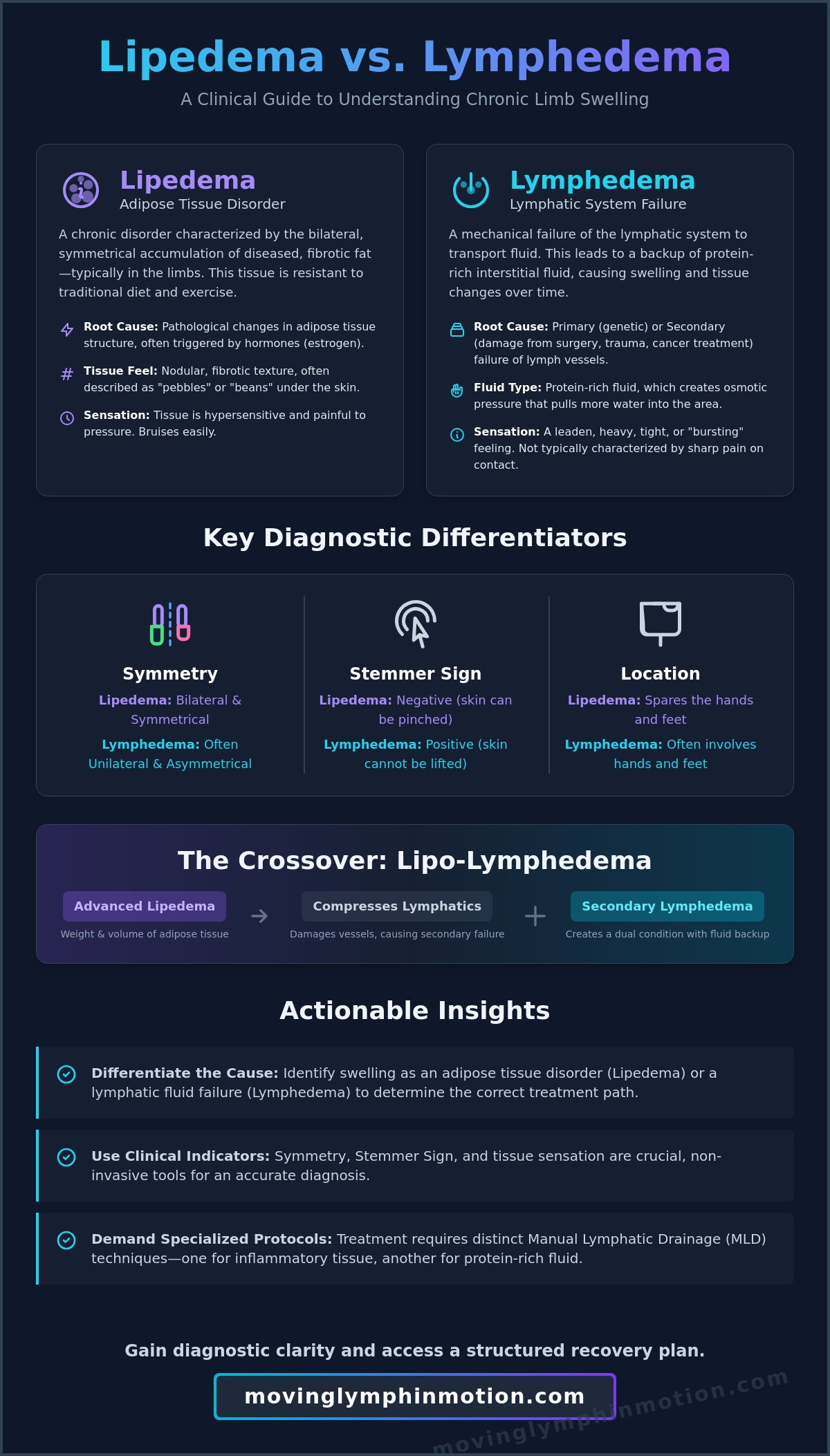
Successful recovery begins with an accurate anatomical diagnosis. While both conditions involve limb swelling, they originate from entirely different biological failures. Lipedema is a chronic adipose tissue disorder characterized by the bilateral, symmetrical accumulation of diseased fat, typically in the legs and arms. In contrast, lymphedema is a mechanical failure of the lymphatic system to transport protein-rich interstitial fluid. When evaluating lipedema vs lymphedema treatment Austin, the first clinical priority is identifying whether the swelling is tissue-based or fluid-based, as the manual protocols for each are physiologically distinct.
The Anatomy of Lipedema Fat
Lipedema fat isn't the result of caloric surplus; it's a pathological change in the tissue structure itself. Unlike standard subcutaneous fat, lipedema tissue is characterized by a nodular, fibrotic structure that often feels like small pebbles under the skin. This diseased tissue is highly resistant to traditional diet and exercise because the adipocytes are trapped in a state of chronic inflammation. Hormonal triggers, particularly estrogen, play a significant role in the progression of these stages. Understanding Lipedema requires recognizing that this tissue is hypersensitive to pressure and often bruises easily, distinguishing it from the painless, soft swelling seen in early-stage fluid retention.
The Mechanics of Lymphedema Fluid
Lymphedema occurs when the lymphatic system's transport capacity falls below the volume of fluid produced in the interstitial space. This failure can be primary, stemming from genetic malformations of the lymph vessels, or secondary, resulting from trauma, surgery, or cancer treatments. When the system's "vacuum" effect is compromised, protein-rich fluid pools in the tissue. This protein buildup is critical; it creates an osmotic pressure that pulls even more water into the area, leading to the heavy, tight sensation patients describe. Effective lipedema vs lymphedema treatment Austin must address this protein management to prevent the fluid from hardening into permanent fibrotic tissue.
It's also essential to monitor for the "Lipo-Lymphedema" crossover. This occurs when untreated lipedema progresses to a stage where the sheer weight and volume of the adipose tissue physically compress the lymphatic capillaries. Over time, this pressure damages the vessels, leading to a secondary lymphatic failure. At this stage, the patient faces a dual challenge: they must manage both the diseased adipose tissue and the stagnant fluid backup. Recognizing this transition early is vital for maintaining mobility and preventing skin complications in the Central Texas heat.
Diagnostic Indicators for Central Texas Patients
Diagnostic clarity is the cornerstone of effective clinical management. In Central Texas, where patients often encounter multiple providers before receiving a correct diagnosis, understanding the physical markers of lipedema vs lymphedema treatment Austin is essential. Symmetry serves as the primary visual differentiator. Lipedema is almost exclusively bilateral and symmetrical, affecting both legs or both arms equally. Lymphedema, however, frequently presents asymmetrically, often localized to a single limb following surgery, trauma, or lymph node removal.
Clinical practitioners utilize the Stemmer Sign to assess the progression of fluid stagnation and skin changes. This diagnostic test involves attempting to pinch and lift the skin on the base of the second toe or middle finger. A positive Stemmer Sign, where the skin cannot be lifted due to thickness, indicates significant fluid backup, a hallmark of lymphedema. Research from the Cleveland Clinic on Lipedema notes that this condition typically presents with a negative Stemmer Sign because the feet and hands remain unaffected by adipose accumulation until the very late stages of the disease.
Sensory feedback also provides critical diagnostic data. Lipedema tissue is characterized by extreme hypersensitivity; even light pressure can cause sharp pain or discomfort. Patients with lymphedema rarely report this type of acute tenderness. Instead, they describe a leaden, bursting sensation caused by the volume of trapped fluid. Recognizing these sensory nuances ensures that the manual therapy approach respects the patient's specific physiological tolerance and tissue state.
Physical Examination Markers
Specialists look for "cuffing" at the ankles or wrists, where diseased fat accumulation stops abruptly, leaving the feet or hands appearing normal. This is a classic indicator of lipedema. In contrast, lymphedema often involves the dorsal surface of the foot, leading to a "squared-off" appearance of the toes. We also evaluate for pitting edema. In early lymphedema, pressing the skin leaves a visible indentation. As the condition becomes chronic, the tissue may transition to non-pitting edema due to hyperkeratosis and skin hardening.
Environmental Factors in Austin and Central Texas
The Central Texas climate poses unique challenges for lymphatic health. When Austin temperatures exceed 100 degrees, the body undergoes significant vasodilation to regulate heat. This process increases blood flow to the skin, which naturally increases the lymphatic load. In the humid Austin-Round Rock corridor, this extra fluid struggles to clear, leading to what many locals call "swelling season." Professional-grade compression and increased frequency of manual therapy become non-negotiable during these months. If you're experiencing increased pressure due to the heat, an individualized assessment can help stabilize your tissue dynamics and prevent further progression.
Clinical Manual Lymphatic Drainage: Comparing Protocols
Manual Lymphatic Drainage (MLD) serves as the primary clinical intervention for both conditions, yet the application of the technique varies significantly based on the underlying pathophysiology. When evaluating lipedema vs lymphedema treatment Austin, it's vital to recognize that MLD is a specialized medical protocol, not a general wellness massage. While both treatments utilize rhythmic, precise movements, the physiological objective for lymphedema is mechanical fluid transport, whereas the objective for lipedema is systemic inflammation reduction and neurological calming.
The distinction in pressure is a critical factor in patient safety and therapeutic efficacy. Lymphedema protocols utilize light, skin-stretching strokes to stimulate the lymphangions, the tiny muscular units within the lymph vessels. This pressure is designed to increase the transport capacity of the fluid-heavy interstitial space. Conversely, lipedema tissue is often characterized by extreme hypersensitivity and fragile capillaries. The protocol must be adapted to address fibrotic adipose tissue without triggering a nociceptive pain response or causing bruising. In both cases, consistent manual intervention is the most effective way to prevent the development of permanent fibrosis, which occurs when stagnant fluid or inflamed tissue hardens over time.
The Lymphedema Protocol: Volume Reduction
For patients with fluid-based swelling, the manual protocol follows a strict proximal-to-distal sequence. We begin by "opening" the termini at the base of the neck and the proximal lymph node groups in the axilla or groin. This clearing process creates a negative pressure gradient, effectively functioning like a vacuum to pull fluid from the swollen limbs. The therapist directs the fluid across anatomical "watersheds" to functional node groups that can process the load. This approach is especially critical for secondary lymphedema cases, where we often integrate post-op lymphatic drainage Austin to manage swelling resulting from surgical trauma or node removal.
The Lipedema Protocol: Pain and Inflammation
The clinical management of lipedema focuses on the "painful fat" syndrome. Because the adipose tissue is in a state of chronic inflammatory distress, aggressive massage techniques can actually trigger inflammatory flares and exacerbate the condition. Our protocol utilizes a specialized depth that respects tissue hypersensitivity while working to soften nodular, fibrotic structures. By calming the peripheral nervous system, we can reduce the patient's overall pain levels and improve the metabolic environment of the diseased tissue. This meticulous approach ensures we address the anatomical nuances of the fat without damaging the delicate microvasculature that supports it.
Navigating Treatment in Austin: Conservative to Post-Op
Building a successful recovery path in Central Texas requires a collaborative medical network. For those seeking lipedema vs lymphedema treatment Austin, the journey often involves coordinating between primary care physicians, vascular specialists, and clinical therapists. It's essential to distinguish between medical-grade intervention and recreational spa services. While a general wellness massage might offer temporary relaxation, it's clinically contraindicated for these medical conditions. Standard massage techniques often involve deep, compressive strokes that can damage fragile lymphatic vessels or trigger inflammatory responses in diseased adipose tissue.
Integrating with Austin Plastic Surgeons
Clinical manual therapy serves as a vital "pre-habilitation" tool for patients considering surgical intervention. Before a plastic surgeon performs liposuction or tissue excision, the lymphatic system must be optimized to handle the upcoming inflammatory load. Pre-operative MLD reduces existing tissue congestion, making the surgical field cleaner and potentially improving the surgeon's visibility. Post-operative protocols are equally critical. Early manual intervention helps clear surgical trauma, reduces the formation of post-surgical fibrosis, and ensures that the remaining lymphatic pathways function at peak capacity to support the healing process.
The Role of Professional Certification
Navigating care in the Austin-Round Rock corridor means looking beyond general titles. Patients should specifically seek a Certified Lymphatic Therapist (CLT) who understands the complex fluid dynamics of the human body. These specialists undergo rigorous training to manage tissue states that a standard practitioner isn't equipped to handle. This level of expertise is why we offer professional manual lymphatic drainage certification to elevate the standard of clinical care in Central Texas. Whether you're in Cedar Park or Georgetown, verifying a therapist's clinical background is the most effective way to ensure your safety.
The environmental stressors of the Texas sun make these professional standards even more non-negotiable. Heat-induced vasodilation can quickly overwhelm a compromised system, turning a manageable condition into a painful flare-up. To maintain long-term tissue health and mobility, you need a partner who understands the anatomical nuances of your recovery. If you're ready to move beyond generic wellness and toward results-driven care, we invite you to schedule a clinical assessment to discuss your specific needs.
Specialized Clinical Care with Lymph in Motion
Criselda White’s approach at Lymph in Motion is built on the principle that clinical precision is the only path to sustainable recovery. For individuals navigating the complexities of lipedema vs lymphedema treatment Austin, the standard healthcare model often falls short, leaving patients with generic advice that fails to account for their specific tissue states. Our methodology prioritizes a deep anatomical understanding of fluid dynamics and adipose pathology. We provide a specialized environment where technical expertise meets the meticulous attention required for chronic condition management.
Effective management goes beyond the clinical session. We empower residents in Austin, Cedar Park, and Leander through comprehensive education on self-care and long-term tissue maintenance. This includes guidance on professional-grade compression, metabolic support, and manual techniques that can be safely integrated into your daily routine. By providing these tools, we ensure you aren't just a passive recipient of therapy but an informed partner in your own healing process.
A Clinical Partnership for Recovery
We reject the "one-size-fits-all" mentality that often characterizes the general wellness industry. Every recovery journey is unique, requiring evidence-based techniques tailored to whether you're managing post-operative recovery or a lifelong chronic condition. Our practice provides a safe, professional space for patients who've previously felt dismissed by traditional medical structures. By focusing on physiological outcomes rather than aesthetic fluff, we help you regain control over your mobility and reduce the systemic inflammation that drives these conditions.
Next Steps: Consultation and Planning
Your clinical journey begins with a thorough anatomical assessment. During this initial visit, we evaluate your tissue texture, limb symmetry, and current lymphatic function to establish a clinical baseline. We don't guess; we observe the specific physical challenges your body faces. From there, we develop a sequential frequency plan that aligns with your condition's stage and your specific recovery goals. This structured approach ensures that every intervention is purposeful, intentional, and effective. To begin your path toward improved health and reduced pain, you can Schedule your clinical consultation with Criselda White today.
Advancing Your Recovery with Clinical Precision
Achieving long-term tissue stability requires an accurate anatomical distinction between diseased adipose tissue and lymphatic fluid stagnation. These conditions demand fundamentally different manual protocols to ensure safety and therapeutic efficacy. Navigating the complexities of lipedema vs lymphedema treatment Austin involves more than just managing symptoms; it requires a specialist who understands the mechanical and metabolic drivers of your condition. By prioritizing clinical expertise over generic wellness, you can finally address the physiological root causes of your discomfort.
As a Certified Manual Lymphatic Drainage Specialist and a provider of professional MLD certification courses, Criselda White offers the technical precision necessary for complex cases. Our practice is also specialized in post-operative cosmetic surgery recovery, ensuring that surgical patients receive the meticulous care required to prevent fibrosis and optimize healing. You don't have to navigate this journey without a knowledgeable guide. We're committed to empowering you through specialized knowledge and a results-driven therapeutic approach that respects your body's unique anatomical needs.
Book a Clinical Consultation for Lipedema or Lymphedema to establish your clinical baseline. We look forward to supporting your transition toward improved mobility and reduced pain.
Frequently Asked Questions
Is lipedema treatment covered by insurance in Texas?
Insurance coverage for lipedema management varies significantly depending on your specific provider and policy requirements. While some major carriers now recognize the medical necessity of surgical intervention when conservative treatments fail, many manual therapy practices in Central Texas operate on a private-pay basis. These clinics can often provide a "Super Bill" that contains the necessary clinical codes for you to submit to your insurance company for potential out-of-network reimbursement.
How many sessions of MLD do I need for lymphedema management?
The frequency of sessions depends on the clinical stage of your condition and the current volume of fluid retention. During an intensive reduction phase, you might require several sessions per week to achieve significant volume changes. Once the limb volume has stabilized, maintenance sessions typically occur once or twice a week. We develop an individualized frequency plan during your initial assessment to ensure the protocol matches your body's specific transport capacity.
Can I have lymphatic drainage if I am planning lipedema surgery in Austin?
Yes, manual lymphatic drainage is a vital "pre-habilitation" tool that we recommend before any surgical intervention. Performing MLD in the weeks leading up to your procedure helps reduce systemic inflammation and optimizes the lymphatic pathways to handle the upcoming surgical trauma. This clinical preparation ensures a cleaner surgical field for your Austin surgeon and helps establish a stable baseline for your post-operative recovery phase.
What is the difference between a lymphatic massage and clinical MLD?
Clinical Manual Lymphatic Drainage (MLD) is a specialized medical protocol based on anatomical watersheds, whereas "lymphatic massage" is often a generic wellness term used in recreational settings. MLD requires precise, light, skin-stretching strokes that follow specific physiological pathways to stimulate lymphangion activity. It's a technical intervention performed by certified specialists, unlike recreational massages which may use incorrect pressure that can damage fragile vessels or exacerbate swelling.
Does the Austin heat make lipedema pain worse?
Yes, the Central Texas climate can significantly increase lipedema-related discomfort due to heat-induced vasodilation. When temperatures exceed 100 degrees, the body increases blood flow to the skin to regulate temperature, which naturally increases the lymphatic load in the limbs. This extra fluid pressure in already sensitive adipose tissue often leads to increased pain and a heavy sensation. Many patients find they need more frequent lipedema vs lymphedema treatment Austin during these seasonal flares.
Can manual therapy cure lymphedema or lipedema?
There is currently no known cure for either condition, but manual therapy is the gold standard for effective long-term management. These are chronic, progressive disorders that require consistent clinical intervention to prevent complications like tissue fibrosis or skin changes. Manual therapy focuses on reducing inflammation, managing fluid volume, and improving overall mobility. While it doesn't remove diseased adipose tissue, it stabilizes the condition and significantly improves your daily quality of life.
How do I find a certified lymphedema therapist in Cedar Park?
Finding a qualified specialist involves verifying their clinical credentials and specific training in lymphatic management. You should look for practitioners who hold a CLT (Certified Lymphatic Therapist) designation from an accredited institution. In areas like Cedar Park or Georgetown, it's essential to confirm they provide medical-grade MLD rather than general spa services. Choosing a clinic that also provides professional certification courses ensures you are receiving care based on the highest clinical standards.
Is manual lymphatic drainage painful for lipedema patients?
Clinical MLD should not be painful, even for patients with extreme tissue hypersensitivity. Unlike deep tissue massage, the pressure used in lipedema vs lymphedema treatment Austin is extremely light and rhythmic. The clinical goal is to calm the peripheral nervous system and reduce the inflammatory environment of the adipose tissue. If a therapist uses aggressive pressure that causes pain or bruising, they are utilizing an incorrect protocol that could trigger a harmful inflammatory flare.


