

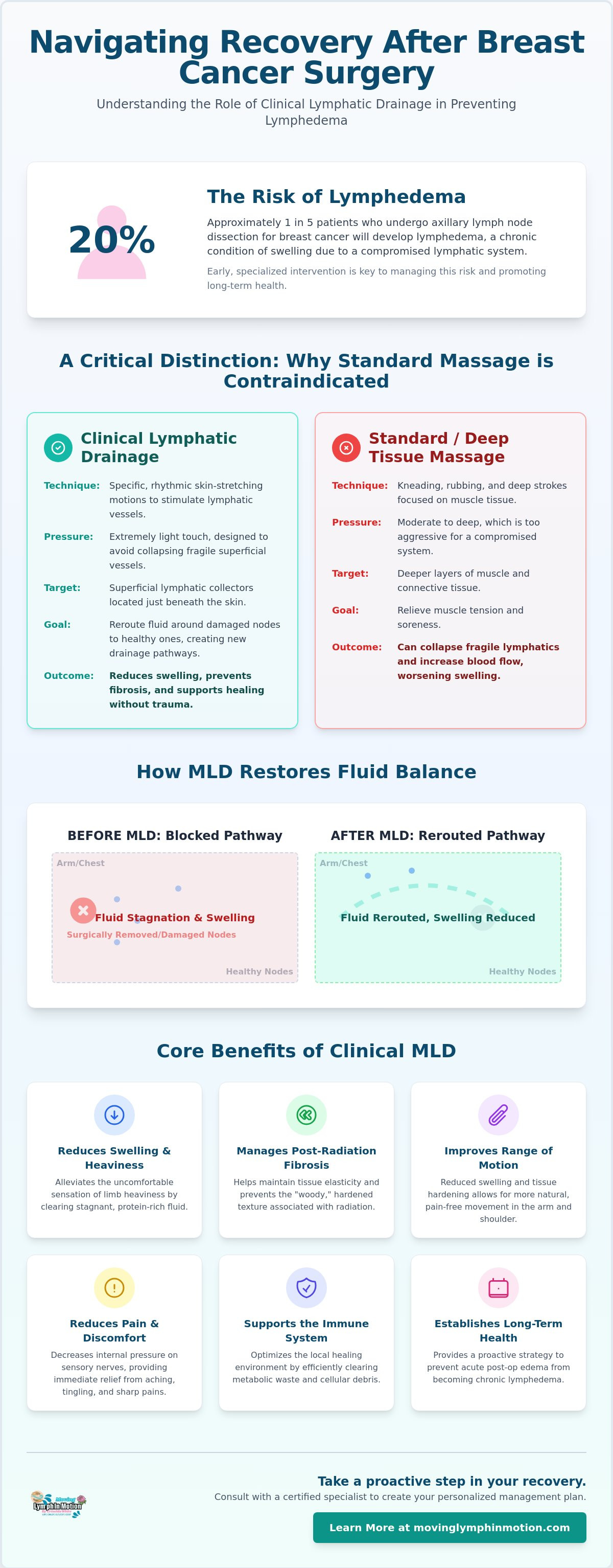
Approximately 20% of patients who undergo axillary lymph node dissection for breast cancer will develop lymphedema. This statistic often brings a heavy sense of anxiety for survivors navigating the delicate phase of post-oncology recovery. You're likely dealing with the physical discomfort of post-surgical edema or a restricted range of motion in your arm and chest. It's natural to feel protective of your healing tissues and wary of standard massage techniques that might cause further damage. Clinical lymphatic drainage for breast cancer isn't a luxury wellness treatment; it's a precise medical intervention designed to reroute fluid when your system's natural pathways have been surgically compromised.
We understand that your recovery requires more than just rest; it demands a structured, evidence-based approach to physiological health. This guide will help you understand the clinical role of manual lymphatic drainage in managing swelling and supporting tissue repair. We'll explore how specialized therapy prevents chronic lymphedema and provides a clear path for long-term lymphatic maintenance. By prioritizing your body's fluid dynamics, you can regain mobility and move forward with a professional plan for your ongoing health.
Key Takeaways
- Learn how clinical lymphatic drainage for breast cancer utilizes specific, light touch techniques to reroute fluid and alleviate the sensation of limb heaviness after node removal.
- Understand the anatomical necessity of precise, rhythmic pressure to avoid collapsing fragile lymphatic vessels, which is a critical distinction between medical MLD and standard massage.
- Discover how targeted therapy manages post-radiation fibrosis and tissue hardening, which supports healthier skin and improved range of motion in the chest and arm.
- Identify the most effective windows for intervention, including pre-operative preparation and managing acute seroma risks in the early days following surgery.
- Establish a clear, long-term management strategy to monitor lymphatic health and proactively prevent the development of chronic lymphedema.
What is Manual Lymphatic Drainage for Breast Cancer Patients?
Manual Lymphatic Drainage (MLD) is a specialized, light-touch clinical technique specifically engineered to address the complexities of a compromised lymphatic system. Unlike traditional massage, which focuses on muscle tissue and deep pressure, MLD targets the superficial lymphatic collectors located just beneath the skin. MLD is a rhythmic, skin-stretching technique that stimulates the contraction of lymphatic vessels to facilitate the movement of interstitial fluid. This precision is vital for patients who have undergone axillary lymph node dissection (ALND) or sentinel node biopsies, as these procedures physically remove the "filtration stations" responsible for draining the arm and chest wall.
Standard recreational massage is strictly contraindicated for individuals with surgically altered lymphatics. Deep, aggressive pressure can collapse fragile, superficial lymphatic vessels and increase blood flow to the area, which often exacerbates swelling rather than relieving it. Foundational research into Manual Lymphatic Drainage highlights its efficacy in managing protein-rich fluid accumulation without causing mechanical trauma to the healing surgical site. For those seeking lymphatic drainage for breast cancer, the goal is physiological restoration through anatomical rerouting.
The Role of the Lymphatic System in Oncology
The lymphatic system serves as the body's primary waste management infrastructure, filtering cellular debris and maintaining fluid homeostasis. Cancer treatments, including surgery and radiation, disrupt this balance by creating a physiological "bottleneck." When lymph nodes are removed or damaged by high-energy rays, the fluid that normally passes through those nodes has nowhere to go. This stagnation leads to localized swelling and increases the risk of infection. Early clinical intervention is the most effective way to prevent this temporary post-surgical edema from progressing into secondary lymphedema.
MLD vs. Lymphedema: Prevention and Management
It is essential to distinguish between acute post-operative swelling and chronic lymphedema. Temporary edema is a standard inflammatory response to surgical trauma, whereas lymphedema is a chronic condition characterized by the accumulation of protein-rich fluid due to a damaged transport system. Clinical lymphatic drainage for breast cancer encourages the development of collateral drainage pathways. These "detours" allow fluid to bypass the damaged areas and reach healthy, functioning lymph node groups in the neck or opposite side of the body. Accessing this specialized care through a certified professional, such as the experts at Best Lymphatic Specialist, ensures that your recovery is guided by medical-grade expertise rather than generalized wellness practices.
Clinical Benefits: How MLD Supports Breast Cancer Recovery
The therapeutic application of lymphatic drainage for breast cancer extends far beyond simple volume reduction. While decreasing the circumference of a swollen limb is a primary goal, the clinical benefits encompass a broader spectrum of physiological restoration. By manually stimulating the lymphatic vessels, a therapist assists the body in clearing protein-rich fluid that would otherwise remain stagnant in the interstitial spaces. This process significantly alleviates the sensation of "heaviness" that many survivors experience in the arm, chest, or axilla following surgery. Various clinical studies on MLD demonstrate that consistent intervention not only reduces swelling but also enhances the overall quality of life by restoring physical comfort.
Beyond fluid management, MLD plays a critical role in addressing radiation-induced changes. Radiation therapy can lead to fibrosis, a condition where healthy tissue becomes hardened and less pliable. Specialized manual techniques help maintain tissue elasticity and prevent the progressive "woodiness" often associated with post-radiation recovery. This intervention also supports the immune system. By facilitating the removal of metabolic waste and cellular debris, MLD ensures that the local immune environment is optimized for healing, reducing the burden on an already stressed system. Improving the range of motion in the shoulder and chest wall is another significant outcome, as reduced swelling allows for more natural, pain-free movement.
Pain Management and Inflammation Reduction
Fluid stagnation is more than a comfort issue; it's a direct contributor to physical pain. When excess fluid accumulates, it creates internal pressure that compresses sensory nerves, leading to sharp pains, tingling, or a dull ache. Understanding manual lymphatic drainage for inflammation from a clinical perspective reveals how reducing this pressure provides immediate relief. Patients often describe the treatment as soothing because the light, rhythmic strokes downregulate the sympathetic nervous system, shifting the body into a restorative state that naturally dampens inflammatory markers.
Supporting Tissue Healing and Scar Management
Surgical recovery often involves the risk of seromas, which are pockets of clear fluid that can collect under the skin. MLD helps move this fluid toward functional nodes, significantly lowering the risk of these accumulations. Additionally, the therapy is instrumental in scar management. By promoting healthy circulation and fluid flow around surgical sites, MLD prevents the formation of restrictive adhesions that can bind the skin to underlying muscle. This is particularly vital for patients preparing for subsequent reconstruction stages, as it ensures the tissue remains soft and receptive to further procedures. If you're navigating these recovery milestones, you may find it beneficial to review specialized therapy options at Best Lymphatic Specialist tailored to your specific surgical timeline.
Clinical MLD vs. Standard Massage: Why Pressure Matters
One of the most critical distinctions in post-oncology care is the difference between recreational massage and medical-grade Manual Lymphatic Drainage. While standard massage techniques like Swedish or deep tissue are effective for muscular tension, they're often counterproductive for a patient recovering from breast cancer surgery. The lymphatic system's superficial capillaries are located just beneath the skin's surface and are held open by microscopic anchor filaments. Excessive mechanical pressure, characteristic of spa-style massages, compresses these filaments and collapses the vessels. For those navigating lymphatic drainage for breast cancer, understanding that deep pressure prevents fluid from entering the lymphatic system is vital for safety and efficacy.
The practitioner's anatomical knowledge is your primary safety net. At Best Lymphatic Specialist, we utilize a clinical approach that prioritizes the physiological integrity of the tissue. This methodology acknowledges that the surgical area is no longer a standard anatomical landscape; it's a compromised system requiring rerouting rather than simple manipulation. The clinical evidence for MLD suggests that the best outcomes occur when the therapist works with the body's remaining functional pathways rather than forcing fluid through damaged zones. Clinical vigilance also means knowing when to defer treatment. For instance, active cellulitis or systemic infections are absolute contraindications, as MLD could unintentionally facilitate the movement of pathogens through the body.
The Risk of Aggressive Techniques
Aggressive techniques often involve excessive heat or friction, both of which trigger vasodilation. This increased blood flow brings more fluid into the interstitial spaces, overwhelming a system already struggling with a reduced node count. If you experience bruising, significant redness, or increased swelling after a session, it's a clear red flag that the pressure was too high. Vodder-style MLD relies on a specialized light touch protocol that focuses on skin stretching rather than deep tissue compression, ensuring the lymphatics remain open and functional throughout the treatment.
Identifying a Qualified Clinical Therapist
A general massage license provides a foundation in musculoskeletal work, but it doesn't equate to clinical MLD certification. Oncology patients have specific needs related to scar tissue, radiation fibrosis, and altered anatomy that require specialized training. During a clinical assessment at Best Lymphatic Specialist, your therapist evaluates your surgical history, skin integrity, and current fluid levels to create a customized management plan. This individualized attention is what separates a dedicated clinical partner from a traditional service provider.
The Recovery Timeline: When to Start Lymphatic Therapy
Timing is a critical variable in the success of your recovery. While many patients wait until swelling becomes a visible problem, clinical intervention is most effective when integrated into the surgical timeline early. Pre-operative MLD serves to prepare the body for the physiological "hit" of surgery by clearing baseline interstitial fluid and optimizing the tissue environment. This proactive measure ensures that the lymphatic system is operating at peak efficiency before the anatomical disruptions of mastectomy or node removal occur. A clean, high-functioning system is better equipped to handle the inflammatory response that follows surgical trauma.
The immediate post-operative window, typically between days 3 and 14, is a vital period for managing acute swelling and minimizing seroma risk. During this phase, the focus of lymphatic drainage for breast cancer is to gently encourage fluid away from fresh incisions and toward functional node groups. This intervention also supports the integration of physical therapy and the proper fit of medical compression garments, creating a comprehensive management plan that evolves with your healing. Long-term, your recovery plan shifts toward maintenance. Monitoring for triggers like air travel, extreme heat, or intense physical exertion years after surgery is essential for preventing the onset of chronic lymphedema.
Recovery After Mastectomy and Node Dissection
Following a mastectomy or axillary lymph node dissection, the chest wall and underarm area often experience significant fluid stagnation. A specific complication known as Axillary Web Syndrome, or "cording," can manifest as tight, rope-like structures under the skin that restrict arm movement. Gentle manual therapy helps soften these cords and restores mobility without straining the healing tissue. Beyond the physical, the compassionate application of clinical touch during this transition provides a sense of safety, helping patients reconnect with their bodies after the trauma of surgery.
MLD for Breast Reconstruction Patients
Breast reconstruction, particularly flap-based procedures like DIEP or TRAM, introduces unique recovery challenges. Unlike a standard mastectomy, reconstruction involves managing swelling at both the chest and the donor site, such as the abdomen. MLD is crucial for ensuring the successful "take" of the reconstructed tissue by reducing internal tension and promoting healthy microcirculation. By alleviating the pressure of excess fluid, the new tissue can integrate more effectively with the surrounding anatomy. To ensure your recovery timeline is professionally managed, you can schedule a clinical consultation to develop a personalized treatment schedule.
Specialized Breast Cancer Care in Austin and Central Texas
Residents of Central Texas navigating the process of post-oncology recovery often encounter a transitional gap between acute medical treatment and long-term physiological maintenance. Lymph in Motion by Criselda White functions as a dedicated clinical partner within the local healthcare community, bridging this gap with specialized expertise. We provide essential lymphatic drainage for breast cancer to survivors across Austin, Cedar Park, Round Rock, and Georgetown, ensuring that geographic proximity doesn't limit access to medical-grade care. Our practice is built on a foundation of anatomical precision, specifically addressing the unique challenges faced by those who have undergone surgical and radiological interventions.
Patient safety is our highest priority, which is why we maintain an open line of communication with local oncologists and surgeons. This collaborative model ensures that every manual intervention is synchronized with your broader medical plan, providing a layer of security that general wellness centers cannot offer. We understand that the fear of developing chronic lymphedema or the discomfort of persistent swelling can be overwhelming. However, you don't have to manage these physiological changes in isolation. By integrating clinical MLD into your recovery, you're choosing a path that prioritizes long-term tissue health and functional mobility over temporary relief. Our team acts as a steady guide, helping you interpret your body's signals and providing the technical intervention needed to keep your lymphatic system functioning optimally.
Clinical Lymphedema Management at Lymph in Motion
Managing chronic swelling requires a commitment to medical-grade seriousness and a focus on measurable physiological results. For a deeper understanding of our methodology, you can explore our guide on Clinical Lymphedema Therapy in Austin TX. We reject standardized, mass-market mentalities, opting instead for individualized attention that respects the specific trajectory of your healing. Our sessions are designed to provide physical relief while empowering you with the knowledge to manage your lymphatic health proactively. We focus on the mechanics of fluid dynamics to ensure that every stroke serves a therapeutic purpose.
Next Steps for Your Healing Journey
Preparing for your initial session involves a thorough review of your medical history and, in many cases, obtaining oncology clearance to ensure your system is prepared for manual drainage. We develop a customized recovery plan tailored to your specific surgical history and current tissue state. Whether you're in the acute stages of post-op healing or managing symptoms years after your final treatment, a structured approach is the most effective way to protect your health. To begin your professional recovery process, you can schedule your clinical MLD session via Vagaro and take the first step toward a more comfortable, mobile future.
Restoring Physiological Balance in Your Recovery Journey
Choosing a path toward long-term health means moving beyond reactive measures and embracing a structured clinical strategy. We've explored how specialized lymphatic drainage for breast cancer differs from standard massage by prioritizing the delicate mechanics of your surgically altered anatomy. Whether you're managing acute post-operative swelling or seeking to prevent chronic lymphedema, the key is consistent, medical-grade intervention that respects your body's new physiological landscape.
Our specialized oncology recovery protocols are designed to meet you at any stage of your timeline. With Certified Lymphatic Therapist (CLT) expertise, we serve survivors throughout the Greater Austin area, including Cedar Park and Georgetown. By focusing on evidence-based results rather than aesthetic fluff, we help you regain your range of motion and confidence in your body's ability to heal. You don't have to navigate the complexities of post-surgical edema without professional guidance.
Book Your Clinical Lymphatic Consultation in Austin
You deserve a recovery plan that's as resilient and dedicated as you've been throughout your treatment. We're honored to act as your clinical partner in this next chapter of your healing journey.
Frequently Asked Questions
Is lymphatic drainage massage safe during chemotherapy or radiation?
Manual lymphatic drainage is generally safe during active treatment, provided your oncologist has cleared you for manual therapy. It assists in managing the systemic inflammatory response and heavy fluid burden often associated with pharmaceutical interventions. During radiation, we avoid direct contact with the treated field to respect skin sensitivity, focusing instead on clearing the surrounding drainage pathways to maintain tissue health.
How soon after a mastectomy can I start lymphatic drainage?
Clinical therapy typically begins between 3 and 14 days after surgery, depending on your surgeon's protocol and the status of your surgical drains. Early intervention is instrumental in managing acute swelling and reducing the risk of seroma formation. We prioritize gentle, proximal clearing to ensure the system is prepared to handle the fluid load from the surgical site as healing progresses.
Can lymphatic drainage spread cancer cells to other parts of the body?
There is no clinical evidence to suggest that lymphatic drainage for breast cancer facilitates the metastasis of cancer cells. This is a historical misconception that has been debunked by modern oncology research. MLD focuses on the movement of interstitial fluid through established or collateral pathways, and it's a standard component of professional cancer rehabilitation programs worldwide.
How many sessions of MLD will I need after breast cancer surgery?
The number of sessions required depends on the complexity of your surgery and the severity of your edema. An intensive initial phase often involves two to three sessions per week for several weeks to achieve significant volume reduction. Once the swelling is stabilized, we transition to a maintenance schedule that monitors your lymphatic health and prevents long-term complications.
What is the difference between lymphedema and normal post-op swelling?
Normal post-operative swelling is a temporary inflammatory response that resolves as tissues heal, while lymphedema is a chronic condition. Lymphedema occurs when the transport capacity of the lymphatic system is permanently reduced due to node removal or radiation damage. This results in the accumulation of protein-rich fluid that requires specialized clinical management to prevent tissue hardening and infection.
Do I need a doctor’s referral for lymphatic drainage in Austin?
While Texas law doesn't strictly require a prescription for massage therapy, our clinical protocol requires clearance from your oncologist or surgeon. This ensures that your therapy is synchronized with your medical treatment plan and that all contraindications are accounted for. We prioritize this collaborative approach to maintain the highest standard of patient safety and physiological results.
What should I wear to my lymphatic drainage session?
You should wear loose, comfortable clothing that is easy to remove, as clinical MLD is performed directly on the skin. We provide professional medical draping to ensure your comfort and privacy throughout the session. Choosing garments that don't restrict the limb or chest area after the treatment will help maintain the fluid movement achieved during the session.
Can I perform lymphatic drainage on myself at home?
Self-drainage techniques can be a valuable component of your maintenance plan, but they should only be performed after professional instruction. A certified therapist must first map your specific drainage pathways and ensure you understand the correct pressure and direction. Home care is a supplementary tool designed to support, not replace, your clinical lymphatic drainage for breast cancer.