
What if the most effective way to resolve persistent swelling isn't through rest, but through a specialized recalibration of your body’s fluid dynamics? Many patients find that post-operative edema or chronic puffiness simply refuses to budge, even with standard recovery protocols. This stagnation isn't just uncomfortable; it's a physiological bottleneck that can stall your entire healing process. Clinical manual lymphatic drainage for inflammation offers a precise, evidence-based intervention designed to clear this cellular debris and restore systemic balance.
You've likely experienced the frustration of slow recovery after cosmetic or medical surgery, perhaps even feeling confused by the difference between a recreational "lymphatic massage" and clinical MLD. We recognize that navigating recovery requires more than just wellness trends; it requires anatomical precision. This article will explain the complex physiological mechanisms of the lymphatic system and how targeted manual techniques facilitate the removal of inflammatory metabolic waste. You'll gain a clear understanding of the lymphatic system's role in waste removal and how these clinical protocols accelerate post-op healing while significantly reducing physical discomfort.
Key Takeaways
- Discover the specific anatomical mechanisms, such as the activation of lymphangions and capillary flap valves, that allow clinical interventions to resolve stagnant fluid.
- Understand why manual lymphatic drainage for inflammation requires precise, light-pressure sequences rather than the aggressive techniques used in traditional deep-tissue massage.
- Learn how specialized lymphatic protocols actively prevent the formation of internal scar tissue and fibrosis following cosmetic procedures like liposuction or BBL.
- Identify the critical role of MLD in managing secondary lymphedema and complex swelling associated with oncology treatments and mastectomies.
- Explore the Lymph in Motion methodology, which prioritizes measurable physiological results and tissue health to ensure a safe, evidence-based recovery journey.
What is Manual Lymphatic Drainage (MLD) for Inflammation?
Manual lymphatic drainage (MLD) is a specialized, non-invasive therapeutic technique designed to stimulate the lymphatic system's primary vessels and nodes. It serves as a clinical tool for the precise management of interstitial fluid, ensuring that the space between your cells remains clear of metabolic waste. While many associate manual therapy with relaxation, clinical MLD operates on a physiological level to resolve fluid stagnation. We utilize the Vodder method, widely recognized as the gold standard for therapeutic results, to achieve predictable and measurable outcomes in tissue health.
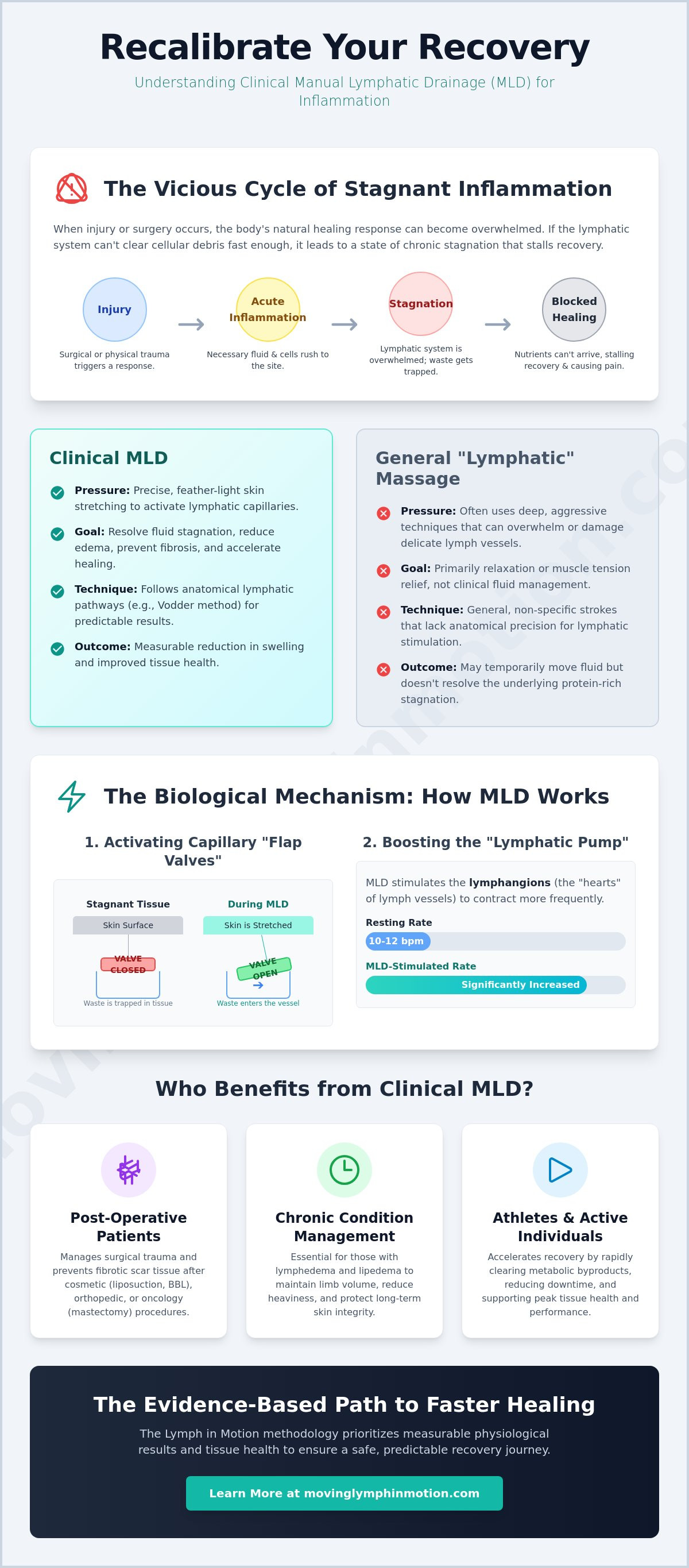
Inflammation is a necessary biological response to injury or surgery, but it becomes problematic when it reaches a state of stagnation. Acute inflammation is the body's initial, localized attempt at healing. However, if the lymphatic system can't keep pace with the volume of fluid and cellular debris, this acute response transitions into chronic inflammatory stagnation. This persistent state prevents fresh, nutrient-rich blood from reaching the tissues, effectively stalling the healing process. Utilizing manual lymphatic drainage for inflammation ensures that this cycle is interrupted, allowing the body to return to its natural regenerative state.
The Difference Between Swelling and Inflammation
Swelling, or edema, is the visible manifestation of underlying fluid inflammation. It's the physical outcome of your body's "trash service"—the lymphatic system—becoming overwhelmed. While localized injury swelling might resolve with basic elevation, systemic or post-operative inflammation requires a more sophisticated approach. The lymphatic system must transport large protein molecules and cellular waste that the venous system simply cannot handle. When these proteins remain trapped in the tissue, they attract more water, creating a feedback loop of persistent swelling and tissue tension.
Who Benefits from MLD for Inflammation?
Clinical intervention is often necessary when the body's natural drainage capacity is compromised. The following groups find significant relief through manual lymphatic drainage for inflammation:
- Post-operative patients: Whether you're recovering from cosmetic surgery, mastectomies, or orthopedic procedures, MLD is essential for managing surgical trauma and preventing the buildup of fibrotic tissue.
- Chronic condition management: Individuals living with lymphedema and lipedema rely on MLD to maintain limb volume, reduce heaviness, and protect skin integrity.
- Athletes and active Austin residents: High-performance recovery often hinges on how quickly the body clears metabolic byproducts. MLD accelerates this process, reducing downtime and supporting long-term tissue health.
By addressing the root cause of fluid retention, MLD provides a pathway to faster healing that rest alone cannot offer. It's an active, evidence-based approach to recovery that prioritizes your physiological well-being.
To further enhance this pathway, some patients integrate advanced recovery tools into their routine; for example, you can visit Lampa na Podczerwień MOVE+ Pro to see how light therapy supports the body's natural healing mechanisms.
The Biological Mechanism: How MLD Resolves Fluid Stagnation
The efficacy of clinical intervention rests on understanding the microscopic structures of the lymphatic system. Unlike the circulatory system, which relies on the heart's central pump, the lymphatic system depends on extrinsic and intrinsic pressures to move fluid. The biological mechanism of MLD centers on the manipulation of the initial lymphatics. These microscopic vessels are held in place by anchoring filaments. When specific, directional skin stretch is applied, these filaments pull open the "flap valves" of the lymphatic capillaries. This allows large protein molecules, metabolic waste, and excess water to enter the system from the surrounding tissue.
Once fluid enters the vessels, it reaches the lymphangion. Often described as the "heart" of the lymph vessel, the lymphangion is a segment of a collector vessel situated between two one-way valves. These segments possess smooth muscle that contracts rhythmically. Clinical manual lymphatic drainage for inflammation stimulates these contractions, increasing the frequency of the "lymphatic pump" from its resting rate of roughly 10 to 12 beats per minute to significantly higher levels. This acceleration is vital for reducing the protein load in the interstitial space. If left unmanaged, high-protein fluid eventually leads to tissue hardening and fibrosis, a common complication in chronic inflammatory states. When lymph nodes are damaged or removed, we use these same principles to "re-route" fluid toward healthy, functional lymphatic watersheds.
The Interstitial Space: Where Inflammation Lives
Inflammation resides in the interstitial space, the fluid-filled environment surrounding your cells. When this area becomes congested with inflammatory markers, it creates a barrier that prevents oxygen and nutrients from reaching healthy tissue. It's a common misconception that deep pressure is required to clear this congestion. In reality, aggressive massage techniques can actually collapse the delicate initial lymphatics, causing further trauma. By using light, precise movements, we ensure these vessels remain open and functional. For those navigating complex recoveries, understanding these physiological recovery paths is the first step toward effective healing.
Stimulating the Lymphatic Pump
The manual application involves specific rhythmic, circular motions that mimic the natural pulse of the lymphangion. Each stroke includes a working phase and a resting phase. The resting phase is critical; it allows the vessels to refill before the next contraction is stimulated. This methodical rhythm doesn't just move fluid; it also has a profound effect on the parasympathetic nervous system. By shifting the body into a "rest and digest" state, manual lymphatic drainage for inflammation fosters the systemic environment necessary for deep tissue repair and cellular regeneration. For individuals looking to further enhance this restorative state, Upper Cervical Care offers a directory of specialists focused on structural alignment and nervous system health.
Clinical MLD vs. General Lymphatic Massage
The term lymphatic drainage massage is frequently used in general wellness settings, but it's vital to distinguish between a recreational spa treatment and clinical Manual Lymphatic Drainage (MLD). A standard Swedish massage focuses on muscle-kneading and deep tissue manipulation to relieve tension. In contrast, MLD utilizes a specific, light skin-stretching stroke designed to interact solely with the superficial lymphatic system. While a spa-level service may offer temporary relaxation, it often lacks the anatomical precision required to resolve stagnant fluid in compromised tissues. Clinical manual lymphatic drainage for inflammation is a targeted medical intervention, not a luxury.
Aggressive, deep-tissue massage is strictly contraindicated for individuals managing post-operative inflammation. Applying heavy pressure to traumatized tissue can damage fragile new capillaries and increase the protein load in the interstitial space, potentially leading to bruising or prolonged edema. True MLD requires specialized training, such as the professional Manual Lymphatic Drainage certification courses offered by Criselda White, to ensure the practitioner understands the directional flow and specific pressure levels necessary for physiological results. We prioritize tissue safety over aesthetic fluff, ensuring that every movement serves a functional purpose in your recovery.
Why Pressure Matters in Inflammatory Recovery
The lymphatic system is predominantly superficial, with roughly 70% of the initial lymphatics located just beneath the skin. Deep pressure effectively bypasses these drainage vessels, collapsing them and preventing fluid uptake. This is particularly dangerous during surgical recovery, where "aggressive" techniques can induce more inflammation rather than resolving it. For those navigating the early stages of healing, our Post-Op Lymphatic Drainage Austin guide provides a detailed look at how pressure must be adjusted based on surgical specifics to protect the delicate healing environment.
The Importance of Certified Practitioners
A Certified Lymphatic Therapist (CLT) undergoes hundreds of hours of training to master the Vodder method and clinical pathology. This expertise is critical because improper drainage can actually cause harm. For example, moving fluid toward compromised lymph nodes or an area of high pressure can exacerbate swelling. Whether you're seeking lipedema vs lymphedema treatment Austin, the practitioner's ability to assess tissue state is paramount. Manual lymphatic drainage for inflammation is only safe and effective when the therapist can accurately identify lymphatic watersheds and redirect fluid to healthy, functional nodes. This level of meticulous care is what separates clinical MLD from a standard massage.
Targeting Specific Inflammatory Conditions
Clinical application of manual lymphatic drainage for inflammation requires a nuanced understanding of different tissue pathologies. The inflammatory response following large-volume liposuction, for example, differs fundamentally from the chronic stagnation observed in post-oncology lymphedema. While the former involves acute surgical trauma and the risk of localized fluid pockets, the latter requires a long-term strategy for managing compromised lymphatic watersheds. By tailoring the directional flow and pressure to the specific condition, we ensure that the intervention supports the body's unique recovery requirements rather than providing a generic, one-size-fits-all service.
Post-Operative Recovery and Fibrosis Prevention
The inflammatory timeline following cosmetic surgery is predictable, yet its management must be meticulous. Within the first 48 hours, the body initiates a flood of fluid to the surgical site. If this interstitial fluid isn't efficiently evacuated, it can organize into seromas (fluid pockets) or eventually harden into fibrotic scar tissue. MLD is the primary clinical tool used to prevent this "lumpy" texture after procedures like liposuction or a BBL. It clears the path for healthy tissue re-adhesion and ensures a smoother aesthetic result. For patients recovering from facial procedures, incorporating buccal massage Austin offers an intraoral approach to resolve deep-seated facial edema that external techniques alone cannot reach.
Chronic Condition Management: Lymphedema and Lipedema
Chronic inflammation in conditions like lymphedema and lipedema isn't merely a matter of volume; it's a matter of tissue quality. The "heavy" sensation often described by patients is the result of protein-rich fluid causing tension within the skin. Manual lymphatic drainage for inflammation is a cornerstone of Complete Decongestive Therapy (CDT), serving to move lymph away from congested areas toward functional nodes. This is especially critical after oncology treatments, such as mastectomies, where the lymphatic system has been structurally altered. Our professional guide on clinical lymphedema therapy in Austin TX outlines how we navigate these complex, long-term inflammatory challenges with anatomical precision.
Beyond surgical and chronic illness recovery, we utilize MLD within our "Build and Sculpt" approach to enhance physical results for active individuals. By removing metabolic waste and reducing sub-clinical inflammation, we optimize the physiological environment for muscle definition and tissue health. This methodology prioritizes the removal of cellular debris, ensuring that your body's "trash service" is operating at peak efficiency. It's an evidence-based way to support your body's natural contours while prioritizing systemic health.
To begin your recovery with a specialist who understands your specific inflammatory needs, book a clinical consultation today.
Professional MLD in Austin: The Lymph in Motion Approach
Lymph in Motion by Criselda White is the clinical leader for lymphatic recovery in Central Texas. We don't offer general wellness services; we provide medical-grade interventions. Our focus remains on measurable physiological results rather than aesthetic fluff. By prioritizing the anatomical integrity of the lymphatic system, we ensure that manual lymphatic drainage for inflammation serves as a reliable pathway to recovery for patients in Austin and Cedar Park. We act as your clinical partner, providing the steady guidance needed to navigate the complexities of tissue healing.
Individualized Clinical Care Plans
Every recovery journey begins with a meticulous assessment. We analyze tissue quality and identify specific areas of stagnant fluid to create individualized care plans. This isn't a standardized protocol. It's a tailored response to your specific surgery or chronic condition. For active individuals, we often integrate the build and sculpt body treatment. This clinical approach removes metabolic debris while supporting tissue definition. It's a functional methodology that bridges the gap between recovery and peak physical performance, ensuring your body's systems operate at high efficiency.
Education and Certification for Practitioners
Our commitment to the Austin community extends beyond patient care. We aim to raise the standard of lymphatic therapy across Texas. To achieve this, Criselda White offers professional Manual Lymphatic Drainage certification courses for massage therapists and medical professionals. These courses provide deep anatomical education, ensuring that local practitioners can safely and effectively apply manual lymphatic drainage for inflammation. By building a community of highly skilled therapists, we ensure that patients have access to the expert care they deserve. We invite local professionals to join this specialized community and elevate their clinical practice.
Navigating physical recovery is complex. You need a dedicated expert who understands the science of healing and respects the delicate nature of your tissues. Whether you're managing post-op edema or a chronic condition, our team provides the evidence-based results you require. We invite you to experience a methodology rooted in clinical precision. To begin your recovery journey, contact us to schedule a consultation at our Austin or Cedar Park locations. We're ready to help you restore your systemic balance and accelerate your healing process.
Restoring Physiological Balance and Accelerating Recovery
Resolving persistent edema and surgical trauma requires more than passive rest; it necessitates a precise anatomical intervention. Clinical manual lymphatic drainage for inflammation acts as a targeted mechanism to evacuate metabolic waste and prevent the development of fibrotic tissue. By prioritizing the rhythmic stimulation of the lymphangion over aggressive muscle manipulation, you ensure that your body's fluid dynamics are restored to their optimal state. This evidence-based approach is essential for anyone navigating the complexities of post-operative healing or chronic lymphatic disorders.
At Lymph in Motion, we provide expert care in post-op cosmetic recovery and lymphedema management, serving the greater Austin area, including Cedar Park, Georgetown, and Leander. As a specialized MLD certification provider for professionals, we're dedicated to clinical excellence and patient safety. We invite you to Book a Clinical Lymphatic Consultation with Criselda White to establish a care plan tailored to your unique physiological needs. Your path to a faster, more comfortable recovery begins with professional expertise. We're committed to supporting your healing journey with the clinical precision you deserve.
Frequently Asked Questions
How does manual lymphatic drainage help with systemic inflammation?
MLD assists systemic inflammation by accelerating the removal of inflammatory proteins and cellular debris from the interstitial fluid. By stimulating the lymphatic pump, the technique ensures that stagnant fluid, which often traps pro-inflammatory markers, is redirected toward functional lymph nodes for filtration. This process restores the physiological environment required for cellular repair and reduces the overall toxic load on the body's tissues.
Can I perform MLD on myself for inflammation?
While basic self-clearing techniques exist for maintenance, clinical manual lymphatic drainage for inflammation requires professional anatomical knowledge to be effective. A therapist must identify specific lymphatic watersheds and directional flow patterns that are unique to your condition or surgical history. Improper self-application risks moving fluid toward congested or compromised nodes, which can inadvertently increase localized pressure and discomfort.
How many sessions of MLD are needed to see a reduction in swelling?
Most patients observe a measurable reduction in tissue tension and volume after a single session, though a series is typically required for lasting results. For acute post-operative recovery, a protocol of three to five sessions per week is often recommended during the first fourteen days. Chronic conditions like lymphedema generally require a more consistent, long-term maintenance schedule to manage ongoing fluid production and prevent tissue fibrosis.
Is MLD safe to perform immediately after cosmetic surgery?
MLD is generally safe and highly recommended within 24 to 48 hours following cosmetic surgery, provided there are no contraindications such as active infection or blood clots. Early intervention is critical for managing the initial inflammatory flood and preventing the formation of seromas. We work in coordination with your surgical team to ensure that the timing and pressure of the treatment align with your specific healing phase.
What is the difference between MLD and a regular massage?
The primary difference lies in the anatomical target and the depth of pressure applied. Regular massage focuses on muscle-kneading and deep tissue manipulation to resolve tension. MLD utilizes a specific, light skin-stretching stroke that interacts only with the superficial lymphatic capillaries. Using deep pressure on inflamed or post-surgical tissue can actually collapse these delicate vessels, making regular massage contraindicated for acute inflammatory recovery.
Does MLD help with inflammation from autoimmune conditions like rheumatoid arthritis?
MLD serves as a supportive therapeutic intervention for autoimmune-related inflammation by facilitating the drainage of fluid accumulated in joint capsules and surrounding tissues. While it doesn't treat the underlying autoimmune cause, it effectively reduces the localized swelling and pressure that contribute to pain and stiffness. This helps improve joint mobility and provides systemic relief from the discomfort associated with chronic inflammatory flares.
Why is light pressure used in MLD instead of deep tissue work?
Light pressure is necessary because the initial lymphatics are located just beneath the skin and are extremely delicate. Deep pressure or heavy compression bypasses these superficial vessels and can cause them to collapse, effectively shutting down the drainage route. By using a light touch, we engage the anchoring filaments that open the capillary flap valves, allowing for the efficient uptake of large inflammatory molecules into the lymphatic system.
Where can I find a certified lymphatic therapist in Austin or Cedar Park?
You can find specialized care at Lymph in Motion, led by Criselda White, with convenient locations in both Austin and Cedar Park. Our clinic focuses on clinical manual lymphatic drainage for inflammation, ensuring every session is performed by a therapist with advanced certification. We prioritize evidence-based results for post-operative recovery and chronic condition management, serving the greater Central Texas region with a commitment to anatomical precision.