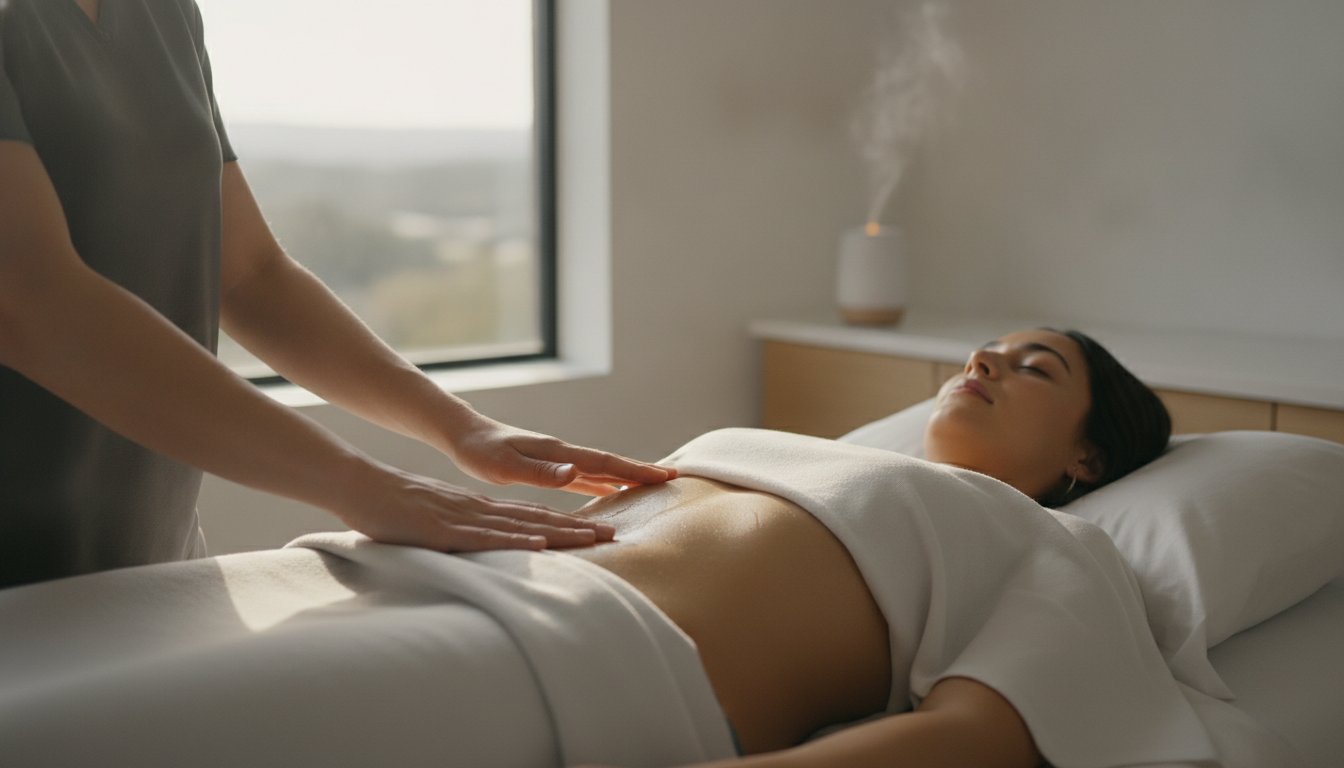
With searches for Brazilian Butt Lifts in Texas surging by 651 percent since 2018, the demand for clinical post-operative care has far outpaced the number of qualified practitioners. You've likely noticed the general massage market becoming increasingly crowded, making it harder to differentiate your skills while competing for the same wellness clients. It's often overwhelming to face complex cases of post-surgical edema or fibrotic tissue without a clear, evidence-based protocol; this is especially true when you're also trying to decipher the specific TDLR requirements for your biennial license renewal.
Discover how to advance your clinical practice through specialized lymphatic drainage continuing education Texas programs that bridge the gap between basic relaxation and medical-grade recovery. You'll learn the exact path to achieving a recognized MLD certification and mastering the precise manual techniques required to manage delicate fluid dynamics and tissue states. This article outlines how to transition from a generalist to a specialist, allowing you to provide the sophisticated, results-oriented care that post-operative patients in Austin and across the state desperately need to heal safely.
Key Takeaways
- Identify the critical differences between general wellness massage and the clinical application required for post-operative cosmetic surgery recovery.
- Master the anatomical foundations of the superficial and deep lymphatic systems to effectively manage complex fluid dynamics and tissue states.
- Navigate the 2026 TDLR standards for lymphatic drainage continuing education Texas to ensure your professional license remains compliant and current.
- Explore specialized career pathways in oncology-related swelling, post-surgical aesthetic recovery, and advanced buccal massage techniques.
- Learn how to apply medical-grade manual techniques to high-demand recovery cases such as Lipo 360, BBLs, and breast cancer therapy.
The Growing Demand for Clinical Lymphatic Drainage Education in Texas
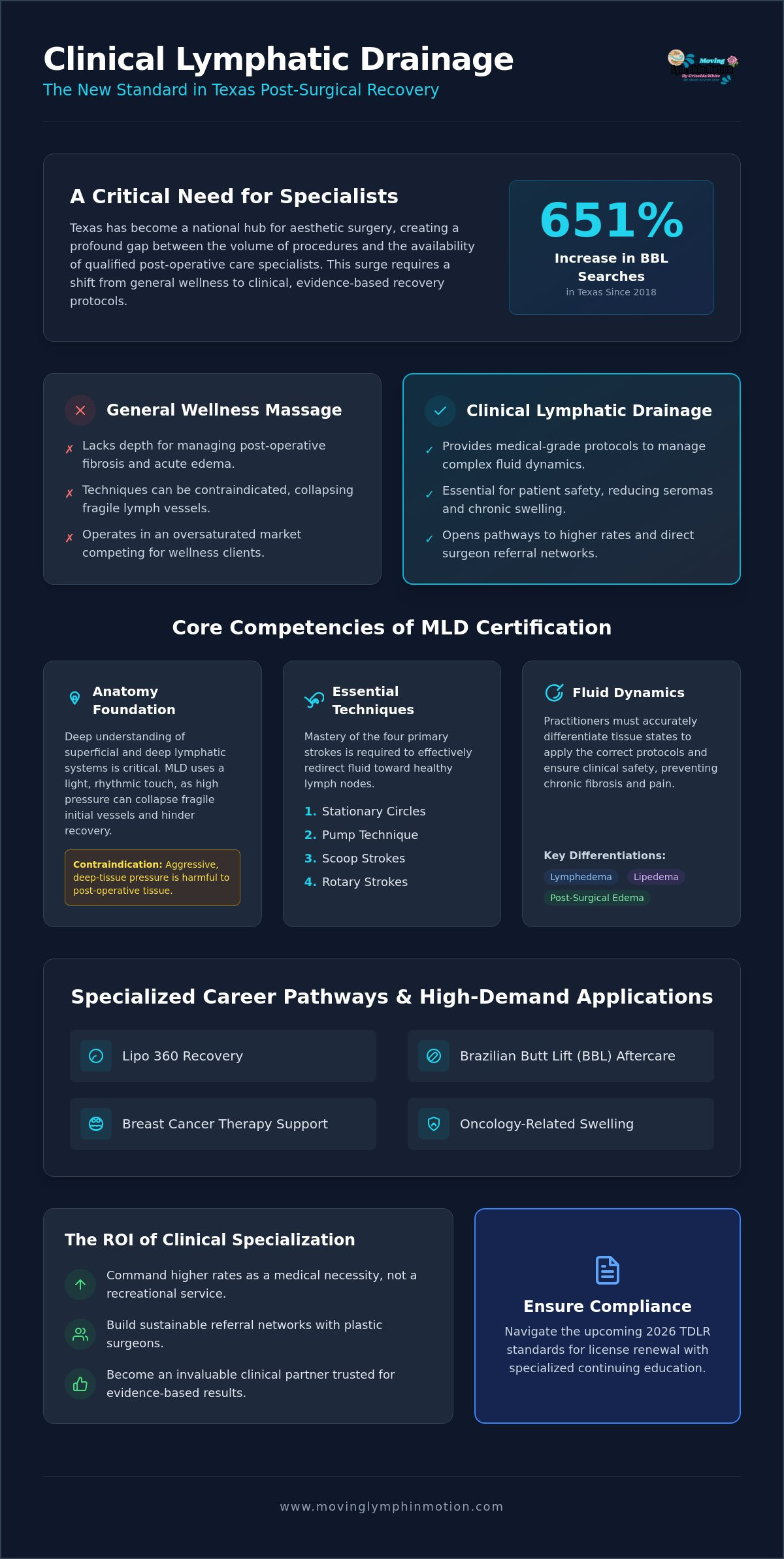
Texas has solidified its position as a national leader in the aesthetic surgery market. Houston currently holds the highest interest in plastic surgery among Texas metropolitan areas, while the state has seen a staggering 651 percent increase in searches for the Brazilian Butt Lift (BBL) since 2018. This volume of surgical intervention has created a profound necessity for specialized post-operative care. While many practitioners offer general wellness services, there's a critical shortage of therapists equipped to handle the physiological complexities of surgical recovery. Seeking Manual lymphatic drainage training is no longer a niche choice; it's a clinical requirement for those working in the modern aesthetic landscape.
General massage therapy often lacks the technical depth to manage post-operative fibrosis and acute edema. Traditional techniques might even be contraindicated during the early stages of tissue remodeling. Practitioners must understand the specific fluid dynamics at play after procedures like Lipo 360. This is why lymphatic drainage continuing education Texas programs are shifting toward a medical-grade curriculum. By mastering clinical protocols, you move beyond the oversaturated general wellness market and into an essential role within the patient's surgical team.
Addressing the Post-Surgical Recovery Gap
Procedures like Lipo 360 and BBL involve significant trauma to the interstitial space, requiring precise intervention to prevent complications. In growing Central Texas hubs like Round Rock and Georgetown, the demand for these surgeries is high, yet the availability of clinical specialists remains low. Surgeons are increasingly observant of patient outcomes, often mandating that their patients work exclusively with certified MLD therapists. This ensures that the delicate lymphatic channels are supported during the inflammatory phase, reducing the risk of seromas and chronic swelling.
The ROI of Clinical Specialisation
Transitioning from a generalist to a specialist offers a clear professional advantage. Specialized practitioners can command higher rates because they provide a medical necessity rather than a recreational service. By pursuing lymphatic drainage continuing education Texas, you gain the credentials needed to build sustainable referral networks with Austin-area plastic surgeons. These partnerships are built on trust and evidence-based results. When a therapist can demonstrably shorten recovery timelines and improve tissue quality, they become an invaluable clinical partner rather than just a service provider.
Core Competencies: What a Professional MLD Certification Must Cover
Manual Lymphatic Drainage (MLD) is a specialized technique designed to optimize fluid dynamics and immune function. It isn't a traditional massage modality; it's a precise physiological intervention focused on the delicate movement of lymph through the body's filtration system. Practitioners must move beyond a basic understanding of relaxation and focus on the specific biological mechanisms that drive tissue recovery and fluid clearance. Mastery of these competencies ensures that the therapist can provide a safe environment for healing, particularly when managing the complex inflammatory responses that follow invasive surgical procedures.
The anatomical foundation of MLD requires a deep understanding of the superficial and deep lymphatic systems. The superficial system, located just beneath the skin, handles the majority of lymph transport. Applying aggressive pressure, such as that used in deep tissue massage, is strictly contraindicated during post-operative recovery. High-pressure techniques can collapse the fragile initial lymph vessels and cause further trauma to healing tissues. Instead, MLD uses a light, rhythmic touch that stimulates the lymphangions, the functional units of the lymph vessels, without causing secondary inflammation or pain.
Mastering essential techniques is the next step in professional development. A comprehensive curriculum covers four primary strokes: stationary circles, pump, scoop, and rotary strokes. Stationary circles are typically applied to the lymph nodes of the neck and face, while the pump technique is used effectively on the extremities. The scoop and rotary strokes allow the practitioner to navigate the body's lymphatic watersheds, redirecting fluid toward healthy, functioning nodes. Each stroke involves a specific working phase to stretch the skin and a resting phase to allow the vessels to refill, mimicking the body's natural pulsatile rhythm.
The Science of Fluid Dynamics and Tissue States
Understanding the role of the lymphatic system in the inflammatory response is paramount for clinical safety. After surgical trauma, the body floods the interstitial space with fluid to facilitate healing. If this fluid remains stagnant, it can lead to chronic fibrosis and increased pain for the patient. Practitioners must accurately differentiate between lymphedema, lipedema, and post-surgical edema to tailor their approach. Manual lymphatic drainage is a physiological intervention rather than a recreational service. By identifying these distinct tissue states, you can apply the correct protocol to prevent long-term complications.
MLD Certification Standards in 2026
In 2026, the criteria for professional certification have become more rigorous to reflect the clinical nature of the work. A comprehensive course typically requires 40 to 45 contact hours of intensive instruction. These programs must include a hands-on assessment to ensure that students can perform the techniques with the necessary precision and rhythm. When researching lymphatic drainage continuing education Texas, look for curriculums that emphasize evidence-based protocols and clinical application. Staying compliant with Texas continuing education requirements is essential for license renewal, but true mastery comes from specialized training. For those seeking advanced credentials, reviewing a Manual Lymphatic Drainage Certification guide can clarify the educational path. Practitioners ready to transition to clinical work can explore professional certification courses in Austin to refine their methodology and improve patient outcomes.
Navigating Texas Continuing Education Requirements for Clinicians
The Texas Department of Licensing and Regulation (TDLR) maintains strict standards for the biennial renewal of massage therapy licenses. For the 2026 renewal cycle, Licensed Massage Therapists (LMTs) must complete at least 12 hours of continuing education. It's vital to remember that the mandatory human trafficking prevention course is a separate requirement and doesn't contribute to these 12 hours. When selecting lymphatic drainage continuing education Texas courses, you must verify that the curriculum aligns with TDLR-approved subjects. This process is equally important for physical therapists, occupational therapists, and nurses, who must ensure that MLD training meets the specific criteria of their respective state boards.
Understanding the distinction between a basic workshop and a comprehensive certification program is essential for your professional growth. A short, six-hour introductory course might satisfy half of your biennial requirements, but it rarely provides the clinical depth needed for complex cases. In contrast, a 40 to 45-hour certification program offers an immersive experience that qualifies you to handle specialized Lymphedema management and post-surgical protocols. This level of education ensures you aren't just checking a box for renewal, but actively expanding your clinical utility in the Texas medical market.
Verifying Course Accreditation
Identifying a legitimate provider requires meticulous verification of their credentials. A Texas-approved CE provider must hold a current registration with the TDLR or be recognized by national boards like the National Certification Board for Therapeutic Massage & Bodywork (NCBTMB). Accreditation ensures the curriculum meets rigorous standards for clinical accuracy and safety. Always maintain detailed documentation of your certificates, as the TDLR may conduct audits to verify compliance. This structured approach to your education protects your license and reinforces your standing as a dedicated professional educator.
Local Education Hubs in Central Texas
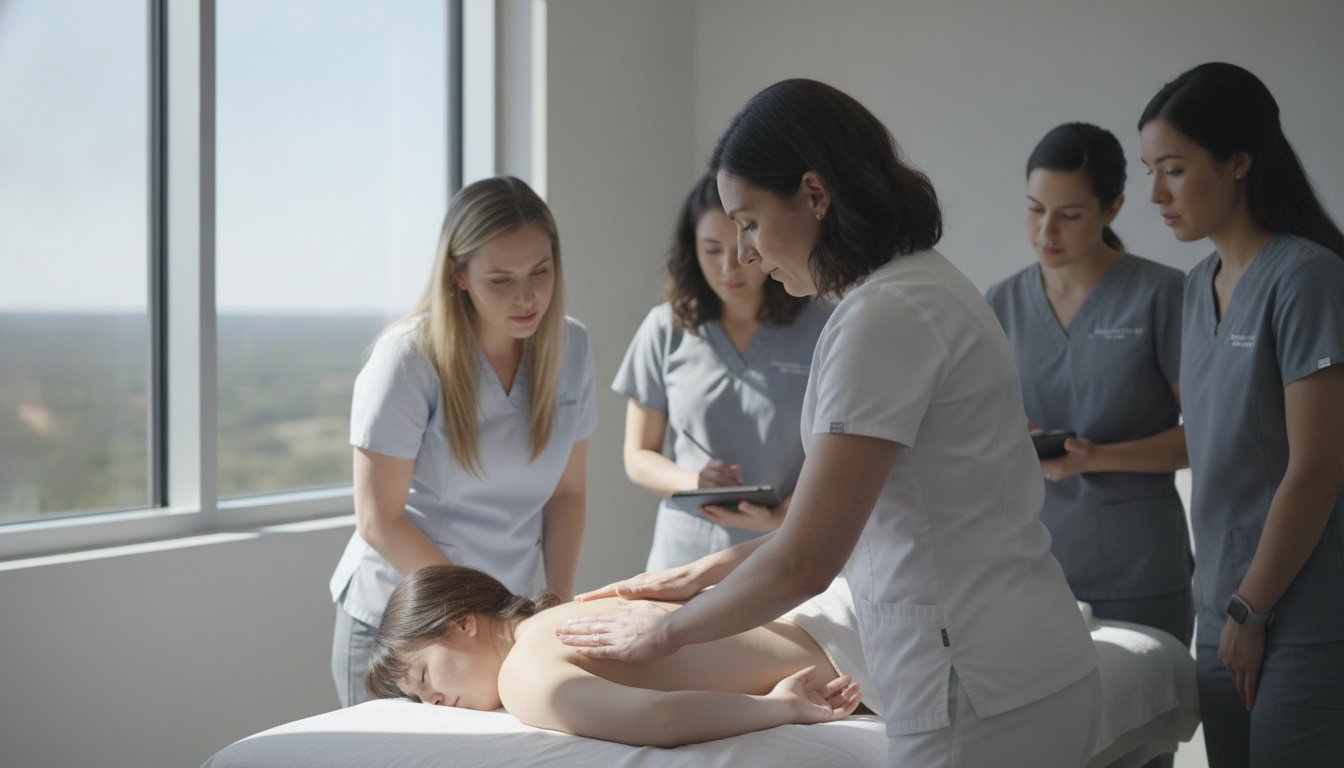
Central Texas has emerged as a primary destination for advanced clinical training. While online modules offer convenience for theoretical study, they cannot replicate the tactile feedback of in-person instruction in cities like Austin, Cedar Park, and Leander. Hands-on labs allow you to refine the specific pressure and rhythm required for effective lymphatic clearance under the guidance of a specialist. These local training sessions also serve as networking hubs, connecting you with other clinicians who face similar challenges in post-operative care. Engaging with your peers in a clinical setting fosters a community of expertise that benefits practitioners and patients across the region.
Specialization Paths: From Lymphedema Management to Aesthetic Recovery
Choosing a specialization path allows practitioners to move beyond basic foundational knowledge and address specific pathological or surgical needs. While general certification provides the mechanics, advanced lymphatic drainage continuing education Texas programs offer the clinical depth required for high-stakes environments. Practitioners typically gravitate toward three primary tracks: oncology and clinical lymphedema, post-operative aesthetics, or advanced facial rejuvenation. Each path requires a distinct understanding of tissue pathology and fluid dynamics to ensure patient safety and therapeutic efficacy.
In the clinical track, managing lymphedema is a vital service for the estimated 3 to 5 million Americans suffering from this condition. Secondary lymphedema is particularly prevalent among breast cancer survivors who have undergone axillary lymph node dissection or radiation. This population requires a practitioner who understands how to reroute fluid to collateral drainage pathways. Specialized certification is mandatory here; without it, a therapist risks triggering an acute inflammatory response in compromised tissues. By mastering these medical-grade protocols, you provide a lifeline to individuals navigating the long-term physiological changes of cancer recovery.
The aesthetic market offers a different but equally demanding specialization. Integrating body sculpting techniques with lymphatic drainage has become a standard requirement in modern recovery centers. This involves using manual techniques to facilitate the clearance of tumescent fluid and inflammatory byproducts after aggressive body contouring. Practitioners who can successfully manage these cases often find themselves at the center of a thriving referral network, as patients and surgeons alike prioritize those with documented clinical expertise.
Post-Operative Cosmetic Recovery Specialization
Mastering the recovery protocols for rhinoplasty, facelifts, and body contouring requires a nuanced approach to acute tissue trauma. Unlike general wellness sessions, these treatments focus on reducing the duration of the inflammatory phase and preventing the formation of permanent scar tissue. Understanding how to manage post-op fibrosis through targeted manual techniques is a skill that distinguishes a specialist from a generalist. For those practicing in Central Texas, reviewing a guide on Post-Op Lymphatic Drainage in Austin can provide deeper insights into local surgical trends and patient needs. These protocols ensure that the surgical result is protected and the patient's comfort is restored as quickly as possible.
Aesthetic Sculpting and Advanced Facial Techniques
The growing market for facial lymphatic drainage has introduced sophisticated methodologies like intraoral buccal massage. This technique involves working on the muscles and lymphatic tissues from inside the oral cavity, providing a level of rejuvenation that external work alone cannot achieve. The clinical benefits of Buccal Massage in Austin include significant reduction in facial puffiness and improved muscle tone. By integrating these advanced protocols into your practice, you address both the physiological and aesthetic concerns of your clients with medical-grade precision. If you're ready to master these specialized tracks, you can register for professional certification courses to elevate your clinical standing.
Advancing Your Practice with Best Lymphatic Specialist Professional Courses
Choosing the right environment for your clinical development is as vital as the curriculum itself. Best Lymphatic Specialist, led by specialist Criselda White, offers a sophisticated educational framework that prioritizes physiological results over general wellness. While many programs provide the hours necessary for license renewal, this Austin-based hub focuses on the meticulous application of manual techniques within a medical context. By participating in lymphatic drainage continuing education Texas through this boutique clinical setting, you gain direct access to evidence-based protocols that are immediately applicable to complex recovery cases.
Unlike large-scale workshops, our courses emphasize the real-world challenges practitioners face in Central Texas. The curriculum is specifically designed to bridge the gap between theoretical knowledge and the high-stakes demands of post-operative cosmetic surgery and oncology recovery. You aren't just learning strokes; you're mastering the ability to assess interstitial fluid dynamics and adapt your methodology to the patient's specific phase of healing. This level of expertise is what allows a practitioner to transition from a traditional service provider to a trusted clinical partner.
Professional MLD Certification: The Best Lymphatic Specialist Difference
The certification process here is characterized by a commitment to technical mastery and individualized attention. We maintain small class sizes to ensure that every student receives direct feedback from Criselda White during hands-on labs. This focused mentorship is essential for developing the precise rhythm and pressure required to stimulate the lymphatic system without causing secondary trauma. Students explore advanced protocols for managing lymphedema and lipedema, learning how to navigate compromised lymphatic watersheds with confidence. This comprehensive training ensures you're prepared to handle the anatomical complexities of patients who have undergone Lipo 360, BBLs, or breast cancer-related surgeries.
Next Steps for Texas Practitioners
As you prepare to elevate your practice, it's important to align your education with your long-term professional goals. Reviewing upcoming course dates and ensuring you meet the enrollment requirements is the first step toward your clinical specialization journey. The demand for skilled therapists in Austin, Cedar Park, and the surrounding areas continues to grow, and becoming a certified specialist positions you at the forefront of this essential field. If you're ready to master medical-grade techniques and build a specialized practice, you can view professional MLD certification courses and join our next cohort of dedicated clinicians. This investment in your lymphatic drainage continuing education Texas is a commitment to providing the highest standard of care for patients navigating the complexities of physical recovery.
Elevating the Standard of Clinical Recovery in Texas
Transitioning from a general massage practitioner to a clinical specialist requires a commitment to technical precision and a deep understanding of post-operative physiology. By mastering the specific manual techniques needed to manage acute edema and prevent fibrosis, you move beyond the limitations of the general wellness market. You become an essential partner in the patient's surgical journey, providing the evidence-based care that surgeons in Austin and across the state now demand. Staying current with lymphatic drainage continuing education Texas standards ensures your practice remains compliant while delivering the medical-grade results your clients deserve.
If you're ready to advance your career through specialized post-op cosmetic recovery protocols and practitioner-led training, our Central Texas hands-on education provides the perfect environment for technical mastery. You'll gain the confidence to handle complex cases with meticulous attention to detail and safety. Master Clinical Lymphatic Drainage with Our Professional Certification Courses and begin your journey toward becoming a recognized leader in recovery therapy. Your dedication to specialized knowledge will define the next chapter of your clinical practice.
Frequently Asked Questions Regarding MLD Education
Is MLD certification required to perform lymphatic massage in Texas?
The Texas Department of Licensing and Regulation does not mandate a specific MLD certification to perform lymphatic techniques under a standard massage license. However, most clinical environments and plastic surgeons require proof of specialized training before referring patients for post-operative care. Obtaining a formal certification ensures you possess the technical proficiency to manage complex fluid dynamics safely without causing tissue trauma.
How many CEUs do I need for my Texas massage license renewal in 2026?
You must complete 12 hours of continuing education every two years to renew your Texas massage therapy license. It's important to remember that the mandatory human trafficking prevention course is a separate requirement and doesn't count toward these 12 hours. Choosing lymphatic drainage continuing education Texas allows you to satisfy these requirements while building a specialized clinical skill set.
What is the difference between a 1-day MLD workshop and a full certification?
A one-day workshop typically provides an introductory overview consisting of 6 to 8 hours, whereas a full certification involves 40 to 45 contact hours of intensive study. Certification programs offer the anatomical depth and hands-on laboratory time necessary to master clinical protocols for lymphedema and surgical recovery. Workshops are suitable for general interest, but they don't provide the credentials required for medical-grade practice.
Can Physical Therapists and Occupational Therapists use these CEUs in Texas?
Yes, Physical Therapists and Occupational Therapists can often apply these hours toward their professional development requirements. These practitioners must verify that the specific course curriculum aligns with the standards set by the Texas Board of Physical Therapy Examiners or the Texas Board of Occupational Therapy Examiners. MLD is a highly valued modality in clinical rehabilitation and oncology settings across the state.
Will I learn post-operative cosmetic recovery in a standard MLD course?
Standard MLD courses primarily focus on the management of primary and secondary lymphedema rather than aesthetic surgery recovery. To effectively treat patients after procedures like Lipo 360 or BBLs, you should seek a program that includes specific protocols for post-operative inflammation and fibrosis. Specialization ensures you understand the unique tissue states created by surgical intervention.
Are there hybrid or online options for lymphatic drainage continuing education?
Hybrid options exist that allow you to complete theoretical coursework online before attending in-person practical sessions. While digital learning is effective for anatomy and physiology, hands-on training is indispensable for mastering the subtle pressure and rhythm of manual drainage. Physical instruction ensures you receive the tactile feedback necessary to perform these techniques with clinical precision.
What is the average cost of MLD certification in Texas?
The cost of lymphatic drainage continuing education Texas varies significantly based on the depth of the curriculum and the number of contact hours. Short introductory workshops are generally more affordable, while comprehensive 5-day certification programs represent a higher professional investment. Practitioners should consider the long-term ROI of specialized certification when evaluating different educational paths.
How do I verify if a course is approved by the Texas Department of Licensing and Regulation?
You can verify course approval by checking the TDLR’s official database of registered continuing education providers. Many reputable programs are also accredited by the National Certification Board for Therapeutic Massage & Bodywork (NCBTMB). Always confirm that the provider’s registration is current and that the specific course title is recognized for credit toward your specific license type.