
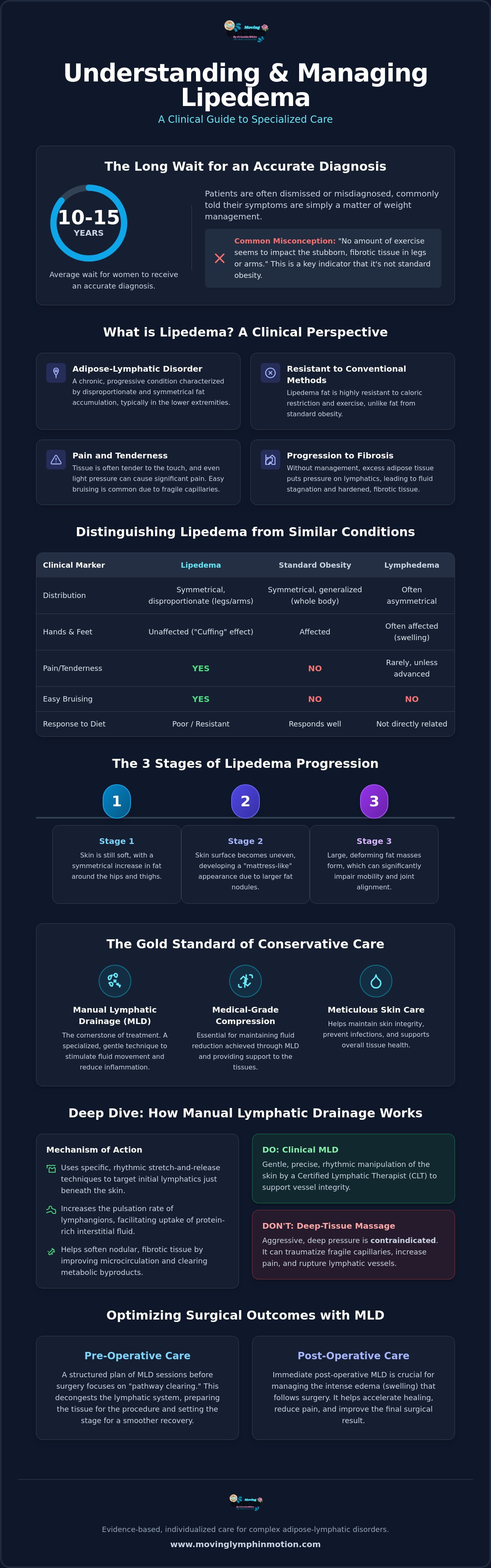
Did you know the average woman waits between 10 and 15 years to receive an accurate diagnosis for the chronic pain and heaviness in her limbs? You've likely been told your symptoms are simply a matter of weight management, yet no amount of exercise seems to impact the stubborn, fibrotic tissue in your legs or arms. This cycle of medical gaslighting is exhausting. It's frustrating to search for specialized lipedema treatment in Austin only to find general wellness spas that don't understand the complex fluid dynamics of your condition.
You deserve a clinical partner who prioritizes physiological results over aesthetic fluff. We provide a structured, medical-grade approach to managing lipedema through specialized manual lymphatic drainage and comprehensive tissue care designed specifically for the Central Texas community. In this guide, we'll explore how targeted manual protocols can reduce limb heaviness, prevent the progression of fluid accumulation, and provide the essential pre- and post-surgical support required for long-term relief. By focusing on anatomical precision and evidence-based techniques, we help you regain mobility and confidence in your recovery journey.
Key Takeaways
- Identify the specific clinical markers that distinguish lipedema from lymphedema and standard obesity to facilitate an accurate diagnosis.
- Understand the physiological mechanics of Manual Lymphatic Drainage (MLD) in stimulating the initial lymphatics to move interstitial fluid and reduce tissue pressure.
- Discover why comprehensive lipedema treatment in Austin utilizes a combination of MLD, medical-grade compression, and meticulous skin care as the gold standard of care.
- Learn how to optimize surgical outcomes through a structured recovery plan involving pre-operative pathway clearing and immediate post-operative edema management.
- Gain insight into the clinical methodology used at Lymph in Motion to provide evidence-based, individualized care for complex adipose-lymphatic disorders.
Understanding Lipedema: A Clinical Perspective for Austin Patients
Lipedema is far more than a cosmetic concern; it's a pathological condition of the adipose tissue. Specifically, it's a chronic, progressive adipose-lymphatic disorder characterized by the disproportionate and symmetrical accumulation of fat, typically in the lower extremities. Unlike standard obesity, lipedema fat is highly resistant to caloric restriction and exercise. This physiological reality often leads to years of frustration for patients in the Central Texas medical community who are frequently misdiagnosed or told to simply "lose weight." Understanding Lipedema requires recognizing that the lymphatic system is also compromised. The excess adipose tissue puts mechanical pressure on the initial lymphatics, leading to micro-angiopathy and fluid stagnation. Early intervention is vital. Without clinical management, the tissue can progress to fibrosis, where the skin becomes hard and the lymphatic transport capacity is permanently reduced.
Recognizing the Symptoms and Stages
Lipedema manifests in distinct stages, usually beginning with a soft, symmetrical increase in fat around the hips and thighs. By Stage 2, the skin surface becomes uneven, often described as having a mattress-like appearance due to the formation of larger fat nodules. Stage 3 involves large, deforming fat masses that can impair mobility and joint alignment. A hallmark clinical marker is the cuffing effect. This is where fat deposits stop abruptly at the ankles or wrists, leaving the feet and hands unaffected. Patients also experience significant tissue tenderness. Even light pressure can cause pain, and easy bruising is common because the capillaries within the lipedema tissue are fragile and prone to leakage.
Why Specialized Care Matters in Central Texas
Finding effective lipedema treatment Austin residents can trust involves moving beyond general wellness centers to clinical environments. A Certified Lymphatic Therapist (CLT) is trained to manipulate the skin in a way that stimulates the lymphangions without causing further tissue trauma. Because lipedema is a lifelong condition, your care team must be able to guide you through conservative management and surgical preparation. Finding the right specialist is a critical first step in your recovery. You can review our guide on Manual Lymph Drainage Therapists to understand the specific qualifications required for managing complex adipose-lymphatic disorders. Seeking an expert who understands the Austin healthcare landscape ensures you aren't just another number in a standardized weight loss program. Proper lipedema treatment Austin focuses on physiological results, reducing pain, and preventing the transition into lipo-lymphedema.
The Role of Manual Lymphatic Drainage (MLD) in Lipedema Treatment
Manual Lymphatic Drainage (MLD) is the cornerstone of conservative lipedema management. Unlike recreational massage, clinical MLD utilizes a specific, rhythmic stretch-and-release technique that targets the initial lymphatics located just beneath the epidermis. This precise movement increases the pulsation rate of the lymphangions, facilitating the uptake of protein-rich interstitial fluid that often becomes trapped within diseased adipose tissue. When exploring Lipedema Treatment Options, it's vital to distinguish this methodology from aggressive, deep-tissue massage. While deep pressure might feel beneficial in other contexts, it's contraindicated for lipedema. The fragile capillaries and nerves in affected limbs are highly susceptible to trauma; excessive force can lead to increased bruising, pain, and a potential rupture of the very lymphatic vessels we aim to support.
Beyond fluid transport, manual therapy plays a significant role in modulating the local inflammatory environment. Chronic lymphatic stagnation promotes the accumulation of inflammatory cytokines, which contributes to the painful, "heavy" sensation patients describe. By systematically clearing these metabolic byproducts, MLD helps downregulate the inflammatory response within the tissue. For those seeking sustainable lipedema treatment Austin clinical protocols often suggest a frequency of one to two sessions per week during intensive phases, transitioning to bi-monthly maintenance as symptoms stabilize. When evaluating the efficacy of lipedema treatment Austin providers offer, the focus should always be on the preservation of vessel integrity and the reduction of systemic inflammation.
Addressing Fibrotic Tissue and Congestion
Lipedema fat is characterized by a "nodular" texture, ranging from small, grain-like structures to larger, fibrotic masses. Lymphatic stagnation creates a hypoxic environment that triggers the production of excess connective tissue, worsening this congestion. Specialized manual techniques help to soften these fibrotic areas by improving the microcirculation and nutrient delivery to the adipose cells. Therapeutic manual pressure must be precisely calibrated to stimulate lymphatic uptake without triggering the hyperalgesic response common in lipedema tissue. If you're ready to start a clinical protocol, you can schedule a specialized assessment to determine the current state of your tissue health.
Long-term Benefits of Regular Therapy
The primary goal of ongoing manual therapy is to maintain mobility and prevent the condition from advancing into Stage 4, also known as lipo-lymphedema. This occurs when the lymphatic system becomes so overwhelmed by the adipose burden that it can no longer compensate, leading to secondary swelling in the feet and hands. Consistent MLD ensures that the lymphatic transport capacity remains optimized, reducing the physical and emotional burden of the disease. For a deeper look at how these methodologies overlap with other swelling disorders, see our guide on Clinical Lymphedema Therapy in Austin.
Comprehensive Management: Conservative vs. Surgical Pathways
Effective management of this condition involves more than isolated treatments; it requires a lifelong commitment to Complete Decongestive Therapy (CDT). This integrated model combines MLD with medical-grade compression, skin care, and therapeutic movement to preserve the integrity of the lymphatic vessels. While some providers focus only on fat removal, a clinical approach recognizes that the underlying adipose-lymphatic dysfunction persists even after the volume is reduced. Sustained results for lipedema treatment Austin depend on this holistic, non-negotiable management system that addresses the health of the entire limb.
Surgical intervention, such as Water-Assisted Liposuction (WAL) or Power-Assisted Liposuction (PAL), offers a path to significant volume reduction and pain relief for those in advanced stages. These lymphatic-sparing techniques physically remove diseased fat cells that are resistant to traditional weight loss methods. It's a mistake to view surgery as a standalone solution. Surgery addresses the adipose burden, yet the lymphatic vulnerability remains. Maintaining conservative therapy before and after surgery is essential to ensure the tissue remains healthy and to prevent the recurrence of swelling as the body adapts to its new contour.
Conservative Management Protocols
Managing lipedema in the Central Texas heat requires specific adjustments to standard protocols. Medical-grade compression is vital for providing external support to the lymphatics, but the fabric choice must be breathable to accommodate local humidity and prevent skin irritation. Dietary choices, particularly therapeutic carbohydrate reduction or anti-inflammatory protocols, help lower the systemic inflammation that drives tissue pain. Low-impact activities, such as swimming or cycling, utilize the muscle pump mechanism to naturally assist lymphatic return without stressing the joints or causing additional tissue trauma.
The Synergy of Surgery and Manual Therapy
The most successful clinical outcomes occur when surgery and manual therapy are perfectly synchronized. Surgeons often recommend a series of MLD sessions prior to liposuction to clear the initial lymphatics and optimize the transport capacity of the interstitial space. Post-operatively, manual therapy is critical for managing acute surgical edema and preventing the formation of dense scar tissue or seromas. For a detailed look at how these phases interact, review our guide on Post-Op Lymphatic Drainage in Austin. This combined approach ensures that your lipedema treatment Austin results in both functional mobility and long-term comfort.
Navigating Lipedema Surgery Recovery in Austin and Cedar Park
Surgical recovery for lipedema is a multi-phased physiological process that requires more than simple rest. Because lipedema-specific liposuction often involves high-volume fat removal, the impact on the lymphatic system is significant. A structured recovery plan ensures that the remaining vessels can handle the increased fluid load and that the tissue heals without excessive scarring. This journey begins well before the first incision. Pre-operative Manual Lymphatic Drainage (MLD) is utilized to clear the primary lymphatic pathways, effectively reducing pre-existing congestion. By optimizing the transport capacity of the lymphatics 1 to 2 weeks before surgery, we create a cleaner surgical field and prepare the body for the acute inflammatory response that follows. This proactive step is a hallmark of comprehensive lipedema treatment Austin specialists recommend for superior outcomes.
The immediate post-operative phase focuses on managing surgical edema and clearing residual anesthesia from the tissues. Within the first 24 to 48 hours, gentle MLD helps to redirect fluid away from the surgical sites toward functional lymph nodes. This prevents the accumulation of stagnant fluid, which can otherwise lead to increased pain and a higher risk of infection. As you move into the second and third weeks, the focus shifts toward tissue remodeling. This stage is critical for preventing post-surgical fibrosis, or the formation of hard, "woody" tissue that can occur as the body's inflammatory response subsides. Consistent manual therapy during this time ensures that the skin and underlying fascia remain pliable, allowing for a smoother, more natural contour.
Specialized Post-Op Care for Lipo 360 and Limb Contouring
Lipedema surgery often involves extensive 360-degree contouring of the limbs or torso, creating unique swelling patterns that differ from standard cosmetic procedures. Standard post-op instructions often fail to address the specific needs of diseased adipose tissue. We utilize a clinical methodology known as Build and Sculpt to refine the physical results during the healing phase. This approach combines MLD with targeted manual techniques to address localized congestion and support the architectural integrity of the healing tissue. It ensures that the reduction in limb volume translates into improved mobility and a significant decrease in the "heavy limb" sensation.
Local Recovery Resources in Central Texas
Navigating recovery in the Austin area requires access to therapists who understand the complexities of lymphatic-sparing surgery. Whether you are recovering in Cedar Park, Round Rock, or Georgetown, finding a specialist with clinical expertise is vital. When choosing a post-op specialist for your lipedema treatment Austin recovery, utilize this checklist:
- Verify Certified Lymphedema Therapist (CLT) credentials.
- Ensure they have specific experience with lipedema-specific liposuction (WAL/PAL).
- Confirm they operate in a clinical, medical-grade environment.
- Check for their ability to coordinate care with your surgical team.
Clinical Excellence at Best Lymphatic Specialist by Criselda White
Selecting a clinical partner for lipedema management requires a focus on specialized education and anatomical precision. Criselda White, a Licensed Massage Therapist and Certified Lymphedema Therapist, provides a level of expertise that distinguishes Best Lymphatic Specialist within the Austin medical community. Her approach is rooted in the Vodder method of Manual Lymphatic Drainage, a gold-standard technique for addressing the complexities of adipose-lymphatic disorders. By moving beyond standardized, mass-market mentalities, she offers a clinical partnership that empowers patients through evidence-based care. This meticulous attention to detail is essential for those seeking lipedema treatment Austin residents can rely on for measurable physiological improvements.
The practice is committed to maintaining high clinical standards, which is reflected in the specialized Manual Lymphatic Drainage certification courses offered to other licensed professionals. This dedication to education ensures that the techniques used at Best Lymphatic Specialist remain at the forefront of lymphatic therapy. We understand that lipedema patients often face a long history of misdiagnosis and frustration. Our goal is to provide a grounded, medical-grade seriousness that instills confidence and provides a clear, therapeutic explanation for every phase of the recovery process. We prioritize the mechanics of the methodology to ensure you understand exactly how your therapy supports your body's healing.
The Best Lymphatic Specialist Difference
Our methodology represents a significant shift from recreational massage to medical-grade manual therapy. We specialize in post-operative cosmetic surgery recovery and oncology-related swelling, bringing a sophisticated understanding of tissue states and fluid dynamics to every session. This clinical expertise is particularly vital for lipedema patients who require a delicate balance of pressure to move interstitial fluid without damaging fragile capillaries. At Best Lymphatic Specialist, our methodology prioritizes physiological results over aesthetic fluff, focusing on the reduction of pain and the prevention of disease progression. This results-oriented focus ensures that your treatment plan is both purposeful and lean, avoiding unnecessary filler and prioritizing your anatomical recovery.
We also address the specific need for advanced contouring through our Build and Sculpt approach. This technique bridges the gap between clinical lymphatic management and aesthetic refinement. For the lipedema patient, this means we aren't just moving fluid; we are actively working to soften fibrotic nodules and support the structural integrity of the healing tissue. This integrated pathway is a cornerstone of the lipedema treatment Austin patients utilize to achieve a more functional and comfortable baseline of health.
Schedule Your Clinical Consultation
Your journey toward better limb health begins with a thorough clinical assessment. During this first visit, we evaluate your current tissue stage, mobility limitations, and any pre- or post-surgical needs you may have. This evaluation allows us to create a sequential, highly organized care plan that respects the unique complexities of your condition. We provide a calm, professional environment where your physical recovery is the primary objective. To begin your personalized protocol, book your session via Vagaro and take the first step toward specialized, expert-led management of your lipedema.
A Clinical Path Toward Restored Mobility
Managing a chronic adipose-lymphatic disorder requires more than perseverance; it demands a clinical strategy tailored to your specific anatomical needs. By prioritizing evidence-based manual therapy and structured post-operative care, you can transition from chronic pain and heaviness to improved mobility and tissue health. Effective lipedema treatment Austin relies on the precision of a specialist who understands the delicate mechanics of fluid dynamics and the necessity of preventing post-surgical fibrosis. This specialized focus ensures that every manual movement serves a physiological purpose, moving beyond general wellness to achieve medical-grade results.
Criselda White acts as a dedicated partner in your recovery, offering the expertise of a Specialized MLD Certification Provider. Her practice focuses on long-term limb health and meticulous tissue management for patients in Austin, Cedar Park, and Georgetown. To begin your journey toward a more comfortable and mobile future, secure your clinical lymphatic therapy session with Criselda White. You've navigated the frustrations of misdiagnosis long enough. It's time to empower your recovery with specialized knowledge and a commitment to clinical excellence.
Frequently Asked Questions
Is lipedema treatment in Austin covered by insurance?
Insurance coverage for lipedema treatment Austin remains discretionary and depends on the specific policies of individual providers. As of July 2026, lipedema does not have a dedicated ICD-10 code, which can complicate the billing process. Most insurance companies require patients to document at least six to twelve months of conservative management, including manual lymphatic drainage and compression therapy, before they will consider claims for surgical intervention based on medical necessity.
How many sessions of manual lymphatic drainage do I need for lipedema?
The number of required sessions varies based on your clinical stage and whether you're in an intensive or maintenance phase of care. Initially, a protocol of one to two sessions per week is often recommended to reduce tissue congestion and inflammatory cytokines. Once your symptoms stabilize and limb heaviness decreases, many patients transition to a maintenance schedule of one to two sessions per month to preserve lymphatic transport capacity.
Can I treat lipedema at home without professional help?
Home-based care is a necessary component of a comprehensive management plan, but it shouldn't replace professional clinical therapy. You can manage symptoms at home through medical-grade compression, anti-inflammatory nutrition, and low-impact exercise. However, the manual manipulation of the initial lymphatics requires specialized training to avoid damaging the fragile capillaries and nerves that are characteristic of lipedema tissue. Professional MLD ensures the fluid is redirected effectively without causing further trauma.
Is manual lymphatic drainage painful for those with lipedema?
Clinical manual lymphatic drainage is a gentle, non-invasive technique that should not cause pain. Because lipedema tissue is often hypersensitive to pressure, we use a light, rhythmic stretching of the skin to stimulate the lymphangions. This differs significantly from deep-tissue massage, which is contraindicated for lipedema. Our goal is to reduce tissue tension and discomfort while providing a sense of physiological relief and safety.
What is the difference between lipedema and lymphedema treatment?
The primary difference involves the symmetrical nature of lipedema and the sparing of the feet and hands. Lipedema is a disorder of the adipose tissue that eventually impacts the lymphatic system, while lymphedema is a primary or secondary failure of the lymphatics to transport protein-rich fluid. While both conditions utilize Complete Decongestive Therapy, lipedema treatment Austin protocols focus more heavily on managing the pain and inflammatory response within the diseased fat cells.
How do I find a lipedema-qualified therapist in Cedar Park or Round Rock?
You should prioritize finding a Certified Lymphedema Therapist (CLT) who has specific experience with adipose-lymphatic disorders. Criselda White serves the Cedar Park, Austin, and Round Rock areas, offering medical-grade manual therapy in a clinical setting. It's important to verify that your therapist understands lymphatic-sparing surgical techniques and has the clinical education necessary to manage complex recovery phases. Avoid general wellness spas that lack specialized lymphedema certifications.
Can manual therapy prevent lipedema from progressing to the next stage?
Consistent manual therapy is vital for slowing the progression of the disease and preventing the onset of Stage 4, known as lipo-lymphedema. By facilitating the movement of interstitial fluid, MLD reduces the mechanical pressure on the lymphatic vessels. This prevents the development of secondary lymphedema and minimizes the formation of fibrotic, hardened tissue. Early and regular intervention helps maintain mobility and preserves the long-term health of the lymphatic system.
Should I get MLD before or after lipedema surgery?
The most effective clinical outcomes are achieved by receiving manual lymphatic drainage both before and after surgery. Pre-operative MLD clears the lymphatic pathways and reduces pre-existing congestion, which creates a cleaner environment for the surgeon. Post-operative care is critical for managing the acute surgical edema and clearing residual metabolic waste. This sequential approach minimizes the risk of post-surgical fibrosis and ensures a smoother recovery process.