
Manual Lymphatic Drainage is not a traditional massage; it is a precision-based physiological intervention designed to re-route interstitial fluid and reset your autonomic nervous system. If you're navigating the restrictive tightness of post-operative edema or managing lymphedema, you likely arrived at your appointment seeking more than just relaxation. It's common to feel a sense of uncertainty regarding the immediate shifts in your body, leading many patients to search for exactly what to expect after first MLD session to ensure their recovery is on the right trajectory.
You've taken a critical step toward managing tissue health and preventing complications like fibrosis or seromas. This guide provides a clinical roadmap of the metabolic changes and recovery milestones your body undergoes following professional treatment. We will examine the science of fluid dynamics, the necessity of hydration for cellular waste removal, and clear instructions for home care to validate your symptoms and optimize your physiological results. By understanding these biological shifts, you can move forward with the confidence that your recovery is being handled with medical-grade precision.
Key Takeaways
- Learn how clinical MLD facilitates the movement of interstitial fluid into the initial lymphatics, shifting your body from a state of congestion to active circulation.
- Understand why fatigue and increased urination are clinically normal markers of physiological success when determining what to expect after first MLD session.
- Identify the specific metabolic waste products, such as long-chain fatty acids and cell debris, that your lymphatic system mobilizes for filtration.
- Discover how early-stage intervention identifies organized fluid and prevents the development of permanent tissue fibrosis after cosmetic surgery.
- Establish a professional recovery roadmap, including the recommended frequency of therapeutic sessions required during the critical first two weeks of healing.
The Physiological Shift: Why Your Body Reacts to Manual Lymphatic Drainage
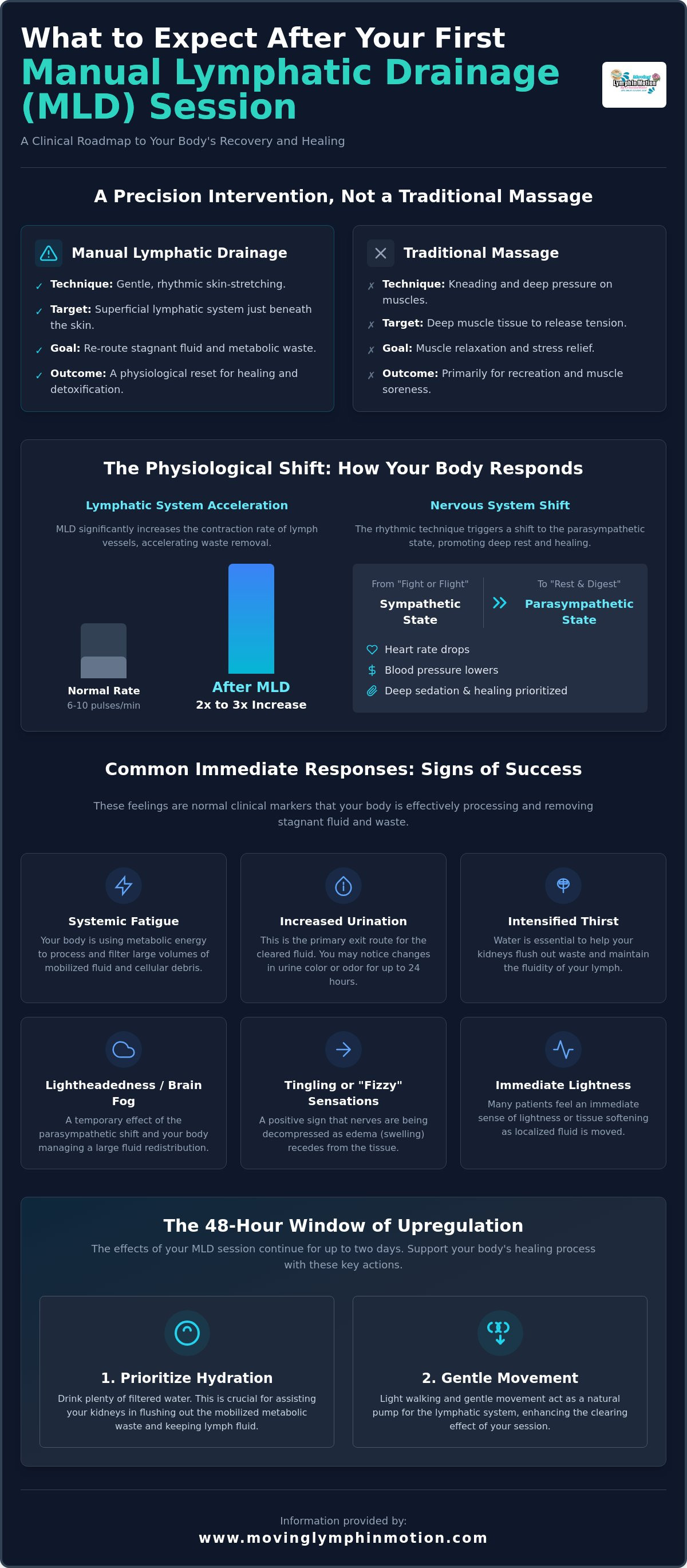
Unlike a traditional massage that manipulates muscle tissue to release tension, Manual Lymphatic Drainage (MLD) is a targeted skin-stretching technique. It focuses on the superficial lymphatic system located just beneath the epidermis. The primary objective is to facilitate the transition of stagnant fluid from the interstitial spaces into the initial lymphatics. When you're assessing what to expect after first MLD session, you must view the treatment as a metabolic reset rather than a recreational luxury. The goal isn't to knead the muscles but to influence the delicate fluid dynamics of the body's waste management system.
The manual application of light, rhythmic pressure stimulates lymphangiomotoricity, which is the intrinsic contraction rate of the lymph vessels. Under normal conditions, these vessels pulse approximately six to ten times per minute. Clinical MLD can increase this rate significantly, often doubling or tripling the pulse frequency. This accelerated rhythm creates a physiological clearing effect. It moves proteins, long-chain fatty acids, and cellular debris toward the lymph nodes for filtration. This process is far more complex than general relaxation; it is a deliberate mobilization of the body’s internal environment.
The Role of the Parasympathetic Nervous System
MLD serves as a potent trigger for the parasympathetic nervous system, commonly known as the "rest and digest" state. As the therapist applies rhythmic, monotonous strokes, the body shifts out of a sympathetic, or "fight or flight," state. This transition often results in a measurable drop in heart rate and blood pressure. It's the reason many patients experience a sense of deep sedation or fall asleep during the session. This isn't just a side effect of a quiet room; it's a neurological response to the specialized touch that allows the body to prioritize healing and filtration.
Fluid Dynamics and Pressure Changes
The mechanics of MLD rely on anatomical precision. By gently stretching the skin, the therapist engages the anchoring filaments that pull open the junctions of the initial lymph capillaries. This creates a pressure gradient that draws fluid into the system. We always begin by clearing proximal areas, such as the neck and terminus, to create a "vacuum effect." This ensures that when we move fluid from a distal limb or a surgical site, there's a clear, low-pressure pathway for it to travel. Aggressive deep-tissue massage can actually collapse these fragile vessels, causing more inflammation. Understanding this mechanical difference helps clarify what to expect after first MLD session regarding immediate tissue softening and the reduction of localized tightness.
Common Immediate Responses: Fatigue, Fluid Shift, and Frequency
The immediate aftermath of a clinical session often brings a wave of sensations that differ significantly from a traditional massage. When patients consider what to expect after first MLD session, the most prominent response is often systemic fatigue. This isn't merely a result of lying down; it's a reflection of the metabolic energy required to process and filter stagnant fluid. Your body is working to transport cellular debris and proteins through the venous system, a task that places a temporary but significant demand on your internal resources.
Accompanying this fatigue is a marked increase in the frequency of urination. This is the primary exit route for the mobilized fluid. You may also notice an intensified thirst. Water is essential to maintain the fluidity of the lymph as it becomes more concentrated with proteins and waste. If you experience temporary lightheadedness or "brain fog," it's often a result of the parasympathetic shift and the kidneys working to manage the sudden influx of fluid. If these symptoms feel overwhelming, you can discuss your specific recovery timeline with a specialist to ensure your hydration and rest protocols are sufficient.
Changes in Elimination and Sensation
You might observe changes in the color or odor of your urine during the first 24 hours. This occurs as the liver and kidneys process the metabolic waste that was previously trapped in the interstitial spaces. Some patients report a "tingling" or "fizzy" sensation in areas of previous swelling. This is a positive clinical indicator that nerves are being decompressed as the edema recedes. While many feel an immediate sense of lightness, others feel a temporary "heaviness" as the body adjusts to the redistributed fluid volume. These shifts are normal markers of a changing tissue environment.
The 48-Hour Window of Stimulation
The effects of a professional session don't end when you leave the clinic. The lymphatic system remains in a state of upregulation for approximately 48 hours. Research in a clinical review of MLD's effectiveness highlights how this sustained activity helps manage post-operative swelling and improve functional outcomes. To support this window, prioritize these actions:
- Hydration: Drink filtered water to assist the kidneys in waste elimination.
- Gentle Movement: Light walking encourages the skeletal muscle pump to move lymph toward the heart.
- Restorative Sleep: The lymphatic system is highly active during sleep, particularly the glymphatic system which manages waste in the brain.
Understanding what to expect after first MLD session helps you navigate these shifts without alarm. Recognize them as evidence of a successful physiological intervention rather than a setback in your healing journey.
The Metabolic Reality: Addressing the "Detox" Myth
The term "detox" is frequently misused in wellness circles, often implying that a massage itself removes impurities from the body. In a clinical context, it's essential to understand that the lymphatic system is a transport mechanism, not an elimination organ. When evaluating what to expect after first MLD session, you should view the treatment as a way to mobilize stagnant fluid toward the venous system. Once these substances enter the bloodstream, the liver and kidneys perform the actual filtration and excretion. MLD simply provides the necessary transit for metabolic byproducts that are too large to be reabsorbed by the blood capillaries.
The substances being moved are specific and anatomical. They include macromolecular proteins, long-chain fatty acids, and cellular debris resulting from tissue trauma or surgical intervention. By clearing this "lymphatic load," the therapy reduces the inflammatory environment of the tissue, which accelerates the healing process. Occasionally, this sudden influx of metabolic waste into the bloodstream can trigger an emotional response. As the parasympathetic nervous system takes over, the body releases stored tension, which can manifest as unexpected tearfulness or a profound sense of relief. This is a common neurological byproduct of the deep sedation felt during treatment.
Nourishing Your Detox Organs
Because the liver and kidneys must process the newly mobilized fluid, hydration is your most critical post-session requirement. Without adequate water, the lymph becomes viscous, which slows the filtration process. We recommend focusing on anti-inflammatory nutrition, such as leafy greens and lean proteins, to support cellular repair. You must avoid alcohol and high-sodium foods for at least 24 hours. Sodium encourages fluid retention, which directly counteracts the pressure gradients established during your session and can lead to a rebound of swelling.
Understanding the "MLD Flu"
Some patients experience what is colloquially known as the "MLD flu" after their initial treatment. This manifests as mild achiness, a low-grade headache, or slight nausea. These symptoms occur because the mobilization of fluid also moves cytokines and other inflammatory markers into systemic circulation. While uncomfortable, this metabolic shift is typically a sign that the lymphatic system is effectively clearing stagnant areas. It's vital to differentiate this from a true contraindication. A normal metabolic reaction should resolve within 24 to 48 hours; however, a persistent fever or localized heat at a surgical site requires immediate clinical consultation to rule out infection.
Post-Op Specifics: Managing Swelling and Preventing Fibrosis
For patients recovering from procedures like Lipo 360, a BBL, or a Tummy Tuck, the inflammatory response is significant. Surgical trauma disrupts the superficial lymphatic pathways, leading to an accumulation of protein-rich fluid that the body cannot efficiently clear on its own. When considering what to expect after first MLD session in a post-operative context, the primary goal is to manually direct this fluid toward functional nodes. This intervention is critical for preventing the formation of seromas and the development of subcutaneous fibrosis, which is the hardening of tissue that can compromise your aesthetic results.
A successful session should result in a noticeable "softening" of the skin. Tissues that felt "woody," tight, or overly pressurized should feel more pliable and less restrictive. This softening indicates that the interstitial pressure has been reduced, allowing for better blood flow and cellular oxygenation. To maintain these results, you must wear your compression garments exactly as prescribed by your surgeon. MLD creates the space for healing, but compression provides the external support necessary to prevent fluid from re-accumulating in the surgical pockets.
Identifying Fibrosis and Seromas
During your first treatment, a clinical therapist meticulously palpates the tissue to identify areas of "organized" fluid or early-stage fibrosis. Swelling typically peaks between days three and seven post-surgery, which is when the risk of tissue hardening is highest. We look for specific markers that require clinical attention:
- Firm Spots: Areas that feel like hard lumps or "speed bumps" under the skin.
- Fluctuance: A wave-like sensation that suggests a localized pocket of fluid, or seroma.
- Persistent Heat: Localized warmth that may indicate an inflammatory spike or potential infection.
Identifying these issues early allows for a more aggressive and targeted recovery plan, ensuring that temporary swelling doesn't turn into permanent scar tissue.
The Austin Recovery Landscape
Navigating the post-operative period requires a specialized partner who understands the protocols of Central Texas plastic surgeons. In the Austin and Cedar Park area, continuity of care is vital for achieving the silhouette you and your surgeon intended. For those seeking a deeper understanding of how these treatments integrate with specific surgical timelines, our Post-Op Lymphatic Drainage Austin guide offers comprehensive surgical context. If you are currently in the initial stages of your recovery, you can schedule a clinical post-op assessment to ensure your tissue health is being professionally monitored.
Optimizing Your Results: Professional Aftercare and Next Steps
While the initial physiological shifts are significant, a single session is rarely sufficient to resolve chronic conditions or acute post-operative edema. The lymphatic system requires consistent stimulation to maintain the pressure gradients established during your treatment. When determining what to expect after first MLD session, it's vital to view it as the foundational step of a cumulative process. For the first 14 days of surgical recovery, we typically recommend a frequency of two to three sessions per week. This frequency is necessary to manage the peak inflammatory window and prevent fluid from becoming "organized" into permanent scar tissue.
To support these clinical interventions at home, you can perform gentle movements that engage the skeletal muscle pump. Diaphragmatic breathing is particularly effective; it creates a central pressure change that draws lymph toward the thoracic duct. Additionally, light ankle pumps or seated knee extensions help move fluid from the lower extremities toward the proximal nodes. We encourage patients to track their progress through objective measurements and photos. Documenting the reduction in limb circumference or the visible softening of surgical sites provides the data needed to adjust your recovery roadmap as the tissue heals.
Creating a Long-Term Management Plan
As you move beyond the acute phase of healing, your care will transition into a maintenance or "optimization" phase. This is especially true for those managing chronic conditions. Understanding how Lymphedema Therapy in Austin differs from standard post-operative care is essential for long-term success. While post-op care focuses on resolving surgical trauma, lymphedema management requires a specialized approach to prevent disease progression. Working with a Certified Lymphedema Therapist (CLT) ensures you have an expert who can adjust your treatment plan based on subtle changes in tissue density or limb volume.
Booking Your Follow-Up Session
The true power of Manual Lymphatic Drainage lies in its cumulative effect. Each subsequent session builds upon the last, progressively refining the tissue environment and reinforcing the body's natural drainage pathways. Consistent treatment prevents the "rebound" effect where swelling returns once the initial stimulation wears off. To maintain your momentum and ensure the best possible physiological outcome, you can schedule your next session via Vagaro to secure your preferred recovery timeline and continue your progress toward full tissue restoration.
Advancing Your Clinical Recovery Journey
Navigating the complexities of physical healing requires more than just patience; it demands a precise, evidence-based approach to tissue management. By understanding the physiological shifts and metabolic requirements of lymphatic transport, you move from a state of uncertainty to one of clinical empowerment. The transition from localized edema to systemic filtration marks the beginning of a successful recovery, whether you're managing chronic lymphedema or the acute inflammatory phase of a surgical procedure. Recognizing that initial fatigue and increased elimination are signs of functional progress helps you stay committed to your long-term health goals.
Establishing a professional partnership with a Certified Lymphatic Therapist (CLT) ensures your recovery is guided by clinical surgical expertise and specialized protocols. From Lipo 360 and BBL recovery to breast cancer-related swelling therapy, our methodology prioritizes physiological results over standardized wellness trends. We serve the greater Austin area, including Georgetown and Round Rock, providing individualized attention to every patient's unique healing timeline. Now that you understand what to expect after first MLD session, you can take the next step in optimizing your results. Book your clinical MLD session in Austin or Cedar Park today and ensure your body has the professional support it needs to thrive.
Frequently Asked Questions
Is it normal to feel more swollen immediately after my first MLD session?
You shouldn't experience an increase in swelling, but a temporary sensation of "fullness" or "heaviness" can occur as fluid redistributes toward the lymph nodes. This shift is a normal part of what to expect after first MLD session, especially if the initial congestion was significant. Always ensure your compression garments are fitted correctly to prevent fluid from settling back into the interstitial spaces as you recover.
How much water should I drink after lymphatic drainage?
Aim for 8 to 10 glasses of filtered water within the first 24 hours of your treatment. Hydration is essential because the lymphatic system requires water to transport the concentrated proteins and cellular debris moved during the session. Without adequate fluid intake, the mobilized waste can become viscous, making it harder for your kidneys to filter and eliminate the metabolic load efficiently.
Can I exercise after my first MLD session?
Gentle movement like walking is highly beneficial, but you should avoid high-intensity workouts for 24 to 48 hours. Strenuous exercise increases blood flow and metabolic waste, which can overwhelm the lymphatic system while it's already working at an accelerated rate. Stick to light activity that encourages the skeletal muscle pump to assist drainage without causing systemic inflammation or tissue stress.
Why do I feel so emotional after my lymphatic massage?
Feeling emotional is a documented response to the profound shift in your autonomic nervous system. MLD triggers a deep parasympathetic state, which can lead to a sudden release of stored physical and emotional tension. It's a sign that your body is moving out of a "fight or flight" mode and into a restorative, healing phase where the nervous system finally feels safe to reset.
What should I do if I feel a hard lump after my liposuction and MLD session?
Inform your Certified Lymphatic Therapist at your next appointment if you detect a firm spot. These lumps often represent "organized" fluid or early-stage fibrosis. Your therapist will use specialized techniques to soften these areas before they become permanent scar tissue. If the area is accompanied by redness, localized heat, or a fever, contact your surgeon immediately to rule out an infection.
How many sessions will it take to see a noticeable reduction in swelling?
Most patients observe a visible reduction in edema within three to five sessions. While the first treatment initiates the fluid shift, the results are cumulative. Achieving long-term tissue softening and volume reduction typically requires a consistent schedule, particularly during the first two weeks of post-operative recovery or when managing chronic conditions like lymphedema and lipedema.
Can I shower or use a sauna after MLD?
You can shower with lukewarm water, but you must avoid saunas and hot tubs for at least 48 hours. Heat induces vasodilation, which significantly increases the volume of fluid the lymphatic system must process. This can lead to a rebound of swelling, counteracting the progress made during your clinical session and potentially increasing discomfort at surgical sites.
What is the difference between MLD and a regular Swedish massage?
MLD is a clinical skin-stretching technique that targets fluid, whereas Swedish massage uses deeper pressure to manipulate muscle fibers. Understanding this distinction is key to knowing what to expect after first MLD session versus a spa treatment. MLD focuses specifically on the superficial lymphatic capillaries to resolve edema and facilitate metabolic clearing rather than addressing muscular knots or tension.