
Recovery after a cosmetic procedure is a matter of fluid dynamics, not muscle tension; therefore, clinical manual lymphatic drainage is the only safe way to optimize your surgical outcome. You've likely spent months planning your transformation, yet the immediate reality of post-operative edema and the fear of developing permanent fibrosis can feel deeply unsettling. It's common to feel caught between conflicting advice from social media and clinical guidelines while managing significant inflammation and discomfort. This guide explains why evidence-based manual lymphatic drainage is the medical standard for post-surgical massage in Austin, ensuring your tissues heal without the lumps or irregularities that compromise your results.
You'll discover how to safely reduce swelling, manage pain, and accelerate your return to normal activities through precise physiological support. We'll examine the specific mechanics of the lymphatic system, the critical phases of tissue remodeling, and the professional standards required to protect your investment in yourself. By understanding the science of interstitial fluid management, you can move through your recovery journey with the confidence that your healing is being guided by clinical expertise rather than guesswork.
Key Takeaways
- Understand why clinical Manual Lymphatic Drainage (MLD) is the physiological gold standard for post-surgical massage in Austin, utilizing precise, light pressure to manage fluid dynamics without risking tissue trauma.
- Learn the critical distinctions between the Acute and Proliferative recovery phases and how therapeutic intervention shifts from fluid redirection to managing early-stage fibrosis.
- Discover tailored recovery strategies for high-impact procedures like Liposuction 360 and BBL, focusing on protecting newly grafted cells while systematically reducing inflammatory swelling.
- Identify the essential clinical qualifications and MLD certifications required to ensure your post-operative care in Central Texas meets medical-grade safety standards.
Understanding Post-Surgical Edema and the Austin Recovery Landscape
Surgical trauma triggers an immediate and complex inflammatory response. While swelling is a biological necessity for healing, unmanaged fluid accumulation can lead to complications that compromise your aesthetic results. The lymphatic system acts as the body’s primary waste management and fluid balance regulator; however, procedures such as Liposuction 360 and Abdominoplasty often disrupt these delicate pathways. When surgical instruments traverse the subcutaneous tissue, they sever the initial lymph capillaries, leaving the body unable to process the sudden surge of interstitial fluid. This is particularly relevant for those seeking post-surgical massage in Austin, where the regional climate can exacerbate recovery challenges.
Central Texas presents unique environmental factors for the post-operative patient. High heat and humidity levels often lead to vasodilation, which increases the volume of fluid leaking from the capillaries into the surrounding tissues. Additionally, Austin has become a significant hub for "surgery tourists" who travel from across the country for specialized procedures. The combination of post-surgical inflammation and the physiological stress of travel, such as prolonged sitting or flying, creates a high-risk environment for extreme swelling and discomfort.
The Biological Impact of Cosmetic Surgery
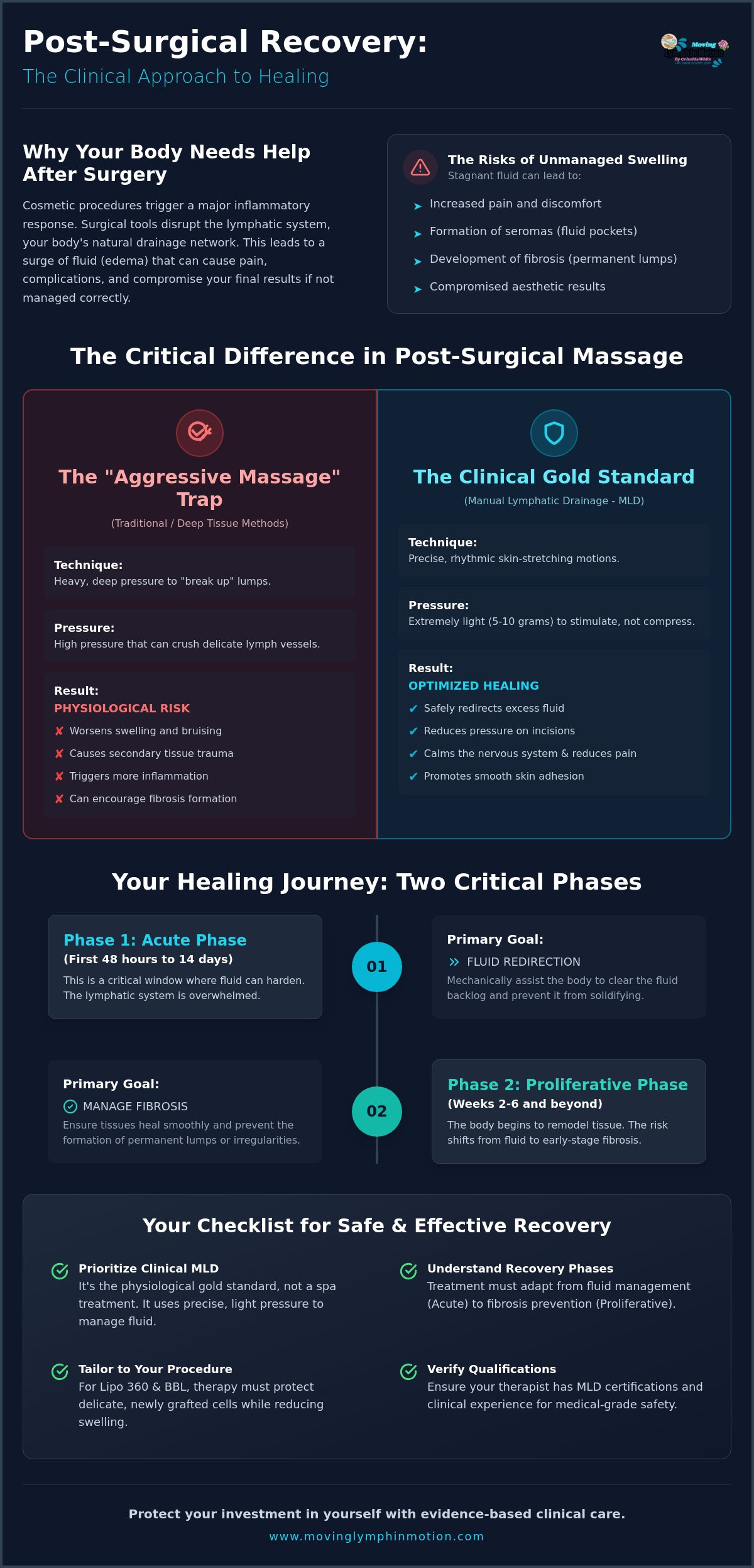
During procedures like liposuction, the mechanical action of the cannula creates a network of empty tunnels within the fat layer. These spaces quickly fill with fluid, increasing interstitial pressure and causing significant pain. If this fluid remains stagnant, it can lead to the formation of seromas, which are encapsulated pockets of fluid that may require clinical aspiration. The first 48 hours to 14 days represent a critical window. During this acute phase, the goal is to redirect fluid toward functional lymph nodes, preventing the protein-rich "sludge" from hardening into permanent irregularities or lumps.
Why "Normal" Recovery Often Requires Clinical Intervention
It's vital to distinguish between systemic swelling and localized post-surgical inflammation. While your body eventually attempts to repair its own drainage routes, the sheer "lymphatic load" during the first few weeks often exceeds the system's compromised "transport capacity." Professional intervention via Manual Lymphatic Drainage (MLD) provides the mechanical assistance necessary to clear this backlog. Post-surgical edema is the accumulation of protein-rich fluid in the interstitial space following tissue disruption. Without specialized post-surgical massage in Austin, this fluid can trigger a secondary inflammatory response, leading to the development of early-stage fibrosis.
Clinical intervention supports the recovery process by:
- Reducing the internal pressure on incisions, which improves scar quality.
- Accelerating the clearance of metabolic waste and cellular debris.
- Providing a gentle, rhythmic stimulus that calms the nervous system and reduces pain perception.
- Ensuring that the skin adheres smoothly to the underlying muscle for a contoured result.
Clinical MLD vs. Traditional Massage: Why Aggressive Techniques Risk Results
The most prevalent misconception in post-operative recovery is the belief that healing requires "deep tissue" work or aggressive manipulation to "break up" lumps. This approach, often incorrectly marketed as a standard part of post-surgical massage in Austin, represents a significant physiological risk to the patient. Aggressive techniques don't just cause unnecessary pain; they can trigger secondary trauma in already fragile tissues. This "Aggressive Massage Trap" often leads to increased bruising, prolonged inflammation, and the potential for wound dehiscence by placing undue stress on fresh incisions.
Clinical Manual Lymphatic Drainage (MLD) operates on a fundamentally different principle than recreational or deep tissue massage. While traditional massage focuses on manipulating muscle fibers with heavy-handed pressure, MLD utilizes a precise, rhythmic application of only 5 to 10 grams of pressure. This skin-stretching technique is designed to interact with the superficial lymphatic system without compressing the deeper structures. Maintaining this specific pressure threshold is critical for ensuring that the delicate lymphatic vessels remain open and functional during the clearance of interstitial fluid.
The Danger of Excessive Pressure After Surgery
Anatomically, the initial lymphatics are microscopic vessels located just beneath the epidermis. They are incredibly delicate and easily crushed by the weight of a standard massage stroke. When these vessels are compressed, they lose their ability to transport fluid, effectively worsening the edema you are trying to resolve. Furthermore, aggressive manual techniques can induce the release of additional inflammatory cytokines, which may actually encourage the formation of the very fibrosis patients hope to avoid. While some practitioners advocate for "incisional drainage" through manual expression, this remains controversial due to the high risk of infection and tissue maceration. MLD offers a safer, non-invasive alternative that respects the body's natural healing tempo.
Manual Lymphatic Drainage (MLD) as a Physiological Tool
MLD acts as a catalyst for the "lymphangion," which is the functional unit of a lymph vessel often described as a microscopic heart. By applying a specific rhythm and direction, MLD increases the frequency of lymphangion contractions, significantly accelerating the transport of protein-rich fluid. The Utility of Lymphatic Massage in clinical settings demonstrates how these precise movements support the body's clearance mechanisms. This intervention also provides a profound neurological benefit by shifting the patient from a sympathetic "fight or flight" state into a parasympathetic state, which is essential for cellular repair. For those seeking specialized care, choosing a post-op lymphatic drainage path ensures your recovery is guided by science rather than force. If you're ready to prioritize a safe, evidence-based recovery, you can schedule a clinical consultation to discuss your specific surgical needs.
The Austin Post-Op Timeline: Integrating MLD into Your Healing Journey
The recovery process follows a structured biological sequence that dictates the timing and frequency of therapeutic intervention. Successfully integrating post-surgical massage in Austin requires a deep understanding of the three distinct phases of wound healing: acute, proliferative, and remodeling. Each phase presents specific physiological challenges that clinical Manual Lymphatic Drainage (MLD) is uniquely designed to address. By aligning therapy with your body's natural repair schedule, we ensure that fluid is managed efficiently and tissues heal with optimal pliability.
Step 1: The Acute Phase (Days 1 to 14). This initial period is characterized by the inflammatory peak, where the primary goal is gentle fluid redirection to reduce internal pressure and manage pain. During these first two weeks, clinical sessions are typically recommended two to three times per week to stay ahead of the swelling. Step 2: The Proliferative Phase (Weeks 2 to 6). As the body begins to build new tissue, the focus shifts to managing early-stage fibrosis and ensuring tissue softening. Step 3: The Remodeling Phase (Weeks 6 and beyond). This final stage involves refining contours and addressing any stubborn hard spots as the scar tissue matures and the skin adheres to its new shape.
The First Two Weeks: Managing the Inflammatory Peak
Early intervention is the most effective way to prevent stagnant fluid from evolving into long-term complications. Coordinating MLD with your surgeon’s compression garment protocols is essential during this phase; the garment provides external resistance while MLD facilitates internal clearance. Early MLD reduces the concentration of fibrinogen, the precursor to scar tissue. By clearing these proteins before they can organize into dense structures, we significantly lower the risk of seromas and chronic inflammation. This proactive management during the first 14 days sets the foundation for a smooth, uncomplicated recovery.
Weeks 3 to 6: Preventing and Treating Fibrosis
Fibrosis refers to the "woody" or "lumpy" texture that often develops after liposuction as the body deposits excess collagen in response to surgical trauma. Clinical MLD encourages the reabsorption of collagen fibers before they have the chance to harden into permanent irregularities. For residents seeking post-op recovery massage Cedar Park, consistent application during this window is vital for maintaining tissue health. Maintaining a schedule of one to two sessions per week during this proliferative phase ensures that the healing tissue remains pliable and the final aesthetic result is contoured and natural.
Optimizing Results for Specific Procedures: Lipo, BBL, and Tummy Tucks
Every surgical procedure alters the body's anatomical landscape in a unique way, requiring a customized approach to post-surgical massage in Austin. For patients undergoing Liposuction 360, the trauma extends across the entire trunk, including the abdomen, flanks, and lower back. This circumferential disruption requires a systemic drainage strategy that addresses the full 360-degree area to prevent fluid from settling in the dependent areas of the back. By facilitating the movement of interstitial fluid toward functional lymph nodes in the axilla and groin, clinical MLD ensures that the skin adheres evenly to the newly contoured muscle, preventing the wavy or uneven texture often associated with unmanaged edema.
Abdominoplasty, or a tummy tuck, presents the challenge of a significant horizontal incision and intense abdominal tightness. In these cases, MLD is essential for improving skin retraction and preventing the "shelf" effect, where fluid collects just above the incision line, creating a protruding ridge of tissue. The gentle, directional strokes of MLD reduce the tension on the suture line by clearing the protein-rich fluid that creates internal pressure. This not only improves the final scar quality but also allows the patient to stand upright more comfortably during the early weeks of recovery.
BBL Recovery: The Delicate Balance of Drainage and Retention
Brazilian Butt Lift (BBL) recovery requires a highly specialized methodology that prioritizes the survival of newly grafted fat cells. While we must aggressively drain the donor sites where liposuction was performed, we must strictly avoid applying any pressure to the buttocks themselves. Clinical protocols for BBL recovery lymphatic massage focus on clearing the inflammatory fluid from the torso and thighs to reduce systemic pressure. During these sessions, positioning is paramount; patients are typically treated in a prone or side-lying position to ensure no weight is placed on the grafts, maintaining the integrity of the newly sculpted contours.
Facial Surgery Recovery: Rhinoplasty and Facelifts
The delicate tissues of the face respond exceptionally well to the light touch of clinical drainage. Following a facelift or rhinoplasty, fluid often pools around the eyes and jawline, leading to persistent periorbital swelling and bruising. Utilizing lymphatic drainage after rhinoplasty Austin protocols helps to clear this congestion, significantly shortening the social downtime associated with facial procedures. As the initial swelling subsides, many patients transition to specialized aesthetic support like buccal massage Austin to refine the mid-face and address any intraoral tension. To ensure your recovery is managed with this level of clinical precision, you can book your post-operative assessment here.
Selecting a Post-Surgical Specialist in Austin, Cedar Park, and Round Rock
Choosing the right practitioner for your recovery is as critical as selecting your surgeon. While many establishments offer "lymphatic massage," there's a profound difference between a general wellness treatment and clinical intervention. A standard massage license in Texas requires 500 hours of basic training, but it doesn't inherently include the specialized knowledge required to manage post-operative complications or fluid dynamics. Entrusting your recovery to a specialist in post-surgical massage in Austin ensures that your therapy is guided by an understanding of surgical trauma and tissue remodeling rather than recreational relaxation techniques.
When interviewing potential providers, focus on their clinical education and specific experience with your procedure. Ask if they understand the specific contraindications for your surgery, such as the pressure limitations required for a BBL or the incision care necessary after a tummy tuck. A qualified professional will be able to explain the physiological reasoning behind their techniques and should be comfortable communicating with your surgical team if issues like seromas or infection are suspected. This level of clinical oversight is what differentiates a high-quality recovery from one plagued by avoidable setbacks.
The Importance of MLD Certification
Rigorous training is the hallmark of a true specialist. Obtaining a manual lymphatic drainage certification involves extensive study of the lymphatic system's anatomy and the precise manual maneuvers required to stimulate lymphangion activity. This certification ensures the practitioner can safely navigate the complexities of compromised immune systems and damaged tissue pathways. Selecting an Austin post-op recovery specialist who holds these credentials means you're working with someone who understands how to adjust their approach as your healing progresses through the acute and proliferative phases.
Your First Session at Best Lymphatic Specialist
At Best Lymphatic Specialist, Criselda White provides a sophisticated blend of clinical authority and individualized care. Your initial visit begins with a thorough clinical assessment of your tissue state, incision health, and current swelling levels. We don't just apply a standard protocol; we develop a recovery series tailored to your specific physiological needs. This methodical approach is why patients travel from Liberty Hill, Leander, and Georgetown for specialized post-surgical massage in Austin. We prioritize education, ensuring you leave each session with a clear understanding of your home-care requirements and compression protocols. To begin your evidence-based healing journey, you can Schedule your clinical recovery session on Vagaro today.
Secure Your Aesthetic Results Through Clinical Excellence
Your surgical procedure is only the first step in achieving your desired aesthetic transformation. The subsequent weeks of recovery require a precise, physiological approach to ensure that your tissues heal with the smoothness and contour you expect. By prioritizing clinical Manual Lymphatic Drainage over aggressive manual techniques, you protect your body from unnecessary trauma and the development of permanent fibrosis. Choosing a specialist who understands the anatomical nuances of your specific surgery is the most effective way to manage the complexities of post-operative edema.
Criselda White is a Certified Manual Lymphatic Drainage Specialist dedicated to post-operative cosmetic recovery. Providing expert post-surgical massage in Austin, she serves the greater Central Texas area, including Cedar Park and Round Rock, with a commitment to evidence-based care. You've invested significantly in your results; ensure they're protected by a practitioner who understands the science of your healing. We focus on physiological outcomes so you can return to your daily life with confidence and clarity.
Your body possesses an incredible capacity for repair, and we're here to provide the steady, expert guidance necessary for a safe and successful recovery journey.
Frequently Asked Questions
How soon after surgery can I start post-op lymphatic massage in Austin?
You can typically begin your recovery series within 24 to 48 hours of your procedure, provided you have received initial clearance from your surgeon. Early intervention is essential for managing the inflammatory peak and preventing the accumulation of stagnant, protein-rich fluid. We coordinate with your surgical team to ensure the timing of your post-surgical massage in Austin aligns with your specific incision healing and compression garment protocols.
Is post-surgical lymphatic drainage painful?
No, clinical manual lymphatic drainage should never be painful. Unlike traditional massage that targets muscle tissue with deep pressure, MLD utilizes a light, rhythmic skin-stretching technique that applies only 5 to 10 grams of pressure. This gentle approach is designed to stimulate the superficial lymphatics and calm the nervous system without causing discomfort or stressing your fresh incisions.
How many sessions of MLD do I really need after liposuction?
Most liposuction patients require an initial series of 10 to 12 sessions to achieve optimal results. During the first two weeks, we generally recommend two to three sessions per week to manage acute edema and internal pressure. As you transition into the proliferative phase of healing, the frequency typically reduces to once per week to monitor tissue softening and address any emerging hard spots.
Can I do my own lymphatic drainage at home?
Performing your own drainage is not recommended during the critical stages of surgical recovery. Post-operative anatomy is complex; incisions and internal sutures often require fluid to be redirected toward alternative, functional lymph node groups rather than the nearest ones. A trained specialist must assess your tissue state and apply precise directional strokes to avoid increasing inflammation or inadvertently causing seromas.
What happens if I don't get lymphatic massage after my cosmetic surgery?
Skipping professional recovery support increases the risk of developing chronic seromas, prolonged swelling, and permanent skin irregularities. When protein-rich fluid remains stagnant in the interstitial space, the body often deposits excess collagen in response, leading to a "woody" or lumpy texture. This can compromise the smooth, contoured results you and your surgeon worked to achieve, sometimes requiring secondary corrective procedures.
Does post-op massage help with fibrosis and lumps?
Yes, specialized post-surgical massage in Austin is the primary non-invasive method for treating post-operative lumps and early-stage fibrosis. MLD facilitates the reabsorption of fibrinogen and collagen fibers before they can organize into dense, hardened tissue. Consistent clinical sessions help soften these areas and encourage the skin to adhere smoothly to the underlying muscle for a refined aesthetic result.
Will my insurance cover post-surgical lymphatic drainage?
Most post-surgical lymphatic services are private-pay, although many patients successfully utilize Health Savings Account (HSA) or Flexible Spending Account (FSA) cards for their sessions. While we don't bill insurance companies directly, we can provide a detailed receipt for you to submit for potential reimbursement. It's advisable to check with your provider regarding their specific requirements for therapeutic or medical-grade massage documentation.
How is MLD different from the "massage" offered at my surgeon's office?
Clinical MLD is a specialized modality requiring specific certification that goes far beyond a general massage license. Many surgeon's offices utilize medical assistants to perform "manual expression" or aggressive "incisional drainage," which can be traumatic to the tissues and carries a higher risk of infection. Clinical MLD is a non-invasive, evidence-based technique that focuses on the physiological stimulation of the lymphangions rather than the forceful manipulation of fluid.