
The success of your rhinoplasty isn't determined solely by the surgeon's precision, but by how effectively your body manages the subsequent fluid crisis. It's common to feel a sense of unease as persistent facial edema masks your new profile and creates a restrictive tightness in the delicate nasal tissues. If you're seeking lymphatic drainage after rhinoplasty Austin offers access to clinical specialists who understand that post-operative recovery is a matter of fluid dynamics rather than simple relaxation. This specialized intervention focuses on the gentle redirection of interstitial fluid to reduce pressure on healing structures and prevent the accumulation of metabolic waste.
We understand that the transition from the operating room to the mirror can be fraught with concern over inflammation and potential fibrosis. This article provides a clinical guide and a structured checklist for managing post-rhinoplasty edema through specialized manual lymphatic drainage. We'll examine the physiological mechanics of the Vodder method, the importance of TDLR licensing for practitioners, and the specific milestones you should monitor to ensure your recovery remains on a predictable, healthy trajectory toward your desired aesthetic outcome. By prioritizing evidence-based tissue management, you can accelerate the visibility of your surgical results while ensuring the long-term health of your skin and underlying cartilage.
Key Takeaways
- Understand the physiological impact of surgical trauma on superficial lymphatic vessels and how clinical drainage restores fluid equilibrium.
- Learn the vital distinction between clinical MLD and traditional massage to avoid damaging delicate nasal structures during early recovery.
- Follow a structured recovery timeline for lymphatic drainage after rhinoplasty Austin to manage edema effectively during the first four weeks post-op.
- Identify the essential credentials and clinical certifications required to ensure your therapist is qualified for specialized post-operative facial care.
- Discover how integrating advanced intraoral techniques can alleviate internal tissue tightness and accelerate the visibility of your surgical profile.
Understanding Post-Rhinoplasty Edema: Why Swelling Persists
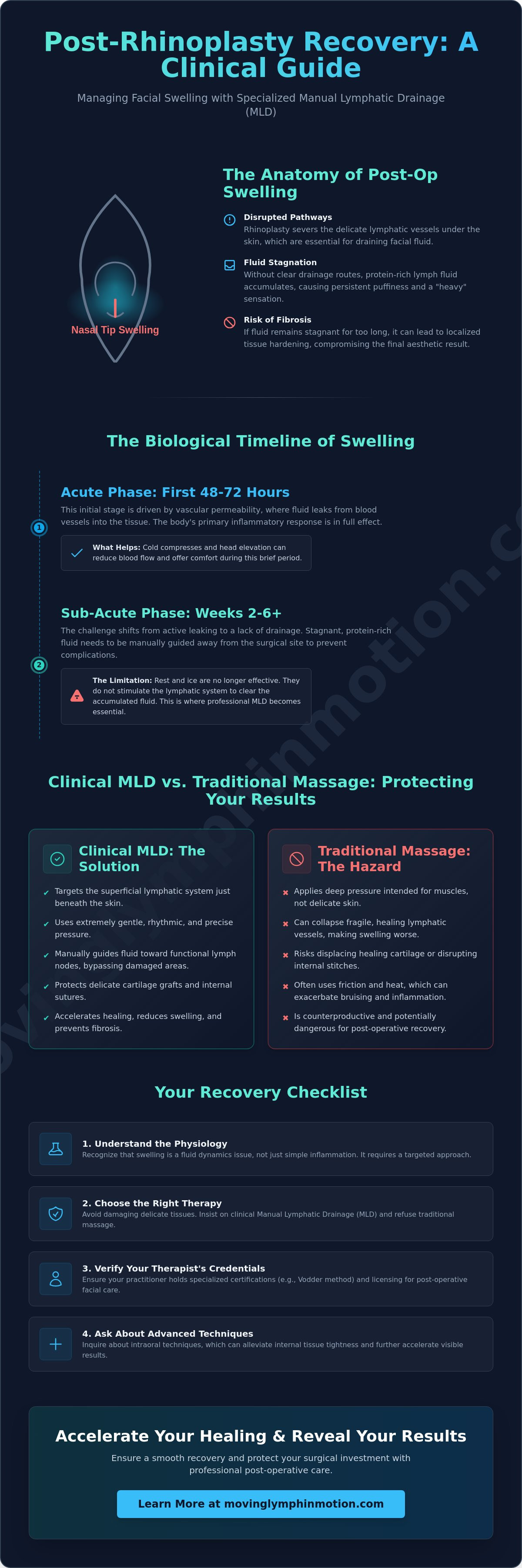
Rhinoplasty is an intricate procedure that involves the deliberate reshaping of nasal bone and cartilage. While these structural changes are the goal of the surgery, the physiological response is one of significant trauma. When a surgeon makes incisions and elevates the soft tissue from the underlying framework, the delicate network of superficial lymphatic vessels is inevitably disrupted. These vessels act as the primary drainage system for facial tissues. Once severed or compressed by initial inflammation, they can no longer efficiently transport interstitial fluid away from the surgical site, leading to the persistent puffiness and "heaviness" patients experience during early recovery.
The accumulation of fluid isn't uniform across the face. The nasal tip often remains the most stubborn area for edema resolution because it is the most distal point of the surgical site. Fluid tends to pool here due to the combined effects of gravity and the limited number of intact drainage pathways remaining in the immediate post-operative period. Seeking lymphatic drainage after rhinoplasty Austin specialists provide is often the most effective way to address this localized stagnation before it compromises the final aesthetic result.
The Biological Timeline of Facial Swelling
Post-surgical inflammation occurs in distinct phases. The acute phase, lasting roughly 48 to 72 hours, is characterized by vascular permeability where fluid leaks from blood vessels into the surrounding tissue. As you transition into the sub-acute phase, the challenge shifts from active leaking to a lack of drainage. Factors such as your genetic predisposition for inflammation, hydration levels, and even sleep position influence how quickly your system can clear this congestion. Post-op edema is a protein-rich fluid accumulation requiring specialized pathways. Without these pathways, the fluid remains trapped, causing the tight, restrictive sensation common in weeks two through six.
Why Traditional "Rest" Isn’t Always Enough
Many patients rely solely on head elevation and cold compresses. While ice is beneficial for reducing blood flow and numbing discomfort in the first 48 hours, it does little to stimulate the lymphatic system once the initial vascular leak has slowed. If stagnant, protein-rich lymph is allowed to sit in the tissue for too long, it can lead to localized tissue hardening or even permanent fibrosis. This is where Manual lymphatic drainage (MLD) becomes essential. Professional intervention manually guides the fluid toward functional lymph nodes, bypassing the damaged nasal channels and ensuring that your body doesn't begin to lay down scar tissue in response to chronic swelling. For those recovering in Central Texas, lymphatic drainage after rhinoplasty Austin serves as a clinical bridge between the surgeon's work and the patient's final, refined profile.
Clinical MLD vs. Traditional Massage: Protecting Your Results
Patients often conflate the term "massage" with the deep, muscular manipulation found in general wellness settings. However, applying traditional massage techniques to a post-operative face is not only ineffective but potentially hazardous. The anatomical target for lymphatic drainage after rhinoplasty Austin specialists is the superficial lymphatic system, which resides directly beneath the epidermis. Unlike deep tissue massage that aims to release muscular tension through significant pressure, clinical lymphatic work focuses on the delicate initial lymph vessels. These vessels are easily collapsed by excessive force, which renders the treatment counterproductive if the practitioner isn't specifically trained in post-surgical protocols.
The Danger of Excessive Pressure After Rhinoplasty
During the initial weeks of recovery, your nasal structure is in a state of high vulnerability. Aggressive manual pressure carries the risk of displacing delicate cartilage grafts or disrupting internal sutures that are critical to your final aesthetic profile. Traditional massage often utilizes friction and heat. Both of these factors can exacerbate post-operative bruising and prolong the inflammatory response by increasing local blood flow. A spa-style facial massage is designed for relaxation and general circulation, but a clinical recovery session is a precise medical intervention. By opting for specialized lymphatic drainage after rhinoplasty Austin, you ensure the therapy respects the structural integrity of your surgery while addressing the physiological need for fluid clearance.
The Science of Manual Lymphatic Drainage
The gold standard for post-surgical care is the Vodder Technique. This methodology utilizes a rhythmic, light-touch approach that exerts less pressure than the weight of a nickel. This specific level of tension is required to stretch the skin and stimulate the lymph angions, often referred to as the "lymphatic pump," without increasing arterial blood flow. This medically-reviewed resource explains the function of the lymphatic system as a vital network for maintaining fluid balance and filtering metabolic waste.
Clinical MLD works by manually directing stagnant fluid toward functional lymph nodes in the neck and submandibular region, effectively bypassing the damaged pathways near the nose. This process doesn't just reduce swelling; it also has a profound neurological calming effect. The slow, repetitive movements down-regulate the sympathetic nervous system, which is often heightened following the stress of surgery. If you're navigating the complexities of facial recovery, partnering with a specialist at movinglymphinmotion.com can provide the clinical precision necessary to protect your surgical investment and accelerate your healing timeline.
The Essential Post-Op Swelling Treatment Austin Checklist
Effective recovery is a methodical process that begins the moment you leave the surgical suite. While the first few days are dedicated to rest and initial healing, the transition to active edema management is critical for long-term tissue health. For patients seeking lymphatic drainage after rhinoplasty Austin specialists recommend, having a structured checklist ensures that no physiological milestone is overlooked. This professional approach moves beyond general wellness and focuses on the specific anatomical needs of a healing face.
- Timeline: Most clinical protocols suggest scheduling your first session between day 4 and day 7 post-op. This typically follows the removal of external splints and ensures the initial vascular "leak" has stabilized.
- Frequency: Consistency is paramount. During the first four weeks, sessions should occur once or twice weekly to maintain the momentum of fluid clearance and prevent the stagnation of protein-rich lymph.
- Hydration: Fluid transport requires adequate systemic hydration. Increase your intake to at least 80 ounces of water daily, starting 24 hours before your appointment, to facilitate the "flushing" of metabolic waste.
- Home Care: Complement your clinical sessions by maintaining head elevation at a 30 to 45-degree angle, even during sleep. Additionally, keep sodium intake below 1,500mg daily to minimize systemic water retention.
- Professional Verification: In Texas, your therapist must hold a current license from the TDLR. Beyond state licensing, confirm they possess a specific MLD or CLT certification to ensure they understand the complexities of facial surgery.
Week-by-Week Recovery Milestones
In the first two weeks, the focus of lymphatic drainage after rhinoplasty Austin is the reduction of acute edema and the clearance of periorbital bruising. By weeks three through six, the emphasis shifts toward managing residual swelling in the nasal bridge and preventing tissue thickening. While the most dramatic changes occur early on, minor fluctuations in nasal volume can persist for several months. Clinical MLD helps stabilize these fluctuations by ensuring the lymphatic pump remains efficient throughout the entire remodeling phase.
The Patient Preparation Checklist
Before your first appointment, discuss your MLD plan with your surgeon to ensure it aligns with their specific post-operative instructions. It's helpful to document your swelling patterns through daily photos, as this data allows your therapist to track therapeutic progress and adjust their technique as the tissue state changes. Finally, ensure your treatment takes place in a clean, clinical environment. Post-surgical skin is highly sensitive, and a professional setting prioritizes the safety and sterile conditions necessary for a complication-free recovery journey.
Choosing a Specialized Lymphatic Therapist in Austin
Selecting a practitioner for post-surgical facial care requires a rigorous vetting process that prioritizes clinical competency over proximity or price. In Texas, a massage therapy license is the legal baseline for practice. However, this general credential doesn't imply proficiency in the complex fluid dynamics required to manage post-rhinoplasty edema. For patients prioritizing lymphatic drainage after rhinoplasty Austin, the distinction between a therapist who attended a weekend workshop and one who holds a comprehensive clinical certification is fundamental to a safe recovery. A specialist must possess a deep anatomical understanding of how surgical trauma alters the initial lymph vessels and how to manually compensate for those disruptions.
Experience with facial and cosmetic surgery recovery is a non-negotiable requirement. The tissues of the nose and periorbital region are exceptionally delicate following reshaping. A therapist without specific surgical experience may inadvertently apply too much pressure or use incorrect directional strokes, which can exacerbate inflammation rather than resolve it. Consistent follow-up with a local Austin-based provider allows for real-time adjustments to your treatment plan as your tissue state evolves from the acute to the sub-acute phase of healing.
Questions to Ask Your Potential Therapist
Before committing to a clinical session, engage in a direct dialogue with your provider to assess their level of expertise. You should feel confident asking about the specific MLD methodology they practice, such as the Vodder method, and how many post-rhinoplasty patients they've treated within the last year. A qualified specialist should also be able to describe how they coordinate care with local Austin plastic surgeons to ensure their manual work aligns with your surgeon's specific post-operative restrictions. If a provider uses vague "spa" terminology or cannot explain the physiological goal of each stroke, it's a significant red flag.
The Value of Clinical Expertise in Central Texas
The Austin metropolitan area, including surrounding communities like Cedar Park, Leander, and Georgetown, is a hub for high-level cosmetic surgery. This concentration of medical expertise has fostered a community of therapists who operate with medical-grade seriousness. Choosing a practitioner who also provides professional MLD certification demonstrates a level of mastery that translates into superior patient outcomes. These educators understand the nuances of various surgical protocols and can adapt their technique to the specific day-count of your recovery. To ensure your surgical results are protected by an authoritative expert, book your clinical recovery session with a specialized Austin therapist today.
Post-Op Recovery with Lymph in Motion by Criselda White
Navigating the delicate phases of facial recovery requires a practitioner who functions as a clinical partner rather than a service provider. Criselda White’s methodology at Lymph in Motion is rooted in the intersection of clinical manual lymphatic drainage and aesthetic refinement. As a Texas Licensed Massage Therapist (TX #MT129702) and a Certified Lymphedema Therapist (CLT), Criselda applies the Vodder Method with a level of anatomical precision that respects the fragile state of post-surgical nasal structures. When you seek lymphatic drainage after rhinoplasty Austin at this practice, the focus extends beyond simple fluid reduction to the active restoration of tissue health and metabolic balance.
The practice’s "Build and Sculpt" philosophy represents a sophisticated evolution of traditional recovery. It recognizes that once the initial edema is managed, the goal shifts toward defining the surgical results and ensuring the skin and underlying tissues settle with maximum clarity. By integrating advanced techniques such as buccal massage Austin patients can address the internal tissue tightness and musculoskeletal tension that often accompany facial surgery. This intraoral approach allows for the manipulation of facial muscles from the inside out, providing a comprehensive level of rejuvenation that external drainage alone cannot achieve.
A Tailored Approach to Surgical Healing
Every rhinoplasty is unique, involving different degrees of bone work, grafting, and soft tissue manipulation. Criselda develops individualized protocols that adapt to the specific day-count and technical nuances of your surgery. This ensures that the pressure, direction, and frequency of your sessions are perfectly calibrated to your body’s current inflammatory state. The practice maintains a steadfast commitment to providing evidence-based lymphedema therapy Austin TX, ensuring that even the most complex cases of post-operative swelling are handled with medical-grade seriousness.
Next Steps for Your Austin Recovery
As your acute swelling subsides, your treatment plan can evolve to include the build and sculpt body treatment, which focuses on long-term contouring and lymphatic efficiency. Transitioning from the intensive early recovery phase to a maintenance schedule helps prevent the minor volume fluctuations that can mask your final surgical profile for months. Scheduling your initial assessment at the Austin clinic is a proactive step toward securing your recovery window and ensuring your results are protected by a clinical specialist. Secure your recovery window today by contacting the clinic to coordinate your post-operative care plan. By prioritizing professional lymphatic drainage after rhinoplasty Austin, you empower your body to heal with the precision your surgery deserves.
Secure Your Aesthetic Results Through Clinical Precision
Managing post-rhinoplasty edema is a physiological necessity rather than an optional luxury. We've established how surgical trauma disrupts the facial lymphatic network and why the nasal tip often remains the most persistent area of swelling. By adhering to a structured checklist and distinguishing between clinical MLD and traditional spa techniques, you protect the structural integrity of your surgery while accelerating your body's natural healing timeline. Early intervention ensures that protein-rich fluid doesn't stagnate, reducing the risk of long-term tissue thickening or fibrosis.
For those seeking lymphatic drainage after rhinoplasty Austin, specialized care ensures that interstitial fluid is redirected safely without compromising cartilage grafts or sutures. As a Certified MLD Instructor and Practitioner, Criselda White offers the clinical expertise required for complex post-cosmetic surgery recovery. Her practice serves the greater Austin area, including Cedar Park and Georgetown, providing a steady hand through your recovery journey. This level of specialization is vital for patients who prioritize physiological results over temporary comfort.
Schedule your clinical post-op recovery session with Criselda White to ensure your surgical investment receives the meticulous attention it requires. You've invested in your new profile; now prioritize the professional care that reveals your best results.
Frequently Asked Questions
How soon after rhinoplasty can I start lymphatic drainage in Austin?
You can typically begin sessions 4 to 7 days after your procedure, once external splints are removed and your surgeon provides clearance. Starting lymphatic drainage after rhinoplasty Austin during this window helps manage the acute inflammatory phase before fluid becomes stagnant. This timeline ensures the initial vascular stability is established while addressing the protein-rich fluid accumulation that causes early discomfort and tightness.
Is lymphatic drainage painful after facial surgery?
Manual lymphatic drainage is a non-invasive, pain-free therapy that utilizes extremely light pressure, often described as less than the weight of a nickel. Unlike traditional massage, MLD doesn't involve deep tissue manipulation or friction. The rhythmic, gentle strokes are designed to stimulate the superficial lymphatic vessels without disturbing sensitive surgical sites, grafts, or sutures, making it a comfortable experience even during early recovery.
How many sessions of MLD will I need after my nose job?
Most patients benefit from one to two sessions per week during the first four to six weeks of recovery. The total number depends on your body's specific inflammatory response and the complexity of the surgical work performed. Your therapist will monitor your tissue state and adjust the frequency as edema resolves, ensuring the nasal tip and surrounding facial structures return to their refined profile as efficiently as possible.
Can lymphatic drainage help with bruising after rhinoplasty?
Clinical MLD significantly accelerates the clearance of bruising by facilitating the removal of cellular debris and broken red blood cells from the interstitial space. By stimulating the lymphatic pump, the therapy helps the body process and filter the metabolic waste associated with surgical trauma. This results in a faster resolution of periorbital discoloration and a more rapid transition to your final aesthetic appearance.
What is the difference between MLD and a regular facial massage?
The primary difference lies in the anatomical target and the amount of pressure applied during the session. Regular facial massage often targets deep muscles and utilizes oils to create friction, which can increase inflammation and displace delicate cartilage. In contrast, clinical MLD targets the superficial lymphatic system with specific, directional strokes that move fluid toward healthy lymph nodes, prioritizing physiological drainage over general relaxation.
Does insurance cover post-op lymphatic drainage in Texas?
Post-operative lymphatic drainage is typically a private-pay service in Texas, as most specialized providers are considered out-of-network. While clinics usually don't bill insurance directly, they can often provide a "Super Bill" for you to submit to your provider for potential reimbursement. You should check with your specific insurance carrier to see if your plan covers medically necessary lymphedema therapy or post-surgical rehabilitation.
Can I perform lymphatic drainage on myself at home?
Performing self-drainage is not recommended during the critical post-operative phase because incorrect pressure or direction can exacerbate swelling or damage new nasal structures. A certified therapist possesses the clinical training to navigate surgical incisions and delicate grafts safely. While home care like head elevation is encouraged, the manual manipulation of facial lymphatics should be left to a specialist to ensure optimal fluid dynamics.
What happens if I skip lymphatic drainage after surgery?
Skipping lymphatic drainage may lead to a significantly slower recovery and more persistent puffiness in the nasal tip. Stagnant, protein-rich fluid that remains in the tissue for too long can eventually cause localized hardening or fibrosis. Professional intervention ensures that the remodeling phase proceeds smoothly, helping you see your refined surgical results much sooner while maintaining the long-term health of the underlying tissue.