

Your surgical procedure represents only the initial phase of your transformation; the critical second half occurs within the cellular environment of your lymphatic system during the weeks that follow. For many patients, the initial stages of cosmetic surgery recovery in Austin are marked by persistent edema and the unsettling sensation of localized tissue density. It's natural to feel a sense of urgency when inflammation obscures your surgical results or when you encounter conflicting information regarding post-operative care.
We understand that navigating the complexities of tissue healing requires more than just patience. This guide explores how specialized manual lymphatic drainage (MLD) functions as a clinical necessity to optimize physiological recovery and safeguard your aesthetic investment against irregular contouring or permanent fibrosis. By prioritizing evidence-based fluid management, you can ensure a more predictable and efficient return to your daily routine with the smooth, even results you intended to achieve.
We'll examine the precise anatomical mechanics behind MLD, clarify the distinction between clinical therapy and recreational spa services, and outline the professional standards required for safe, effective tissue mobilization during your healing journey.
Key Takeaways
- Understand how surgical trauma triggers the inflammatory cascade and why the lymphatic system is the primary pathway for clearing localized edema.
- Learn how clinical manual lymphatic drainage accelerates the removal of inflammatory mediators to optimize your cosmetic surgery recovery Austin and ensure smooth skin retraction.
- Distinguish between aggressive body contouring and the precise, light-touch methodology of clinical MLD required to prevent tissue damage and fibrosis.
- Identify the "Golden Window" for beginning therapy, often within 24 to 48 hours post-operation, to manage acute swelling and surgical soreness effectively.
- Discover the importance of individualized treatment plans that prioritize physiological restoration over general wellness approaches.
The Physiology of Cosmetic Surgery Recovery in Austin
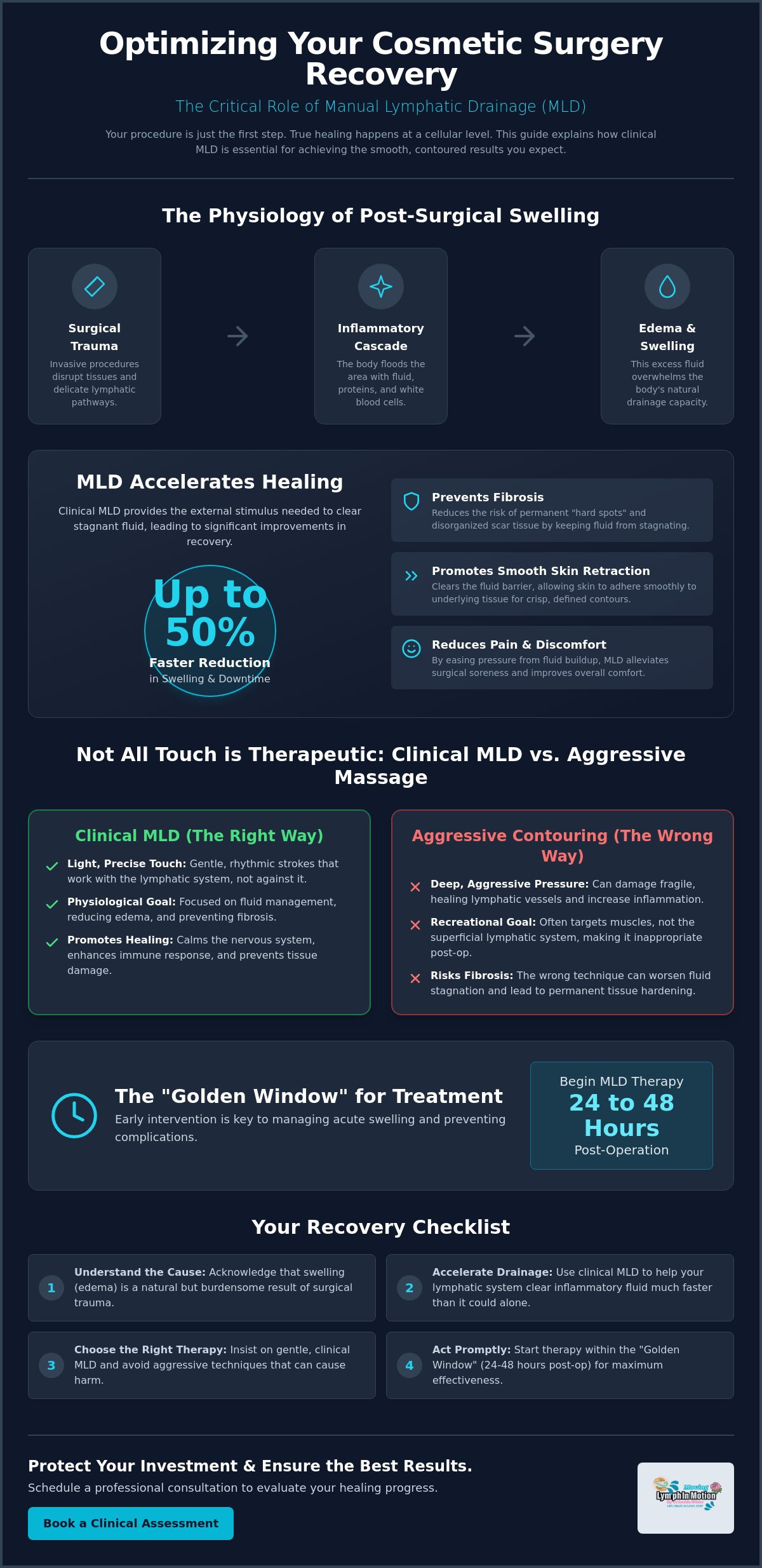
Post-op edema is the accumulation of protein-rich fluid in the tissue spaces following surgical disruption. When you undergo an invasive procedure, your body initiates a complex inflammatory cascade. This physiological response increases capillary permeability, allowing fluid, white blood cells, and plasma proteins to flood the surgical site. While this is a necessary part of the initial healing phase, it creates a significant burden on your internal drainage systems.
The lymphatic system is the body's dedicated waste management network. It's responsible for clearing interstitial fluid and cellular debris that the venous system is too small to transport. During a typical cosmetic surgery recovery Austin, the volume of this fluid often exceeds the body's natural capacity to process it. Unlike the circulatory system, which has the heart to act as a pump, the lymphatic system relies on intrinsic vessel contractions and external movement. Manual lymphatic drainage provides the external stimulus needed to move this stagnant fluid toward functional lymph nodes.
Surgical Trauma and Lymphatic Interruption
Invasive procedures such as Lipo 360 or an abdominoplasty involve the mechanical disruption of the superficial lymphatic pathways. Cannulas used in liposuction create tunnels in the adipose tissue, while incisions for a tummy tuck can sever the delicate collectors responsible for fluid transport. This interruption causes a temporary fluid backlog in the tissues. Choosing to wait for the body to heal on its own often leads to prolonged inflammation and unnecessary discomfort. Without intervention, the protein-rich fluid remains trapped, potentially leading to the formation of hard lumps or irregular tissue textures.
Understanding Edema and Seroma Risks
Distinguishing between expected swelling and problematic fluid collection is vital for a successful outcome. Normal post-operative swelling is diffuse, but stagnant fluid that settles in surgical pockets can lead to seromas. These are localized collections of serum that can interfere with how the skin adheres to the underlying muscle. The physiological necessity of manual evacuation during the early recovery phase can't be overstated. By gently directing fluid away from the trauma site, we reduce the pressure on the tissues and minimize the risk of chronic swelling. To ensure your recovery stays on track, you can book a clinical assessment to determine the state of your tissue health and fluid dynamics.
Why Manual Lymphatic Drainage (MLD) is Essential for Aesthetic Results
The relationship between fluid management and skin retraction is a critical factor in procedures like liposuction or abdominoplasty. When interstitial fluid is allowed to persist, it creates a physical barrier that prevents the skin from adhering smoothly to the underlying fascia. By systematically clearing this fluid, MLD facilitates better skin "snap-back," which is essential for achieving a crisp, defined contour. Research regarding the clinical efficacy of MLD highlights its ability to transition the body from an acute inflammatory state to a regenerative phase more efficiently. If you're concerned about how your tissues are settling, you can schedule a professional consultation to evaluate your healing progress.
Preventing Fibrosis and Tissue Adhesions
Fibrosis refers to the development of "hard spots" or disorganized scar tissue beneath the skin’s surface. This occurs when stagnant, protein-rich fluid triggers an overproduction of collagen fibers that bunch together rather than laying flat. Clinical MLD keeps the ground substance of the tissue supple, ensuring that collagen deposition remains organized and flexible. Early intervention is the most effective way to prevent these permanent irregularities from compromising your surgical investment.
Enhancing the Immune Response and Healing
Efficient lymphatic flow is directly linked to the delivery of healing white blood cells to the surgical site. By accelerating waste removal, MLD reduces the metabolic burden on the area, which lowers the risk of post-operative infection. The rhythmic, light-touch application of this therapy also shifts the body from a stressed sympathetic state into a restorative parasympathetic state. This systemic calming effect is vital for cellular repair and overall patient comfort during the most sensitive phases of recovery.
Clinical MLD vs. General Massage: Protecting Your Investment
A common but dangerous misconception exists among patients navigating cosmetic surgery recovery Austin: the idea that aggressive "body contouring" or deep tissue work is necessary to smooth out post-surgical lumps. In reality, these heavy-handed techniques are strictly contraindicated during the acute and sub-acute phases of healing. Clinical manual lymphatic drainage isn't a traditional massage; it's a precision-based skin-stretching technique designed to stimulate the lymphangions without collapsing the delicate initial lymphatic vessels. These vessels reside just beneath the epidermis, and applying excessive pressure, such as that used in wood therapy or vigorous kneading, can rupture fragile new capillaries and cause internal bruising. This secondary trauma adds to the inflammatory load the body must clear, effectively stalling your progress.
The anatomy of a clinical MLD stroke is characterized by a light, rhythmic, and purposeful movement. It's designed to follow the specific architecture of the lymphatic system, which may have been altered by your surgeon’s incisions. Unlike spa-level treatments that focus on general relaxation, clinical MLD prioritizes the physics of fluid dynamics. By using a gentle touch, the therapist can effectively encourage the opening of lymphatic collectors, facilitating the movement of protein-rich fluid toward functional drainage sites. This methodical approach ensures that the tissue remains calm and the healing environment is preserved rather than disrupted.
The Risks of Inexpert Post-Op Care
Improper technique doesn't just feel uncomfortable; it can actively worsen your condition. When an untrained provider attempts to "push" fluid without understanding the redirected pathways necessitated by surgical trauma, they risk forcing interstitial fluid into areas where drainage is already compromised. This can lead to localized "pockets" of swelling or increased pain. The "no pain, no gain" philosophy has no place in clinical recovery. If a treatment causes significant discomfort or leaves you bruised, it's not therapeutic lymphatic drainage. Expert care should feel soothing and provide an immediate sense of lightness in the treated area.
What to Look for in an Austin Recovery Specialist
While Texas requires a license for massage therapy, a standard license doesn't guarantee expertise in post-surgical care. You must distinguish between a spa-level massage and a specialist with clinical MLD certification. Ask potential providers about their specific protocols for different surgical techniques, such as how they adapt their approach for a tummy tuck versus a deep plane facelift. For a deeper dive into vetting your care team, consult this Manual Lymph Drainage Therapists: A Clinical Guide to ensure you're entrusting your results to a qualified professional who understands the complexities of your procedure.
Your Post-Op Recovery Timeline: When to Begin Lymphatic Therapy
The trajectory of your cosmetic surgery recovery Austin isn't a static period of waiting, but a dynamic sequence of biological events that require specific interventions at precise intervals. We often refer to the first 24 to 48 hours as the "Golden Window" for starting manual lymphatic drainage. During this hyper-acute phase, the lymphatic system is overwhelmed by the sudden influx of protein-rich fluid and cellular debris. Initiating gentle mobilization early helps clear these inflammatory mediators before they can settle into the tissue, significantly reducing the intensity of initial bruising and soreness.
Phase 1, encompassing the first two weeks, focuses primarily on managing acute edema. This is the period where the sensation of "tightness" is most pronounced. As you transition into Phase 2 (Weeks 3 to 6), the clinical focus shifts toward contour refinement and the active prevention of fibrosis. This is a critical stage where the body begins depositing new collagen; MLD ensures these fibers lay down in an organized fashion rather than forming the hard, irregular lumps associated with poor drainage. By Phase 3 (Month 2 and beyond), therapy serves as a maintenance tool for optimal skin health and final tissue maturation, ensuring the long-term integrity of your results.
Protocol for Lipo 360 and Tummy Tuck Recovery
Body contouring procedures like Lipo 360 and abdominoplasty involve extensive disruption of the subcutaneous tissue. This requires a specialized understanding of redirected drainage paths, as the primary vertical collectors in the abdomen may be temporarily non-functional. We coordinate our manual therapy with your use of compression garments to ensure that fluid is directed away from the flanks and toward functional nodes in the axilla or groin. For a detailed breakdown of this process, read more about lymphatic drainage for liposuction recovery.
Recovery Protocols for Facial and Breast Procedures
Facial surgeries, such as facelifts or rhinoplasty, require an even more delicate touch due to the high density of lymphatic vessels in the head and neck. Managing swelling quickly in these areas is paramount to seeing your new profile and ensuring the skin drapes correctly over the underlying structure. You can review our lymphatic drainage after rhinoplasty in Austin checklist for specific post-op milestones. Similarly, breast augmentation or mastectomy recovery benefits from gentle drainage techniques that reduce pressure on incisions and improve overall comfort without disturbing the placement of implants or delicate sutures.
Specialized Post-Operative Care at Best Lymphatic Specialist
At Best Lymphatic Specialist, we view recovery as a precise physiological requirement rather than an elective convenience. The Criselda White approach is founded on the intersection of advanced clinical knowledge and a deep understanding of the patient’s emotional journey after surgery. We recognize that cosmetic surgery recovery Austin involves more than just managing symptoms; it's a proactive strategy to restore lymphatic integrity. Our practice provides individualized treatment plans tailored to the specific surgical methodology used by your physician, ensuring that our manual therapy complements their structural work.
We serve patients throughout the Greater Austin area, including Cedar Park, Round Rock, and Georgetown, offering a specialized environment for those seeking professional post-operative support. By integrating manual lymphatic drainage into your surgeon’s prescribed recovery plan, we act as a clinical partner in your healing process. This collaborative approach ensures that your tissue remains supple and your fluid dynamics are optimized from the earliest stages of your cosmetic surgery recovery Austin.
A Dedicated Recovery Hub in Central Texas
Unlike multi-service wellness centers or general spas, our facility is a dedicated hub focused exclusively on lymphatic health. This specialization allows us to maintain a high standard of clinical precision that generalists can't replicate. Austin surgeons frequently refer their patients to Best Lymphatic Specialist because they trust our ability to handle complex fluid dynamics and sensitive tissue states. Beyond post-operative care, we provide essential support for lymphedema and lipedema management, alongside aesthetic options like our Build and Sculpt offerings. This comprehensive focus ensures we remain experts in the mechanics of tissue health and structural integrity.
Booking Your Clinical Recovery Sessions
Securing your recovery window is a vital step in your surgical preparation. We recommend pre-scheduling your post-op sessions as soon as your surgery date is confirmed. This ensures you can access the "Golden Window" of initial healing when the lymphatic system is most burdened. During your first clinical evaluation, we perform a thorough assessment of your tissue density, fluid distribution, and incision health. This evidence-based approach allows us to adjust the frequency and intensity of your sessions as your body moves through the various stages of healing, ensuring a seamless transition toward your final results.
Schedule your clinical recovery session at Best Lymphatic Specialist to ensure your physiological healing is managed by a specialist who prioritizes your long-term aesthetic investment.
Secure Your Aesthetic Investment Through Clinical Recovery
The success of your surgical transformation depends on the meticulous management of your internal healing environment. We've established that localized edema, if left unmanaged, can compromise skin retraction and lead to the formation of disorganized scar tissue. By prioritizing a clinical approach to manual lymphatic drainage, you transition your body from a state of acute inflammation to one of efficient regeneration. This is not a luxury; it's a physiological requirement for achieving the smooth, contoured results you and your surgeon intended.
Integrating professional intervention into your cosmetic surgery recovery Austin ensures your results are protected by evidence-based protocols. As a Certified Manual Lymphatic Drainage Specialist at Best Lymphatic Specialist, I provide specialized post-op protocols for Lipo 360, BBL, and facelifts. Serving the communities of Austin, Cedar Park, and Round Rock, our practice acts as a steady guide through the complexities of tissue healing. Book Your Post-Op Clinical Recovery Session at Best Lymphatic Specialist to begin your journey toward a smoother, more comfortable recovery. Your body possesses an incredible capacity for repair, and with specialized clinical support, you can navigate this transition with absolute confidence.
Frequently Asked Questions
When should I start lymphatic massage after liposuction in Austin?
You should ideally begin manual lymphatic drainage within 24 to 48 hours following your procedure to maximize the "Golden Window" of recovery. Early intervention helps clear inflammatory mediators before they settle into the tissue, which significantly reduces the intensity of acute edema. Most specialists in cosmetic surgery recovery Austin coordinate with your surgeon to ensure the timing aligns with your specific physiological state and surgical technique.
Is post-op lymphatic drainage painful?
Clinical manual lymphatic drainage is a gentle, non-invasive technique that shouldn't cause pain. Unlike deep tissue massage, it utilizes light, rhythmic skin-stretching to stimulate the initial lymphatic vessels located just beneath the epidermis. If you experience significant discomfort or bruising, the technique is likely too aggressive for a post-operative state. Proper MLD should provide an immediate sense of lightness and relief from surgical tightness.
How many sessions of manual lymphatic drainage do I need after a tummy tuck?
Most patients require a series of 10 to 15 sessions to manage the extensive fluid backlog associated with an abdominoplasty. The exact frequency depends on your body's inflammatory response and the extent of the surgical disruption to your lymphatic pathways. We typically recommend frequent sessions during the first two weeks, followed by a tapering schedule as your tissues begin to stabilize and the acute swelling subsides.
Can I do lymphatic drainage at home, or do I need a specialist?
While basic wellness techniques exist for home use, post-surgical recovery requires the expertise of a certified lymphatic therapist. A specialist understands how to navigate redirected drainage paths and avoid areas of compromised tissue integrity. Attempting self-treatment after invasive surgery carries risks, including the potential for forcing fluid into surgical pockets or inadvertently causing tissue trauma that can lead to permanent irregularities.
Will lymphatic massage help with the hard lumps (fibrosis) after my BBL?
Specialized lymphatic therapy is highly effective at preventing and softening the "hard spots" known as fibrosis that often follow a Brazilian Butt Lift. These lumps form when protein-rich fluid stagnates and triggers disorganized collagen production. By maintaining consistent fluid movement, clinical MLD keeps the ground substance of your tissue supple, ensuring a smoother contour and preventing permanent adhesions from compromising your aesthetic results.
Does my insurance cover post-operative lymphatic drainage in Texas?
Manual lymphatic drainage performed by a massage therapist is generally not covered by insurance or Medicare in Texas. These services are classified as wellness or therapeutic bodywork rather than medical treatment. Some providers may offer a superbill that you can submit to your insurance company for potential reimbursement, but you should verify your specific coverage details with your provider before beginning your treatment plan.
What is the difference between MLD and a regular massage?
MLD differs from regular massage in its anatomical focus and application of pressure. Traditional massage targets the musculature with deep pressure, while clinical MLD utilizes a light, rhythmic touch to engage the superficial lymphatic system. This methodology prioritizes fluid dynamics and the clearance of interstitial waste without collapsing the delicate vessels. It's a specialized clinical tool designed specifically for physiological restoration rather than general relaxation.
Can I get lymphatic drainage if I still have surgical drains in place?
You can safely receive manual lymphatic drainage while surgical drains are still in place. In fact, clinical therapy often assists the drainage process by gently directing fluid toward the designated exit points. Your therapist will work meticulously around the drain sites to ensure they remain undisturbed while focusing on the surrounding tissues to reduce the overall fluid burden on your body during this sensitive phase of recovery.