

Research suggests that lipedema affects approximately 11% of women in the United States, yet it remains one of the most frequently misdiagnosed conditions in modern medicine. You've likely spent years being told your limb heaviness and chronic pain are merely a matter of diet or exercise, only to find that standard weight loss protocols fail to address the underlying physiological reality of your tissue. This frustration is a common barrier to effective lipedema management in Central Texas, where patients often navigate a fragmented healthcare system in search of specialists who truly understand the anatomical complexities of the disease.
You deserve a recovery strategy grounded in clinical science rather than generic wellness advice. This guide offers a comprehensive framework for managing the condition, moving beyond surface-level symptoms to address the mechanics of lymphatic fluid dynamics and subcutaneous adipose tissue. We'll explore the specific protocols for specialized manual therapy, the necessity of medical-grade compression, and how to establish a localized care team in the Austin area. By prioritizing physiological results and tissue integrity, you can finally find a path toward reduced limb pain, decreased swelling, and improved functional mobility.
Key Takeaways
- Differentiate lipedema from lifestyle-related conditions by identifying specific anatomical markers and symmetrical adipose tissue distribution.
- Locate qualified specialists in the Austin area, including vascular surgeons and physiatrists, to secure a formal clinical diagnosis.
- Implement Manual Lymphatic Drainage (MLD) as a primary tool for lipedema management Central Texas to decrease interstitial inflammation and limb heaviness.
- Access a curated resource guide for medical-grade compression and anti-inflammatory nutritional strategies designed for long-term physiological stability.
Understanding Lipedema: Clinical Symptoms, Stages, and Anatomical Markers
Lipedema is not a lifestyle-driven condition. It's a progressive connective tissue disorder characterized by the pathological accumulation of adipose tissue that doesn't respond to traditional caloric restriction or exercise. Gaining a clinical Understanding Lipedema involves recognizing that this diseased fat is physiologically distinct from healthy fat. It's almost exclusively found in women and typically presents with a hallmark symmetrical distribution in the lower or upper limbs. Navigating lipedema management Central Texas starts with a clinical identification of these markers to ensure patients receive targeted lymphatic care rather than generic weight loss advice.
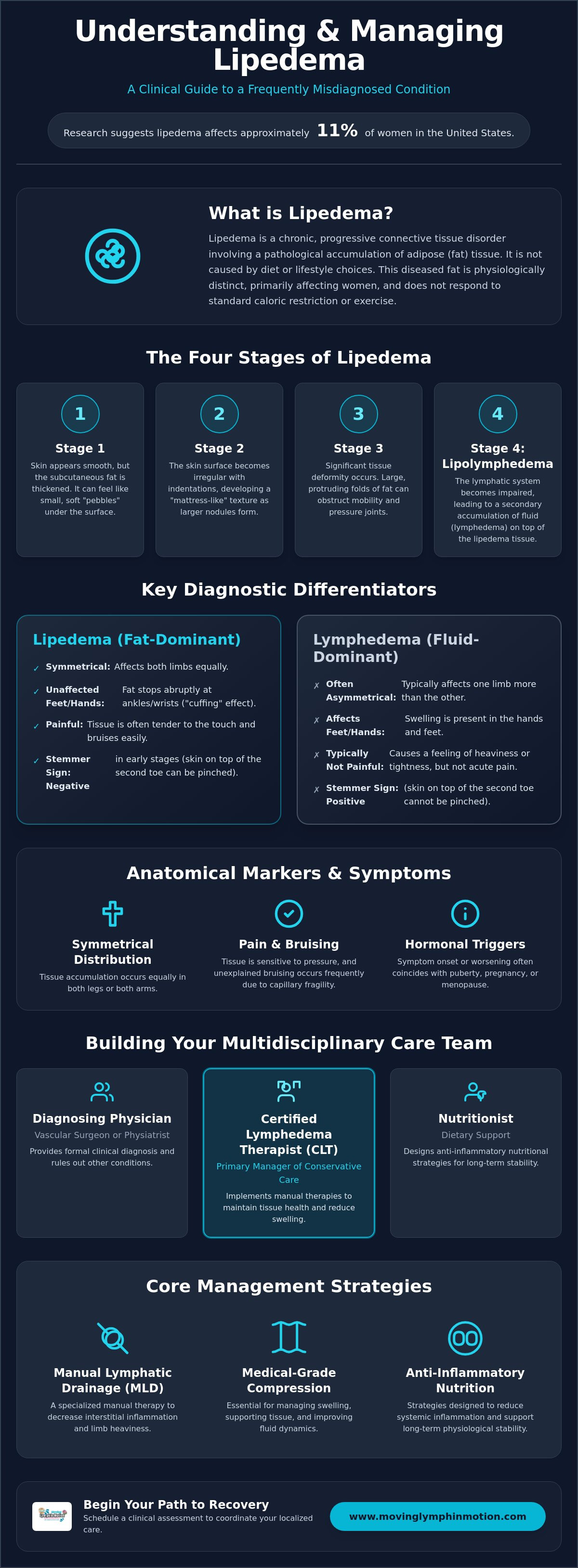
A defining anatomical marker is the "cuffing" phenomenon. Unlike other forms of swelling, lipedema fat terminates abruptly at the ankles or wrists, leaving the feet and hands unaffected. This creates a visible ring of tissue that distinguishes it from general obesity. Clinicians categorize the progression of the disease into four distinct stages:
- Stage 1: The skin appears smooth, but the subcutaneous fat is thickened and may feel like "small pebbles" under the surface.
- Stage 2: The skin surface becomes irregular with indentations, often described as a mattress-like texture, as larger nodules begin to form.
- Stage 3: Significant tissue deformity occurs, with large, protruding folds of fat that can obstruct mobility and put pressure on joints.
- Stage 4: Also known as lipolymphedema, this stage involves the failure of the lymphatic system, leading to secondary fluid accumulation.
Lipedema vs. Lymphedema: Key Diagnostic Differentiators
Differentiating between fluid-dominant and fat-dominant swelling is vital for an accurate diagnosis. Lymphedema is primarily a failure of fluid transport, often resulting in asymmetrical swelling and a positive Stemmer Sign, where the skin on the second toe cannot be pinched. In contrast, lipedema is a tissue disorder where the Stemmer Sign is usually negative in early stages. Many patients face medical gaslighting, as their symptoms are frequently misdiagnosed as simple obesity. This clinical oversight remains the primary barrier to accessing specialized lipedema management Central Texas, delaying necessary manual therapies and compression protocols.
The Physiological Impact of Diseased Adipose Tissue
At a cellular level, lipedema adipocytes are larger and more prone to inflammation than healthy fat cells. This tissue is highly sensitive to hormonal triggers, particularly estrogen, which is why symptom onset often coincides with puberty, pregnancy, or menopause. The interstitial environment becomes congested, leading to chronic pain and a sensation of heaviness. Micro-angiopathy within the diseased tissue causes capillary fragility, which explains why lipedema patients experience frequent and unexplained bruising even with minimal contact.
Navigating Lipedema Diagnosis and Specialists in Central Texas
Securing a formal diagnosis is the first critical step toward a structured recovery, yet finding a physician who recognizes the specific anatomical markers of the disease can be challenging for patients in Austin, Cedar Park, and Round Rock. While primary care providers are the traditional point of entry, the most accurate clinical assessments in the Austin medical community are typically performed by vascular surgeons or physiatrists. These specialists possess the diagnostic tools to differentiate between subcutaneous adipose tissue disorders and venous insufficiencies, ensuring that your path toward lipedema management Central Texas is based on physiological reality rather than a misdiagnosis of simple obesity.
When preparing for a consultation in Leander or Liberty Hill, it is helpful to provide your physician with a concise clinical history. Documenting the following markers can facilitate a more productive evaluation:
- Symmetry: Note that tissue changes occur equally in both legs or both arms.
- Hormonal Correlation: Identify if symptom onset coincided with puberty, pregnancy, or menopause.
- Tissue Texture: Describe the presence of "pearl-like" nodules or a mattress-like irregularity.
- Sensitivity: Report any localized pain, tenderness, or unexplained bruising.
Building Your Multidisciplinary Care Team in Austin
Effective management requires a collaborative effort between a diagnosing physician, a nutritionist, and a Certified Lymphedema Therapist (CLT). Within this framework, the CLT acts as the primary manager for conservative care, implementing the manual protocols necessary to maintain tissue health. At Best Lymphatic Specialist, we serve as a central coordinator for these therapies, ensuring that your non-surgical interventions are synchronized with your physician’s clinical goals. You can schedule a clinical assessment at Best Lymphatic Specialist to begin coordinating your localized care team in Georgetown or the surrounding areas.
What to Expect During a Clinical Lipedema Evaluation
A clinical evaluation is primarily focused on physical palpation and medical history. The specialist will assess the skin’s temperature, texture, and the presence of the "cuffing" phenomenon at the ankles or wrists. While lipedema is a clinical diagnosis, some providers in Central Texas may utilize ultrasound to measure the thickness of the subcutaneous layer or lymphoscintigraphy to evaluate the functional capacity of the lymphatic system. These tools help rule out primary lymphedema and provide a baseline for your management strategy. A thorough evaluation ensures that your therapeutic plan addresses the underlying micro-angiopathy and tissue inflammation rather than just surface-level symptoms.
Clinical Manual Therapy: The Foundation of Lipedema Management
While surgical options are often discussed, Manual Lymphatic Drainage (MLD) remains the non-negotiable gold standard for non-surgical lipedema management Central Texas. This clinical intervention targets the interstitial environment where metabolic waste and excess fluid accumulate. By reducing the inflammatory load within these spaces, MLD directly mitigates the hypersensitivity and limb heaviness that characterize the disease. Effective symptom management often requires a structured frequency, typically beginning with an intensive phase of multiple sessions per week to stabilize the tissue before moving into a maintenance rhythm tailored to the patient's physiological response.
It's vital to distinguish clinical MLD from the "lymphatic massage" often marketed at general wellness spas. Spa-level treatments frequently utilize deep pressure or oils, which can be counterproductive or even painful for those with lipedema. Clinical therapy is a dry, highly specialized technique that prioritizes the delicate lymphatic structures located just beneath the skin. A trained specialist understands how to manipulate the tissue without causing trauma to the fragile capillaries, ensuring that the treatment supports rather than hinders the recovery process.
The Mechanics of Manual Lymphatic Drainage for Lipedema
The process utilizes precise, skin-stretching maneuvers designed to stimulate lymphangiomotoricity, the intrinsic contraction rate of the lymph vessels. This targeted application helps move stagnant fluid and protein out of the subcutaneous tissue, providing relief from the "heavy limb" sensation. For a deeper look at specific protocols, see this Clinical Manual Therapy for Lipedema Legs: A Professional Management Guide. By improving fluid dynamics, we can reduce the mechanical pressure on pain receptors, allowing for a higher quality of life and improved mobility.
Preventing Fibrosis and Tissue Hardening
Chronic inflammation within lipedema tissue often leads to fibrosis, a secondary hardening of the connective tissue. Without consistent intervention, this progression from Stage 1 to Stage 3 can significantly limit range of motion and increase baseline pain levels. Manual techniques are essential for maintaining tissue pliability and preventing the formation of dense, fibrotic nodules. In advanced cases, we integrate myofascial release to address adhesions within the fascia, ensuring a comprehensive approach to lipedema management Central Texas. This proactive maintenance is the most effective way to preserve functional movement and protect tissue integrity over the long term.
Comprehensive Management Resources: Compression, Nutrition, and Movement
Lipedema management Central Texas requires more than clinical visits; it demands a daily commitment to physiological support. While manual therapy addresses the fluid already present in the tissue, home-care resources prevent new accumulation and manage systemic inflammation. In the Austin area, patients have access to specialized medical fitters who understand that standard off-the-shelf garments often fail to provide the necessary containment for diseased adipose tissue. Integrating these resources into a daily routine is what separates temporary relief from long-term stability.
Nutrition plays a critical role in controlling the metabolic environment of the limbs. Many specialists recommend the Rare Adipose Disorder (RAD) diet, which focuses on whole, anti-inflammatory foods to reduce tissue swelling and baseline pain. Complementing this, low-impact movement is essential for stimulating lymphatic flow without causing oxidative stress or injury. Austin’s active culture offers excellent opportunities for swimming or rebounding. These activities utilize hydrostatic pressure or rhythmic acceleration to move fluid through the vessels without the high-impact strain of traditional exercise.
We must also address the mental health challenges that accompany a chronic, progressive diagnosis. The frustration of years spent navigating medical gaslighting often leaves a significant psychological mark. Local support groups and therapists specializing in chronic illness provide vital emotional scaffolding. They help patients move past the trauma of misdiagnosis and focus on the empowerment that comes with a clinical, evidence-based management plan.
Selecting the Right Compression for Lipedema
Flat-knit garments are the superior choice for lipedema because their stiffer, custom-woven fabric provides a "wall" that contains tissue without cutting into skin folds. Round-knit stockings, while common, often act like a rubber band and can create painful tourniquet effects at the ankles or knees. Professional measuring in a clinical setting ensures that the gradient pressure is distributed accurately to facilitate fluid return. Compression provides external pressure to support weakened vessel walls, preventing further fluid leakage into the interstitial space.
Managing Inflammation Through Lifestyle Adjustments
The intense heat and humidity of Central Texas can exacerbate swelling by causing vasodilation and an increased fluid load on the lymphatic system. Managing these environmental triggers often involves the use of pneumatic compression pumps as a supplemental home tool. These devices mimic manual techniques to keep the lymphatic system active between professional sessions. For more detailed answers on managing these fluctuations, review this Lymphatic Drainage for Chronic Swelling: A Clinical FAQ and Guide. You can book a consultation for a personalized management plan to integrate these medical-grade resources into your daily life.
Specialized Lipedema Care at Best Lymphatic Specialist
Best Lymphatic Specialist operates as a clinical destination for those navigating the complexities of chronic swelling and tissue disorders. Led by Criselda White, a Licensed Massage Therapist and Certified Lymphedema Therapist, the clinic prioritizes physiological outcomes through the application of the Vodder Method. This medical-grade approach to lipedema management Central Texas focuses on stabilizing the interstitial environment and maintaining the health of the subcutaneous adipose tissue. By utilizing precise, evidence-based manual protocols, we ensure that every session contributes to long-term tissue integrity and pain reduction.
The clinic provides essential support for patients in Cedar Park, Round Rock, and Georgetown who require a higher standard of care than general wellness providers offer. We recognize that lipedema is a progressive condition that demands a specific anatomical understanding of fluid dynamics. Our localized presence in the Austin area ensures that residents can access the intensive manual therapy required to manage their condition without the logistical stress of traveling to out-of-state specialists.
Our "Build and Sculpt" service offers a unique clinical advantage by focusing on the structural health of the limbs. For lipedema patients, this isn't about aesthetic fluff but rather about improving the pliability of the fascia and the health of the underlying tissue layers. This service works in tandem with manual drainage to address the tissue deformities and lobular structures that often develop in later stages, providing a comprehensive strategy for managing the physical changes associated with the disease.
Individualized Treatment Protocols for Central Texas Residents
We reject the "one-size-fits-all" mentality of traditional massage in favor of anatomical precision. Each patient receives a thorough clinical assessment to determine the most effective manual path for their specific stage of lipedema. This supportive environment allows women to transition from a state of frustration to one of empowered management. By focusing on the unique physiological needs of every individual, we provide a clear roadmap for long-term recovery and symptom control.
Booking Your Clinical Consultation
Taking the next step in your recovery involves a commitment to professional, clinical oversight. Our scheduling process is designed to be efficient, allowing you to prioritize your lymphatic health without unnecessary delays. In addition to patient care, we offer professional Manual Lymphatic Drainage certification courses to elevate the standard of care within the community. Schedule your clinical lipedema management session with Criselda White at Best Lymphatic Specialist to secure a dedicated partner for your journey through lipedema management Central Texas.
Securing Long-Term Stability for Your Lymphatic Health
Refining your strategy for lipedema management Central Texas requires shifting from temporary relief to a structured, clinical routine. You've identified the anatomical markers of the condition and established the necessity of a multidisciplinary care team. By integrating medical-grade compression with specialized manual protocols, you can effectively manage the inflammatory load and preserve the integrity of your subcutaneous tissue. This proactive approach is the most reliable way to maintain functional mobility and mitigate the progression of fibrotic hardening over the long term.
Best Lymphatic Specialist provides the clinical expertise of a Certified Lymphatic Therapist (CLT) to act as your partner in this recovery journey. Our practice maintains a dedicated focus on chronic swelling and post-operative care, serving the Greater Austin area, including Cedar Park and Round Rock. You don't have to navigate these physiological complexities alone. Book Your Clinical Lipedema Consultation in Austin to establish a professional management plan tailored to your specific tissue needs. Taking action today ensures that your lymphatic health remains a priority as you move toward a more comfortable, active lifestyle.
Frequently Asked Questions
How do I know if I have lipedema or just stubborn leg fat?
Lipedema is distinguished from standard adipose tissue by its symmetrical distribution, disproportionate volume, and sensitivity to pressure. While stubborn fat is typically painless and responds to caloric deficits, lipedema tissue is often tender and may feel like small, hard nodules beneath the skin surface. This diseased fat generally spares the feet and hands, creating a distinct visual contrast that standard weight gain does not produce.
Is lipedema management covered by insurance in Texas?
Insurance coverage for lipedema management Central Texas is evolving as more carriers recognize the medical necessity of conservative care. While many plans now cover Manual Lymphatic Drainage and medical-grade compression garments, they often require a formal diagnosis and extensive documentation of functional impairment. It's common for providers to request records of failed conservative treatments before approving more intensive interventions or surgical support.
Can manual lymphatic drainage cure lipedema?
There is currently no known cure for lipedema, as it is a progressive genetic and connective tissue disorder. Manual Lymphatic Drainage (MLD) serves as a primary management pillar that stabilizes the tissue, reduces inflammatory pain, and prevents secondary complications like fibrosis. Consistent therapy helps maintain the current stage of the disease and prevents the system from progressing toward lymphatic failure.
What is the best type of exercise for lipedema patients in Austin?
Water-based activities like swimming or aquatic aerobics are ideal for patients in the Austin area due to the natural hydrostatic pressure of the water. This pressure acts as a full-body compression garment, supporting fluid return and reducing limb heaviness without the high-impact strain of traditional gym workouts. Rebounding on a high-quality mini-trampoline is another effective low-impact option that stimulates the lymphatic valves through rhythmic acceleration.
Why do my legs bruise so easily with lipedema?
Easy bruising occurs due to micro-angiopathy, a condition where the small blood vessels within the diseased adipose tissue become exceptionally fragile. This capillary weakness means even minor contact can cause the vessels to rupture and leak into the surrounding tissue. This physiological vulnerability is a hallmark of the condition and is often one of the first symptoms patients notice before a formal diagnosis.
How often should I receive MLD therapy for lipedema management?
Frequency depends on your clinical stage and the severity of your symptoms. Most patients begin with an intensive phase consisting of two to three sessions per week to reduce inflammation and stabilize the tissue. Once the initial swelling is managed, we transition to a maintenance rhythm for lipedema management Central Texas, which may involve bi-weekly or monthly sessions to preserve tissue health and prevent fluid rebound.
What is the difference between a massage therapist and a Certified Lymphatic Therapist?
A Certified Lymphatic Therapist (CLT) has completed a minimum of 135 hours of specialized clinical training in addition to their standard massage license. This advanced education focuses on the complex anatomy and physiology of the lymphatic system, specifically the Vodder Method of manual drainage. This ensures the therapist can safely manipulate fluid and manage diseased tissue without damaging the fragile vessels or causing additional inflammation.
Can lipedema progress to lymphedema if left untreated?
Untreated lipedema can lead to Stage 4, also known as lipolymphedema. This occurs when the excessive weight and volume of the adipose tissue put enough mechanical pressure on the lymphatic vessels to cause a secondary failure of the system. Once the lymphatic system can no longer transport the fluid load, the patient experiences the fluid-dominant swelling characteristic of lymphedema alongside the existing tissue disorder.