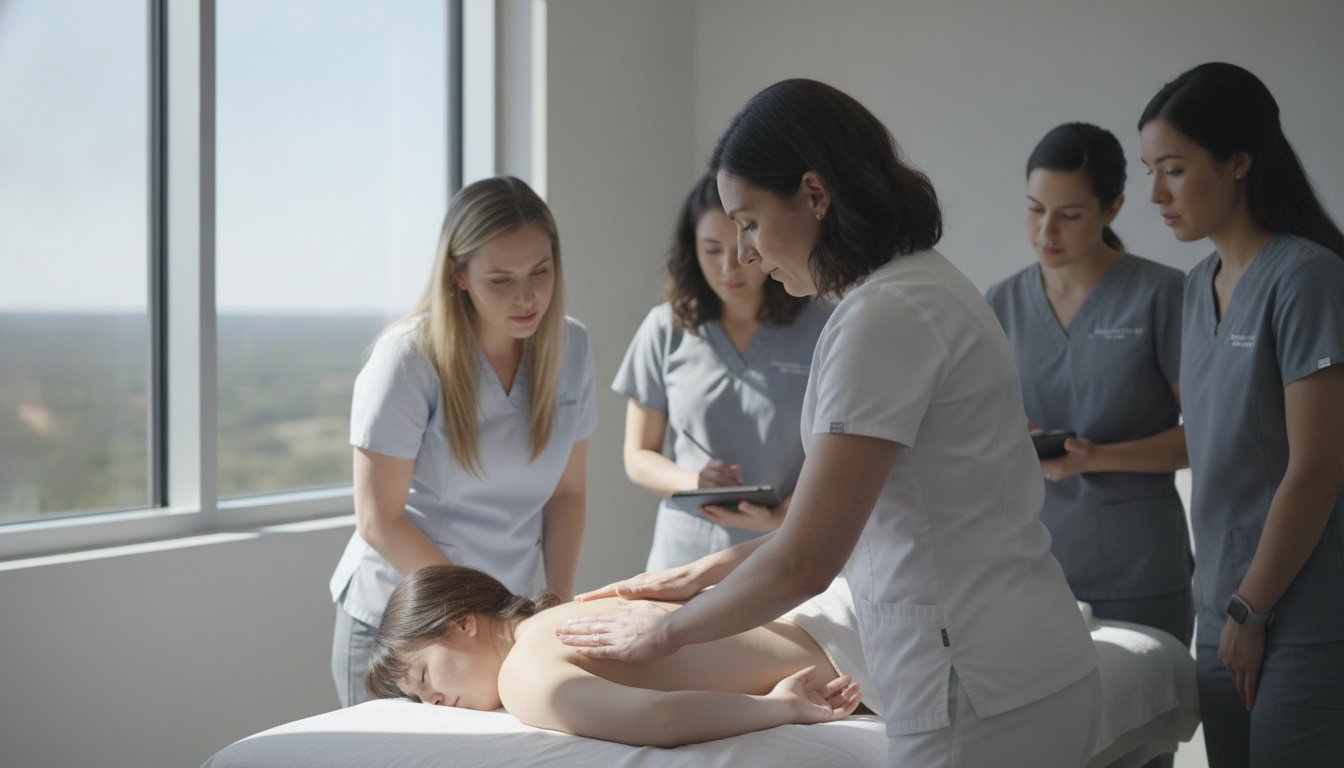

For the estimated 1 in 9 women living with lipedema, the persistent frustration of limbs that refuse to respond to traditional diet or exercise isn't a failure of willpower; it's a complex physiological battle against inflammatory pressure. You've likely felt the heavy, aching sensation and the sharp tenderness to touch that defines lipedema tissue. It's equally exhausting to seek professional help only to encounter practitioners who fail to distinguish your condition from lymphedema or general weight gain. We understand that navigating these physical challenges requires more than just general wellness advice; it demands a clinical approach rooted in anatomical precision.
In this guide, you'll discover how specialized manual therapy for lipedema legs addresses the unique structural changes in your tissue to reduce chronic pain and restore mobility. We'll explore the mechanics of the clinical Manual Lymphatic Drainage (MLD) process and how it manages the interstitial environment to prevent fibrotic progression. By focusing on the reduction of tissue inflammation and the optimization of fluid dynamics, you can gain a clear path toward decreasing limb heaviness and reclaiming your physical comfort. This professional management guide provides the technical clarity you need to understand your recovery journey.
Key Takeaways
- Understand that lipedema is a chronic connective tissue disorder, requiring a clinical approach that differs significantly from standard weight loss protocols.
- Learn how the precise Vodder technique used in manual therapy for lipedema legs activates the lymphatic system's pumps to alleviate pain and tissue heaviness.
- Discover why high-pressure massage techniques are contraindicated for lipedema tissue and can lead to increased inflammation or vascular damage.
- See how integrating professional manual lymphatic drainage with medical-grade compression and nutritional support forms a comprehensive management plan.
- Explore the specialized, evidence-based methodology utilized at Lymph in Motion to provide individualized care for complex lymphatic and adipose conditions.
Understanding Lipedema Tissue and the Role of Manual Therapy
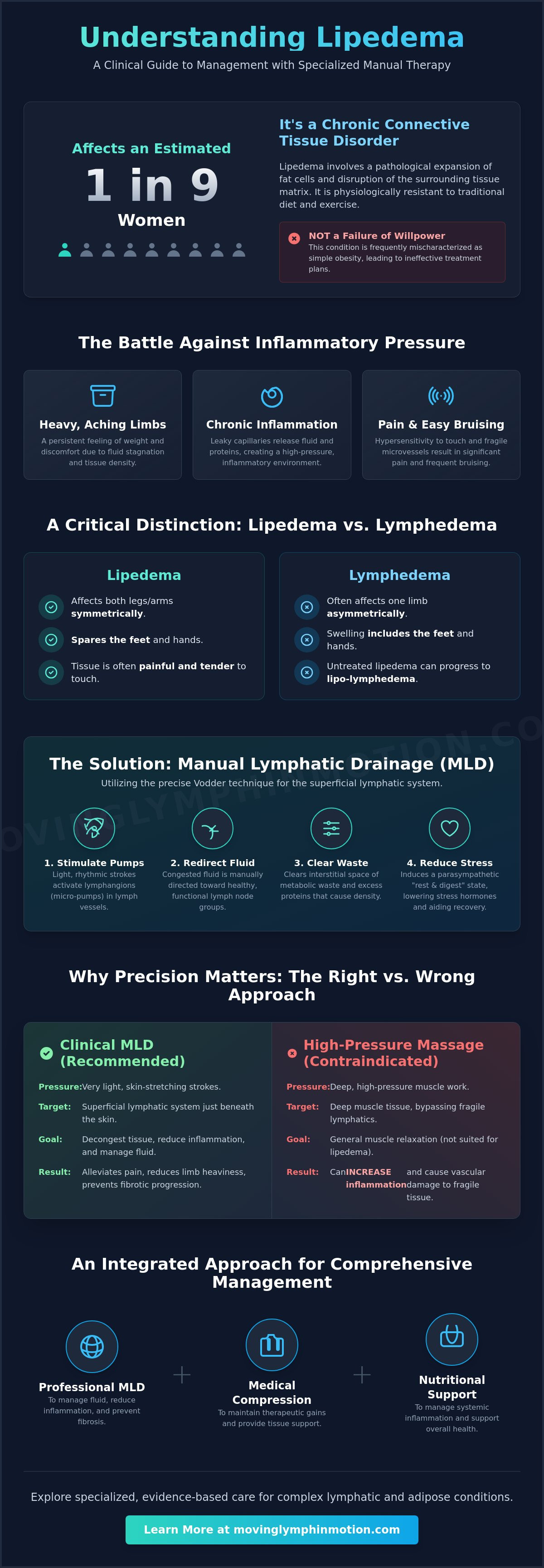
Lipedema is frequently mischaracterized as simple obesity or a failure of lifestyle management. In reality, it's a chronic, progressive connective tissue disorder that primarily affects women. Unlike standard adipose tissue, lipedema fat is metabolically distinct and physiologically resistant to traditional weight loss efforts. This condition involves a pathological expansion of fat cells and a simultaneous disruption of the surrounding extracellular matrix. Understanding Lipedema requires looking beyond the surface to the underlying vascular and lymphatic dysfunction that drives tissue changes.
The condition typically progresses through three clinical stages, each presenting unique challenges for the patient. In the early phase, the skin remains smooth, though the underlying tissue feels grainy or nodular, similar to small pearls. By the second stage, the skin surface becomes indented and uneven as these nodules grow into larger, more palpable masses. The third stage involves significant tissue folds and structural changes that can severely impede joint range of motion. Throughout these phases, manual therapy for lipedema legs serves as a critical intervention within the framework of Complete Decongestive Therapy (CDT), aiming to manage symptoms before they escalate into more restrictive deformities.
The Inflammatory Environment of Lipedema Legs
The tissue in lipedema legs exists in a state of chronic low-grade inflammation. This is driven by microvascular fragility where leaky capillaries release fluid and proteins into the interstitial space. This accumulation creates a high-pressure environment that irritates nociceptors, leading to the characteristic hypersensitivity and easy bruising reported by patients. Lipedema is a distinct pathological state of adipose tissue characterized by structural fibrosis and fluid stagnation. Clinical manual therapy addresses this by facilitating the removal of these inflammatory mediators from the tissue, which helps to lower the overall pressure on the sensory nerves.
Lipedema vs. Lymphedema: Why the Distinction Matters
A primary diagnostic indicator of lipedema is its bilateral symmetry; it typically affects both legs equally while sparing the feet. In contrast, lymphedema is often asymmetrical and involves swelling of the dorsal surface of the foot. For those seeking lymphedema therapy Austin TX, it's vital to recognize that untreated lipedema can eventually overwhelm the lymphatic system. This leads to a secondary condition known as lipo-lymphedema. Precise manual therapy for lipedema legs is essential to prevent this progression by supporting the lymphatic load before the vessels become permanently damaged or exhausted.
The Mechanics of Manual Lymphatic Drainage (MLD) for Lipedema
Clinical manual therapy for lipedema legs utilizes the Vodder technique, a rhythmic, light-touch methodology designed specifically for the superficial lymphatic system. Unlike deep tissue work that targets muscles, this technique focuses on the initial lymphatics located just beneath the skin. By applying precise skin-stretching strokes, such as stationary circles and scoop movements, the therapist stimulates the lymphangions. These are the microscopic pumps within the lymphatic vessels that contract rhythmically to move fluid toward the heart. According to the US Standard of Care for Lipedema, this manual intervention is a foundational component of conservative management for the condition.
Fluid redirection is a critical component of the process. Therapists identify watersheds, which are natural boundaries in the lymphatic system, and manually direct congested fluid toward healthy, functional lymph node groups. This systematic drainage clears the interstitial space of metabolic waste and excess proteins that otherwise contribute to tissue density. During this process, the repetitive, gentle nature of the strokes induces a significant shift into the parasympathetic nervous system. This state of rest and digest is not merely for comfort; it actively reduces systemic stress hormones and lowers the heart rate, which helps stabilize the microvascular environment and supports natural healing.
Addressing Fibrosis and Tissue Hardening
In advanced stages, lipedema tissue undergoes fibrosis, a process where chronic inflammation leads to the scarring or hardening of adipose tissue. This results in the palpable nodules and stiffened skin layers common in Stage 2 and 3. Specialized manual strokes focus on softening these hardened protein deposits to restore tissue pliability. Maintaining this elasticity is a long-term goal, as it prevents the tissue from becoming increasingly restrictive and painful. For patients in Central Texas, seeking lipedema management early in the fibrotic process is essential for preserving limb contour and joint mobility.
Pain Modulation Through Lymphatic Clearance
The primary driver of lipedema-related pain is the mechanical pressure of interstitial fluid against sensory nerve endings. As MLD clears this congestion, the immediate reduction in tissue tension lowers pain receptor activation. Patients don't just feel better; they frequently describe a profound sense of lightness in their limbs immediately following a session. This relief is the result of reduced inflammatory pressure within the extracellular matrix. While a single treatment provides temporary relief, significant and sustained symptom reduction typically requires a consistent frequency of therapy. Most clinical protocols suggest two to three sessions per week during the initial intensive phase to achieve lasting results.
Clinical MLD vs. Standard Massage: Why Precision Matters
Distinguishing between recreational massage and clinical manual therapy for lipedema legs is vital for patient safety and therapeutic efficacy. Traditional deep tissue massage focuses on the musculoskeletal system, utilizing high-pressure strokes to release myofascial tension. However, the physiological profile of lipedema involves significant microvascular fragility and interstitial congestion. Applying aggressive pressure to these sensitive areas can rupture weakened capillaries and damage initial lymphatic collectors, leading to hematomas and increased localized inflammation. Clinical Manual Lymphatic Drainage (MLD), performed by a Certified Lymphedema Therapist (CLT), utilizes a skin-stretching technique that respects these anatomical vulnerabilities while effectively moving fluid.
A CLT undergoes extensive training, typically exceeding 135 hours of specialized education, to master the nuances of fluid dynamics and tissue pathology. This expertise allows for intra-session adjustments based on the patient's specific level of tenderness. Recent research on physical therapy for lipedema supports the use of these gentle, non-invasive techniques to manage the unique adipose environment without causing further tissue trauma. By prioritizing physiological results over the intense sensations often associated with deep tissue work, clinical therapy ensures a safer, more effective recovery path.
The Danger of High-Pressure Techniques
Many patients mistakenly seek out "anti-cellulite" treatments or aggressive "sculpting" massages that use suction tools or wooden implements. These methods are contraindicated for lipedema tissue. Bruising following a session is not a sign of "detoxification" or progress; it's an indicator of vascular trauma that can exacerbate fibrotic changes. When evaluating a specialist, use this checklist to ensure they understand the condition:
- Do they distinguish between lipedema adipose tissue and standard obesity?
- Is their touch light enough to avoid causing pain or bruising?
- Do they prioritize clearing the trunk and proximal nodes before addressing the limbs?
- Are they familiar with the specific stages of lipedema progression?
Standardizing the Clinical Approach
A typical 60-minute clinical MLD session follows a strict anatomical sequence to maximize fluid clearance. The therapist begins by "opening" the proximal nodes in the neck (terminus) and the abdomen (cisterna chyli). This preparatory phase creates a pressure gradient that allows fluid from the legs to move more efficiently into the central circulation. Only after the trunk is cleared does the therapist begin work on the thighs and lower legs. This methodical flow ensures that the lymphatic system isn't overwhelmed by a sudden influx of fluid from the extremities. For residents in Central Texas, finding a qualified lymphedema therapist Cedar Park ensures that these clinical standards are maintained throughout the management process.
Integrating Manual Therapy into a Central Texas Management Plan
Manual therapy for lipedema legs serves as a catalyst for long term symptom control, but its efficacy is maximized when integrated into a comprehensive daily management strategy. This condition requires a multimodal approach to stabilize the interstitial environment and prevent the accumulation of metabolic waste. While professional sessions address existing congestion and fibrotic changes, the hours between appointments are equally critical. Patients must adopt a framework that supports the lymphatic system's limited capacity through intentional nutrition, mechanical support, and specific movement patterns.
Anti-inflammatory nutrition plays a foundational role in managing the systemic load. Lipedema tissue is highly sensitive to dietary triggers that increase vascular permeability. By focusing on whole foods that stabilize insulin levels and reduce oxidative stress, you can lower the volume of fluid the lymphatic system must process. Complementing this with low-impact movement, such as swimming or walking, utilizes the internal muscle pump to assist with fluid return. These activities are preferred because they provide the necessary mechanical stimulation without the high-impact force that can damage fragile microvessels. Incorporating manual therapy for lipedema legs alongside these lifestyle adjustments creates a sustainable path toward reduced limb heaviness.
The Synergy of Compression and Manual Drainage
Medical-grade compression acts as the essential "second skin" that maintains the volume reduction achieved during clinical MLD. Without this external containment, the low-pressure interstitial space quickly refills with fluid. For lipedema management, the choice of garment is technically significant. Flat-knit garments are generally superior to round-knit options because their stiffer, more stable weave provides the necessary resistance against the specific lobular shape of lipedema tissue. You can find more detailed information on garment selection in our guide on lymphatic drainage for chronic swelling. Consistently wearing these garments ensures that the progress made during therapy is preserved rather than lost to daily gravitational pull.
Finding Specialized Care in Austin and Surrounding Areas
Managing lipedema in Central Texas presents unique environmental challenges. The intense heat and humidity of the Austin area can cause significant vasodilation, which increases the lymphatic load and exacerbates swelling. Working with a local specialist who understands these regional factors is vital. A clinical environment provides the technical tools and professional guidance needed to navigate these fluctuations. The initial consultation process involves a thorough assessment of your tissue state, stage of progression, and current mobility levels to design a targeted plan. If you're ready to move beyond temporary relief, schedule your clinical lipedema assessment to begin a structured recovery journey.
Between professional visits, a simplified Self-MLD routine helps maintain the pressure gradient. This framework focuses on clearing the proximal areas, such as the neck and abdomen, through diaphragmatic breathing and gentle skin-stretching. These daily self-care steps ensure that the central lymphatic pathways remain open, allowing the limbs to drain more effectively during your next professional session.
Lipedema Management at Lymph in Motion by Criselda White
Effective management of lipedema requires a practitioner who possesses both technical precision and a deep understanding of the condition's unique anatomical challenges. Criselda White, a Licensed Massage Therapist (TX #MT129702) and Certified Lymphedema Therapist, brings this specialized expertise to the Austin and Cedar Park communities. As a Massage Therapy Instructor (MTI #4403), she doesn't just apply these techniques; she upholds the clinical MLD standards through professional education. This level of certification ensures that your care is rooted in the Vodder methodology, providing a safe and effective application of manual therapy for lipedema legs that prioritizes your physiological health.
The approach at Lymph in Motion is fundamentally patient-first, recognizing that no two cases of lipedema are identical. Every session is meticulously tailored to the specific stage of your condition and your current level of tissue sensitivity. Whether you're navigating the early nodular changes of Stage 1 or the more complex structural obstructions of Stage 3, the therapy is adjusted to match your tolerance. By focusing on the gentle redirection of interstitial fluid and the softening of fibrotic tissue, the practice helps you manage chronic pain without the risk of vascular trauma. This individualized attention ensures that your treatment plan evolves as your tissue health improves.
A Clinical Partner for Your Recovery Journey
The environment at Lymph in Motion is designed to be a calm, professional sanctuary where the focus remains entirely on your recovery goals. We reject the "aesthetic fluff" and recreational language common in general wellness spaces, opting instead for evidence-based protocols that deliver measurable physiological results. You're treated as a clinical partner in this process, receiving the education needed to understand the mechanics of your own healing. If you're seeking a structured approach to managing limb heaviness and inflammation, the first step is a comprehensive clinical assessment. This initial meeting allows us to map your tissue state and establish a baseline for your professional management plan in Austin.
Comprehensive Support Beyond the Table
Management of a chronic condition like lipedema doesn't end when you leave the treatment table. Lymph in Motion provides the guidance necessary to integrate clinical therapy into your broader lifestyle, from garment selection to movement strategies. For patients looking to address specific tissue texture and toning after achieving fluid stabilization, we offer the build and sculpt body treatment. This specialized manual contouring works in tandem with lymphatic clearance to support the structural integrity of the skin and underlying connective tissue. This holistic yet medically grounded approach ensures you have the tools to maintain your results long term. If you're ready to experience specialized relief through manual therapy for lipedema legs, contact our clinic to schedule your professional consultation.
Advancing Your Path to Tissue Recovery
Navigating the complexities of lipedema requires a transition from general wellness to specialized clinical care. You've learned that standard massage techniques can be detrimental to fragile microvessels, whereas manual therapy for lipedema legs focuses on the precise stimulation of lymphangions to reduce inflammatory pressure. By combining this technical approach with medical-grade compression and anti-inflammatory support, you can effectively stabilize your tissue state and prevent fibrotic progression. This methodical management is essential for reclaiming mobility and reducing the chronic heaviness that characterizes the condition.
Criselda White, a Certified Lymphedema Therapist (CLT), provides this high-formality, evidence-based care specifically for patients across Central Texas. Our practice prioritizes physiological results and patient education over the superficial promises of the aesthetic industry. We understand that your journey is unique, and we're committed to providing the technical expertise needed to manage your symptoms safely. If you're ready to address the unique challenges of your recovery with a dedicated specialist, Book a Clinical Lipedema Consultation with Criselda White. You don't have to navigate this progressive condition without a professional partner; a structured, clinical path forward is within reach.
Frequently Asked Questions
Is manual therapy for lipedema painful?
No, clinical manual therapy for lipedema legs is not a painful process. Because lipedema tissue is hypersensitive to pressure, we utilize the Vodder technique, which involves a very light, rhythmic touch that avoids triggering nociceptors. If you experience pain during a session, the pressure is likely too deep and requires immediate adjustment by your therapist to prevent vascular trauma.
How often should I get MLD for my lipedema legs?
Management typically involves an initial intensive phase followed by a long term maintenance phase. During the intensive period, sessions are often scheduled two to three times per week to achieve significant reduction in tissue inflammation and fluid volume. Once your symptoms stabilize, maintenance sessions may occur weekly or bi-weekly depending on your specific inflammatory load and how well you manage your condition with compression.
Can manual therapy reduce the size of my lipedema fat?
Manual therapy does not eliminate the pathological fat cells associated with lipedema. It specifically addresses the interstitial fluid, metabolic waste, and inflammation that accumulate within the connective tissue. While this process reduces the overall circumference and "heaviness" of the limbs by clearing excess fluid, it's a fluid management strategy rather than a fat removal procedure.
Does insurance cover manual therapy for lipedema?
Insurance coverage for lipedema management varies significantly by provider and policy. However, documented conservative treatment, including manual therapy and compression, is frequently a prerequisite for those seeking insurance approval for surgical interventions. It's important to verify your specific policy's requirements for lymphedema or lipedema treatment codes to understand your benefits.
What is the difference between MLD and a standard lymphatic massage?
Clinical MLD is a specialized, evidence-based technique that targets the initial lymphatics through precise skin-stretching movements. Standard lymphatic massage often lacks the anatomical sequence required to stimulate the lymphangions effectively and may use inconsistent pressure. Manual therapy for lipedema legs must be performed by a certified specialist to ensure the fragile microvessels are not damaged by excessive force.
Can I perform manual therapy on myself at home?
You can perform simplified self-drainage techniques at home to support your professional clinical treatments. These daily routines focus on clearing proximal areas like the neck and abdomen through diaphragmatic breathing and gentle stretching to keep central pathways open. While these steps are excellent for maintenance, they don't replace the thorough, systematic clearance achieved during a professional 60-minute session.
How soon will I see results after starting manual therapy?
Many patients report a profound sense of lightness and a reduction in sharp pain immediately following their first session. Visible changes in tissue texture and sustained limb volume reduction typically become more apparent after four to six consistent treatments. The cumulative effect of regular therapy is necessary to achieve a stable, less inflammatory interstitial environment.
Is manual therapy safe if I also have varicose veins?
Manual therapy is generally safe and often beneficial for individuals with concurrent varicose veins. Because the technique is superficial and rhythmic, it supports fluid return without putting undue pressure on the deeper venous system. Your Certified Lymphedema Therapist will conduct a thorough vascular screening during your initial assessment to ensure there are no contraindications such as active deep vein thrombosis.