

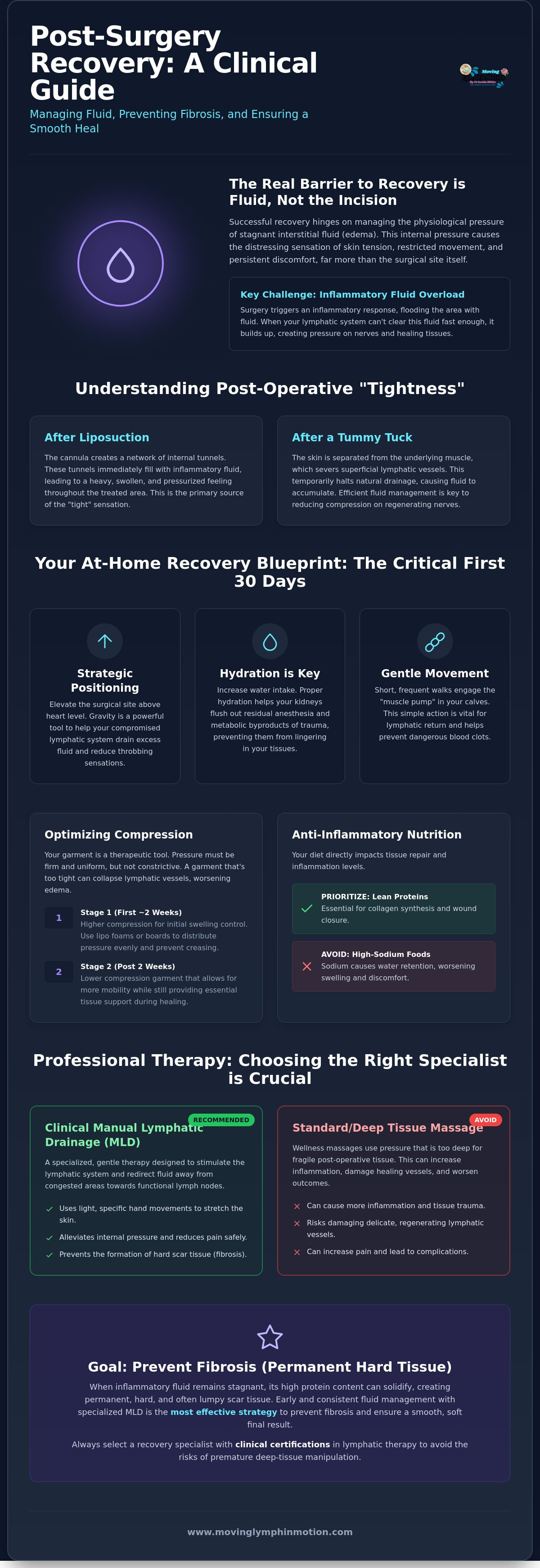
The most significant barrier to a smooth recovery isn't the surgical incision itself, but the physiological pressure of stagnant interstitial fluid. While many patients expect a linear healing process, the reality often involves intense edema that creates a distressing sensation of skin tension and restricted movement. Successfully managing discomfort after cosmetic surgery requires a shift in focus from passive rest to active, clinical fluid management. It's understandable to feel concerned when compression garments become painful or when you notice the early signs of tissue firmness.
You aren't alone in prioritizing the long-term anatomical integrity of your results over temporary aesthetic fluff. This clinical guide provides professional strategies to reduce post-operative swelling and prevent the formation of permanent, hard scar tissue known as fibrosis. We'll explore how specialized lymphatic therapy protocols alleviate internal pressure and restore mobility during the critical first 30 days of your recovery journey. By understanding the mechanics of your body's inflammatory response, you can move toward a more comfortable and predictable healing outcome.
Key Takeaways
- Understand why post-operative tightness is primarily an inflammatory fluid challenge rather than simple nerve pain.
- Learn anatomical positioning and hydration protocols for managing discomfort after cosmetic surgery during the first 30 days.
- Distinguish between clinical Manual Lymphatic Drainage (MLD) and standard wellness massage to ensure safe, effective fluid transport.
- Identify the physiological triggers for post-surgical fibrosis and learn how specialized therapy prevents permanent tissue hardness.
- Evaluate the clinical certifications necessary when selecting a recovery specialist to avoid the risks of premature deep-tissue manipulation.
Understanding the Physiology of Post-Operative Discomfort
Post-operative discomfort isn't a single sensation. It's a multifaceted physiological state that stems from mechanical tissue trauma, the resulting inflammatory cascade, and the subsequent accumulation of protein-rich fluid. While acute pain is often managed through pharmacological means immediately following a procedure, the secondary discomfort caused by edema is a persistent challenge. This is where clinical pain management strategies must evolve to address the physical pressure within the tissue. Successfully managing discomfort after cosmetic surgery requires an understanding that "tightness" isn't just a surface sensation. It's a clear indicator that the lymphatic system is struggling to clear surgical byproducts and cellular debris.
The distinction between acute surgical pain and secondary discomfort is critical for a successful recovery. Acute pain typically involves the direct stimulation of nociceptors by the incision itself. Secondary discomfort, however, is often more diffuse. It manifests as a heavy, pressurized feeling that can restrict your range of motion. Early intervention in fluid management can significantly alter the recovery trajectory. By reducing the volume of stagnant fluid early, you decrease the structural stress on the healing tissue and minimize the risk of long-term complications.
The Inflammatory Response and Edema
When tissue is manipulated during surgery, the body initiates a defense mechanism. This inflammatory response increases capillary permeability, allowing fluid, white blood cells, and proteins to flood the interstitial space. While this process is protective, the resulting volume of fluid creates significant hydrostatic pressure. This pressure compresses local nerve endings, leading to the dull, aching, or throbbing sensations characteristic of the first two weeks post-op. Swelling is a biological necessity, but it becomes a source of chronic discomfort when the lymphatic system cannot keep pace with the fluid load.
Why 'Tightness' Occurs After Liposuction and Tummy Tucks
Liposuction involves the repetitive movement of a cannula through the subcutaneous fat layer, creating a network of internal tunnels. These tunnels quickly fill with fluid, leading to a heavy, pressurized feeling. In the case of an abdominoplasty, or tummy tuck, the skin is undermined and separated from the underlying muscle. This process inevitably severs superficial lymphatic vessels, which temporarily halts natural drainage in the area. As the tissue begins to heal, you may experience "zingers" or sharp, burning sensations. These are signs of nerve regeneration. Managing discomfort after cosmetic surgery in these cases involves reducing the fluid load so these delicate nerves can heal without excessive compression. When fluid is moved efficiently, the skin feels less "tight" and mobility returns more quickly.
Immediate Strategies for Managing Discomfort at Home
The initial 48 to 72 hours following a procedure represent a critical window for stabilizing the body's inflammatory response. While the clinical environment provides immediate support, your home environment must be structured to facilitate optimal fluid drainage. Managing discomfort after cosmetic surgery at home begins with strategic positioning. Elevating the surgical site above the level of the heart utilizes gravity to assist compromised lymphatic vessels in moving interstitial fluid toward functional lymph nodes. This deliberate positioning reduces the hydrostatic pressure that often leads to intense, throbbing sensations in the early days of recovery.
Consistency is paramount when following post-operative pain management protocols. Maintaining an "around-the-clock" schedule for prescribed analgesics during the first two days prevents pain levels from spiking; it's much harder to control discomfort once it becomes acute. Simultaneously, increasing water intake is essential. Proper hydration assists the kidneys in processing residual anesthesia and surgical fluids, ensuring that the metabolic byproducts of trauma are efficiently excreted rather than lingering in the tissues. Short, frequent walks around your living space are also vital. These gentle movements engage the "muscle pump" mechanism in the calves, which is the primary driver for venous and lymphatic return. This simple action significantly lowers the risk of deep vein thrombosis and prevents fluid from pooling in the extremities.
Optimizing Your Compression Routine
Compression garments are therapeutic tools, not just restrictive clothing. A garment that's too tight can actually collapse superficial lymphatic vessels, which worsens edema rather than resolving it. The pressure should be firm and uniform. Utilizing lipo foams or abdominal boards helps distribute this pressure evenly, preventing the garment from "digging" into sensitive areas or creating contour irregularities. Typically, patients remain in Stage 1 garments for the first two weeks before transitioning to Stage 2 garments, which allow for more mobility while still providing necessary tissue support.
Nutrition and Hydration for Inflammation Reduction
Your dietary choices directly impact the rate of tissue repair. Prioritizing lean proteins provides the essential amino acids required for collagen synthesis and wound closure. Conversely, high-sodium foods must be strictly avoided. Excess salt increases osmotic pressure, causing the body to retain water and exacerbating surgical swelling. Incorporating anti-inflammatory foods like leafy greens and berries can help modulate the systemic response to trauma. For those seeking professional guidance on navigating these early recovery stages, scheduling a clinical consultation can provide a personalized roadmap for your specific needs.
The Role of Clinical Manual Lymphatic Drainage (MLD)
Clinical Manual Lymphatic Drainage (MLD) is a specialized, non-invasive technique designed to accelerate the removal of metabolic waste and excess interstitial fluid. Unlike recreational wellness massages that focus on muscle manipulation or deep tissue friction, MLD utilizes a precise, light-touch skin-stretching methodology. This specific movement targets the initial lymphatics located just beneath the epidermis. For those focused on managing discomfort after cosmetic surgery, MLD serves as a primary therapeutic intervention to reduce the physical pressure that leads to pain and restricted mobility. It's a sophisticated physiological tool that respects the delicacy of healing tissue while addressing the root cause of post-surgical tightness.
The timing of these sessions is a critical factor in the recovery timeline. Many patients begin clinical MLD as early as 24 to 48 hours post-operation, provided they have clearance from their surgeon. Initiating therapy during this acute phase prevents the accumulation of protein-rich fluid from stagnating and hardening into uncomfortable tissue states. Patients often report an immediate reduction in "hardness" and internal pressure following a single session. This rapid relief occurs because MLD physically redirects fluid from congested surgical sites toward functional, healthy lymph nodes that can process the volume more effectively. It turns a stagnant recovery into a dynamic healing process.
Science of the Lymphatic System in Recovery
At the anatomical level, MLD works by manually stimulating the lymphangions, which are the individual pumping units within the lymphatic vessels. By increasing the contraction frequency of these units, the therapist enhances the body's natural drainage capacity. This proactive fluid management significantly reduces the risk of seromas, which are localized pockets of fluid that can cause pain and require surgical aspiration. Additionally, the rhythmic and gentle nature of MLD has a profound calming effect on the sympathetic nervous system. By shifting the body into a parasympathetic state, the therapy lowers systemic stress and creates an internal environment more conducive to cellular repair and tissue regeneration.
What to Expect During a Post-Op Session
A clinical recovery session begins with a meticulous assessment of the tissue state. The therapist evaluates the skin for signs of pitting edema, localized heat, or the early development of fibrosis. This diagnostic approach ensures that the therapy is tailored to your specific physiological needs rather than following a standardized routine. The environment is strictly clinical, prioritizing patient comfort and safety above all else. For individuals seeking expert guidance, Lymph in Motion's Austin-based services provide specialized recovery support that bridges the gap between surgical trauma and functional wellness. This targeted care ensures that managing discomfort after cosmetic surgery is a guided, evidence-based process.
Preventing and Managing Fibrosis and Scar Tissue
Post-surgical fibrosis is the development of dense, internal scar tissue that manifests as localized hardness or "lumps" within the surgical site. This physiological response occurs when the body's inflammatory process becomes disorganized, often due to prolonged fluid stagnation or excessive tissue trauma. While surface incisions heal visibly, the underlying fascia and subcutaneous layers can develop adhesions that bind tissues together. This internal scarring is a primary driver of chronic tightness and can significantly restrict your range of motion. Successfully managing discomfort after cosmetic surgery involves identifying these adhesions early, before they mature into permanent, rigid structures.
Consistency during the first 6 to 8 weeks is paramount. During this timeframe, collagen fibers are still relatively pliable and responsive to clinical intervention. If stagnant fluid is allowed to remain, the high protein content acts as a biological glue, accelerating the formation of these hard areas. Specialized manual techniques are employed to gently disrupt these early-stage adhesions, ensuring that the tissue remains supple and the aesthetic contour remains smooth. This proactive approach prevents the development of chronic pain cycles associated with restricted tissue mobility.
Identifying Early Signs of Fibrosis
Distinguishing between normal post-operative edema and developing fibrosis is essential for an effective recovery. While edema typically feels like a diffuse, squishy fullness, fibrosis presents with distinct characteristics. You should monitor for localized areas of hardness that don't resolve with elevation or the sensation of "roping" beneath the skin. Persistent lumps or irregularities that feel rigid to the touch are clear indicators that the tissue is becoming fibrotic. If your skin feels stuck or lacks its natural glide, a professional assessment is necessary to prevent these symptoms from becoming chronic.
Advanced Manual Contouring Techniques
Once the initial acute swelling has subsided, the focus shifts toward refining the final aesthetic result. The Build and Sculpt approach utilizes advanced manual therapy to improve skin retraction and ensure a seamless transition between treated and untreated areas. This is particularly vital after liposuction or abdominoplasty, where skin must adhere smoothly to the newly contoured underlying muscle. For a deeper look at these clinical protocols, read our guide on Post-Op Lymphatic Drainage in Austin: A Clinical Guide to Surgical Recovery. To ensure your recovery stays on track and your tissue remains healthy, you can book a professional fibrosis assessment to address any specific areas of concern.
Professional Recovery in Austin: Choosing Your Specialist
The final phase of managing discomfort after cosmetic surgery involves selecting a therapeutic partner who understands the intricate nuances of post-operative physiology. Recovery isn't a passive event; it's a series of anatomical milestones that require expert oversight to ensure the best possible aesthetic and functional results. Choosing a specialist with a clinical certification, such as MLD or CMLDT, is the most critical decision you'll make after leaving the surgical suite. These credentials signify that the practitioner has undergone rigorous training in fluid dynamics and the specific contraindications associated with surgical trauma.
One of the most significant risks in early recovery is the application of aggressive or deep tissue massage. While these techniques are beneficial in a general wellness context, they're dangerous for a post-surgical patient. High-pressure manipulation can cause tissue shearing, damage fragile new vasculature, and significantly increase internal bruising. A clinical specialist prioritizes the integrity of your incisions and the stability of your inflammatory response above all else. When interviewing a potential therapist in the Austin area, consider the following checklist:
- Does the practitioner hold a recognized clinical certification in Manual Lymphatic Drainage?
- Can they explain the physiological difference between edema and early-stage fibrosis?
- Do they have experience working with your specific procedure, such as a tummy tuck or 360 liposuction?
- Is their environment clinical and focused on medical-grade recovery rather than recreational relaxation?
Clinical Standards vs. General Wellness
A traditional spa setting is often inappropriate for immediate post-surgical care. Clinical recovery requires a level of medical-grade seriousness that addresses the complexities of drains, compression garment fit, and incision health. At Best Lymphatic Specialist, we maintain the highest standards of professional education. We even offer a MLD Practitioner Certification Course to ensure other professionals meet these rigorous requirements. This commitment to education reinforces our position as an authoritative guide for patients navigating the complexities of physical healing.
Booking Your Recovery Series
Achieving consistent results in managing discomfort after cosmetic surgery typically requires a multi-session approach. A single session can provide relief, but a series of treatments ensures that fluid remains mobile and fibrosis is prevented during the entire 30 to 60-day window of peak scar formation. We provide specialized care for patients in the Austin, Cedar Park, and Round Rock areas, offering tailored recovery plans that adapt as your tissue heals. To secure your place in our clinical schedule and ensure your recovery is managed by an expert, you can schedule your clinical recovery session with Best Lymphatic Specialist today.
Optimizing Your Path to Clinical Recovery
The transition from surgery to daily life requires more than just patience; it demands a structured, physiological approach to tissue health. By prioritizing clinical fluid management and identifying early signs of fibrosis, you actively protect the investment you've made in your results. Professional intervention through Manual Lymphatic Drainage (MLD) transforms a high-pressure inflammatory state into a controlled healing environment. Managing discomfort after cosmetic surgery is most effective when you move beyond general wellness and adopt medical-grade recovery standards.
If you're navigating the first 30 days of recovery in Austin, Cedar Park, or Georgetown, specialized support is essential. Best Lymphatic Specialist provides the clinical expertise and specialized MLD certification necessary to guide you through these critical phases. You don't have to manage the complexities of swelling and tissue tension alone. Book Your Specialized Post-Op Recovery Session in Austin to ensure your body has the professional support it needs to heal with precision. Your commitment to a clinical recovery today ensures a more mobile and comfortable tomorrow.
Frequently Asked Questions
Is it normal to feel extreme tightness 10 days after cosmetic surgery?
Feeling significant tightness 10 days post-operation is a common occurrence as the inflammatory response reaches its peak. During this phase, the accumulation of protein-rich interstitial fluid creates internal hydrostatic pressure that makes the skin feel overstretched and rigid. This sensation is a primary reason for managing discomfort after cosmetic surgery through clinical intervention. If the tightness is accompanied by localized heat or redness, it's important to consult your surgical team to rule out infection.
Can manual lymphatic drainage help with the pain from my compression garment?
Clinical lymphatic drainage directly alleviates the pressure that makes compression garments feel intolerable. By manually moving stagnant fluid away from the surgical site, MLD reduces the underlying tissue volume. This reduction ensures that the garment provides necessary therapeutic support without causing excessive skin tension or localized pain at the fabric's edges. When the internal fluid load is managed, the garment can perform its function of stabilizing the tissue without causing distress.
How soon after a tummy tuck can I start lymphatic drainage therapy?
Most patients can begin specialized lymphatic therapy within 24 to 48 hours after an abdominoplasty. Early intervention is critical for clearing surgical byproducts and anesthesia remnants before they begin to stagnate in the tissue. While this early start is standard for managing discomfort after cosmetic surgery, the exact timing should always be confirmed with your surgeon to ensure it aligns with your specific incision healing and drain placement.
What happens if I don't get lymphatic massage after liposuction?
Forgoing lymphatic therapy after liposuction increases the risk of developing chronic edema and post-surgical fibrosis. Without manual assistance, the protein-rich fluid trapped in the surgical tunnels can harden, leading to permanent lumps or an irregular, "wavy" skin contour. This stagnation often prolongs the recovery timeline and can result in long-term tissue rigidity that restricts your natural range of motion. Proactive drainage ensures these fluids are processed before they can organize into scar tissue.
Will lymphatic drainage help reduce the bruising after my procedure?
Lymphatic drainage is highly effective at accelerating the resolution of post-operative bruising. The technique stimulates the lymphatic capillaries to uptake extravasated blood cells and cellular debris more rapidly. By clearing these byproducts from the interstitial space, the skin returns to its natural tone much faster than it would through passive healing. This process also reduces the localized inflammation that often accompanies deep bruising, further improving overall comfort.
Is MLD painful when performed on a fresh surgical site?
Clinical MLD is a non-invasive, light-touch technique that should never cause pain. Unlike traditional massage, it does not involve deep tissue manipulation or heavy pressure. The therapist uses a rhythmic, skin-stretching motion designed to stimulate the initial lymphatics located just beneath the skin's surface. This methodology is specifically intended to be soothing and safe even for highly sensitive, freshly operated tissues. If a session feels aggressive or painful, it isn't following clinical MLD protocols.
How many sessions of lymphatic drainage do I need for optimal comfort?
While individual requirements vary based on the surgical scope, a series of 5 to 10 sessions is typically recommended during the first four weeks of recovery. The initial appointments focus on acute fluid reduction and pain management, while subsequent sessions prioritize tissue remodeling and the prevention of fibrosis. This structured sequence allows the therapist to adapt the treatment as your body moves through the different stages of physiological repair, ensuring a smooth and predictable healing process.