
You might assume that the most effective way to reshape a silhouette requires high-energy lasers or cryogenic technology, but the most sophisticated tool for clinical tissue refinement remains the skilled human hand. For those seeking manual body contouring Austin specialists offer a methodology that prioritizes physiological health over temporary aesthetic fixes. It's common to feel frustrated when stubborn fluid retention or systemic puffiness persists despite your best efforts; it's equally valid to feel wary of machine-based side effects like Paradoxical Adipose Hyperplasia. You deserve a solution that respects your body's biological complexity while delivering visible results.
This article explains the anatomical science behind manual body sculpting and how professional hand-based techniques reshape tissue without the need for invasive machines. You'll learn how targeted manipulation of the lymphatic and fascial systems reduces circumference and resolves post-surgical fibrosis. We'll also examine the current regulatory landscape in Texas and how these clinical methods, which have demonstrated a cumulative average loss of nearly seven inches in specific studies, restore skin elasticity and muscle definition through evidence-based practice.
Key Takeaways
- Understand why clinical body contouring focuses on the precise management of interstitial fluid and tissue refinement rather than the aggressive destruction of fat cells.
- Discover how manual strokes stimulate lymphangions, the microscopic hearts of the lymphatic system, to effectively resolve systemic puffiness and stubborn fluid retention.
- Learn about the safety advantages of hand-based techniques, which mitigate risks like Paradoxical Adipose Hyperplasia through the therapist's ability to palpate and respond to unique tissue needs.
- Explore how the Build and Sculpt protocol provides specialized manual body contouring Austin residents rely on for visible muscle definition and the resolution of post-surgical fibrosis.
- Identify the essential steps of a clinical intake process, including the assessment of surgical history and the systematic activation of lymph nodes to optimize your results.
What is Manual Body Contouring? Defining the Clinical Approach
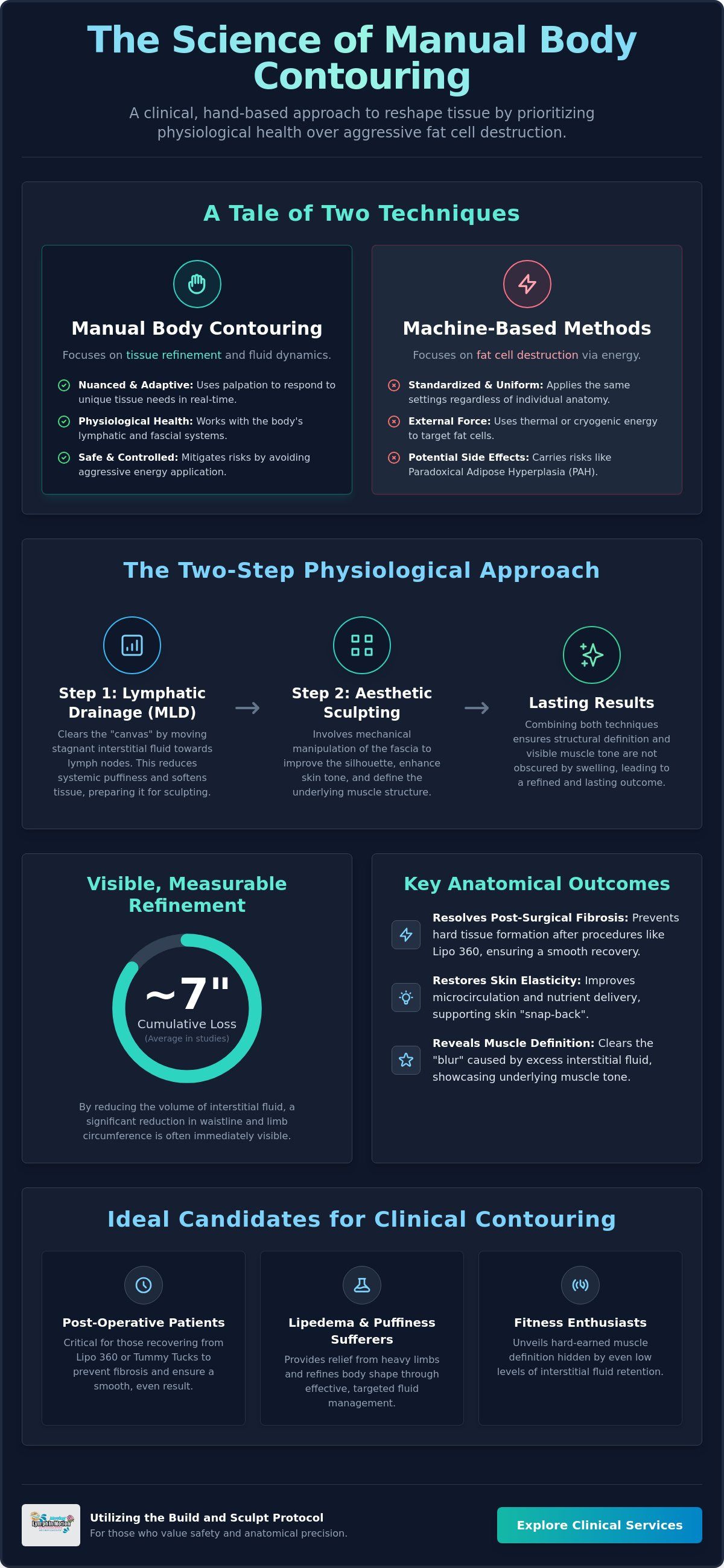
Manual body contouring isn't about the aggressive destruction of fat cells through external heat or cold. Instead, it's a sophisticated, hand-based therapy that focuses on the precise refinement of the lymphatic and integumentary systems. Unlike standardized machine settings that apply uniform energy to every patient regardless of their unique anatomy, clinical manual body contouring Austin specialists use palpation to identify specific tissue states. This fundamental shift from "fat destruction" to "tissue refinement" allows for a more nuanced management of fluid dynamics and fascial health. It prioritizes the body's biological integrity while achieving a more defined silhouette.
The human hand can detect subtle irregularities, such as localized edema or early-stage fibrosis, that a laser or cooling plate simply cannot perceive. By prioritizing physiological results over aesthetic trends, this methodology provides a sense of safety for individuals navigating physical recovery. The Manual lymphatic drainage (MLD) technique serves as the clinical foundation of this process. It ensures that the body's natural filtration system is functioning optimally before any physical sculpting begins, creating a healthy internal environment for tissue change.
The Synergy of Lymphatic Drainage and Aesthetic Sculpting
Effective contouring requires a two-step physiological approach to be successful. First, MLD clears the "canvas" by moving stagnant interstitial fluid toward functional lymph nodes. This reduces systemic puffiness and softens the tissue. Second, sculpting involves the mechanical manipulation of the fascia to improve the silhouette and enhance skin tone. These two techniques must be performed together for lasting results. Without fluid clearance, fascial work is obscured by swelling. Without fascial refinement, the results of fluid drainage lack the structural definition and visible muscle tone many patients seek.
Who Should Seek Manual Contouring in Austin?
This clinical approach is particularly beneficial for individuals navigating complex recovery paths or specific physiological challenges. The methodology is highly individualized rather than a mass-market service.
- Post-operative patients: Individuals recovering from Lipo 360 or a Tummy Tuck often face post-surgical fibrosis. Manual intervention is critical for preventing hard tissue formation and ensuring a smooth, even recovery.
- Lipedema and puffiness: For those managing Lipedema or chronic systemic puffiness, manual techniques provide relief from heavy limbs while refining the body's shape through fluid management.
- Fitness enthusiasts: Even with low body fat, interstitial fluid retention can hide muscle tone. Manual contouring reveals underlying definition by clearing the "blur" caused by excess fluid.
At Best Lymphatic Specialist, we utilize the Build and Sculpt protocol to achieve these specific anatomical outcomes. This targeted manual methodology is designed for those who value safety and anatomical precision over invasive alternatives. You can view our clinical service options through our online booking portal to determine how this methodology aligns with your personal refinement goals.
The Physiological Mechanism: How Manual Techniques Shape Tissue
The efficacy of manual body contouring Austin specialists provide is rooted in the precise stimulation of the body's internal drainage and structural systems. While many FDA-reviewed body contouring technologies rely on thermal or cryogenic energy to impact fat cells, manual therapy engages the lymphatic system's "hearts," known as lymphangions. These microscopic, muscular segments of the lymph vessels respond to specific, rhythmic pressure. By increasing the contraction frequency of these units, manual strokes accelerate the removal of metabolic waste and stagnant fluid, which machines cannot always achieve with the same level of anatomical nuance.
The interstitial space is the fluid-filled reservoir between cells that dictates tissue volume. When this reservoir becomes congested, the result is systemic puffiness and a loss of visible muscle definition. Manual techniques address this congestion through a process called tissue remodeling. This isn't merely moving fluid; it's a mechanical method of improving microcirculation and nutrient delivery to the dermis. This increased blood flow supports skin snap-back and improves the overall health of the integumentary system.
Managing the Interstitial Fluid Dynamics
Clinical practitioners use a methodical "bottom-up" approach to manage fluid dynamics. This involves guiding stagnant interstitial fluid from the limbs and trunk toward functional lymph nodes for filtration. The visual impact of this process is often immediate. By reducing the volume of the interstitial reservoir, we see a significant reduction in waistline and limb circumference. This refinement reveals the body's natural architecture that was previously obscured by swelling. You can review our specialized protocols to see how we apply these physiological principles to your specific recovery or refinement needs.
Fascial Integrity and Skin Elasticity
Fascial manipulation is a critical component of manual sculpting. Adhesions within the fascial layers can create "dimpling" or uneven contours by tethering the skin to underlying tissues. Targeted manual pressure releases these adhesions, promoting a smoother and more contoured body surface. This work is especially vital for preventing "hard" tissue or post-surgical fibrosis. Early manual intervention ensures that the healing process remains organized, maintaining the elasticity of the tissue and preventing the structural irregularities that often follow invasive procedures. This proactive management of fascial health is what ultimately dictates the longevity and quality of the aesthetic outcome.
Manual Sculpting vs. Non-Surgical Machines: A Clinical Comparison
Choosing between automated devices and manual therapy is a decision that impacts both safety and long-term physiological outcomes. While "hands-free" marketing suggests convenience, it often overlooks the biological reality of tissue response. When considering manual body contouring Austin residents should prioritize practitioners who can distinguish between adipose tissue, localized edema, and fascial restrictions. Machines operate on standardized protocols that apply uniform energy, but they lack the sensory precision to identify tissue irregularities or adjust pressure based on real-time feedback.
One significant concern with machine-based fat reduction is the risk of Paradoxical Adipose Hyperplasia (PAH). This condition, though rare, causes fat cells to expand and harden rather than shrink, often requiring surgical intervention to correct. Manual therapy completely avoids this risk. Additionally, energy-based devices frequently trigger an inflammatory response as the body attempts to process damaged cells. This is where the evidence-based efficacy of manual lymphatic drainage becomes essential. Manual work doesn't just "melt" fat; it supports the body's natural systems to ensure that metabolic waste and inflammatory byproducts are cleared efficiently.
The Limitations of Automated Fat Reduction
Machines are designed to target specific cell types, but they're often unable to address fluid-based edema or systemic puffiness. If a patient's primary concern is water retention or a sluggish lymphatic system, a fat-freezing device won't provide the necessary relief. These "one-size-fits-all" protocols also fail to account for the discomfort and potential downtime associated with cryolipolysis or laser treatments. Manual therapy offers a safer, more compassionate choice for those with sensitive lymphatic systems or conditions like lipedema, where aggressive machine settings could exacerbate pain or swelling.
Why Manual Therapy is Essential for Post-Op Results
Manual intervention is a requirement, not an option, for achieving optimal results after procedures like liposuction. The "Therapist Advantage" lies in the ability to palpate and respond to the unique needs of healing tissue. Manual touch identifies early-stage fibrosis, or internal scarring, that machines would simply miss. By utilizing specialized Post-Op Lymphatic Drainage Austin protocols, practitioners ensure that healing remains organized and the skin adheres smoothly to the new contours. This individualized attention prevents the "lumpy" or uneven results that can occur when post-surgical care is neglected or left to automated devices. You can schedule a clinical assessment to discuss your specific recovery needs through our professional booking portal.
How to Prepare for and Optimize Your Manual Contouring Session
Preparing for manual body contouring Austin sessions involves more than just showing up for an appointment. It begins with a comprehensive clinical intake where we evaluate your surgical history, the current state of your lymphatic system, and any localized tissue irregularities. This assessment ensures that the therapy is tailored to your specific physiological needs rather than following a generic protocol. The session itself follows a logical, proximal-to-distal order. We begin with the manual activation of major lymph node clusters to ensure the body's primary drainage points are open and functional. Only then do we transition to targeted sculpting strokes designed to move fluid and refine tissue.
It is a common misconception that effective contouring must be aggressive or painful. In reality, clinical manual work is rhythmic and intentional. If the pressure is too high, it can trigger a sympathetic nervous system response, causing the lymph vessels to spasm and stop moving fluid. Results are cumulative. While a single session can provide immediate relief from puffiness, a structured series of appointments is typically necessary to achieve lasting visible muscle definition and circumference reduction. For residents in the Greater Austin area, including Cedar Park and Georgetown, we often recommend a specific frequency based on your recovery stage or aesthetic goals.
Pre-Session Protocols for Maximum Fluid Clearance
Hydration is the most critical factor in facilitating lymphatic transport. Water acts as the medium for moving metabolic waste through the system; without adequate fluid intake, the lymph becomes sluggish and difficult to manipulate. On the day of your session, avoid applying heavy lotions or oils to the treatment area. These products create a barrier on the skin that interferes with the specific "grip" required for manual sculpting. We also recommend timing your sessions carefully around surgical milestones. Coordinating manual work with your surgeon's timeline ensures that we address swelling at the most effective intervals.
Post-Session Care: Maintaining the Sculpted Result
The work continues after you leave the clinic. Medical-grade compression is often required to "hold" the new contour and prevent fluid from re-accumulating in the interstitial spaces. Dietary choices also influence your longevity of results. Reducing sodium intake for at least 48 hours following a session prevents immediate water retention. To support the professional work between appointments, we encourage gentle movement and specific dry brushing techniques. These self-care steps keep the lymphatic system active and ensure that the tissue remains soft and receptive to further refinement. Book your clinical consultation to establish a personalized treatment plan that aligns with your recovery or refinement timeline.
Refining Your Results with the Build and Sculpt Protocol
The final stage of tissue refinement requires a protocol that bridges the gap between clinical recovery and aesthetic excellence. At Best Lymphatic Specialist, the Build and Sculpt protocol serves as the premier manual body contouring Austin residents utilize to achieve these dual-action results. This methodology, developed and implemented by Criselda White, a certified specialist in Central Texas, integrates the fundamental principles of Manual Lymphatic Drainage with advanced fascial manipulation. By addressing both the fluid dynamics and the structural integrity of the tissue, this protocol ensures that the results are not only visible but grounded in physiological health.
Transitioning from general research to a personalized clinical assessment is the most effective way to determine how these techniques apply to your unique anatomy. Every body processes recovery and fluid accumulation differently. A specialist's touch provides the individualized attention necessary to navigate these complexities, moving beyond the limitations of standardized, mass-market treatments. This observant and highly skilled approach ensures that every session is purposeful and lean, focusing on the specific physical challenges identified during your intake.
Specialized Care for Austin, Cedar Park, and Round Rock
Choosing a practitioner who understands the intricate anatomy of surgical recovery is vital for those in the Greater Austin area, including communities like Cedar Park, Round Rock, Georgetown, and Liberty Hill. Surgical procedures like liposuction or abdominoplasty significantly alter the local lymphatic pathways. A therapist must possess the clinical education to adapt their techniques to these changes. For those interested in the underlying biological mechanisms, our guide on Lymphatic Drainage for Tissue Healing provides a deeper look into the clinical science of recovery.
Your Path to Non-Invasive Transformation
Manual techniques offer a safer, more holistic path to body confidence by working in harmony with your natural systems. They avoid the inflammatory triggers and potential complications associated with energy-based machines. By prioritizing the health of the lymphatic and fascial systems, you ensure a transformation that is sustainable and restorative. We encourage you to move from the research phase into active refinement. A customized treatment plan, designed with your specific goals in mind, provides the steady guide needed for a successful journey. You can Book Your Build and Sculpt Session today to begin your clinical assessment and start the process of professional tissue refinement.
Advancing Your Path to Anatomical Refinement
Reclaiming your silhouette requires an understanding of the delicate balance between fascial health and lymphatic efficiency. We've explored how manual intervention offers a level of sensory feedback that energy-based devices cannot replicate, particularly when identifying early-stage fibrosis or localized edema. By prioritizing these physiological foundations, you ensure a recovery process that is both organized and aesthetically superior. True transformation isn't found in a standardized machine setting; it's found in the precise, clinical manipulation of tissue.
As a Certified Manual Lymphatic Drainage Specialist, Criselda White provides the specialized post-operative protocols necessary for navigating the complexities of tissue healing. Whether you're in Cedar Park, Round Rock, or Georgetown, our clinic serves the greater Central Texas area with a commitment to evidence-based results. Transitioning to manual body contouring Austin residents trust means choosing a partner who values your long-term health as much as your immediate silhouette. You deserve a recovery journey that is managed with expertise and anatomical precision.
Take the next step toward a more refined and confident version of yourself. Book Your Build and Sculpt Assessment in Austin to begin your clinical journey. You don't have to navigate the complexities of physical recovery alone; we're here to guide you through every stage of tissue refinement.
Frequently Asked Questions
Is manual body contouring painful compared to machines?
Manual body contouring is not painful and should never cause physical distress. Unlike some machine based treatments that utilize intense thermal or cryogenic energy, manual techniques rely on rhythmic, intentional pressure to stimulate the lymphatic system. If a session is painful, it can trigger a sympathetic nervous system response, causing lymph vessels to spasm and hindering fluid transport. Our clinical approach prioritizes tissue safety and patient comfort to ensure optimal physiological results without unnecessary inflammation.
How many sessions of manual contouring are needed to see visible results?
Visible results are cumulative and typically require a structured series of sessions to achieve lasting change. While many patients notice a reduction in systemic puffiness after a single appointment, significant changes in circumference and skin tone usually manifest over 10 to 18 sessions. The exact frequency depends on your specific anatomical goals and the current state of your lymphatic system. We recommend an initial clinical assessment to establish a timeline tailored to your body's unique response rate.
Can manual contouring help with post-liposuction fibrosis?
Manual techniques are highly effective for resolving post-liposuction fibrosis and internal scarring. After surgical trauma, the body may produce disorganized collagen fibers that feel like hard lumps under the skin. Specialized manual strokes identify these early stage adhesions and encourage the tissue to heal in a more organized, elastic manner. This proactive management prevents permanent structural irregularities and ensures the skin adheres smoothly to the new surgical contours for a refined silhouette.
Is this treatment safe for someone with lipedema or lymphedema?
Manual body contouring Austin specialists consider these techniques a primary management tool for individuals with lipedema or lymphedema. Because these conditions involve compromised lymphatic transport and sensitive adipose tissue, the gentle, non thermal nature of manual work is significantly safer than aggressive machine treatments. Our protocols focus on clearing interstitial congestion and reducing the heavy, painful sensation often associated with these chronic lymphatic conditions while respecting the integrity of the vascular system.
How does manual contouring differ from a standard deep tissue massage?
Manual contouring differs from deep tissue massage by targeting the lymphatic and fascial systems rather than the musculoskeletal layers. Standard massage often focuses on releasing muscle knots through heavy pressure, which can actually collapse delicate, superficial lymph vessels. Clinical contouring uses specific, directional strokes to activate lymph nodes and move stagnant interstitial fluid. It's a specialized therapy designed for tissue refinement and fluid management rather than general relaxation or deep muscle recovery.
Will the results of manual sculpting last if I don't get surgery?
Results can be long lasting without surgery if the patient maintains a healthy lymphatic environment. Since the methodology focuses on clearing fluid and refining fascial integrity, the improvements in muscle definition and silhouette remain visible as long as systemic inflammation is managed. We provide guidance on hydration, movement, and dietary choices to help you sustain the reduced circumference and improved skin elasticity achieved during your clinical sessions, ensuring the transformation is sustainable.
Can I combine manual contouring with other med-spa treatments in Austin?
Integration with other aesthetic treatments is possible, provided there is a strategic clinical timeline. Manual therapy is often used to clear the inflammatory byproducts generated by energy based med-spa services. However, it's vital to coordinate these services so that the manual body contouring Austin protocol doesn't interfere with the acute inflammatory phase required for some treatments. Proper timing ensures that the body's drainage pathways are open to process the metabolic waste created by other modalities.
What should I wear to my Build and Sculpt session?
Patients should wear comfortable, loose fitting clothing to their Build and Sculpt session. During the actual treatment, we require direct skin contact to accurately palpate tissue states and perform precise manual strokes. We provide professional draping to ensure your comfort and privacy throughout the clinical process. Avoid wearing tight, restrictive clothing immediately after the session, as the lymphatic system needs unhindered flow to continue the drainage process initiated during your professional therapy.