
What if the persistent hardness and uncomfortable skin tension following your procedure isn't just an inevitable phase of recovery, but a physiological signal that your body's drainage pathways are overwhelmed? It's common to feel a sense of apprehension when swelling doesn't subside as expected or when tissues begin to feel uncharacteristically dense. Implementing clinical manual drainage for post-op edema isn't a luxury; it's a specialized therapeutic intervention designed to reroute trapped interstitial fluid and clear the biological bottleneck caused by surgical trauma.
In this guide, you'll gain a comprehensive understanding of the anatomical mechanics behind surgical swelling and how targeted manual techniques prevent the development of permanent fibrosis. We'll examine the critical distinction between recreational massage and clinical lymphatic therapy, providing a structured roadmap for reducing inflammation and safely accelerating your return to daily activities. By prioritizing evidence-based recovery strategies, you can ensure your healing process is both physiologically efficient and structurally sound, allowing you to transition from clinical recovery to your desired results with confidence.
Key Takeaways
- Understand the biological origins of post-surgical swelling, specifically how the accumulation of protein-rich fluid in the interstitial space triggers the inflammatory cascade.
- Discover how clinical manual drainage for post-op edema utilizes the precise "stretch and release" principle to stimulate lymphatic collectors and clear the biological bottleneck.
- Learn why traditional deep-tissue massage is contraindicated for healing incisions and how specialized fluid transport techniques protect fragile recovery sites.
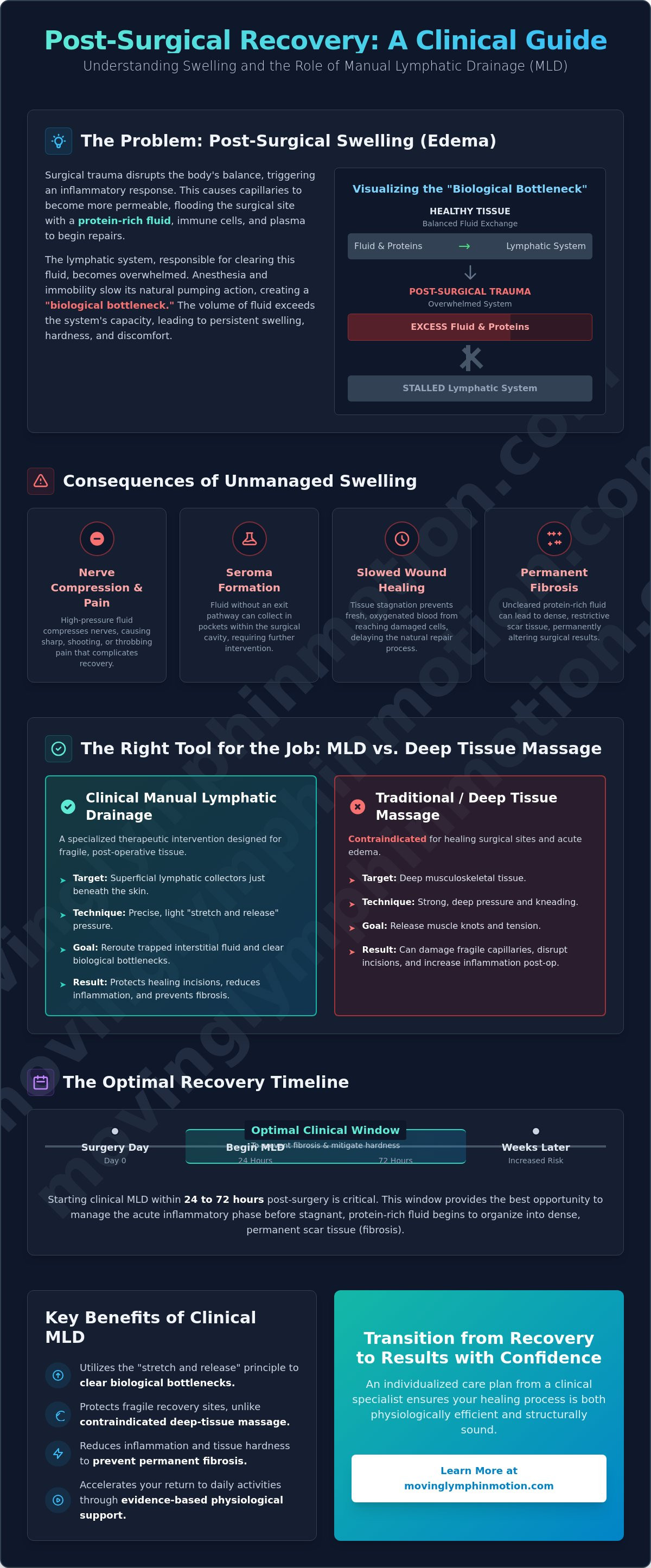
- Identify the optimal clinical window for beginning treatment—typically 24 to 72 hours post-surgery—to effectively mitigate tissue hardness and prevent permanent fibrosis.
- Explore how individualized care plans from a clinical specialist can accelerate your return to daily activities through evidence-based physiological support.
The Physiology of Post-Op Edema: Why Swelling Occurs After Surgery
Surgical intervention, regardless of the surgeon's skill, represents a significant disruption to the body’s internal equilibrium. The resulting swelling, clinically known as post-operative edema, is an accumulation of protein-rich fluid within the interstitial space between cells. This isn't a simple surplus of water; it's a complex biological cocktail. When the body experiences trauma, it initiates an inflammatory cascade that increases capillary permeability, allowing fluid, proteins, and immune cells to flood the surgical site to begin the repair process.
The lymphatic system is responsible for removing this fluid, but it often becomes overwhelmed. During surgery, anesthesia and the subsequent period of reduced mobility significantly inhibit the natural pump mechanism of the lymphatic system, which relies on muscle contraction to move fluid. This creates a physiological bottleneck. Clinical Manual Lymphatic Drainage (MLD) is often required because the volume of fluid exceeds the capacity of the remaining, functional lymphatic pathways. Utilizing manual drainage for post-op edema provides the external stimulus needed to restart this stalled system and restore fluid balance.
Tissue Trauma and the Inflammatory Response
Surgical instruments, while precise, inevitably disrupt the delicate network of initial lymphatic capillaries located just beneath the skin. As these vessels are severed, the primary exit route for interstitial fluid is blocked. In the initial healing phase, white blood cells and plasma accumulate at the incision sites to prevent infection and bridge the tissue gap. While acute surgical swelling is a natural part of this process, it's distinct from chronic secondary lymphedema, which involves permanent damage to the lymphatic architecture. Proper application of manual drainage for post-op edema helps manage this acute phase before the fluid becomes stagnant and difficult to move.
The Consequences of Unmanaged Fluid Retention
If this protein-rich fluid isn't cleared, it creates a high-pressure environment that compresses local nerves and blood capillaries. This pressure often manifests as sharp, shooting pains or a deep, throbbing ache that complicates the recovery experience. Additionally, prolonged retention increases the risk of seroma formation, where fluid pockets collect in the surgical cavity because they cannot find a functional exit pathway. This state of tissue stagnation doesn't just cause discomfort; it actively slows wound healing by preventing fresh, oxygenated blood from reaching the damaged cells. Without intervention, this environment can lead to the formation of dense, restrictive scar tissue known as fibrosis, which can permanently alter the aesthetic and functional results of your procedure.
Understanding Manual Lymphatic Drainage (MLD): The Clinical Mechanism
Manual Lymphatic Drainage (MLD) is a highly specialized, non-invasive therapeutic intervention designed to accelerate the evacuation of interstitial fluid. Unlike traditional massage, which focuses on musculoskeletal manipulation, MLD targets the delicate lymphatic collectors located just beneath the dermal layer. The primary objective is to restore homeostasis by manually encouraging the transport of lymph fluid through the body’s drainage pathways. It's a technical process that requires a deep understanding of fluid dynamics and anatomical structures.
The technique operates on the "stretch and release" principle. By applying a specific, light pressure to the skin, a therapist engages the anchoring filaments that connect the initial lymphatic capillaries to the surrounding tissue. This physical manipulation creates a pressure differential that opens the microscopic valves of the lymph vessels, allowing protein-rich fluid to enter the system. Once inside, the fluid is directed toward healthy, functioning lymph node groups that haven't been compromised by the surgical procedure. This directional flow is critical for bypassing damaged channels and reducing localized pressure. Clinical research, including a Cochrane review on MLD effectiveness, highlights how these precise movements support the body's natural recovery processes.
Beyond fluid transport, MLD induces a significant parasympathetic effect. By stimulating the sensory receptors of the skin with rhythmic, gentle movements, the therapy reduces the body's sympathetic "fight or flight" stress response. This neurological shift promotes vasodilation and further enhances the efficiency of the lymphatic pump. For patients seeking this level of specialized care, choosing a provider focused on post-operative cosmetic surgery recovery ensures the methodology remains clinically sound.
Fluid Dynamics and the Vodder Technique
The Vodder method is the gold standard for manual drainage for post-op edema. It utilizes four distinct strokes: stationary circles, pump, scoop, and rotary. Each movement is performed with a precise pressure of less than five grams. This light touch is clinically superior because excessive pressure can collapse the fragile lymphatic capillaries, inadvertently trapping fluid in the tissues. By maintaining this low-pressure threshold, a specialist can effectively reroute fluid around surgical scars or disrupted channels, ensuring a clear path for drainage.
Preventing Fibrosis Through Edema Control
Fibrosis is the development of hard, restrictive scar tissue that can compromise both the aesthetic and functional outcome of a surgery. When post-operative edema remains stagnant, the high concentration of proteins in the fluid provides a structural "scaffolding" for collagen to over-deposit. This excessive collagen production leads to the "hardness" many patients experience during the second and third weeks of recovery. Early intervention with manual drainage for post-op edema prevents this accumulation. By keeping the interstitial environment clear, MLD ensures the tissue remains soft and pliable, significantly reducing the risk of permanent tissue changes.
MLD vs. Traditional Massage: Why Technique Matters for Surgical Recovery
A frequent point of confusion for patients is the distinction between recreational "lymphatic massage" and clinical manual drainage for post-op edema. While the terms are often used interchangeably in casual conversation, they represent vastly different methodologies with conflicting goals. Traditional massage, such as Swedish or deep tissue, focuses on the musculoskeletal system, utilizing pressure to manipulate muscle fibers and increase local circulation. Clinical MLD, however, is a superficial technique that prioritizes the movement of lymph fluid through the initial lymphatic capillaries without stimulating the deeper muscle layers.
Aggressive kneading or deep-tissue work is strictly contraindicated during the acute recovery phase. Surgical trauma leaves the dermal layers in a state of high fragility. When excessive pressure is applied, it can collapse the delicate, newly forming lymphatic vessels that are attempting to bridge the surgical gap. This doesn't just stall progress; it can cause structural damage to the very system responsible for your healing. Maintaining the integrity of these vessels is essential for long-term fluid management and tissue health.
Perhaps the most pervasive myth in recovery is that "pain equals progress." In specialized post-surgical care, pain is an indicator of tissue distress, not therapeutic efficacy. Clinical manual drainage for post-op edema should be a gentle, rhythmic experience that induces a state of relaxation. If a treatment causes significant discomfort or leaves you with new bruising, it's a sign that the technique is too aggressive for your current physiological state and could be causing further micro-trauma to the healing site.
The Dangers of Aggressive Post-Op Massage
Utilizing high-pressure techniques shortly after surgery can trigger a secondary inflammatory response. This influx of blood to the area, combined with the mechanical stress on capillaries, often results in increased swelling and hematoma formation. Traditional massage also creates shear forces on the skin that can jeopardize the integrity of healing incisions. For these reasons, aggressive rubbing is medically inappropriate until the tissues have reached a specific stage of remodeling and the lymphatic system has regained its baseline capacity.
Identifying a Certified Lymphatic Therapist
Effective recovery requires more than just a general massage license; it demands a practitioner who has completed rigorous, specialized clinical training. Professional Manual Lymphatic Drainage certification Courses provide therapists with the anatomical knowledge required to navigate complex surgical recoveries safely. When selecting a partner for your recovery, it's essential to ask about their specific experience with your procedure and their understanding of clinical methods. A specialist will be able to explain the physiological reasoning behind every stroke they perform, ensuring your safety remains the highest priority.
The Recovery Timeline: When to Begin Manual Drainage for Edema
Timing is a fundamental component of clinical success. The physiological window for initiating manual drainage for post-op edema typically opens between 24 and 72 hours after the procedure. Starting within this timeframe allows the therapist to address the inflammatory peak before the fluid loses its fluidity and begins to thicken with high-protein concentrations. While the exact start date depends on your surgeon's specific clearance and the nature of the surgery, early intervention is the standard for preventing the biological bottleneck that leads to tissue hardness.
During the first two weeks, the frequency of sessions is significantly higher than in later stages. This intensive schedule ensures that as soon as fluid is moved into the functional lymphatic collectors, the space is cleared for the next wave of drainage. Manual drainage for post-op edema works most effectively when paired with medical-grade compression garments. The garment provides the consistent external pressure necessary to prevent fluid from re-pooling in the interstitial spaces between clinical sessions. Standard treatment frequency often follows this clinical progression:
- Days 1 to 14: Three to five sessions per week to manage the inflammatory peak.
- Weeks 3 to 4: Two sessions per week to support tissue remodeling.
- Weeks 5 and beyond: Weekly sessions as needed for final contouring.
The First 14 Days: The Critical Window
The primary objective during these initial 14 days is the systematic reduction of the inflammatory peak and the mitigation of acute pain. By clearing the pressure from local nerve endings, MLD provides immediate symptomatic relief that pharmacological options alone can't always achieve. This phase is about stabilization and safety. For patients in Central Texas, following established post-op recovery massage in Cedar Park protocols ensures that the inflammatory response is managed with medical-grade precision. Consistent drainage during this window is the most effective way to prevent the stagnation that leads to long-term complications.
Weeks 3-6: Moving Toward Contouring
As you move beyond the second week, the therapeutic focus shifts from emergency fluid evacuation to sub-acute tissue management. The sub-acute phase is the period where collagen synthesis peaks, and the body begins to lay down the structural framework of the surgical result. During weeks three through six, MLD supports the final settling of the tissues by addressing minor irregularities and ensuring the remaining fluid doesn't interfere with the skin's ability to retract. This transition is essential for achieving the smooth, contoured results that were the goal of the surgery. To begin your clinical recovery journey, you can schedule your post-operative cosmetic surgery recovery sessions today.
Professional Post-Op Care in Central Texas: The Lymph in Motion Approach
Clinical recovery is an intricate process that demands a partner with specialized anatomical knowledge and a commitment to patient safety. Criselda White established Lymph in Motion by Criselda White to provide this level of medical-grade oversight for individuals navigating the complexities of surgical healing. Unlike standardized recovery models that apply a one-size-fits-all mentality, her methodology prioritizes a deep understanding of fluid dynamics to ensure that manual drainage for post-op edema is applied with maximum physiological efficiency. Every protocol is meticulously individualized, recognizing that the body's inflammatory response to surgery is as unique as the procedure itself.
This commitment to precision extends beyond the initial recovery phase into the realm of aesthetic optimization. By integrating clinical therapy with specialized Build and Sculpt services, the practice ensures that patients don't just heal, but achieve the refined, contoured results they originally sought. This transition from acute fluid management to structural sculpting is performed with the quiet confidence of a specialist who understands exactly how tissue remodeling occurs. By maintaining this high level of anatomical precision, Lymph in Motion by Criselda White helps patients move through their recovery journey with a sense of safety and professional expertise.
Specialized Recovery in Austin and Cedar Park
For patients recovering throughout the region, including Leander, Liberty Hill, and Georgetown, Lymph in Motion by Criselda White serves as a vital clinical partner. The practice works in direct alignment with local plastic surgeons' recovery protocols to ensure that every session adheres to the specific safety requirements of your surgical team. This collaborative approach ensures that manual drainage for post-op edema is synchronized with your surgeon’s expectations for wound healing and tissue retraction. For a detailed overview of localized services, you can explore our guide on post-op lymphatic drainage Austin, which outlines the specialized support available to our Central Texas community.
Beyond Edema: Long-Term Lymphatic Health
While managing surgical swelling is often the immediate priority, the practice is also dedicated to the long-term management of chronic conditions such as lymphedema and lipedema. We also provide specialized support for breast cancer-related swelling, maintaining a proactive approach to lymphatic health even after the acute surgical window has closed. This comprehensive perspective ensures that your lymphatic system remains functional and efficient throughout every stage of your health journey, supporting your immune system and systemic fluid balance. To begin your clinical recovery with an evidence-based approach, you can Schedule your clinical post-op evaluation with Criselda White today.
Securing Your Surgical Results with Clinical Precision
Navigating the weeks following a procedure requires a strategic shift from surgical intervention to physiological maintenance. You now understand that post-operative swelling is a complex biological state that, if left unmanaged, can lead to restrictive fibrosis and prolonged physical discomfort. By prioritizing clinical manual drainage for post-op edema over recreational massage, you ensure your recovery follows the strict anatomical parameters necessary for efficient healing. This specialized methodology doesn't just manage fluid; it protects the long-term integrity of your surgical investment.
As a Certified MLD Practitioner specialized in cosmetic surgery recovery, Criselda White offers the expert guidance needed to navigate these complexities throughout the Greater Austin Area. Whether you're within the critical 72-hour window or moving toward the final contouring phase, our clinical approach provides a clear path to restoration. Book Your Clinical Post-Op Recovery Session in Austin today to secure the professional oversight your body requires. Trust the deliberate science of your healing process and provide your tissues with the expert care they need to thrive.
Frequently Asked Questions
How soon after my liposuction or tummy tuck can I start manual drainage?
Most patients can begin manual drainage for post-op edema within 24 to 72 hours following their procedure. This early intervention is critical for managing the inflammatory peak before fluid becomes protein-heavy and stagnant. However, you should always verify the exact start date with your surgical team, as specific techniques or drain placements may require minor adjustments to the standard clinical timeline.
Is manual lymphatic drainage painful on a fresh surgical site?
Clinical manual lymphatic drainage is a non-painful, superficial technique that utilizes less than five grams of pressure. It's specifically designed to be gentle enough for fresh incision sites and traumatized tissue. If you experience significant pain or sharp discomfort during a session, the technique is likely too aggressive. MLD should induce a parasympathetic response, helping to soothe the nervous system rather than triggering a pain response.
How many sessions of manual drainage will I need for post-op edema?
The total number of sessions depends on the extent of the surgery and your body's specific inflammatory response. A standard clinical course often involves 10 to 12 sessions during the first four to six weeks of recovery. Initially, sessions are scheduled three to five times per week to clear the acute volume of fluid. As swelling stabilizes and the sub-acute phase begins, frequency typically decreases to once or twice weekly.
Can I do manual lymphatic drainage on myself at home?
Self-treatment is not recommended during the acute phase of surgical recovery. Clinical manual drainage for post-op edema requires specialized knowledge of redirected fluid pathways to bypass disrupted lymphatic channels. Incorrect application or excessive pressure at home can collapse fragile new capillaries or inadvertently push fluid into areas without functional drainage. Professional oversight ensures that fluid is moved safely toward healthy lymph node groups.
What is the difference between a regular massage and MLD for surgery?
Regular massage focuses on the musculoskeletal system, using deep pressure to manipulate muscle fibers and increase blood circulation. MLD is a technical, skin-stretching methodology that targets the initial lymphatic capillaries just beneath the dermis. While traditional massage can increase inflammation and bruising on healing tissues, MLD reduces the volume of interstitial fluid without stressing the surgical site. They are physiologically distinct interventions with opposing mechanical goals.
Will manual drainage help prevent the "lumps and bumps" after liposuction?
Yes, MLD is the primary clinical tool for preventing the development of permanent tissue hardness or fibrosis. These lumps occur when stagnant, protein-rich edema provides the scaffolding for excessive collagen deposition. By consistently clearing this fluid before it thickens, manual drainage keeps the tissue soft and pliable. This ensures that the skin can retract smoothly over the new contours, resulting in a more refined aesthetic outcome.
Should I wear my faja or compression garment during the drainage session?
You'll need to remove your faja or compression garment for the duration of the clinical session to allow for direct skin contact and unobstructed fluid movement. However, you should put the garment back on immediately after the treatment is completed. The manual drainage clears the fluid, and the compression garment provides the necessary external pressure to prevent that fluid from re-accumulating in the interstitial spaces between your appointments.
How do I know if my swelling is normal or if I have a complication?
Normal post-surgical swelling typically feels like moderate tension and may include localized bruising that subsides over two to three weeks. However, you should contact your surgeon immediately if you notice signs of a complication, such as localized heat, extreme redness, or a sudden increase in swelling accompanied by a fever. These symptoms may indicate an infection or a hematoma, which require medical assessment beyond the scope of lymphatic therapy.


