
The success of an abdominoplasty isn't determined solely in the operating room; it's often decided during the critical weeks of physiological regulation that follow. While many view recovery as a period of passive waiting, your body's lymphatic pathways are physically disrupted during surgery. This makes specialized tummy tuck lymphatic massage Round Rock an essential physiological regulator rather than an optional luxury. You've likely experienced the frustrating tension of post-operative edema or felt the anxiety that comes with spotting potential signs of fibrosis. These aren't just minor discomforts. They're biological signals that your system requires manual intervention to manage fluid dynamics and ensure proper tissue healing.
This article explains why specialized manual lymphatic drainage (MLD) is essential for preventing complications like seromas and achieving the smooth, flat aesthetic results you desire. You'll learn how clinical MLD differs from recreational massage and why the timing of your sessions is critical for a faster return to your daily activities. We'll also provide a clear path to accessing expert, medical-grade care in the Round Rock area to support your recovery with precision and clinical authority.
Key Takeaways
- Understand how abdominoplasty disrupts superficial lymphatic pathways and why redirecting fluid flow is a physiological necessity for proper healing.
- Learn how tummy tuck lymphatic massage Round Rock accelerates the inflammatory phase and reduces post-operative pain by lowering interstitial pressure.
- Discover the clinical difference between aggressive recreational massage and the specialized skin-stretching techniques required for safe lymphatic drainage.
- Identify the optimal recovery timeline, from managing acute swelling in the first ten days to preventing fibrosis during the peak swelling period.
- Explore the clinical approach of Criselda White at Lymph in Motion, where evidence-based therapy meets comprehensive post-operative education.
The Physiological Impact of Abdominoplasty on Lymphatic Health
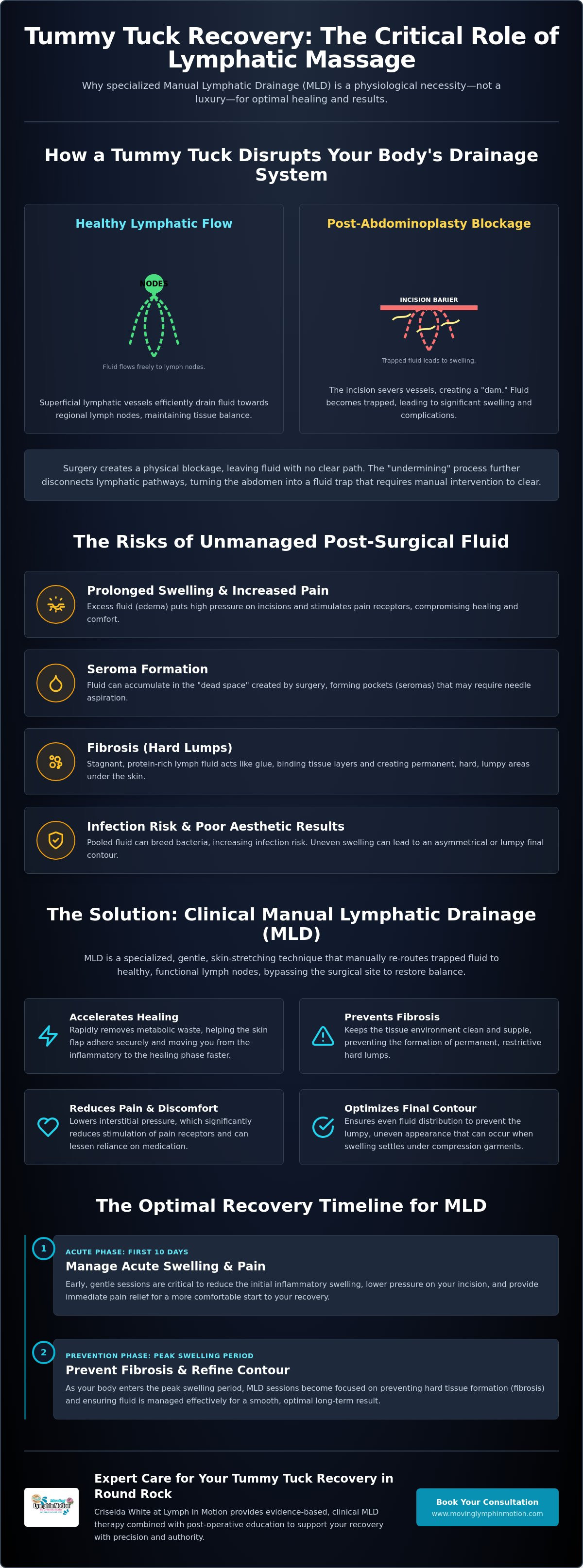
Abdominoplasty is more than a superficial aesthetic adjustment; it is a major surgical disruption of the body's fluid transport system. During the procedure, the surgeon severs the superficial lymphatic vessels that reside within the subcutaneous fat and skin layers. These vessels are responsible for draining interstitial fluid toward the axillary and inguinal lymph nodes. In a healthy state, fluid moves across anatomical "watersheds," which are invisible boundaries that dictate the direction of lymph flow. The horizontal incision of a tummy tuck effectively creates a permanent barrier across these watersheds, leaving the fluid with no clear path to its destination.
This anatomical blockage is why seeking a professional tummy tuck lymphatic massage Round Rock specialist is a clinical necessity. Without manual intervention, the fluid remains trapped above the incision line, leading to prolonged swelling and potential complications. Manual lymphatic drainage (MLD) serves as a specialized therapeutic method to manually reroute this stagnant fluid toward intact, functional lymph nodes, bypassing the damaged surgical site. By simulating the natural rhythmic contractions of the lymph collectors, MLD encourages the body to find new pathways for drainage while the primary vessels attempt to regenerate.
Understanding Post-Surgical Edema
Acute inflammatory swelling is the body's immediate response to surgical trauma. It's a protective mechanism where white blood cells and nutrients rush to the site to begin tissue repair. However, if this fluid isn't cleared efficiently, it transitions from a helpful response to chronic edema. Excessive interstitial pressure from fluid accumulation puts significant strain on fresh incisions and sutures, which can compromise the integrity of the surgical closure. Stagnant fluid provides a protein-rich environment for bacterial growth, which significantly increases the risk of post-operative infection.
The "Undermining" Effect and Lymphatic Stasis
The "undermining" phase of surgery involves lifting the skin and adipose tissue away from the abdominal muscle wall to allow for tightening. This process effectively "unplugs" the vertical connections between the deep and superficial lymphatic systems. As a result, the lower abdomen becomes a structural "trap" where lymph fluid pools with no natural exit. Clinical MLD provides a temporary physiological bypass. By applying specific, light-touch sequences, a therapist can stimulate the remaining functional vessels to take up the excess load, effectively clearing the "trap" and restoring fluid balance. This intervention is key to preventing the transition from soft swelling to the hard, disorganized tissue known as fibrosis.
Critical Benefits of Tummy Tuck Lymphatic Massage in Round Rock
While the anatomical shifts discussed previously are significant, the functional advantages of tummy tuck lymphatic massage Round Rock are what define the quality of your recovery. This clinical intervention does more than just move fluid; it actively manages the body's repair cycle. By facilitating the rapid evacuation of metabolic waste and cellular debris, MLD accelerates the transition from the acute inflammatory phase to the proliferative phase of healing. This speed is vital for faster tissue approximation, allowing the skin flap to adhere more securely to the underlying muscle wall.
The reduction of post-operative pain is perhaps the most immediate benefit for many patients. Excess fluid creates high interstitial pressure, which mechanically stimulates pain receptors, known as nociceptors, in the surgical area. By lowering this pressure through targeted drainage, the intensity of discomfort decreases significantly. This often leads to a reduced reliance on pain medication and a more comfortable transition back to mobility. If you're noticing localized hardness or persistent tension, scheduling a clinical assessment can help identify areas requiring focused drainage.
Preventing seromas is another critical objective. A seroma occurs when fluid accumulates in the "dead space" created by surgical undermining. If these pockets are left unmanaged, they can necessitate surgical aspiration with a needle or even lead to infection. MLD ensures that fluid is continuously moved out of these vulnerable areas, promoting a drier, safer environment for internal healing. Finally, this therapy optimizes your final contour. By ensuring even fluid distribution, MLD prevents the lumpy or asymmetrical appearance that can occur when swelling settles unevenly under compression garments.
Preventing Fibrosis and Hard Tissue Formation
Post-surgical fibrosis is the development of disorganized, dense connective tissue that feels like hard lumps under the skin. When protein-rich lymph fluid remains stagnant in the tissues, it acts as a biological "glue" that binds layers together prematurely. Early MLD intervention keeps the interstitial environment clean and the tissues supple. This prevents the formation of permanent, restrictive scarring that can compromise both your comfort and your aesthetic result.
Enhancing Scar Tissue Maturation
The appearance of your final scar is directly tied to the health of the surrounding lymphatic environment. Congested tissue often leads to hypertrophic or raised scarring because the skin lacks the proper nutrient exchange to heal cleanly. Specialized manual techniques improve the microcirculation and elasticity of the skin around the incision site. This supports a smoother maturation process, helping the scar fade and flatten more effectively over time.
Clinical MLD vs. Standard Massage: Why Specialization Matters
When seeking tummy tuck lymphatic massage Round Rock, the most critical distinction to understand is that clinical manual lymphatic drainage (MLD) is not a traditional massage. While recreational massage focuses on muscle manipulation and deep tissue pressure, clinical MLD targets the initial lymphatics located just beneath the epidermis. These delicate vessels are physically attached to the skin via anchoring filaments. To open these vessels and allow fluid to enter the lymphatic system, a therapist must use a specialized "Skin-Stretching" technique rather than kneading or friction.
Applying deep pressure or traditional massage strokes actually collapses these superficial capillaries, rendering the treatment ineffective. Standard massage also generates heat and friction, which induces hyperemia, an increase in blood flow to the area. While beneficial for athletic recovery, this is counterproductive for a fresh surgical site because it drives even more fluid into the interstitial space, worsening the edema. Clinical MLD utilizes a precise, rhythmic sequence that respects the new surgical landscape, ensuring fluid is redirected without adding further stress to the compromised tissues.
The Danger of Deep Pressure After Abdominoplasty
Aggressive manual techniques pose a significant risk to the structural integrity of your surgical results. Deep tissue massage can cause internal bleeding or the formation of hematomas, which may require medical intervention. There's also the risk of disrupting the delicate healing of internal sutures or the "internal bra" structures your surgeon has meticulously placed. A critical clinical warning: never allow a therapist to "push" fluid directly toward a closed surgical incision. This creates mechanical tension that can lead to incision dehiscence, where the wound edges begin to separate. Fluid must always be directed toward functional, proximal lymph node groups that are capable of processing the volume.
Credentials to Look for in a Round Rock Specialist
The safety of your recovery depends on the clinical education of your therapist. There's a vast difference between a licensed massage therapist who attended a brief weekend workshop and a Certified Lymphatic Therapist (CLT). A CLT has completed a minimum of 135 hours of specialized training focused on the complex anatomy and pathology of the lymphatic system. This advanced knowledge is non-negotiable when managing surgical drains or identifying the subtle early markers of seromas and infections. For more information on verifying these qualifications, you can review our guide on Choosing a manual lymph drainage therapist to ensure your post-op care meets medical-grade standards.
Your Recovery Timeline: When to Schedule Sessions
The success of your recovery depends on a methodical approach to timing. While generic advice often suggests waiting six weeks to begin any form of therapy, modern clinical protocols prioritize early intervention. For those seeking tummy tuck lymphatic massage Round Rock, the recovery journey is divided into specific physiological phases, each requiring a different therapeutic focus. Establishing a professional schedule early ensures that fluid dynamics are managed before they lead to permanent tissue changes.
- Phase 1 (Days 3-10): This initial window focuses on managing acute inflammatory swelling. Gentle drainage during this period supports the function of surgical drains and prevents the initial build-up of protein-rich fluid that can strain your incisions.
- Phase 2 (Weeks 2-4): This is typically the "peak swelling" period. The body's inflammatory response is at its height, and the risk of early fibrosis is greatest. MLD during this phase is essential to keep tissues supple and prevent the formation of hard lumps.
- Phase 3 (Weeks 5-12): As the acute swelling subsides, the focus shifts to tissue remodeling. Therapy during this phase refines the aesthetic contour and ensures the skin flap adheres smoothly to the underlying muscle wall.
Your specific surgical details will dictate the frequency of care. Procedures that include extensive liposuction or complex muscle repair often generate a higher interstitial load, requiring more frequent sessions to maintain comfort. You can book your post-operative assessment online to establish a timeline tailored to your specific surgical details.
Preparing for Your First Session
Preparation is key to a successful clinical appointment. You should wear loose, non-restrictive clothing that's easy to remove and put back on after therapy. We'll provide specific guidance on managing your compression garment during the session. Hydration is paramount for lymphatic efficiency. Increasing your water intake 24 hours before your appointment ensures that the lymph fluid is less viscous, making it easier for the system to transport and clear. For a deeper look at what to expect, review our Clinical guide to post-op recovery.
Frequency and Duration of Care
A series of 5 to 10 sessions is the standard clinical recommendation for a full abdominoplasty. This isn't a one-time fix but a cumulative process that supports the body's natural healing rhythm. You'll know the therapy is working when you experience a noticeable reduction in skin tension and an increase in urination as your body processes the cleared fluid. If the surgical area feels significantly softer and your mobility improves, your system is responding well to the intervention.
Specialized Tummy Tuck Recovery with Criselda White
Navigating the post-operative period requires more than just a standard service provider; it demands a clinical partner who understands the intricate mechanics of tissue repair. At Best Lymphatic Specialist, serving the Round Rock and greater Austin areas, the focus is on evidence-based recovery protocols that prioritize physiological outcomes. Criselda White, a Texas Licensed Massage Therapist and Certified Lymphedema Therapist (CLT), utilizes the Vodder Method of manual lymphatic drainage to ensure every session is anatomically precise. This methodology doesn't just address surface-level swelling. It targets the deep interstitial fluid dynamics that determine how well your body integrates the surgical changes made during your abdominoplasty.
The tummy tuck lymphatic massage Round Rock patients experience here is characterized by a meticulous, observant approach. Criselda combines clinical application with essential post-operative education, empowering you to understand your body's healing signals. This specialized therapy is designed to integrate seamlessly with your plastic surgeon’s specific post-op instructions. Whether your procedure involved extensive muscle plication or was combined with 360-degree liposuction, the treatment plan is adjusted to account for the unique inflammatory load on your system. As your recovery progresses beyond the acute phase, the focus shifts from medical necessity to aesthetic refinement. This transition often involves the Build and Sculpt body treatment, which focuses on manual contouring to enhance the final definition of your abdominal results.
A Partner in Your Surgical Journey
Effective recovery isn't a solitary process. We prioritize communication with your surgical team to ensure a unified care plan that respects your surgeon's specific techniques and milestones. At every visit, we conduct a personalized assessment of your tissue health, monitoring for any signs of fluid pockets or disorganized scarring. This level of individualized attention ensures that your recovery remains on a predictable, safe trajectory. By observing the subtle changes in fluid volume and tissue density, we can adjust the manual techniques to provide the exact level of support your lymphatic system needs at that moment.
Booking Your Recovery in Round Rock
Managing the logistics of surgery is complex enough without the stress of difficult scheduling. We utilize the Vagaro platform to provide a streamlined, transparent booking experience for our post-op patients. Because specialized clinical MLD is in high demand, we strongly recommend booking your initial series of sessions before your surgery date. This proactive approach ensures you have guaranteed availability during those critical first ten days when intervention is most impactful. When you're ready to secure your clinical support, you can schedule your post-op clinical MLD session through our online portal to begin your journey toward an optimized recovery.
Prioritizing Your Physiological Healing Journey
Recovery from an abdominoplasty is a complex biological process that requires more than just time; it requires intentional, clinical management of your body’s fluid dynamics. By choosing specialized tummy tuck lymphatic massage Round Rock, you're transitioning from a passive recovery to an active, evidence-based healing journey. You've learned how manual lymphatic drainage reroutes fluid around surgical barriers and why the technical precision of a specialist is non-negotiable for preventing fibrosis. These clinical interventions are the key to ensuring your surgical results are as smooth and comfortable as possible.
As a Certified Manual Lymphatic Drainage Specialist with a specialized focus on post-cosmetic surgery recovery, Criselda White provides the expert guidance necessary to safeguard your surgical investment. Her advanced clinical protocols for fibrosis prevention offer a level of safety and precision that standard massage cannot match. Don’t leave your results to chance. Secure your clinical recovery sessions with Criselda White today to ensure your path to a smooth recovery is guided by a dedicated professional. Your body possesses an incredible capacity to heal, and we're here to provide the expert support it needs to reach its full potential.
Frequently Asked Questions
Is lymphatic massage painful after a tummy tuck?
Clinical manual lymphatic drainage (MLD) is a non-invasive, gentle technique that shouldn't cause pain. Unlike deep tissue massage, it uses a light skin-stretching touch to stimulate superficial vessels. Most patients find the reduction in interstitial pressure actually relieves post-operative discomfort immediately. If a session feels aggressive or painful, the technique isn't true MLD and could potentially damage your healing tissues or cause unnecessary inflammation.
How soon after my tummy tuck should I start lymphatic massage?
You can typically begin tummy tuck lymphatic massage Round Rock within 3 to 7 days following your procedure. Early intervention is key to managing acute inflammatory swelling before it becomes stagnant. While some surgeons recommend waiting until the first follow-up appointment, starting early helps support the body's natural drainage pathways during the most intense phase of post-surgical edema. Always confirm the specific timing with your surgical team first.
Can I do lymphatic drainage on myself at home?
Self-treatment is not recommended during the critical early phases of recovery. Clinical MLD requires a deep understanding of redirected fluid pathways and "watershed" areas that have been altered by surgery. Attempting to move fluid yourself without specialized training can lead to improper drainage or accidental tension on incision lines. A Certified Lymphatic Therapist ensures fluid is moved safely to functional lymph node groups that are capable of processing the volume.
Do I need my surgeon’s permission before starting MLD?
Yes, obtaining clearance from your plastic surgeon is a standard clinical requirement. Professional therapists prioritize a unified care plan to ensure that MLD doesn't interfere with specific surgical techniques or wound healing. Most surgeons recognize MLD as a beneficial component of recovery, but they must confirm that your incisions are stable and there are no contraindications, such as active infections or the risk of blood clots, before you begin.
How many sessions of lymphatic massage will I need after abdominoplasty?
A standard recovery protocol usually involves a series of 5 to 10 sessions. The exact frequency depends on the extent of your surgery, such as whether extensive muscle repair or liposuction was performed. Most patients benefit from two to three sessions per week during the first fourteen days. This is often followed by a tapering schedule as the acute swelling subsides and the tissue remodeling phase begins to take over.
What happens if I don’t get lymphatic massage after my tummy tuck?
Without manual intervention, the body’s lymphatic system must eventually regenerate new pathways to clear the swelling, a process that can take three to six months. During this time, stagnant fluid can lead to persistent discomfort, increased skin tension, and a higher risk of developing permanent fibrosis. While the body may eventually clear the fluid on its own, MLD significantly shortens the recovery timeline and improves the final aesthetic contour.
Will MLD help if I already have hard lumps (fibrosis)?
Yes, specialized MLD is highly effective at managing early-stage fibrosis. When protein-rich fluid is left to stagnate, it can form dense, disorganized fibrous connective tissue. Clinical techniques help soften these areas by encouraging the evacuation of the fluid that feeds the scarring process. Consistent tummy tuck lymphatic massage Round Rock helps restore tissue suppleness and improves the overall smoothness of the abdominal wall even after lumps have begun to form.
Can I have MLD if I still have surgical drains in place?
You can and should receive MLD while surgical drains are still in place. The therapy is designed to gently move fluid toward the drains, preventing the accumulation of fluid in "dead spaces" created during the surgical undermining process. A Certified Lymphatic Therapist knows how to work safely around drain sites to reduce the overall fluid load. This targeted movement may even help the surgeon determine when the drains are ready for removal.
More Articles
Lymphatic Drainage Continuing Education in Texas: A Clinical Guide for Practitioners

What to Expect After Your First MLD Session: A Clinical Recovery Guide