

Why does your chest feel like an immovable weight in the days following surgery, even when your surgeon confirms the procedure was a success? While some discomfort is anticipated, the intense pressure and restricted range of motion caused by post-surgical edema can be deeply unsettling. You're likely experiencing a combination of tissue tension and fluid stasis that makes even simple movements feel labored. Integrating lymphatic drainage after breast augmentation into your recovery plan is not a luxury; it's a clinical necessity for managing the unique physiological stress caused by implant placement.
You've invested significant time and resources into your aesthetic goals, and it's natural to feel protective of your results while navigating the complexities of healing. This clinical guide explores the anatomical mechanisms behind manual lymphatic drainage to help you reduce inflammation, manage pain, and safeguard against complications like capsular contracture. We will examine how targeted therapy facilitates the removal of metabolic waste and supports tissue remodeling. By understanding these biological functions, you can ensure a faster return to your normal routine with a soft, natural-looking outcome.
Key Takeaways
- Understand how the creation of the surgical pocket disrupts superficial lymphatic capillaries, necessitating a specialized clinical approach to fluid management.
- Discover how lymphatic drainage after breast augmentation alleviates the "heavy" sensation in the chest wall and facilitates the natural "drop and fluff" of your implants.
- Learn to distinguish between gentle, medical-grade skin stretching and aggressive massage techniques that risk displacing implants or damaging internal sutures.
- Identify the critical windows for therapy, from managing acute inflammation in the first ten days to supporting tissue softening during the first month of recovery.
- Recognize the importance of choosing specialized post-operative care that prioritizes physiological results over standard, recreational wellness protocols.
The Anatomy of Recovery: How Breast Augmentation Affects Lymph Flow
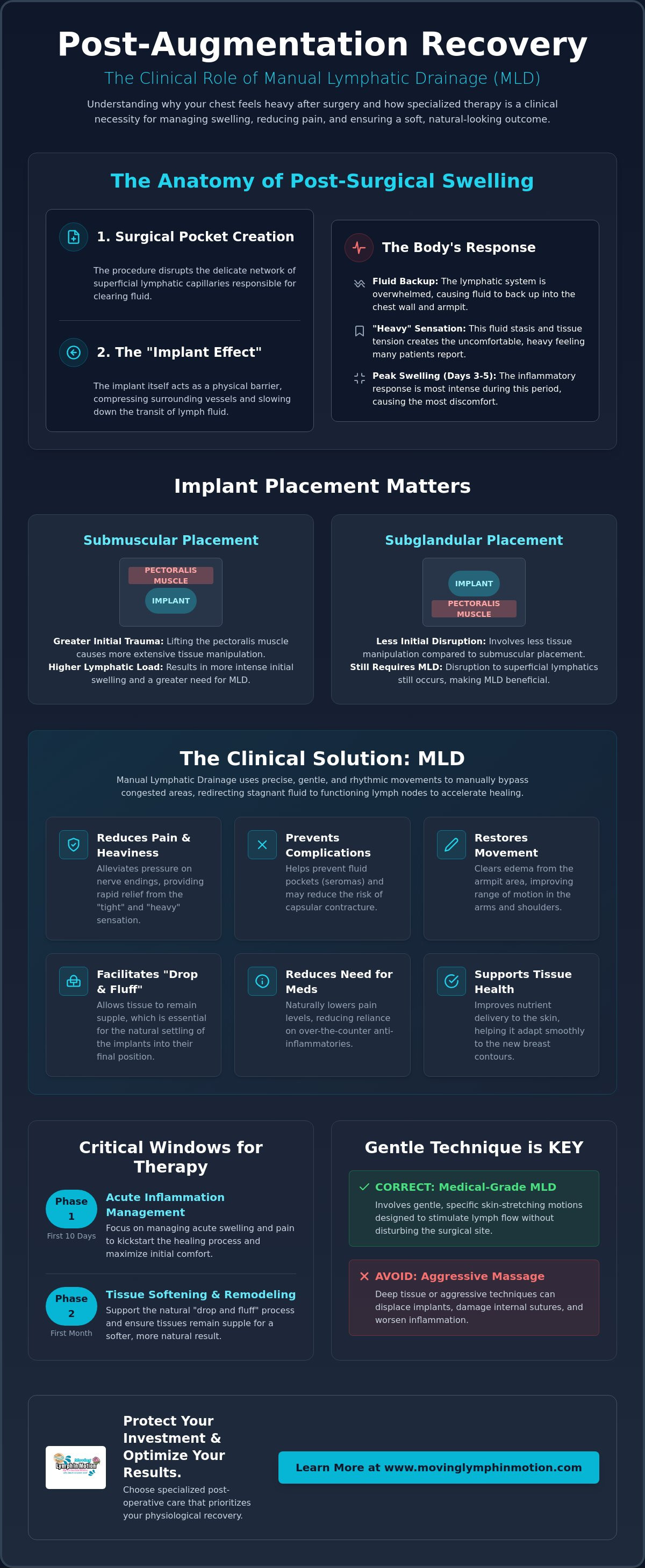
Breast augmentation is more than a change in aesthetic volume; it's a significant physiological event that alters the local environment of the chest wall. The primary mechanism for managing the body's response to this change is Manual Lymphatic Drainage (MLD), a specialized clinical technique that uses precise, rhythmic movements to stimulate the lymphatic system and redirect stagnant fluid toward functional nodes. During the surgical procedure, the creation of the implant pocket inevitably disrupts the delicate superficial lymphatic capillaries. These microscopic vessels are responsible for absorbing interstitial fluid. When they're severed or cauterized, the body's ability to clear waste is temporarily compromised, leading to the characteristic swelling seen in the early stages of recovery.
The presence of the implant itself introduces a unique challenge known as the "implant effect." Unlike other surgeries where tissue simply heals back together, a breast augmentation places a permanent physical barrier within the tissue layers. This foreign body exerts constant pressure on the surrounding lymph vessels, effectively compressing them and slowing the transit of fluid. This is a primary reason why lymphatic drainage after breast augmentation is critical. The body's natural drainage pathways in the axilla, or armpit, often become overwhelmed as they attempt to process the sudden surge of inflammatory proteins and surgical debris while simultaneously battling the mechanical obstruction of the implant.
The axillary lymph nodes serve as the primary filtration centers for the breast and upper extremities. Post-surgery, these nodes must work at an accelerated rate to manage the influx of fluid. When the volume exceeds the filtration capacity, fluid backs up into the lateral chest wall and armpit area, leading to the "heavy" or "stuffy" sensation many patients report. Specialized Post-Operative Cosmetic Surgery Recovery protocols are designed to manually bypass these congested areas and move fluid toward healthy, functioning nodes.
Tissue Stretching and the Inflammatory Response
The physiological impact of stretching skin and muscle to accommodate an implant triggers an immediate inflammatory response. This stretching causes micro-trauma to the surrounding soft tissue, resulting in edema that often migrates toward the sides of the chest and upper abdomen due to gravity and the lack of efficient upward transport. Most patients find that the peak swelling period occurs between days 3 and 5, which is typically the most uncomfortable phase of the initial recovery.
Lymphatic Disruption in Submuscular vs. Subglandular Placement
Implant placement depth significantly influences the degree of initial swelling. Submuscular placement involves more extensive tissue manipulation, as the pectoralis muscle is lifted to create space. This results in greater initial trauma and a more intense lymphatic load to clear residual anesthesia and surgical debris. Utilizing lymphatic drainage after breast augmentation early in the process helps fluid find new pathways. This manual intervention is also vital in preventing seromas, which are pockets of sterile fluid that can form when the lymphatic system cannot keep pace with the volume of interstitial fluid produced during the healing phase.
Clinical Benefits of MLD for Breast Augmentation Patients
The clinical application of manual lymphatic drainage after breast augmentation offers more than just temporary relief; it provides a structural advantage during the remodeling phase of healing. The sensation of "tightness" in the chest wall is often a direct result of high interstitial fluid pressure. By mechanically stimulating the initial lymphatics, MLD reduces this hydrostatic pressure, providing rapid relief from the "heavy" sensation that characterizes the first week post-op. This reduction in fluid volume allows the parenchymal and adipose tissues to remain supple, which is essential for the natural settling of the implants.
Restoring functional movement is another primary goal of specialized recovery protocols. Edema in the axillary region often restricts the movement of the glenohumeral joint, making it difficult to perform daily tasks. By facilitating the evacuation of stagnant fluid from the armpits and lateral chest, MLD improves the range of motion in the arms and shoulders. Additionally, optimized fluid transit ensures that nutrient-rich blood can reach the dermis more effectively. This supports skin health and retraction, ensuring the skin envelope adapts smoothly to the new contours of the breast.
Pain Management Without Medication
High volumes of interstitial fluid create mechanical tension on delicate nerve endings, or nociceptors. By facilitating the evacuation of this fluid, MLD naturally lowers pain levels without the systemic side effects of pharmacological interventions. The technique also engages the parasympathetic nervous system, inducing a state of physiological calm that is vital for systemic cellular repair. Many patients find they can significantly reduce their reliance on over-the-counter anti-inflammatories when mechanical drainage is prioritized as a primary recovery tool.
Aesthetic Longevity and Result Optimization
The clinical goal of lymphatic drainage after breast augmentation is to ensure the body integrates the implant into the surrounding tissue smoothly. Early intervention is the most effective way to prevent permanent "lumpy" edema, which can compromise the smooth contour of the breast. Stagnant fluid is rich in proteins that, if left unmanaged, can trigger excessive collagen deposition and lead to localized fibrosis or hard scar tissue around the pocket. For a deeper look at managing these post-op changes, read our guide on How to Reduce Swelling After Cosmetic Surgery. Ensuring your recovery is managed by a specialist in Post-Operative Cosmetic Surgery Recovery can make the difference between a standard result and a superior aesthetic outcome.
Manual Lymphatic Drainage vs. Aggressive Massage: A Safety Warning
One of the most critical distinctions in post-operative care is the difference between specialized clinical therapy and traditional deep tissue work. While the term "massage" is often used colloquially, clinical Manual Lymphatic Drainage (MLD) is a highly specific, light-touch technique that focuses on stretching the skin rather than compressing the underlying muscle. This is a vital safety consideration for anyone seeking lymphatic drainage after breast augmentation. The initial lymphatic capillaries are located just beneath the surface of the skin; they don't require heavy pressure to function. In fact, applying excessive force actually collapses these delicate vessels, which halts fluid transit and exacerbates the very swelling you're trying to resolve.
Aggressive techniques such as kneading, deep tissue manipulation, or "wood therapy" are strictly contraindicated during the early stages of recovery. These methods exert mechanical stress that can displace the implant before the body has had time to form a stable capsule around it. Furthermore, the use of mechanical rollers or wooden tools on a fresh surgical site can cause secondary trauma to the healing tissues. This unnecessary pressure triggers a secondary inflammatory response, increasing the metabolic load on an already compromised lymphatic system and potentially leading to localized hematomas.
Protecting the Surgical Pocket
The first six weeks of healing are a delicate period where the internal sutures and the surgical pocket are at their most vulnerable. Heavy pressure during this window is dangerous because it risks disrupting the internal architecture established by your surgeon. Aggressive massage post-augmentation can lead to increased bruising and delayed pocket closure. By contrast, specialized MLD respects the integrity of the implant placement, using rhythmic, low-pressure strokes that facilitate fluid movement without disturbing the underlying surgical work.
What to Look for in a Post-Op Specialist
Because the stakes are high for your aesthetic results, it's essential to verify the credentials of your provider. A Certified Lymphatic Therapist (CLT) has undergone rigorous training in fluid dynamics and anatomical redirection. Your therapist should also possess a clear understanding of the specific surgical techniques used in your procedure, such as whether the implants are submuscular or subglandular. This knowledge ensures the therapy is tailored to your unique recovery needs. If you're looking for specialized care in Central Texas, reviewing a Post-Op Recovery Massage in Cedar Park checklist can help you identify a provider who prioritizes medical-grade safety over recreational wellness trends.
The Recovery Roadmap: When to Start Lymphatic Therapy
The timing of your recovery interventions determines the efficiency of your healing trajectory. While every patient's physiology is unique, clinical protocols for lymphatic drainage after breast augmentation typically follow a structured three-phase roadmap. Initiating therapy at the correct interval ensures that you aren't just managing symptoms, but actively facilitating the biological stages of tissue repair. By aligning treatment with your body's natural inflammatory cycle, you can minimize the duration of post-surgical discomfort.
The Early Phase occurs between days 3 and 10. This is when acute swelling and inflammatory responses are at their peak. Gentle intervention during this window helps evacuate the initial surge of fluid, providing relief from the intense pressure on the chest wall. It's during this stage that the body is most prone to fluid stasis, so professional intervention is vital to prevent the "stuffiness" often felt in the armpits and lateral chest.
The Integration Phase spans weeks 2 through 4. During this time, the focus shifts to supporting tissue softening and the "drop and fluff" process. By keeping the tissue supple, MLD facilitates the natural settling of the implants into the surgical pocket. This prevents the "high and tight" look from becoming prolonged due to stagnant edema. Initiating lymphatic drainage after breast augmentation during this window ensures that the skin envelope adapts smoothly to the new contours.
The Maintenance Phase begins at month 2 and beyond. This phase addresses any residual tightness or minor areas of fibrosis that may have developed. To achieve optimal results, 1 to 2 sessions per week is considered the clinical standard during the first month of recovery. This frequency maintains a consistent "vacuum effect" within the lymphatics, preventing fluid from re-accumulating as you return to higher activity levels.
Your First Session: What to Expect
Your initial appointment involves a comprehensive clinical assessment of skin tension and incision healing. We also evaluate the fit of your surgical bra to ensure it isn't causing secondary lymphatic obstruction or skin irritation. The MLD sequence itself follows a specific anatomical order, beginning with the neck and axillary nodes to clear the central pathways before addressing the breast tissue. This "top-down" approach is essential for creating space for fluid to move. For a more detailed look at these techniques, refer to our guide on Manual Drainage for Post-Op Edema.
Compression and MLD: A Dual Approach
Manual therapy and medical-grade compression work in synergy to optimize the recovery environment. While your surgical bra provides the necessary external support, MLD actively moves fluid out of the interstitial spaces so the body can reabsorb it. This dual approach prevents the "rebound swelling" that can occur when compression is removed for long periods. You'll know your lymphatic system is regaining normal function when you notice a reduction in localized heat, a softening of the tissue, and improved mobility in your upper body. If you're ready to begin your recovery journey, you can schedule your clinical assessment today.
Specialized Breast Recovery in Austin and Central Texas
Patients in the Austin metropolitan area have access to some of the most skilled plastic surgeons in the country. To match the precision of these surgical procedures, your aftercare must move beyond general wellness and into the realm of clinical therapy. Specialized lymphatic drainage after breast augmentation is a cornerstone of this recovery, providing a bridge between the operating room and your final aesthetic result. At Best Lymphatic Specialist, we provide a medical-grade alternative to recreational spa treatments, focusing exclusively on the physiological mechanics of fluid dynamics and tissue remodeling.
Our practice serves a broad range of patients across Central Texas, including those recovering in Cedar Park, Round Rock, Georgetown, and Liberty Hill. We understand that the logistical aspects of recovery can be taxing. To prepare for your appointment, we recommend wearing loose, comfortable clothing that opens in the front to minimize unnecessary arm movement. Please bring your surgical bra or any specific compression garments recommended by your surgeon, as we will assess their fit during the session. Staying well-hydrated in the 24 hours prior to your visit is also essential, as it supports the viscosity of the lymph fluid and facilitates easier transport through the system.
A Clinical Partner for Your Surgical Journey
Local surgeons frequently recommend specialized Certified Lymphatic Therapists (CLTs) because they understand that post-operative outcomes are heavily influenced by the management of the inflammatory environment. A therapist at Best Lymphatic Specialist who specializes in Post-Operative Cosmetic Surgery Recovery understands the nuances of different surgical techniques, such as the specific pocket boundaries of a submuscular augmentation versus a breast lift. Our focus remains steadfastly on clinical results. We prioritize the reduction of edema and the prevention of fibrosis over "aesthetic fluff," ensuring that your body has the optimal conditions to heal safely and efficiently.
Take the Next Step in Your Healing
Every recovery journey is individualized, and your therapy plan should reflect your specific healing pace. When you book your session, please provide details regarding the date of your surgery and any specific instructions provided by your surgical team. This information allows us to customize the MLD sequence to address your current level of tissue tension and fluid volume. As your healing progresses, we adjust the frequency and focus of our sessions to support the long-term integration of your implants. You can schedule your clinical post-op lymphatic session via Vagaro to ensure your recovery is managed with the expertise it deserves.
Securing Your Aesthetic Results Through Clinical Recovery
The transition from the operating room to your daily routine requires more than just time; it demands a precise, physiological approach to fluid management. By understanding how the mechanical presence of an implant affects your lymphatic transit, you can move beyond simple pain management toward active result optimization. Clinical protocols focused on gentle skin stretching protect the integrity of your surgical pocket while facilitating the "drop and fluff" process essential for a natural aesthetic outcome.
As a Certified Manual Lymphatic Drainage Specialist (CLT), I provide evidence-based care specifically designed for breast augmentation and lift recovery. My practice serves the Austin, Cedar Park, and Georgetown communities, offering a medical-grade alternative to standard wellness treatments. Integrating lymphatic drainage after breast augmentation ensures that your tissues remain supple and your inflammatory response stays under control. You deserve a recovery process that is as meticulous and intentional as your surgery itself.
Book Your Clinical Post-Op Recovery Session in Austin to begin your customized healing journey. Your body possesses an incredible capacity for repair; we are here to provide the expert clinical guidance it needs to thrive during this transformative time.
Frequently Asked Questions
Is lymphatic drainage massage painful after breast augmentation?
Clinical MLD is entirely painless and should feel like a very light, rhythmic stretching of the skin. Because the initial lymph vessels are located just beneath the dermis, aggressive pressure is unnecessary and counterproductive. If you feel pain during your session, the therapist is likely using too much force. Professional lymphatic drainage after breast augmentation prioritizes your comfort to keep the nervous system in a state of systemic healing.
How soon after my breast surgery can I start lymphatic drainage?
Most patients begin therapy between day 3 and day 10 post-op, provided they have clearance from their surgeon. This early window is critical for managing the peak inflammatory phase. While your initial movements may be limited, gentle drainage helps redirect fluid before it becomes stagnant. Your therapist will work around your incisions and surgical garments to ensure the procedure is safe and effective during this sensitive recovery period.
Will lymphatic drainage help my implants "drop and fluff" faster?
Yes, MLD facilitates the "drop and fluff" process by removing the fluid that acts as a physical splint around the implant. When the surrounding tissues are engorged with edema, they remain rigid, holding the implants in a higher, more unnatural position. As the fluid is evacuated and the tissue softens, the implants can settle more gracefully into the surgical pocket, leading to a smoother and more natural aesthetic outcome.
Can I perform self-lymphatic drainage at home after my surgery?
Self-drainage is generally not recommended during the initial recovery phase because it lacks the precision and anatomical knowledge required for clinical results. Improper technique or excessive pressure can inadvertently disrupt internal sutures or cause fluid to pool in the wrong areas. A Certified Lymphatic Therapist understands the specific redirection needed to bypass your surgical site. Professional care ensures that the delicate balance of your healing tissue is respected.
How many sessions of MLD do I typically need for breast augmentation recovery?
The clinical standard for recovery is typically two sessions per week for the first 4 to 8 weeks following your procedure. Research indicates that approximately 60% to 70% of surgical swelling resolves within the first four weeks, making this the most impactful time for therapy. Consistent sessions during this window prevent the accumulation of protein-rich fluid, which can otherwise lead to localized tissue hardening or prolonged post-operative discomfort.
Is it safe to have lymphatic massage if I have submuscular implants?
It is entirely safe and highly recommended for patients with submuscular implants. Because the pectoralis muscle is manipulated during this type of placement, there is often a higher degree of initial tissue trauma and metabolic waste. Utilizing lymphatic drainage after breast augmentation helps clear this debris and reduces the muscle spasms that can occur as the chest wall adapts to the mechanical presence of the new implant.
What happens if I skip lymphatic drainage after my breast surgery?
Skipping lymphatic therapy won't prevent you from healing, but it often leads to a more uncomfortable and prolonged recovery journey. Without manual assistance, stagnant fluid remains in the tissue longer, which can increase the risk of localized fibrosis or hard scar tissue formation. You may also experience a lingering "heavy" sensation and a slower return to your full range of motion compared to patients who prioritize clinical aftercare.
Does lymphatic drainage help with the "tightness" in my chest wall?
Yes, MLD is highly effective at reducing the intense tightness felt in the chest wall after surgery. This sensation is primarily caused by high interstitial fluid pressure pushing against the skin and muscle. By mechanically moving this fluid toward functional lymph nodes, MLD lowers the internal hydrostatic pressure. This results in immediate relief from the "stuffed" feeling and allows the skin to retract more comfortably over the new contours.