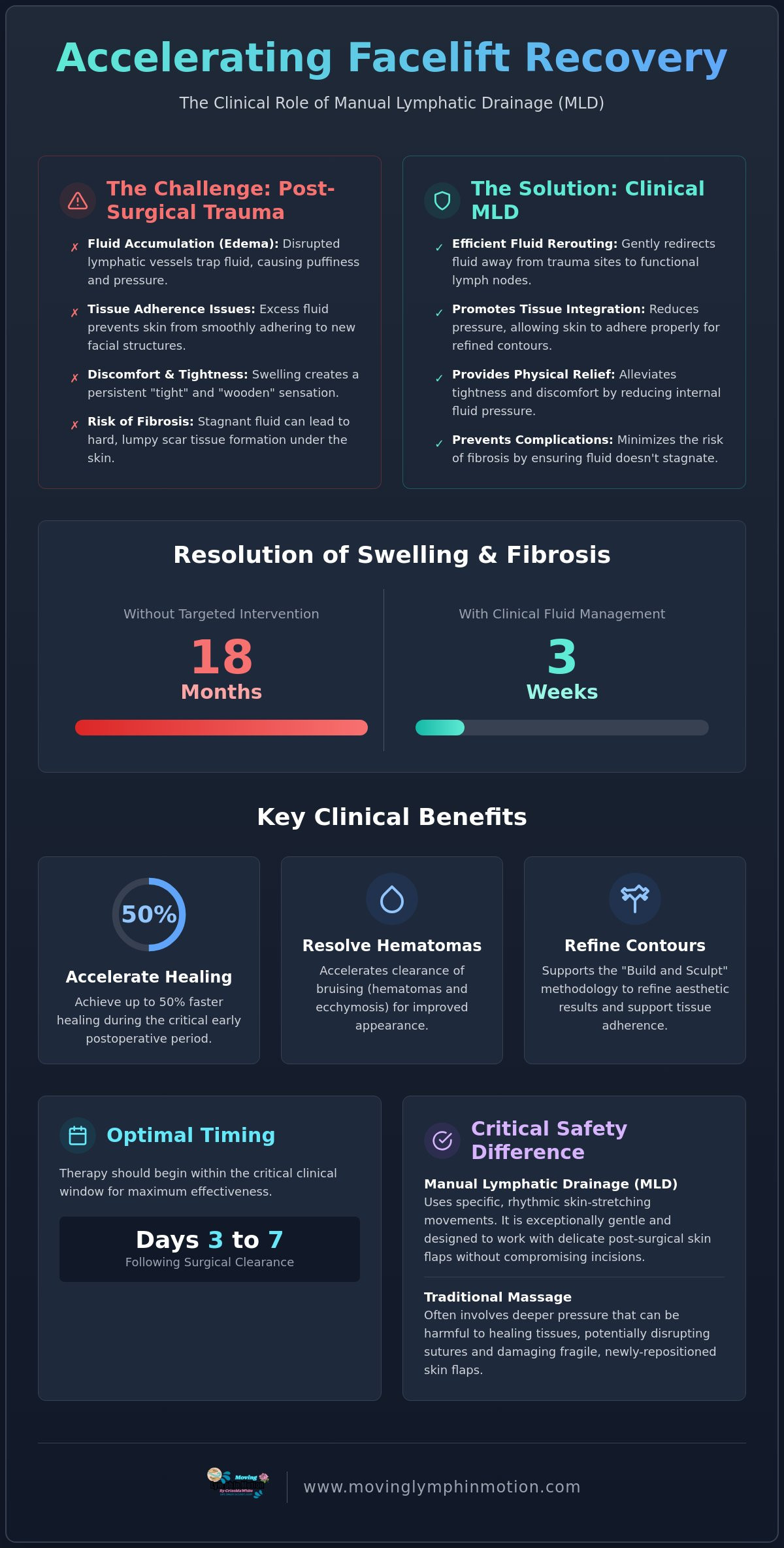
Did you know that without targeted intervention, post-operative swelling and fibrosis can persist for up to 18 months, while clinical fluid management often resolves these issues in as little as three weeks? It's common to feel a sense of distress when your initial reflection reveals significant puffiness and bruising rather than the refined contours you anticipated. This guide explains how specialized lymphatic drainage for facelift recovery Georgetown patients utilize can accelerate your healing by up to 50% during the early postoperative period.
We understand the anxiety that comes with managing delicate skin flaps and incisions while navigating the persistent "tight" sensations of surgical edema. By implementing a precise, manual approach to fluid dynamics, we can encourage the skin to adhere more efficiently to new facial structures and protect the integrity of your surgical results. You'll discover the anatomical reasons behind post-surgical swelling and receive a clear, evidence-based recovery timeline to help you return to your social life with confidence and clinical clarity. This methodical approach ensures your transition from the operating room to your daily routine is both safe and highly organized.
Key Takeaways
- Understand how surgical trauma disrupts facial fluid dynamics and why clinical intervention is necessary to manage post-operative edema.
- Learn how specialized lymphatic drainage for facelift recovery Georgetown accelerates the clearance of hematomas and prevents the formation of fibrosis along the jawline.
- Discover the critical safety differences between manual lymphatic drainage and traditional massage to avoid compromising your healing skin flaps.
- Identify the optimal clinical window for beginning therapy, typically starting between days three and seven following surgical clearance.
- Explore how the "Build and Sculpt" methodology integrates with post-operative care to refine your aesthetic contours and support tissue adherence.
The Role of Lymphatic Drainage in Facelift Recovery
During a rhytidectomy, or facelift, a surgeon meticulously repositions facial tissues and removes excess skin to restore a youthful contour. This process involves making incisions and undermining the skin, which inevitably severs the superficial lymphatic vessels located just beneath the dermis. These delicate vessels are responsible for transporting interstitial fluid and cellular waste back into the venous system. When these pathways are compromised, fluid accumulates in the extracellular space, resulting in post-operative edema. This isn't merely a cosmetic side effect; it's a physiological response to surgical trauma that requires specific clinical management to ensure the best possible aesthetic outcome.
The body's natural drainage system cannot always clear this high-protein fluid efficiently on its own because the local "pipes" are temporarily offline. Without intervention, this fluid can stagnate, leading to prolonged inflammation and the potential for tissue hardening. Utilizing Manual Lymphatic Drainage (MLD) acts as a clinical necessity rather than a luxury. It provides a specialized method for fluid to exit the facial tissues while the primary vessels undergo the regeneration process, which can take several weeks or months.
Understanding Facial Edema and Tissue Adherence
Post-operative edema in the face creates significant hydrostatic pressure. This pressure exerts an outward force on the newly repositioned skin flaps, often placing unnecessary tension on delicate sutures and incisions. For the surgery to be successful, the skin must adhere smoothly and firmly to the underlying musculature and fascia. If excess fluid remains trapped between these layers, it acts as a physical barrier that prevents this critical adherence. In the context of lymphatic drainage for facelift recovery Georgetown specialists provide, the focus is on reducing this pressure to allow for optimal tissue integration. Post-facelift edema is the localized accumulation of fluid and inflammatory byproducts that, if left unmanaged, can distort final surgical contours and delay the healing of the skin-to-muscle interface.
The Biological Mechanism of Manual Drainage
Clinical MLD utilizes a specific, rhythmic touch to stimulate the "initial lymphatics," which are the tiny entry points of the lymphatic system. By applying precise, skin-stretching movements, the therapist manually opens these portals to increase fluid uptake. This process effectively reroutes lymph fluid away from the surgical trauma sites toward functional lymph nodes in the neck and clavicular region. This rerouting is essential during the initial weeks when the original pathways are still healing. Furthermore, these gentle techniques stimulate the parasympathetic nervous system, shifting the body from a "fight or flight" stress response into a restorative state. This neurological shift is vital for cellular repair and overall recovery speed, making lymphatic drainage for facelift recovery Georgetown a foundational element of a sophisticated post-operative protocol.
Clinical Benefits: Why Manual Drainage is Essential for Facial Contouring
The aesthetic success of a facelift depends largely on how the tissues settle during the inflammatory phase. While the surgeon's skill sets the foundation, the recovery protocol determines the final refinement. One of the most immediate benefits of specialized lymphatic drainage for facelift recovery Georgetown is the accelerated resolution of hematomas and ecchymosis. These terms refer to the pooling of blood and the subsequent bruising that often discolors the face and neck. By gently stimulating the lymphatic system, we facilitate the removal of these stagnant fluids and cellular debris. This process doesn't just improve your appearance; it reduces the metabolic load on the healing tissues. As Cleveland Clinic explains lymphatic drainage, the technique assists the body in maintaining proper fluid balance and immune function, which is critical when the face is in a state of high-alert repair.
Patients frequently report a distressing "tight" or "wooden" sensation in the weeks following surgery. This discomfort is often caused by the pressure of interstitial fluid pushing against nerves and newly sutured skin. MLD provides a non-invasive way to alleviate this pressure, offering a sense of physical relief that traditional pain management may not fully address. By reducing this internal tension, the skin is allowed to settle naturally over the new surgical architecture without being strained by persistent edema.
Preventing Fibrosis and Scar Tissue Complications
Post-operative fibrosis occurs when chronic swelling triggers an overproduction of collagen, leading to the formation of hard, tethered tissue beneath the skin. In facial surgery, this often manifests as "lumpiness" along the jawline or behind the ears. MLD prevents these complications by ensuring that fluid doesn't stagnate long enough to initiate a fibrotic response. Research indicates that with clinical fluid management, post-operative swelling and fibrosis can resolve in as little as three weeks, compared to the 9 to 18 months it might take without intervention. Maintaining tissue suppleness is essential for a natural-looking result, as it allows the skin to move fluidly with your facial expressions rather than appearing rigid or fixed.
Intraoral Buccal Massage as a Recovery Tool
As you progress into stage-two recovery, usually after the initial acute phase has subsided, we may introduce buccal massage Austin techniques. This intraoral approach allows us to address internal swelling and muscle tension from within the oral cavity. It's particularly effective for patients experiencing stiffness in their smile or tension in the masseter muscles due to surgical trauma. This specialized work ensures that both the superficial and deep layers of the face recover with equal precision. If you're ready to transition from acute swelling to refined contouring, you can request a professional consultation to determine the best timing for your sessions.
MLD vs. Traditional Massage: Protecting Your Surgical Investment
Distinguishing between manual lymphatic drainage and traditional massage is vital for protecting your surgical investment. Many patients mistakenly assume that any "light" touch qualifies as lymphatic work. However, clinical MLD involves a specific skin-stretching technique designed to move fluid through the superficial vessels without compressing them. Traditional massage focuses on muscle manipulation, which requires a depth of pressure that is entirely inappropriate for a recovering face. Applying deep or aggressive pressure can lead to the mechanical detachment of healing skin flaps, potentially resulting in tissue necrosis or visible contour irregularities.
Using the wrong technique doesn't just risk tissue damage; it can actually increase inflammation. Aggressive movements stimulate blood flow to the area, which is counterproductive when the goal is to reduce fluid volume and calm the tissues. This is why choosing specialized lymphatic drainage for facelift recovery Georgetown is a safety decision as much as an aesthetic one. A specialist understands that the lymphatic system is delicate and sits directly beneath the skin's surface. We prioritize the preservation of your surgeon's work by avoiding any movement that could shear the healing layers.
The "No Pressure" Rule for Post-Op Faces
The primary difference lies in the target tissue. While Swedish or deep tissue massage aims to release muscular knots through kneading and friction, MLD targets the interstitial fluid through rhythmic, directional strokes. Heavy pressure can easily rupture fragile new capillaries that are attempting to re-establish blood supply to the surgical area. Traditional massage is strictly contraindicated during the acute recovery phase of a facelift because it threatens the structural integrity of the surgical site and can cause secondary trauma.
Qualifications Matter: Choosing a Specialist in Georgetown
Not all practitioners possess the training required to handle complex post-operative cases. When searching for a manual lymph drainage therapist, it's essential to verify their clinical certifications. A Certified Lymphedema Therapist (CLT) undergoes a minimum of 135 hours of specialized training, while a Certified Manual Lymphatic Drainage Therapist (CMLDT) completes at least 40 hours of classroom education. At Best Lymphatic Specialist, we maintain these high clinical standards to ensure that every session is safe and evidence-based. This level of expertise is necessary to navigate the specific anatomical changes that occur after a rhytidectomy. Relying on a generalist for lymphatic drainage for facelift recovery Georgetown can lead to suboptimal results or avoidable complications. Your face requires an observant, highly skilled clinical partner who understands the nuance of fluid dynamics.
The Post-Op Timeline: When to Start Therapy in Georgetown
Timing is a critical variable in physiological recovery. To achieve the 50% quicker recovery time associated with early clinical intervention, the application of lymphatic drainage for facelift recovery Georgetown must align with the body's natural inflammatory cycle. While every patient's biological response varies, we follow a structured, evidence-based timeline to manage fluid dynamics from the acute phase through to final tissue remodeling. This phased approach ensures that we don't disrupt the initial clotting process while still addressing the peak of post-surgical edema.
- Initial Phase (Days 3–7): Once your surgeon provides clearance, we begin with exceptionally gentle fluid redirection. This phase focuses on alleviating the pressure that peaks around the 72-hour mark, providing comfort and reducing the metabolic load on healing tissues.
- Secondary Phase (Weeks 2–4): As the primary swelling begins to subside, our focus shifts to resolving residual puffiness and monitoring for early signs of fibrosis. We work to ensure the skin adheres smoothly to the underlying facial structures.
- Maintenance Phase (Month 2+): During this period, the focus is on final sculpting and refinement. We often integrate techniques like buccal massage to address any deep-seated stiffness and ensure the tissues remain supple and natural-looking.
Coordinating with Your Surgical Team
Success in post-operative care requires seamless communication with your surgical team. We prioritize protocol alignment with local Central Texas surgeons to ensure our manual techniques complement their specific surgical approach. The first 72 hours are vital for managing the peak of the inflammatory response. We address common clinical concerns, such as the distinction between managing closed wounds versus active incision drainage, ensuring that every movement supports the structural integrity of your results. By maintaining this professional dialogue, we provide a recovery environment that is both safe and highly specialized.
Frequency of Sessions for Optimal Results
The frequency of your visits is determined by the extent of your procedure and your body's specific rate of fluid clearance. For a full rhytidectomy, we typically recommend two to three sessions per week during the first 14 days. This intensive schedule is necessary to keep the lymphatic pathways open while the body is in a high-production state of interstitial fluid. For a mini facelift, the frequency may be lower, as the surgical trauma is less extensive. As the primary edema resolves, we taper the frequency of sessions. You can schedule your initial post-op assessment to establish a customized frequency plan that matches your surgical timeline and healing goals.
Specialized Recovery at Best Lymphatic Specialist
Criselda White’s clinical approach at Best Lymphatic Specialist is rooted in a deep understanding of facial anatomy and the complex fluid dynamics that follow a rhytidectomy. We don't view recovery as a passive waiting period but as an active, managed phase of surgical success. Central to this is our "Build and Sculpt" philosophy. This methodology transcends simple fluid removal; it focuses on the structural refinement of facial tissues by ensuring that post-surgical edema doesn't compromise the final contours. By integrating these specialized techniques, we ensure that the transition from acute post-operative swelling to long-term facial health is seamless and evidence-based. This clinical partnership provides the steady guidance needed to navigate the complexities of physical healing with professional confidence.
Our environment is strictly clinical and private. We recognize that post-operative patients require a setting that prioritizes both safety and discretion during a vulnerable phase of their recovery. This isn't a general wellness spa; it's a dedicated therapeutic space where the focus remains entirely on your physiological results. As you move beyond the initial weeks of healing, we empower you with clinical-grade education. This specialized knowledge allows you to understand the metabolic processes behind every movement, ensuring you're an active participant in your own recovery journey while protecting the integrity of your surgical investment.
A Tailored Protocol for Every Patient
No two surgical outcomes are identical, which is why we conduct a comprehensive anatomical assessment at every post-op lymphatic drainage Austin session. We meticulously evaluate your specific bruising patterns, the texture of the subcutaneous tissue, and the localization of swelling. This allows us to adjust our manual techniques in real-time based on your body's unique response to the procedure. For instance, if one side of the jawline shows signs of early tethering or persistent fluid retention, we adapt the protocol to prioritize that area. This level of individualized attention is what distinguishes lymphatic drainage for facelift recovery Georgetown at our clinic. We don't follow a standardized, mass-market script; we follow your body's unique biological signals.
Booking Your Recovery in Georgetown
Our clinic is conveniently located near major local landmarks, including the historic Georgetown Square and the Southwestern University area, making it easily accessible for residents throughout the region. We've streamlined our scheduling through a secure online portal to ensure that coordinating your recovery is as stress-free as possible. Securing specialized lymphatic drainage for facelift recovery Georgetown ensures that your healing process is guided by clinical expertise rather than guesswork. We recommend booking your sessions in advance to align with your surgeon's post-operative timeline. If you're ready to protect your surgical investment and accelerate your healing, you can schedule your clinical recovery session on Vagaro.
Securing Your Aesthetic Investment
Your surgical journey doesn't end when you leave the operating room; it evolves during the critical weeks of tissue remodeling. By prioritizing clinical precision over recreational massage, you protect the delicate work of your surgeon and ensure your skin adheres perfectly to its new contours. We've explored how specialized lymphatic drainage for facelift recovery Georgetown provides a methodical path to reducing edema, preventing fibrosis, and restoring facial suppleness. Utilizing a phased approach that transitions from acute fluid management to intraoral buccal massage allows for a level of refinement that standard recovery protocols often overlook.
As a Certified Manual Lymphatic Drainage Specialist, we coordinate recovery protocols directly with Central Texas surgeons to maintain the highest safety standards. Whether you're managing early-stage inflammation or seeking final facial sculpting, our evidence-based methodology supports every stage of your healing. You don't have to navigate the complexities of post-surgical swelling alone. We act as your clinical partner, ensuring your results are as vibrant and natural as intended. Book Your Clinical Facelift Recovery Session today to begin your tailored healing journey. We look forward to supporting your path to a refined and comfortable recovery.
Frequently Asked Questions
Is lymphatic drainage painful after a facelift?
Manual lymphatic drainage is a non-invasive, painless technique that utilizes extremely light, rhythmic pressure. Since the goal is to stimulate the superficial lymphatic vessels rather than the underlying musculature, the touch is soothing and gentle. Many patients find the process deeply relaxing, as it shifts the body into a restorative parasympathetic state. It's specifically designed to alleviate the "tight" discomfort of post-operative edema without causing further trauma to sensitive surgical sites.
How many sessions of MLD will I need for my facelift recovery?
Most patients require an initial series of two to three sessions per week for the first 14 days to manage peak inflammation. This frequency ensures that stagnant fluid is consistently moved through the system while the body's natural drainage pathways are regenerating. As the primary swelling resolves, we typically taper sessions to once per week. The total duration of therapy is individualized, often ranging from three weeks to several months depending on the surgical extent.
Can I perform lymphatic drainage on myself at home?
We strongly advise against performing self-directed lymphatic drainage during the acute recovery phase. The structural integrity of healing skin flaps is delicate, and improper pressure or direction can lead to mechanical detachment or increased inflammation. While we provide clinical-grade education for safe at-home care, the manual redirection of fluid around surgical trauma sites requires the specialized training of a certified professional to ensure the safety of your surgical investment.
Will lymphatic drainage help with the bruising on my neck?
Yes, lymphatic drainage for facelift recovery Georgetown is highly effective for accelerating the resolution of hematomas and ecchymosis on the neck. By facilitating the removal of trapped blood cells and metabolic waste from the interstitial space, MLD reduces the visible duration of bruising. This process encourages a faster return to social activities by clearing the discoloration that often settles in the neck and jawline area due to gravity and surgical trauma.
What is the difference between buccal massage and MLD for facelift recovery?
The primary difference lies in the anatomical approach and the depth of the tissue work. MLD is an external technique focused on the superficial lymphatic system located just beneath the skin. Buccal massage is an intraoral technique that addresses deep-seated muscle tension and internal swelling from inside the oral cavity. While MLD is essential for early-stage edema, buccal massage is a stage-two tool used for refined sculpting and resolving stiffness in the smile.
Can MLD help if I had my facelift several months ago and still feel tight?
MLD can still be beneficial months after surgery if you are experiencing persistent tightness or "lumpiness." This sensation is often caused by post-surgical fibrosis, where chronic swelling has led to the formation of tethered scar tissue. Clinical fluid management can help soften these areas and improve tissue suppleness even in the maintenance phase. We assess the current state of your tissue to determine if MLD or intraoral techniques are best suited for your long-term goals.
Is MLD safe if I still have drains or sutures in place?
MLD is safe and often recommended while drains or sutures are still in place, provided it's performed by a certified specialist. We meticulously work around incisions and drain sites, focusing on redirecting fluid toward functional lymph nodes without disturbing the surgical hardware. This early intervention helps prevent fluid from accumulating around the drains, which can improve overall comfort and support the initial healing of the skin-to-muscle interface.
Does my plastic surgeon need to refer me for lymphatic drainage?
While a formal referral isn't always required, we prioritize clinical coordination with your plastic surgeon. We ensure our protocols align with their specific surgical instructions and wait for their clearance before beginning lymphatic drainage for facelift recovery Georgetown. This collaborative approach ensures that your recovery is seamless and that any specific concerns regarding your incisions or healing progress are addressed within a professional, evidence-based framework. We maintain open communication to ensure your safety.