For licensed practitioners in Texas, the path to specializing in Manual Lymphatic Drainage (MLD) is a significant professional evolution. It represents a move from general wellness into the precise, clinical world of post-operative recovery and lymphedema management. However, navigating the landscape of certifications can be confusing, with a stark difference between superficial "lymphatic massage" workshops and rigorous, professional MLD training.
This guide provides a clear roadmap for Texas massage therapists, estheticians, and healthcare professionals. We will explore the clinical standards, anatomical depth, and career advantages of pursuing a legitimate MLD certification that is respected by medical providers and tailored to the unique demands of the Central Texas market.
What Defines Professional MLD Training in Texas?
Professional Manual Lymphatic Drainage is a highly specific, medical-grade therapeutic intervention designed to manage and redirect fluid in the body. Unlike a conventional massage, its primary goal is not muscle relaxation but the gentle stimulation of the lymphatic system, a critical component of immunity, fluid balance, and post-surgical healing. True professional training focuses on this distinction from day one.
- Defining MLD as a Clinical Intervention: It is a targeted therapy that requires a deep understanding of the lymphatic system’s structure and function to safely manage conditions like lymphedema and post-operative edema.
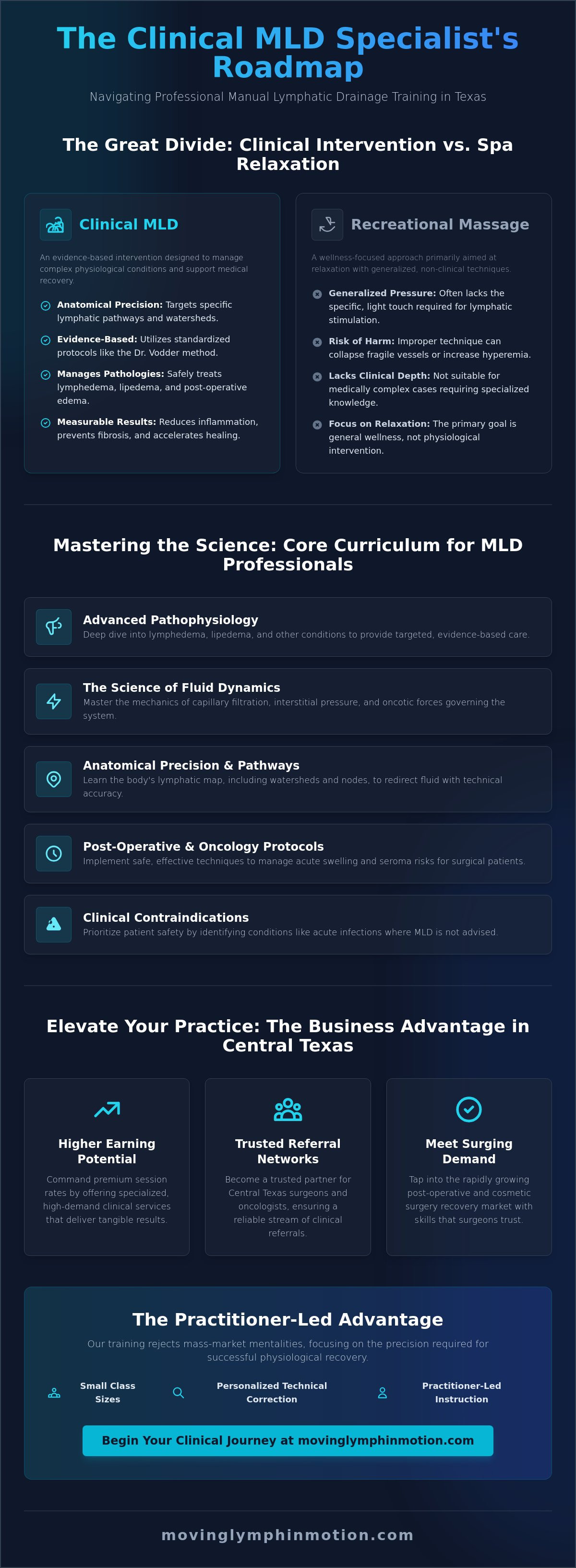
- "Lymphatic Massage" vs. Clinical MLD: The term "lymphatic massage" often refers to a light-pressure, wellness-focused modality. Clinical MLD, in contrast, is a precise sequence of manual techniques based on anatomical pathways to achieve specific physiological outcomes.
- The Vodder Technique as the Gold Standard: Developed by Drs. Emil and Estrid Vodder, this technique is the foundational method taught in most credible certification programs. Its gentle, rhythmic, and precise strokes are designed to stimulate lymphatic vessels without increasing blood circulation, which is critical for compromised tissues.
- The Role of the Lymphatic System: Comprehensive training covers how this system underpins healing by removing cellular waste, proteins, and excess fluid from the body's tissues, especially after trauma or surgery.
The Clinical vs. Recreational Divide
The core difference lies in intent and precision. Spa-grade lymphatic techniques, while relaxing, are insufficient and potentially harmful for post-operative or lymphedema patients. Professional MLD requires anatomical accuracy to manipulate fluid toward viable lymph nodes, a skill that demands extensive hands-on training. The pressure, direction, and rhythm are meticulously calibrated to support fragile tissues, not just promote general wellness.
The Evolution of Lymphatic Education
As cosmetic surgery has become more advanced, so has the demand for specialized post-operative care. Professional MLD training in Texas has evolved to meet this need, moving beyond basic theory to include evidence-based protocols for procedures like Lipo 360 and BBLs. This clinical focus ensures therapists can effectively prevent complications like fibrosis and support a surgeon’s recovery plan. For more detail on this process, explore the clinical science of recovery through lymphatic drainage.
Core Curriculum: Mastering the Science of Fluid Dynamics
A professional MLD curriculum is rooted in science. It goes far beyond learning strokes to instill a deep understanding of the body's fluid systems and the pathologies that affect them. This knowledge is what separates a technician from a true clinical therapist.
- Advanced Anatomy and Physiology: In-depth study of the lymphatic, integumentary, and cardiovascular systems and how they interact.
- Pathophysiology of Edema: Understanding the mechanisms behind different types of swelling, including lymphedema, lipedema, and post-traumatic edema.
- Mastery of Vodder Strokes: Detailed, hands-on instruction in the four foundational techniques: stationary circles, pump, scoop, and rotary strokes.
- Indications and Contraindications: Learning to identify when MLD is appropriate and, more importantly, when it is unsafe, such as in cases of acute infection, thrombosis, or certain cardiac conditions.
Anatomical Precision in MLD
Effective MLD is impossible without a precise mental map of the lymphatic system. Training focuses on identifying lymphatic "watersheds"—the boundaries that separate drainage territories—and locating the key clusters of lymph nodes, or "catchments," that serve as primary drainage sites. Students learn to manually stimulate these areas and direct fluid across watersheds when necessary, a technique crucial for patients who have had lymph nodes removed or damaged.
The Four Pillars of the Vodder Technique
The Vodder technique is built on a foundation of four distinct strokes, each with a specific purpose. The curriculum breaks down the application, pressure, and rhythm of each one. A key principle is that the pressure must be just enough to stretch the skin and stimulate the superficial lymphatic capillaries without compressing them. The clinical "cadence"—the slow, rhythmic sequence of the session—is essential for encouraging the natural, wave-like contractions of the lymphatic vessels.
Texas Certification Standards and CEU Requirements
For Licensed Massage Therapists in Texas, ensuring your specialty training meets state requirements is crucial for your license renewal and professional standing. Understanding the regulatory landscape helps you invest in a certification that is both legitimate and valuable.
- Navigating TDLR Requirements: The Texas Department of Licensing and Regulation (TDLR) governs the practice of massage therapy in the state. Continuing education is a mandatory part of license renewal.
- Understanding Texas CE Provider Approval: For CEUs to be accepted by the TDLR, they must be provided by an instructor or school with TDLR-approved provider status. Always verify this before enrolling in a course.
- The Path to Advanced Certification: A professional journey often begins with a foundational MLD certification course, followed by advanced training in specific areas like post-operative care or lymphedema management.
Verifying Your Training Provider
The quality of your education depends entirely on your instructor. Look for a provider who is not just a teacher but an active clinical practitioner. A "certificate of completion" from a weekend workshop is not the same as a "certification" from a comprehensive, clinically focused program. An instructor's credentials should be transparent. For example, our instructor, Criselda White, is a TDLR-approved Continuing Education Provider, a Certified Lymphedema Therapist and Certified Cosmetic Surgery Therapist through the Norton School of Lymphatic Studies, and a Certified Manual Lymphatic Drainage Therapist through Klose Training.
Maintaining Your Professional Credentials
Once certified, MLD specialization becomes an integral part of your professional development. You must factor your MLD training into your LMT renewal cycle with the TDLR. Furthermore, specializing in clinical work like oncology or post-surgical recovery necessitates a review of your professional liability insurance to ensure you have adequate coverage for these advanced modalities.
The Business Case for MLD Specialization in Central Texas
Specializing in clinical MLD is a strategic business decision, particularly in the thriving Central Texas corridor. The demand for qualified therapists is rapidly outpacing supply, creating a significant opportunity for practitioners ready to elevate their skills.
- High Demand in Austin, Cedar Park, and Georgetown: This region is a major hub for cosmetic surgery, creating a consistent need for skilled post-operative care specialists.
- Increased Earning Potential: As a specialized clinical service, MLD commands higher session rates than general massage, reflecting the advanced training and tangible results it provides.
- Building a Niche and Referral Network: Certification allows you to transition from a generalist to a sought-after lymphatic specialist. This positions you to build a strong referral network with local plastic surgeons, oncologists, and physical therapists.
The Post-Cosmetic Surgery Boom
Procedures like Lipo 360, BBLs, and Mommy Makeovers are extremely common in the Austin area. Surgeons increasingly rely on certified MLD therapists as a standard part of their post-operative recovery protocols. Your role is to accelerate healing, reduce swelling and bruising, and—most critically—help prevent the formation of fibrosis (hard scar tissue) and seromas (fluid pockets), ensuring a smoother, more aesthetically pleasing surgical outcome.
Client Retention through Clinical Results
The results of professional MLD speak for themselves. When patients experience faster, more comfortable recoveries, they become loyal clients and your best source of referrals. Your ability to create multi-session treatment plans for acute post-op care, and then transition clients to long-term lymphatic maintenance, builds a sustainable and rewarding practice. Providing this level of professional, results-oriented care has a profound positive impact on a patient's physical and emotional recovery journey.
Training with Lymph in Motion: The Practitioner-Led Advantage
Choosing where to get your professional MLD training in Texas is a critical decision. At Lymph in Motion, we offer a unique, practitioner-led educational experience that bridges the gap between textbook theory and real-world clinical practice.
- Direct Education from Criselda White: Learn directly from a practicing clinical expert with credentials from top-tier institutions like the Norton School and Klose Training.
- Small Class Sizes: Our intimate learning environment ensures every student receives personalized, hands-on correction to perfect their technique.
- Real-World Case Studies: The curriculum is enriched with case studies drawn from a high-volume post-operative practice right here in Central Texas.
- Post-Certification Support: Graduates join a professional community, gaining access to ongoing mentorship and support as they build their own clinical practices.
Why a Practitioner-Led Course Matters
Learning from an instructor who is actively treating patients in the Austin post-op landscape provides an unparalleled advantage. You gain insights into the specific challenges and protocols relevant to the local surgical community. This approach moves beyond generic MLD to teach exclusive techniques for fibrosis prevention and aesthetic sculpting, equipping you with the skills surgeons and patients are actively seeking.
Next Steps for Texas Professionals
Embarking on your clinical MLD journey is a commitment to excellence. It requires dedication, precision, and a passion for facilitating healing. If you are a licensed professional ready to elevate your practice and meet the growing demand for specialized lymphatic therapy, we invite you to take the next step.
- Review our upcoming course dates in the Austin area.
- Ensure you meet the prerequisites for enrollment, including a valid Texas professional license.
- Apply to begin your journey toward becoming a certified MLD practitioner.
View our upcoming MLD certification courses and secure your spot.
Frequently Asked Questions
- Do I need to be a Licensed Massage Therapist to take MLD training in Texas?
Typically, professional MLD certification courses require you to be a licensed healthcare professional, such as a Licensed Massage Therapist (LMT), Registered Nurse (RN), Physical Therapist (PT), or Occupational Therapist (OT). Specific prerequisites may vary by provider. - How long does it take to become a Certified Manual Lymphatic Drainage practitioner?
Foundational certification courses typically involve 40-50 hours of intensive training, blending online theory with in-person, hands-on practice. Advanced certifications, like those for lymphedema, can require 135 hours or more. - Are online-only MLD certification courses recognized in Texas?
While online modules for theory are common, MLD is a hands-on skill that cannot be mastered without in-person instruction. Reputable programs use a hybrid model, and the TDLR requires hands-on training for many CEU-approved courses. Be wary of certifications that are 100% online. - What is the difference between MLD and Complete Decongestive Therapy (CDT)?
MLD is one of the four components of CDT. CDT is the comprehensive gold-standard treatment for lymphedema and includes MLD, compression bandaging, remedial exercises, and meticulous skin care. MLD training is the first step toward becoming a certified lymphedema therapist. - Can I use MLD training for my required Texas LMT continuing education units?
Yes, provided the course is offered by a TDLR-approved CE provider. Always verify the provider’s status with the TDLR before enrolling to ensure the hours will count toward your license renewal. - What kind of equipment do I need to start an MLD practice after training?
An MLD practice requires minimal specialized equipment. A high-quality, comfortable massage table is essential. Other supplies may include gentle, hypoallergenic lotions or powders (though many techniques are performed on dry skin), and eventually, compression bandaging supplies if you pursue full CDT certification. - Will this training prepare me to work with post-cosmetic surgery patients specifically?
Our foundational course provides the essential MLD skills, and our curriculum is heavily focused on the post-operative applications most relevant to the Central Texas market. We teach the specific protocols needed to manage recovery from procedures like liposuction, tummy tucks, and BBLs. - How much can a certified MLD therapist expect to earn in the Austin area?
While rates vary, certified MLD specialists in the Austin area typically charge significantly more per session than general massage therapists due to the clinical nature and high demand for the service. Rates can often range from $120 to $180+ per hour.


