
While many consider post-operative fibrosis a complication, clinical data from 2025 suggests it is nearly universal in the months following liposuction. For many practitioners in Central Texas, the transition from general wellness to managing these complex physiological states feels like a daunting leap. You likely recognize that the local massage market is increasingly saturated, leaving skilled therapists searching for a way to distinguish their practice through specialized expertise. It's common to feel a lack of confidence when faced with the delicate fluid dynamics and hardened tissue of a post-surgical patient.
Securing an advanced mld certification Austin program provides the technical foundation to manage these tissue states with medical-grade precision. This specialized training empowers you to command higher rates while ensuring patient safety through evidence-based protocols. This guide examines the 2026 Texas regulatory landscape, including the 12-hour continuing education requirements, and outlines the specific clinical pathways that move your practice beyond recreational touch into the realm of specialized surgical recovery.
Key Takeaways
- Understand why general massage techniques are insufficient for the complex physiological demands of post-cosmetic surgery recovery.
- Gain technical insight into the anatomy of the lymph vascular network and the specific pathophysiology of surgical trauma.
- Evaluate the differences between Vodder-based methodologies and hybrid models when selecting an advanced mld certification Austin program.
- Learn clinical protocols to identify early signs of fibrosis and implement therapeutic strategies to prevent long-term tissue hardening.
- Discover the strategic steps to transition your practice into a clinical recovery hub through professional referral networks in Central Texas.
Why Advanced MLD Specialization is Essential for Austin Practitioners
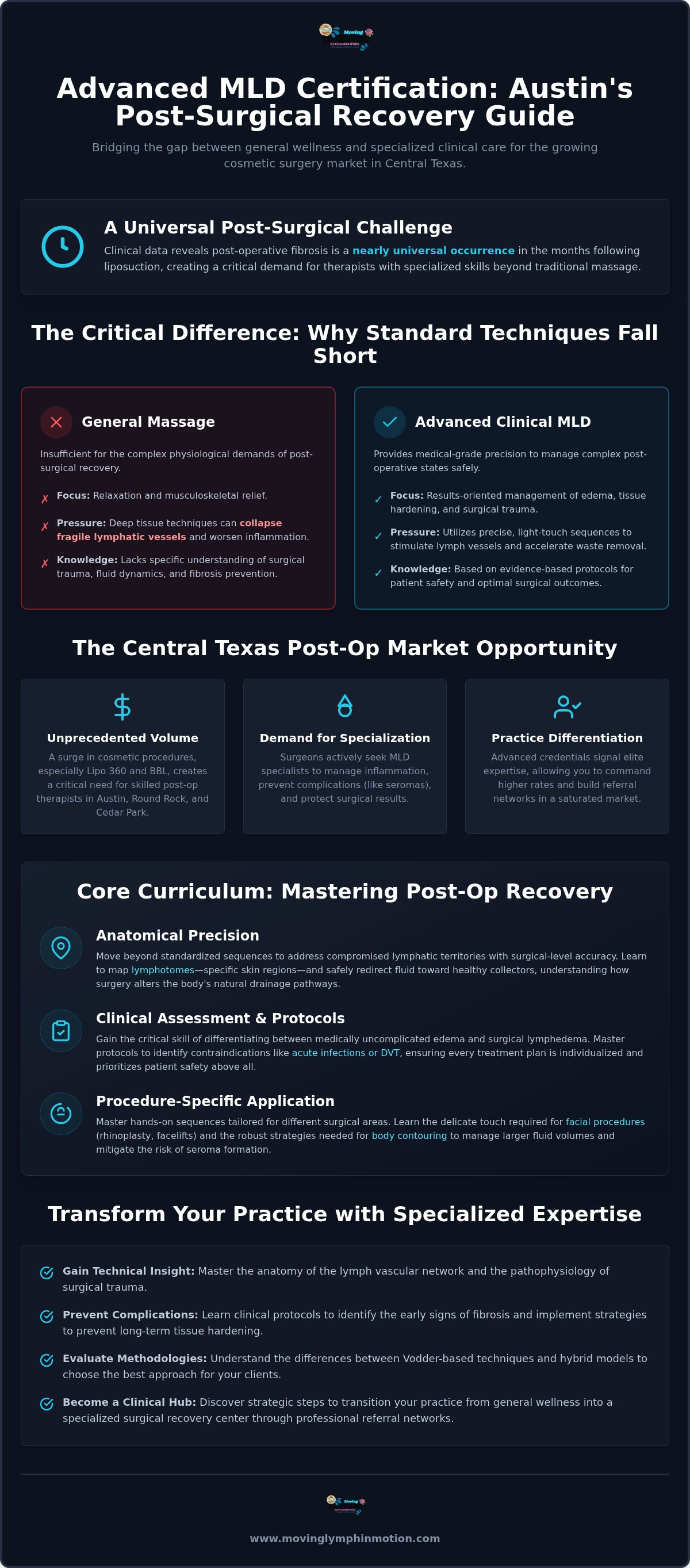
Central Texas is seeing an unprecedented volume of cosmetic procedures, particularly Lipo 360 and BBL. This surge creates a critical need for clinicians who understand the specific pathophysiology of surgical trauma. While general massage therapy focuses on relaxation and musculoskeletal relief, it lacks the technical depth required to manage post-operative edema. Pursuing an advanced mld certification Austin program allows practitioners to bridge this gap, moving from a wellness-focused approach to a results-oriented clinical standard. It's a transition from being a service provider to becoming a vital partner in a patient's medical recovery team.
The Austin Post-Op Market Landscape
The demand in Austin, Round Rock, and Cedar Park isn't just about volume; it's about complexity. Patients undergoing high-definition body contouring or rhinoplasty face significant inflammatory responses that require expert intervention. Surgeons in the region increasingly seek specialists who can provide medical-grade Manual Lymphatic Drainage (MLD) to ensure the surgical result isn't compromised by persistent swelling. Without specific credentials, a therapist may inadvertently cause harm or fail to recognize early signs of complications like seromas. Specialized credentials differentiate your practice in a competitive region, signaling to both patients and surgeons that you possess the specialized knowledge to handle high-stakes recovery cases.
Physiological Benefits of Clinical MLD
Surgical trauma disrupts the superficial lymph vascular network, leading to localized fluid stagnation and increased interstitial pressure. This isn't a state that benefits from deep tissue work; in fact, excessive pressure can collapse fragile lymphatic vessels. Clinical MLD utilizes precise, light-touch sequences to stimulate these vessels and accelerate the removal of metabolic waste. By optimizing these drainage processes, you actively reduce the patient's recovery timeline and minimize the risk of chronic inflammation. You can explore the mechanics of these protocols further in our Post-Op Lymphatic Drainage in Austin: A Clinical Guide. This methodology ensures that the aesthetic goals of the surgery are met while prioritizing the patient's physiological safety. For Lipo 360 and BBL patients, an advanced mld certification Austin provides the anatomical knowledge to navigate risks like contour irregularities with confidence.
Core Curriculum: Mastering Manual Lymphatic Drainage for Post-Op Recovery
A rigorous clinical curriculum transcends basic stroke patterns to address the complex physiological changes following invasive surgery. Practitioners must develop a sophisticated understanding of both the superficial and deep lymph vascular networks to effectively manage post-operative recovery. Mastering these concepts is the cornerstone of any reputable advanced mld certification Austin program. This education ensures that every manual application is rooted in anatomical fact rather than general wellness theory. Precision is paramount. When a surgeon alters the natural landscape of the body, the lymphatic system must find new pathways to maintain homeostasis.
Anatomical Precision in MLD
Effective drainage after procedures like liposuction or abdominoplasty requires more than a standardized sequence; it demands an understanding of compromised lymphatic territories. Clinicians learn to map lymphotomes, which are specific skin regions drained by the same group of regional lymph nodes. Surgery often disrupts these boundaries, requiring the therapist to redirect fluid toward healthy, functional collectors. Lymph formation occurs when interstitial fluid enters the initial lymphatic capillaries; this process is essential for regulating tissue pressure and mobilizing proteins that would otherwise cause stagnation. By understanding these fluid dynamics, you can safely navigate areas of high inflammation without causing further vascular stress.
Clinical Assessment and Protocols
A critical component of advanced training involves differentiating between medically uncomplicated edema and surgical lymphedema. While post-op swelling is expected, its mismanagement can lead to chronic issues. Clinicians must identify specific indications for early intervention while remaining vigilant for contraindications such as acute infections or deep vein thrombosis. You can find more details on these distinctions in our Manual Lymphatic Drainage Certification: A Clinical Guide. Developing individualized treatment strategies based on the specific surgical technique used is vital for patient safety.
Hands-on application remains the heart of the curriculum. Students practice specific sequences tailored for facial procedures, such as rhinoplasty or facelifts, where delicate tissue requires a specialized touch. Body procedures require a different approach to address larger volumes of fluid and the risk of seroma formation. This methodical approach ensures that you provide a sense of safety and expertise to individuals navigating the complexities of physical recovery. If you are ready to elevate your practice, exploring professional MLD education is the next logical step. Pursuing an advanced mld certification Austin through a clinical lens prepares you to handle the most challenging post-op cases with quiet confidence.
Comparing MLD Certification Programs in Central Texas
Selecting an advanced mld certification Austin program requires a meticulous evaluation of clinical methodology and credentialing weight. While many courses offer continuing education credits, few provide the technical depth needed to manage surgical trauma effectively. Practitioners must distinguish between a weekend workshop and a comprehensive certification that prepares them for the complexities of the Central Texas cosmetic recovery market. This choice isn't merely about proximity; it's about the clinical validity of the techniques you'll apply to patients in high-stakes recovery phases.
The Vodder technique remains the gold standard in the industry, prioritized for its precision in stimulating the lymphatic system without collapsing delicate vessels. Other methodologies may exist, but the clinical community in Austin largely recognizes Vodder-based training as the benchmark for post-operative care. This recognition is vital when building a specialized practice, as it instills confidence in both patients and referring surgeons. The income potential for a specialist far exceeds that of a generalist, as you aren't just selling a service; you're providing a critical medical intervention that prevents long-term complications.
Certification Standards and Credibility
Clinical accreditation from organizations like Klose Training ensures that the curriculum meets rigorous medical standards. It's essential to understand that a certification signifies a higher level of competency than simple continuing education hours. While the Texas Department of Licensing and Regulation requires 12 hours of CE every two years, a professional MLD certification typically involves 40 to 45 contact hours of intensive study. This depth of training is what allows you to use the CMLDT designation, a credential that carries significant weight in medical environments. You can learn more about identifying these standards in our guide on Manual Lymph Drainage Therapists: Choosing a Specialist.
Local Training Opportunities
Austin professionals benefit from a variety of training models, ranging from five-day in-person intensives to hybrid formats. Hybrid models allow for the theoretical study of fluid dynamics and anatomy to be completed online, followed by focused, hands-on clinical practice in Austin or Round Rock. This practical component is where you refine the tactile sensitivity required for delicate post-rhinoplasty or body contouring recovery. Pursuing an advanced mld certification Austin through these local venues also provides an opportunity to network within the Central Texas surgical community. Evaluating instructor expertise is the final piece of the puzzle; ensure your mentors have deep roots in actual clinical recovery rather than just academic theory. This ensures your training is grounded in the reality of the current surgical landscape.
Clinical Standards and Prevention of Post-Surgical Fibrosis
Fibrosis represents a significant challenge in post-operative recovery, often manifesting as localized tissue hardening that can compromise surgical results. Clinical data from October 2025 confirms that post-liposuction fibrosis is nearly universal during the first few months, sometimes persisting for up to two years. An advanced mld certification Austin provides the expertise to identify these changes before they become permanent. By stimulating the lymphatic system, you prevent protein-rich fluid from stagnating and organizing into dense, fibrotic structures. The mechanical stimulation of the initial lymphatics facilitates the uptake of large protein molecules that cannot enter the venous capillaries. When these proteins remain in the interstitial space, they act as a scaffold for fibrotic growth, making early manual intervention essential.
The Fibrosis Prevention Protocol
Implementing a structured protocol ensures that you address inflammation before it transitions into chronic tissue changes. This systematic approach allows you to provide a sense of safety and expertise to individuals navigating the complexities of physical recovery. Most protocols follow these critical phases:
- Step 1: Early intervention timing. For procedures like liposuction and tummy tucks, clinical MLD often begins within 24 to 48 hours post-op, provided there's clearance from the surgical team.
- Step 2: Monitoring tissue density. You must systematically palpate for changes in tissue resistance and identify fluid accumulation zones that are prone to hardening.
- Step 3: Progressive pressure adjustments. Your manual sequences must evolve alongside the body's inflammatory timeline, moving from gentle drainage to more targeted mobilization as healing progresses.
Managing Surgical Complications
Seromas and secondary swelling require a specialized approach that moves beyond basic relaxation techniques. While you don't perform invasive drainage, your manual sequences help the body process localized fluid collections naturally through healthy lymphotomes. Coordinating care with Austin-based plastic surgeons ensures a seamless recovery journey and reinforces your role as a clinical partner. Post-operative fibrosis is the excessive accumulation of dense connective tissue following surgical trauma, often resulting in visible contour irregularities and restricted mobility. Identifying these complications early allows for immediate protocol adjustments.
Education remains a pillar of high-level clinical care. You must guide patients on the boundaries between professional intervention and home management, explaining how compression garments interact with lymphatic flow. Your advanced mld certification Austin training equips you to provide this specialized knowledge, ensuring patients don't inadvertently exacerbate their swelling through improper home care. This authoritative guidance instills confidence and ensures the long-term success of the surgical procedure.
Launching Your Specialized Lymphatic Practice with Lymph in Motion
Transitioning from a general practice to a clinical recovery hub requires a fundamental shift in both methodology and business operations. It involves moving away from the mass-market mentality of the general massage industry to offer high-precision, results-based therapy. Securing an advanced mld certification Austin is the catalyst for this evolution, providing the technical validity needed to operate as a specialist. At Best Lymphatic Specialist, we guide practitioners through this transition, emphasizing the importance of clinical authority in building a sustainable, high-demand practice. This isn't just a branding change; it's a commitment to a medical-grade standard of care.
Building robust referral networks with plastic surgeons in Austin, Cedar Park, and Georgetown is essential for long-term success. Surgeons prioritize patient safety and aesthetic outcomes; they require partners who understand the nuances of surgical trauma and can identify complications like seromas or early-stage fibrosis. By positioning yourself as a certified specialist, you become a trusted extension of the surgical team. This professional alignment allows you to move beyond competitive hourly rates into value-based packaging that reflects the specialized nature of post-operative care. Client retention naturally increases when patients see measurable physiological results during their recovery journey.
Professional Growth in Central Texas
While post-cosmetic recovery is a high-volume market in Central Texas, your specialized skills also apply to chronic conditions like lipedema and oncology-related swelling. A clinical practice thrives on versatility within the lymphatic specialty, allowing you to serve a diverse patient base with complex needs. You can also integrate advanced aesthetic protocols, such as Buccal Massage in Austin: A Clinical Guide, to offer intraoral facial sculpting for reconstructive or aesthetic patients. This diversification ensures your practice remains resilient while providing individualized attention to various patient populations navigating physical recovery.
Next Steps for Certification
To qualify for the 2026 advanced mld certification Austin cohorts, practitioners must hold a current license as a massage therapist, physical therapist, occupational therapist, or nurse. For Texas-based LMTs, this includes having completed at least 500 classroom hours of education from a TDLR-licensed school. Securing your spot in our upcoming intensives provides access to ongoing mentorship with Criselda White at Best Lymphatic Specialist, ensuring you have a steady guide throughout your clinical journey. This commitment to education empowers you to provide medical-grade care with the quiet confidence of a specialist who prioritizes physiological results over aesthetic fluff.
Elevating Your Clinical Practice in Central Texas
Transitioning from a general wellness practitioner to a clinical recovery specialist requires a dedicated commitment to anatomical precision. You've explored how specialized MLD protocols prevent the formation of dense fibrotic tissue and accelerate the body's natural healing timeline after invasive procedures. Securing an advanced mld certification Austin through our program ensures you meet the rigorous medical-grade therapeutic standards expected by the region's elite plastic surgeons. This credential isn't just about meeting state requirements; it's about mastering the technical skills necessary to manage the most complex post-op cases in Central Texas.
With direct clinical mentorship from Criselda White, you'll learn to navigate the specific challenges of Austin's high-volume cosmetic surgery niche. This specialized focus empowers you to command higher rates and build a practice rooted in evidence-based results. The path toward becoming a trusted clinical partner begins with a commitment to professional excellence and patient safety. We look forward to supporting your journey as you redefine the standard of care for surgical recovery in your community.
Frequently Asked Questions
What are the prerequisites for MLD certification in Austin?
Prerequisites for an advanced mld certification Austin program include a current professional license in a healthcare field such as massage therapy, physical therapy, occupational therapy, or nursing. For Texas massage therapists, this requires the completion of at least 500 classroom hours from a school licensed by the Texas Department of Licensing and Regulation (TDLR). These foundational hours ensure that practitioners possess the necessary understanding of anatomy and physiology before advancing to specialized lymphatic studies.
How long does the MLD practitioner certification course take to complete?
A standard MLD practitioner certification course generally requires 40 to 45 contact hours to ensure clinical competency. These intensives are typically conducted over five to five and a half days. This concentrated timeframe allows for a deep immersion into the technical precision required to stimulate the lymph vascular network effectively without causing tissue trauma.
Is MLD certification valid for massage therapists in Texas?
MLD certification is a recognized and highly valued credential for licensed massage therapists across the state. It directly contributes to the continuing education requirements mandated by the TDLR, which requires LMTs to complete 12 hours of CE every two years. Holding this certification signals a commitment to medical-grade standards that go beyond basic wellness training.
Can I specialize in post-cosmetic surgery recovery immediately after certification?
You can begin integrating lymphatic drainage into your practice immediately, though pursuing additional advanced training specifically for post-plastic surgery procedures is recommended for complex cases. These specialized modules provide the clinical depth needed to manage unique tissue states like post-operative fibrosis. This focused expertise is essential for safely navigating the recovery phases of Lipo 360 or abdominoplasty patients.
What is the difference between Vodder and other MLD techniques?
The Vodder technique is widely considered the gold standard in the industry due to its meticulous focus on light, rhythmic strokes that stay within the superficial tissue layers. This approach ensures that the initial lymph collectors are stimulated without being collapsed by excessive pressure. Other methodologies may use different sequences or pressure levels, but Vodder remains the most clinically recognized path for advanced mld certification Austin practitioners.
Will this certification help me work with lymphedema and lipedema patients?
Yes, this certification provides the foundational manual skills necessary to support patients managing lymphedema and lipedema. Manual lymphatic drainage is a core component of Complete Decongestive Therapy, the primary clinical approach for these conditions. Mastering these protocols allows you to transition from general practice to a specialized clinical recovery hub.
How much can a certified MLD therapist charge in the Austin area?
Certified MLD therapists in Austin typically command higher rates than general wellness practitioners because they provide a specialized medical intervention. While specific pricing varies by practice, the clinical nature of post-surgical recovery allows you to move away from competitive mass-market pricing. Specialists are valued for their ability to prevent complications and ensure optimal surgical results.
Are there hybrid or online options for MLD training in Central Texas?
Hybrid training models are available for practitioners in Central Texas, offering a blend of theoretical and practical study. These programs allow you to complete the anatomical and physiological coursework online before attending an in-person intensive for hands-on skill refinement. This ensures that the tactile sensitivity required for delicate clinical work is mastered under direct professional supervision.


