
The ceiling of your athletic performance isn't defined by your training volume, but by the efficiency of your metabolic waste clearance. While many individuals seek out specialized lymphatic drainage after liposuction Austin to manage post-surgical edema, the underlying physiological principles of Manual Lymphatic Drainage (MLD) offer a sophisticated clinical advantage for the high-performance athlete. Intense physical exertion creates a cascade of cellular debris and inflammatory byproducts that can linger in the interstitium, leading to the familiar sensation of heavy legs and persistent muscle soreness.
You've likely experienced those frustrating training plateaus where your body simply cannot keep pace with your ambitions, leaving you stuck in a cycle of delayed onset muscle soreness. This article explores how clinical MLD serves as a metabolic reset, moving beyond superficial relaxation to address the structural and fluid dynamics of recovery. We'll examine a specific clinical case study to demonstrate how specialized techniques accelerate tissue repair, reduce systemic inflammation, and restore the mobility necessary for peak output.
Key Takeaways
- Understand how high-intensity training saturates lymphatic pathways with metabolic debris and why passive rest is often insufficient for restoring tissue mobility.
- Learn how the same medical-grade protocols used for lymphatic drainage after liposuction Austin are adapted to accelerate cellular detoxification and metabolic "resets" for athletes.
- Explore a clinical case study of an Austin marathoner to see how manual stimulation of lymphangions resolves persistent leg heaviness and recurring training plateaus.
- Discover the critical 24-48 hour post-event window for utilizing Manual Lymphatic Drainage to minimize systemic inflammation and optimize muscle readiness.
- Identify the clinical distinction between generic wellness massage and specialized interventions like the Build and Sculpt Body Treatment for professional-grade tissue refinement.
The Physiological Toll of High-Performance Training on the Lymphatic System
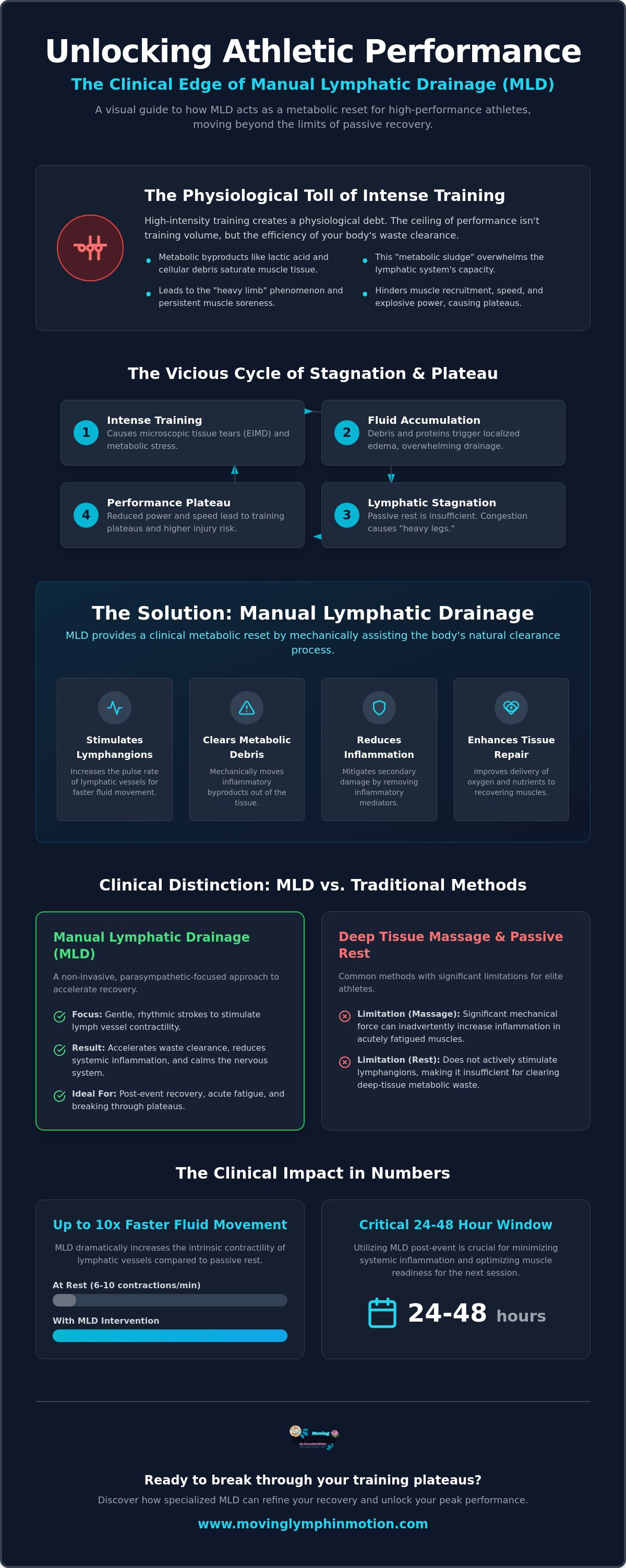
High-intensity athletic training creates a physiological debt that extends far beyond depleted glycogen stores. When you push your body to its absolute limit, the resulting metabolic stress triggers a significant shift in your internal fluid dynamics. While the community often discusses lymphatic drainage after liposuction Austin in the context of surgical recovery, the clinical reality for an elite athlete is remarkably similar. Both scenarios involve tissue trauma and an overwhelmed lymphatic system struggling to manage an increased volume of interstitial fluid.
During strenuous exertion, metabolic byproducts like lactic acid and creatine kinase accumulate within the muscle tissue. These substances, along with cellular debris from microscopic fiber damage, saturate the lymphatic pathways. When the rate of byproduct production exceeds the system's capacity for removal, the interstitium becomes congested. This stagnation leads to the "heavy limb" phenomenon. This isn't merely a feeling of fatigue; it is a physical reality where excess fluid pressure hinders muscle recruitment, reduces contraction speed, and stalls your explosive power. Through the specialized application of Manual lymphatic drainage (MLD), we can mechanically assist the clearance of this metabolic "sludge," restoring the environment necessary for cellular repair.
Exercise-Induced Muscle Damage (EIMD) and Fluid Stagnation
Microscopic tissue tears are a natural byproduct of training, yet they trigger localized edema that can become counterproductive. This Exercise-Induced Muscle Damage (EIMD) prompts the body to flood the area with fluid to transport immune cells. However, during peak training blocks, this natural drainage often becomes overwhelmed. The lymphatic system is responsible for transporting large-molecule proteins away from the muscle tissue. If these proteins remain stagnant, they attract more water through osmotic pressure, worsening the swelling and extending your recovery timeline. Specialized lymphatic drainage after liposuction Austin protocols are highly effective here because they prioritize the precise movement of these protein-rich fluids back into the circulatory system.
The Limitations of Passive Recovery for Elite Athletes
Rest is a fundamental component of any training program, but passive recovery has its limits. Simply sitting or sleeping doesn't provide the mechanical stimulation required to clear deep-tissue metabolic waste efficiently. While compression garments and elevation offer some benefit by assisting venous return, they don't actively stimulate the contractility of the lymphangions. Manual intervention is often necessary to maintain "lymphatic load" capacity, especially during back-to-back performance days. Without active clearance, acute inflammation can transition into chronic stagnation, which increases the risk of overuse injuries and persistent systemic fatigue.
How Manual Lymphatic Drainage Accelerates Athletic Recovery
Manual Lymphatic Drainage (MLD) is a specialized clinical intervention designed to stimulate the intrinsic contractility of lymphangions, the functional units of the lymphatic vessels. While many residents prioritize lymphatic drainage after liposuction Austin to resolve surgical trauma, athletes utilize these same mechanisms to facilitate a metabolic "clearance." By applying precise, rhythmic pressure, we move interstitial debris into the initial lymphatics, effectively filtering the cellular exhaust produced during high-intensity training sessions.
This process is essential for controlling post-training inflammatory responses. When metabolic byproducts like creatine kinase remain in the tissue, they can trigger secondary damage to surrounding muscle fibers. MLD mitigates this risk by mechanically accelerating the removal of these inflammatory mediators. Once the interstitium is cleared of stagnant fluid and waste, the pressure on local capillaries decreases. This reduction in extravascular pressure allows for the enhanced delivery of nutrient-rich, oxygenated blood to recovering muscle groups, which is the cornerstone of tissue repair.
Stimulating Lymphangion Contractility for Faster Clearance
The efficacy of MLD lies in its ability to increase the frequency of lymphatic pulsing. At rest, lymphatic vessels typically contract six to ten times per minute. Through specific, low-pressure strokes on the vessel walls, MLD can increase this rate, moving fluid up to ten times faster than passive rest allows. Our clinical focus remains on the major nodal basins, specifically the axillary and inguinal nodes, before directing fluid toward the thoracic duct for systemic filtration. This anatomical precision ensures that the drainage follows the body's natural pathways for maximum efficiency.
MLD vs. Traditional Sports Massage: A Clinical Distinction
It's vital to distinguish MLD from traditional sports massage. Deep tissue work often involves significant mechanical force that can inadvertently increase inflammation in an acutely fatigued athlete. In contrast, MLD is a non-invasive, parasympathetic-focused approach. It calms the nervous system while facilitating fluid movement. For those experiencing acute training stress, utilizing lymphatic drainage for tissue healing is often superior to myofascial release, as it addresses the fluid-based barriers to recovery without adding further mechanical stress to the muscle fibers.
If you're navigating a rigorous training block and feel your recovery has stalled, you might consider how a clinically targeted recovery session can restore your physiological baseline.
Case Study: Clinical MLD Protocol for an Endurance Athlete in Austin
To illustrate the clinical efficacy of Manual Lymphatic Drainage (MLD) in a high-performance context, we followed the progress of a competitive Austin-based marathoner. This athlete was deep in a rigorous training block for the Austin Marathon, reporting a significant plateau in their recovery. Despite adhering to standard protocols, they experienced persistent calf heaviness and delayed muscle readiness following intense hill repeats in the Westlake area. While many individuals prioritize lymphatic drainage after liposuction Austin to address surgical trauma, this case demonstrates how the same physiological principles apply to resolving exercise-induced fluid stagnation.
The primary objective was to facilitate a metabolic "reset" by mechanically clearing the interstitium. Over a four-week clinical intervention, we targeted the lower extremities and the abdomen to optimize the body's primary drainage pathways. By the conclusion of the protocol, the athlete reported a measurable improvement in "readiness" scores and a noticeable reduction in the "heavy leg" sensation that had previously stalled their training progression.
Initial Assessment and Baseline Physiological Markers
Our initial clinical evaluation revealed significant indicators of lymphatic congestion. We assessed tissue turgor and identified palpable nodal tenderness in the inguinal region, suggesting that the primary filtration basins were overwhelmed by the volume of metabolic waste. We also identified areas of "fibrotic-like" stagnation within the fascia of the posterior chain. These baseline markers were tracked alongside subjective recovery data, including sleep quality and muscle soreness scales, to ensure a comprehensive view of the athlete's physiological state. It's often at this stage that the parallels between athletic recovery and lymphatic drainage after liposuction Austin become most apparent, as both require a meticulous focus on restoring fluid equilibrium.
The Intervention: Targeted Manual Lymphatic Drainage
The intervention consisted of weekly sixty-minute sessions. We prioritized proximal clearance, opening the major nodal basins in the neck and abdomen before addressing the distal drainage of the lower limbs. This sequential approach ensures that the central system can accommodate the influx of fluid from the extremities. We integrated these sessions with manual body contouring for athletic performance to further refine tissue state and mobility. Between sessions, the athlete was educated on specific diaphragmatic breathing techniques to support the upward flow of lymph toward the thoracic duct. This combination of clinical intervention and patient education resulted in a consistent reduction in limb circumference and a faster return to baseline performance levels after high-intensity efforts.
Integrating MLD into Your Austin Training Regimen
Successful athletic performance relies on a structured recovery plan that mirrors the intensity of the training itself. While the demand for lymphatic drainage after liposuction Austin is well-documented for surgical healing, the strategic integration of MLD into a training regimen offers a competitive edge by managing metabolic load. For an athlete, timing is the most critical variable. Sessions must be synchronized with the specific phases of your macrocycle to ensure the lymphatic system is primed to handle the physiological stress of peak training blocks.
Pre-event optimization involves clearing the interstitium to maximize tissue oxygenation. By reducing fluid pressure on the microvasculature, we ensure that muscles receive the necessary nutrients for explosive output. Conversely, post-event recovery focuses on the 24-48 hour window. This period is vital for maximum inflammatory control, as it prevents the accumulation of cellular debris that leads to chronic soreness. Maintaining this system during high-volume weeks prevents the "overtraining" plateau, allowing you to sustain intensity without physiological stagnation. Finding manual lymph drainage therapists who specialize in these athletic demands is essential for achieving these precise results.
Timing Your Sessions for Maximum Performance
Scheduling a session 72 hours before a race or major event is ideal. This timeframe allows the body to achieve optimal tissue suppleness and fluid balance without the risk of immediate post-treatment fatigue. During the taper phase, MLD supports the system's transition from high-stress activity to a state of readiness. For immediate post-race protocols, we focus on clearing systemic metabolic stress within the first two days after the effort. This proactive approach significantly shortens the recovery timeline compared to passive rest alone.
Self-Care Strategies to Support Professional MLD
Clinical intervention is most effective when supported by proper self-care. Hydration remains the primary factor in lymph viscosity; dehydrated fluid becomes sluggish and difficult to move. Between professional sessions, engaging in gentle movement patterns on local Cedar Park or Round Rock trails can encourage natural drainage through muscle pump activity. It's also helpful to view compression therapy as a supplement to, rather than a replacement for, manual work. While garments provide external pressure, they cannot replicate the targeted, rhythmic stimulation of the lymphangions provided by a specialist.
To ensure your recovery matches your training intensity, you can book a clinical recovery session to optimize your next performance cycle.
Precision Recovery at Best Lymphatic Specialist: The Specialist Advantage
The distinction between a general wellness "lymphatic massage" and clinical Manual Lymphatic Drainage (MLD) is found in the practitioner's anatomical precision and physiological intent. At Best Lymphatic Specialist, Criselda White delivers a methodology rooted in medical-grade results rather than recreational relaxation. While many individuals seek out lymphatic drainage after liposuction Austin to manage post-surgical inflammation, the same level of specialist care is required to resolve the metabolic stagnation inherent in professional-level training. We don't view recovery as an optional luxury, but as a clinical necessity for maintaining tissue integrity and performance longevity.
Our approach often integrates the Build and Sculpt Body Treatment to address specific tissue refinement needs. This specialized protocol goes beyond simple fluid movement, focusing on the manual contouring and structural health of the fascia. For athletes, this means not only clearing metabolic waste but also improving the mechanical landscape of the muscle groups. We develop personalized recovery plans that align with your specific sport and Austin training schedule, ensuring that your physiological "reset" occurs at the optimal point in your training cycle to prevent cumulative fatigue.
Clinical Expertise Beyond the Aesthetic
Effective lymphatic work requires advanced certification and a deep understanding of fluid dynamics. We reject standardized, one-size-fits-all protocols that treat the body as a static system. Instead, we perform a thorough physiological assessment to identify your unique areas of stagnation and tissue density. Whether you are training on the trails of Georgetown or the tracks in Round Rock, your anatomical needs are specific to your movement patterns. Our practice prioritizes the quiet confidence of evidence-based results over aesthetic fluff. We focus on the contractility of your lymphangions and the health of your initial lymphatics to ensure that your recovery is as high-performance as your training sessions.
Next Steps for Your Recovery Journey
During your first session at Best Lymphatic Specialist, we conduct a comprehensive evaluation of your tissue state and recovery baseline. This assessment allows us to create a roadmap that integrates seamlessly with your existing coaching or physical therapy team. We believe in a collaborative approach to athletic health, acting as your clinical partner to ensure that every manual intervention supports your broader performance goals. You can schedule your athletic recovery session via Vagaro to begin a more intentional, results-oriented recovery journey. By prioritizing the internal environment of your tissues, you provide your body with the safety and expertise it needs to excel in your next event.
Restoring Your Physiological Baseline for Peak Performance
The gap between a training plateau and a performance breakthrough often depends on the efficiency of your internal filtration system. By prioritizing the mechanical clearance of metabolic waste, you ensure that your muscle tissue remains mobile and receptive to the next high-intensity effort. We've explored how targeted manual stimulation resolves the "heavy leg" phenomenon and shortens recovery timelines, allowing you to maintain training volume without the risk of systemic stagnation. While many residents utilize lymphatic drainage after liposuction Austin for post-operative care, the clinical application of these techniques is equally vital for the competitive athlete.
Precision recovery requires an evidence-based approach that favors physiological results over superficial relaxation. Through specialized Build and Sculpt protocols and a dedicated focus on anatomical accuracy, we provide the clinical expertise needed to navigate your most demanding training blocks. As a Certified Manual Lymphatic Drainage Specialist, Criselda White acts as your professional partner, ensuring your recovery matches the intensity of your training goals.
Optimize your athletic recovery—Book your session with Criselda White. It's time to provide your body with the specialized support it needs to excel.
Frequently Asked Questions
Is manual lymphatic drainage the same as a sports massage?
No. Sports massage uses mechanical force to manipulate muscle tissue, which can inadvertently increase inflammation if applied too aggressively to fatigued fibers. MLD is a specialized, light-pressure technique focusing on the contractility of lymphangions to clear interstitial fluid. It targets the lymphatic system specifically, making it a non-invasive recovery tool that calms the parasympathetic nervous system rather than adding mechanical stress to the body.
How many sessions of MLD does an athlete typically need for recovery?
Frequency depends on your training phase and physiological load. For acute recovery from high-intensity events, one to two sessions within the first 48 hours is often sufficient to clear metabolic waste. During peak training blocks, weekly sessions help maintain lymphatic capacity and prevent stagnation. Just as patients utilize lymphatic drainage after liposuction Austin for structured post-op healing, athletes benefit from a consistent clinical protocol tailored to their training cycles.
Can MLD help with old sports injuries or chronic inflammation?
Yes, MLD is effective for resolving chronic edema and fibrotic-like stagnation associated with old injuries. When an injury site remains chronically swollen, it hinders nutrient delivery and tissue mobility. By stimulating the drainage of protein-rich fluid, MLD reduces the pressure on local nerve endings. This process restores the healthy fluid exchange necessary for long-term tissue remodeling and improved range of motion in previously compromised areas.
Does lymphatic drainage help with muscle soreness (DOMS)?
MLD directly addresses the fluid-based components of Delayed Onset Muscle Soreness (DOMS). While DOMS is caused by microscopic muscle damage, the resulting edema creates pressure that intensifies pain. By mechanically accelerating the removal of inflammatory byproducts like lactic acid and creatine kinase, MLD reduces this interstitial pressure. This lowers systemic inflammation and shortens the duration of soreness, allowing for a faster return to high-output training.
Is MLD safe to do immediately after a marathon or triathlon?
It is safe and highly recommended within the 24 to 48 hour window following endurance events. Immediate post-event MLD focuses on calming the nervous system and initiating the clearance of the heavy metabolic load produced during extreme exertion. Because the technique is non-invasive and uses minimal pressure, it doesn't risk further damaging muscle fibers that are already in a state of acute repair, unlike deeper manual therapies.
Will lymphatic drainage help me lose "water weight" before a competition?
MLD resolves interstitial fluid retention, which can result in a leaner appearance and a reduction in limb circumference. While this is often seen in individuals receiving lymphatic drainage after liposuction Austin, athletes use it to improve their power-to-weight ratio and tissue suppleness. This metabolic reset clears the weight of stagnant fluid, ensuring that every pound on competition day is functional muscle rather than unproductive edema.
What should I do after my MLD session to ensure the best results?
Prioritize hydration and gentle movement to support the newly stimulated lymphatic flow. Drinking water reduces lymph viscosity, making it easier for the system to filter waste through the lymph nodes. Incorporating diaphragmatic breathing and light walking encourages the thoracic duct to continue moving fluid toward the venous system. Avoid high-sodium meals and intense heat immediately following a session to prevent the re-accumulation of fluid in the cleared tissues.
How do I know if my lymphatic system is sluggish from training?
Common indicators include a persistent feeling of heavy limbs, swelling that doesn't resolve with overnight rest, and nodal tenderness in the inguinal or axillary regions. You might also notice a decrease in explosive power or a training plateau that doesn't respond to standard rest. These signs suggest that your interstitial fluid is saturated with metabolic debris, indicating that your natural drainage pathways are currently overwhelmed by your training volume.